A Review of the Mythology of Work: How Capitalism Persists Despite Itself

Peter Fleming writes a bitter screed against a version of capitalism and the concept of work in his recent book, The Mythology of Work: How Capitalism Persists Despite Itself. His basic purpose is to prove that, “We work, pay taxes, take care of the bills and commuting costs for one single reason: not to ‘survive’ but so that the governing elite gains its priveleges for nothing. Our labour is designed to provide freedom to the rich. Our work exists in order to subsidize the costs of their existence.”

The book, then, is largely a critique of what Fleming sees as an oppressive class system, where the middle and lower classes are firmly squashed by managers and owners of capital. This is a book that demonizes work and profit. It is essentially a moral complaint, although Fleming denies that in his conclusion. It is not a cheerful book, or one that provides real hope of change. In fact, in the conclusion, Fleming seems to abandon hope that even his critique can change anything. He labels his work inoperative, because he is both benefiting from and participating in the very system that he intends to critique.

Analysis

There are deep layers of irony in this book. Fleming is careful to note some of them in his own conclusion. As noted above, he recognizes that he, as a middle class university worker, benefits from the so-called oppression of others who are in a class below him in the economic food chain.

There are other clear ironies, though. In some ways, Fleming has an exceptionally high view of human nature. He believes that the economic system would continue and human flourishing would exist if only the managers and owners of capital would be replaced by a democratic body of workers. Thus the workers, executing the daily job, could replace the vision and ordering function that managers and corporate bureaucratic methodology provides.

At one level I am sympathetic with him. In previous jobs, I have often felt that I had a better view of the problem and a better hope of devising a solution than the administrators above me. However, sometimes my best solution was the best only for a limited population. The broader corporate perspective required a different approach or there was another solution that worked best for the company as a whole, though it was less than optimal in my small sphere. There were times I think I was right, but others that I was certainly wrong because I did not have the whole picture.

Fleming’s assumption is that everything would work out alright because the workers would make good long term decisions if they were only given the power. He fails to note that in many situations this is not the case. Although corporations sometimes make frustrating choices for short term benefit, the same is true for workers. Union strikes are nearly always couched as striving for worker’s rights or some absolutely necessary good. And sometimes this is valid. Sometimes, however, strikes and discordant negotiations are designed merely to extract the most near term gain for the workers. In other words, greed is sometimes still the motivation, and sometimes the fault is on the side of the workers.

Another basic assumption in Fleming’s calculus is the inherent goodness of humans. Yet, at the same time, he sees humans as pathetically weak. He describes debt as a form of slavery and faults banks for people’s consumer debt. There certainly are (and have been) cases of predatory lending, but the kind of consumer debt that Fleming describes as slavery is largely the result of excessive spending due to a lack of self-control. Fleming seems to argue that there is a deterministic force that is driving people to make bad choices. He ignores the fact that in many cases, these are bad choices that were made voluntarily for short term gain in recognition there would be a later price to pay.

A major problem with Fleming’s view of human nature is that he wants to have it both ways. Workers would make good choices if they had the opportunity despite the reality they have made poor choices when they have had the opportunity. This seems a bit sketchy.

Another problem with The Mythology of Work is that Fleming seems to be jousting a strawman. He has constructed a caricature of neo-liberalism (a term for a free market economic perspective) which closely represents crony capitalism in his portrayal. He assumes that the socialistic U.K. context that he is operating in is somehow an ideal situation according to a neo-liberal.

As someone who resonates with neo-liberal economics, I was not offended by Fleming’s critique because he was obviously not talking about me. It isn’t clear, however, whether he recognizes there is another option out there.

I was thankful that at the end Fleming proposes some solutions that would help resolve his critique. These solutions include: 1. A guaranteed minimum income with a max 1:3 ratio to top earners; 2. More mediating institutions; 3. Government ownership of utilities and other similar monopolies; 4. A three-day work week; 5. Eating less meat; 6. Providing non-monetary incentives.

Some of these suggestions are more helpful than others. Perhaps in another post I will engage with some of them. Some of them seem doomed to fail and unrealistic. For example, the guaranteed minimum income with a max income limit assumes that diminished returns (and unearned baselines) wouldn’t significantly undermine economic flourishing in society. In other words, there are some jobs people won't do for only a little more than the lowest skilled workers make. He anticipates this criticism, and dismisses it, but he never deals with it. Simplistic solutions like this rely on assumptions about human nature that seem invalid given human history.

Conclusion

Overall this is not a cheerful book. Fleming’s view of work is so negative that it seems he doesn’t recognize any redeeming benefits to work. What if our purpose is to serve one another through faithful work? What if the real problem is not work itself, or the system, but our idolization of money and our improper valuation of work? Fleming tries to resolve the problem created when workers identify themselves by their job by eliminating work instead of correcting the attitude. In the end, while some of his critiques are helpful, this volume left me looking for a more realistic solution.

Note: A gratis copy of this volume was provided by the publisher with no expectation of a positive review.

Marie Durand - The Story of Faithfulness in Persecution

If you haven’t heard of Reformation Heritage Books before today, you’ve been missing out. They produce a number of fine volumes on theology, particularly on Puritan theology.

One of the most significant contributions they are making to the life of the church is the Christian Biographies for Young Readers series. These are fully illustrated, hardbound books that are suitable early elementary through middle school. The books include drawings and paintings of historic scenes as well as contemporary photos of historical sites.

Summary

The latest edition in this series highlights the life of Marie Durand. Durand was a French Protestant who was born in the early eighteenth century. As a Protestant in Catholic France, her family was at times tolerated, but later on most of the family was arrested for meeting together and worshipping according to their conscience.

As a result of her faith, which led her to disobedience to the crown, Durand spent thirty-eight years in prison. She lived the first 19 years of her life free, though with threat of persecution through many of those years. Nearly her entire adult life was lived in the small confines of the Tower of Constance, where she and a number of other Protestant women and children were imprisoned. Snow and rain fell through the grating in the roof and through the slitted windows. Their meager provisions had to be augmented by their families and friends on the outside.

Inside, Durand served as a teacher to the children, letter writer for many of the other prisoners, and also spiritual leader because of her ability to read and write better than others. Her role was significant, and yet the reality is that she spent nearly four decades in a small one-room prison with only occasional opportunities to go outside into the fresh air.

While the women, including Marie Durand, were imprisoned, their husbands were made to be galley slaves. Or, like Marie’s brother Pierre, were executed outright if they persisted in preaching the Protestant faith.

And yet they persisted.

Analysis and Conclusion

This is what makes this biography so powerful and timely. Durand’s story reminds us of what real persecution looks like. This is not merely social marginalization but absolute, unfettered, and unreasoning punishment. Many men and women lost their lives in exchange for an unsullied conscience.

This book is written as a third person historical biography. In other words, it is not a story book, but a work of non-fiction directed to the young. This is the sort of story that can provide the sort of vicarious memory that a young Christian may need when attempting to sort through the social consequences of a vibrant Christian faith in the coming years. This volume shows that others have paid a greater price, and that it was worth it.

The author, Simonetta Carr, is a native of Italy with a multicultural background. She has been an elementary school teacher, a home-school teacher of eight, and a writer for newspapers and magazines. The book is illustrated by Matt Abraxas who is an artist by trade who lives on Colorado.

These books are not inexpensive, but they are well constructed. The illustrations draw the reader in and help to make the story come alive. This would be a suitable volume to incorporate into a homeschool unit, or as part of church library. The entire series would make an exceptional Christmas or birthday gift for a young reader. This is the sort of reading that will stick to a child’s ribs and provide encouragement in a time of need.

This is the ninth book in the series. Previous titles include John Calvin; Augustine of Hippo; John Owen, Athanasius; Lady Jane Grey; Anselm of Canterbury; John Knox; and Jonathan Edwards. Hopefully there are more planned in the near future. If the future volumes are as good as this one, the church will be blessed.

Note: A gratis copy of this volume was received from the publisher through Cross Focused Reviews with no expectation of a positive review.

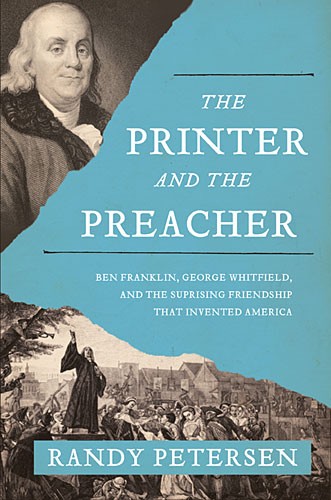
The Printer and the Preacher - A Review

The recently released book, The Printer and the Preacher, promises to explain how the friendship between Benjamin Franklin and George Whitefield helped to “invent America.” The author, Randy Petersen, has an extensive list of publications including a number of co-authored volumes. He has written on sports, psychology, history, various Christian topics, and more. Petersen appears to have an eclectic appetite for writing projects and the ability to finish them.

The book is readable and there are some interesting anecdotes, but I found it to be a disappointment overall. There are pointers along the way that indicate that both Franklin and Whitefield influenced the founding of the United States, but Petersen never really explains why their friendship was pivotal. I walked away with a better understanding of the long-term correspondence that existed between these two men, but without seeing how it really matters in the grand scope of history.

Analysis and Critique

Petersen’s writing style is light. The book uses endnotes, so it is not encumbered by the distractions (welcomed by many) that footnotes often provide. He tells the story well. There are points, however, where Petersen is excessively informal, in ways that may be deemed disrespectful by those who engage in academic pursuits. He consistently refers to people by their first names (George and Ben), which is atypical for serious historical work.

There is a connection between the two men. Franklin and Whitefield corresponded for decades and met several times, particularly while Whitefield was preaching through America. Franklin printed news about Whitefield and many of his sermons. Whitefield attempted to convert Franklin from his self-created Deism to a Calvinistic Christianity. He was unsuccessful. There is a story worth hearing here.

However, after reading The Printer and the Preacher, it isn’t clear that there is enough of a story to make a book length treatment. At times Petersen lapses into conjecture, trying to describe conversations they were likely to have or occasions they might have met while both were in London. This has the dangerous potential to present as surmise as fact, if the reader is not careful. The concept of a surprising friendship that is essential to the formation of America is intriguing, but in my mind at least, there needs to be a better case made.

This is a popular level historical book, but at times the history gets jumbled because Petersen tries to organize the parallels by topic instead of by chronology. He also jumps back and forth between accounts of the lives of two men born eight years apart on different continents. There are certainly some parallels between the two, but at times the presentation seems strained.

 The greatest benefit of the book is Petersen’s demonstration that two men with vastly different foundational beliefs could get along, work together, and have meaningful dialog for a number of years. Whatever other weaknesses the book may present, this is a good thing to understand and I appreciate Petersen’s efforts to tell the story well.

Conclusion

The Printer and the Preacher is a quick read. It would be worth taking to the beach or on an airplane. It is has weaknesses, but it is an entertaining book that some history buffs may enjoy.

Note: A gratis copy of this book was provided by the publisher with no expectation of a positive review.

Why I like Westerns

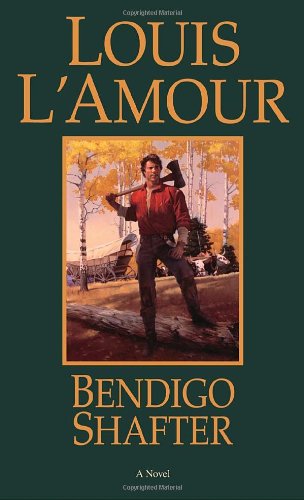
I enjoy reading Westerns. In fact, when I have the opportunity (or make the opportunity) to read for pleasure, it’s often to either a British mystery or a Western. In particular, I’m fond of Louis L’Amour. I blame this in part on the uncle that introduced me to L’Amour when I was a teenager. However, my appreciation of a good, clean Western is deeper than that.

It wouldn’t be worth being a theologian if I didn’t try to dissect ideas that others would simply enjoy. So, I will try to explain why I like Westerns. I think there are at least three reasons.

Three Reasons I Like Westerns

There is an escapist quality to Westerns. They are realistic, but they are set in a time and place remote from where I live. Since I reside in North Carolina, the canyons, deserts, and mountains of L’Amour’s novels allow me to get out of the four walls of my house in the wilderness or the untamed towns of a previous century.

Instead of thinking about the dissertation I should be writing, the work that is waiting, or the current political turmoil, Westerns allow me to witness a life and death struggle without the perils of actually being stampeded, shot, or hanged. Additionally, since the drama tends to be much more exciting than hunting for typos in a manuscript, the stories are more interesting than my daily life.

The second reason I like Westerns is that you can nearly always tell the good guys from the bad guys. Call me a simple, but I don’t like spending a hundred pages of a book trying to figure out if I should be rooting for the protagonist or wishing that the main character would get snuffed out by a vigilante.

No, give me a good, old fashioned white hat, black hat Western where you can honestly like the good guys and dislike the bad guys. L’Amour’s heroes aren’t perfect, which makes them a bit more relatable than some others. However, the bad guys are always selfish, arrogant, dirty, murdering, and dishonest. Some hold this simple dualistic perspective against Westerns, but I think it makes the genre more enjoyable. If I wanted to deal with complex emotions I’d watch a day-time talk show.

The third reason I like Westerns is that the guy nearly always gets the girl. This is where the closet romantic in comes out. Again, there isn’t a lot of drama and introspection about liking and not liking someone. Instead you get attraction, mutual admiration, and sometimes conflict. You know, the usual.

L’Amour’s stories are enjoyable because there is usually a strong female lead to complement the male lead. In a few books, the protagonist is a female. Without demolishing all types, the simplicity of romance in Westerns allows for a clean, healthy, enjoyable romance. In a world that seems to want every romance to be against type, the simplicity matters.

Conclusion

I don’t get a lot of time to read fiction, but I have a decent collection of L’Amour’s stories that I return to now and again. I’ve read some other authors, like Zane Grey, but I’ve never gotten into them. Much like my preference for reading Dorothy L. Sayers over Agatha Christie, I think this comes down to the slightly more complex characterization, while still keeping it light and fluffy.

For me, Westerns are an oasis in an otherwise rocky terrain. They allow me to be a hero without getting saddle sores. They entertain me and expand my world a little without sucking me dry emotionally. This is a good thing, I think.

A Few Things Happened at Acton University

Last week I spent four days in Grand Rapids, Michigan at Acton University. If you look for Acton University on the map you won’t find it because it is a conference, not a formal institution of higher education. However, the content is so broad and educational the creators began to call it a university.

 Acton Institute is a think tank and non-profit organization that exists “to promote a free and virtuous society characterized by individual liberty and sustained by religious principles.” They are known as free market advocates, but there is a lot more to it than that.

 The ethos is profoundly Christian, but also wholesomely ecumenical. By that I mean that the experience is ecumenical in that we were talking about our differences and enriching our common faith without negating the real, and sometimes deep, differences in our understandings of the Eucharist, role of clergy, and polity. These differences remain, but an authentic dialog between Catholics, Eastern Orthodox, and various stripes of Protestants (including a significant Baptist contingent) was made possible due to a commitment not to be contentious about the faith and a common interest in the topic at hand.

 The conference is interdenominational, intergenerational, intercultural, and interdisciplinary.

 One example of this was the informative discussion I had with an Orthodox priest about Alexander Solzhenitsyn. There were many points of difference, but I came away with a deepened perspective on the Russian Orthodox author. Of course, there were points where there was a lack of understanding as one Roman Catholic presenter noted that Catholics have the Nicene Creed while the Presbyterians have the Westminster Confession. The fundamental error in his statement went unnoticed by many, but I saw a number of folks shift uneasily as they decided to let it pass. The intent was good, so the conversation continued.

 One night I sat at supper with the president of a private, classical school in Chicago. We had a great discussion on transitioning into classical education from conventional schooling. We also talked about environmental ethics, alternative energy, and the quality of the food. He is a retired journalist, so he shared some of his reporting experience, which spanned several decades. Another night I had a long conversation with a retired efficiency expert who had consulted with companies throughout the world. He was Dutch, but had recently become an American citizen.

 Another night, I shared a table with some Nigerian pastors. They were amazed that we Americans could eat meat every night and cheesecake, too. Then, the bespectacled pastor asked me how he could get a pair of rimless glasses like mine, so we explored the wonders of online optical stores on a smartphone. His phone was nicer than mine. This was an international experience.

 Then there were philosophers, historians, lawyers, engineers, housewives, pastors, firemen, soldiers, butchers, bakers, and candlestick makers. Actually, I didn’t see any of the last three, but they may have been there. It was a profoundly interdisciplinary event.

 The highlights of the meeting was getting to meet Michael Novak, a well-known economist. Actually, I think the high point was when he asked me to get him some potato chips from the lunch line, but I’ll let you judge for yourself.

 The best lecture I went to was by Peter Kreeft. The formerly Evangelical, now Catholic philosopher from Boston College. He is an expert on Aquinas and the Inklings. His talk on Truth, Beauty and Goodness in C.S. Lewis was true, beautiful and good on its own. It was a pleasure to hear him masterfully unfold his topic and answer questions with such depth, breadth, and clarity.

 There were amazing conversations wherever you turned. People were talking about poverty alleviation efforts in their local cities, starting businesses, and funding charities. There was a fermenting energy bursting from every corner. It really is a wonderful thing.

 Everywhere capitalists, yet everywhere there was concern for human dignity and the rule of law. There is an energy in the movement. A synergistic momentum that propels attendees out of the meeting looking for a hill to take and a person to help.

 If you have a chance, you should go. It's an exciting place to meet people and consider future possibilities, and you never know where the road might take you.

The Oxford Handbook of Value Theory - A Review

Oxford University Press recently released another entry into their series of Oxford Handbooks, this time the topic is value theory. Like most of their handbooks, The Oxford Handbook of Value Theory is designed to be a mid- to upper-level reference volume and not an introduction, at least not an introduction to someone without some background in philosophy.

Value theory is a key concept for ethics. How do we determine what is of value, especially what is of ultimate value? How do we evaluate between two things that are each good? Where does value come from?

The twenty-two new essays in this volume are a worthy attempt at bringing some clarity to an otherwise exceedingly complex portion of philosophy. Indeed, I found that though some of the essays challenged me with symbolic logic and dense philosophical prose, my understanding of contemporary value discussions was improved significantly.

After a brief introductory chapter by the editors, Iwao Hirose and Jonas Olson, the book is divided into three sections. The first is on foundations. In ten chapters, authors provide overviews of the differences between evaluative and deontic value (quality versus morality), intrinsic and extrinsic value, value and emotion, and more. These first tend essays tend to be simpler and clearer for the relatively uniformed. The second section deals with the structure of value theory. There are important definitions of incomparability and incommensurability, a discussion of ranking different value structures, and an evaluation of theories of value aggregation. The six essays in this section are more focused and philosophically dense, but they inform the reader of important arguments in the field of value theory. The final section includes six chapters that apply the earlier concepts. How will health be valued? What is freedom worth? Can we assign value to nature? The practical orientation of these chapters relies on the framework provided in the earlier discussions, but rounds out the volume to show why the whole discussion matters.

The essays tend to be expository, which is to say they are not strongly polemical. The authors are trying to explain the field more than sway the reader toward one system or another. This is an essential characteristic of a handbook like this.

This is a not a book for the faint of heart. Indeed, it is a reference book that will best serve individuals with some background in philosophy to improve their grasp of the field. In reality, the world would be better served if more people understood value theory more thoroughly and were able to differentiate between aesthetic goodness and moral duties, or, in some cases, see value in aesthetics at all.

Ethicists and moral philosophers should begin petitioning their librarians to get a copy of this book in their collections. It is the best entry into the depths of value theory that I have found, and I have looked before. Reading this volume has been enormously helpful in my understanding of discussions in environmental ethics, which I hope will pay dividends in the future.

Note: A gratis copy of this volume was provided by the publisher with no expectation of a positive review.

"Where Are We Going?" not "Where Are We Now?"

Sometimes at conferences or even in sermons, it’s the throwaway lines that pack the most punch.

In a discussion on the nature of social justice, particularly how it has been reinterpreted and changed from its original purpose, Michael Novak made an interesting comment.

He said, “When people’s life expectancy was only into their 20’s, ‘Til death do us part’ meant something significantly different than it does now.”

In one sense this is untrue, because at the heart of it, the marriage vow has always been a lifelong commitment. There was always an intended permanence. However, at the next level in the comment, which is where I think Novak intended the audience to go, there is a meaty truth worth chewing on.

Commitment to marriage for life is something different when you only expect to live for another decade than it is if you expect to live for another sixty years. Or, rather, the nature of what is being committed to is different.

Without deconstructing marriage in this discussion, which others are doing apart quickly and violently enough, it is worth considering if some of the unraveling of marriages within the church isn’t due to a slow change in teaching about the significance of marriage.

In other words, it is one thing to commit to live with someone you don’t get along with for a decade. It is another thing to commit to deal with another person’s idiosyncrasies for three times the time you’ve been alive. I'm not sure the teaching of the church on marriage kept up with the reality of life.

The way you think about marriage, enter into marriage, and live as a married person changes based on that expectation. The difference is much like the way you pack for a weekend getaway instead of a two week vacation. There is a lot more preparation for one than the other.

Pulling back from the specific issue of marriage, this brings up the way the Church uses data and adapts the way she teaches to the changing world around her. The doctrines do not change, but the way they are expressed certainly must to keep up with the changing landscape.

This is where, as a smart aleck young evangelical, I am tempted to point out how the Church is always reactionary. But, I am part of that reaction, continually lagging behind the culture hoping to find a way to communicate within it.

When the Church, which includes me, fails to find new ways to apply old truths, we leave people to fill in the gaps on their own. God is good and Scripture accessible, but sometimes the result of such independent development isn’t good.

Instead of reading into the sign of the times, looking for where we are right now, we need to be looking for where we are going. We may be wrong, but only if we lead people to think about a way forward can we hope to have them adequately prepared for today.

Image used by CC license: http://ow.ly/OvOcL Thinking....[Explored] Ricardo Cuppini

Some Thoughts on Scripture, Theology, and Climate

It doesn’t matter if the issue is economics, the environment, human sexuality, or liturgy, when we ask what the Bible says about a topic we need to asking the question of the Bible. We should not try to construct our preconceived notions out of biblical material.

For some, this is an obvious statement, but as I read theology texts and Christianesque articles on various issues from all angles, I consistently get frustrated with the authors’ well-meaning attempts at eisegesis. It is especially frustrating to someone, like me, who views Scripture as the final norm in all matters of life and faith to fight  through an attempt to contort the text to fit their perspective.

Theology and Climate Change

One recent example is a book on Systematic Theology and climate change. Recognizing that climate change is a big deal, and that I expect Pope Francis to affirm anthropogenic climate change in his forthcoming encyclical, I am still puzzling over the approach of this book.

Scripture affirms an earth-positive ethics. That is, an environmental ethics can be built that has strong support from Scripture. What Scripture doesn’t help us with is the particulars about the data that relates to climate change or what to do about it.

This is something we are going to have to watch for in the near future, as the forthcoming papal encyclical encourages growing concern for the environment. We need to be more concerned with the environment than we are. However, we also need to balance our method of response to environmental concerns so that we do not ignore our responsibility to care for the poor, advance medical technologies, and advocate for the life of the unborn.

In other words, not everything that comes under the mantle of environmentalism can be matched up with Christianity. This is true despite the fact that we can develop a thoroughgoing environmental ethics from Scripture.

More particularly, we cannot blindly jump onto a policy bandwagon when issues like climate change come into play, even if they are entirely human caused. There are elements in the platform of many climate policy advocacy groups that don’t match a Christian worldview. We need to navigate these waters very carefully.

Challenges for Contemporary Theologians

This is what makes trying to derive a theology of climate change from Scripture. The Bible doesn’t actually say anything about the specific nature of climate change. Therefore, any theology that deals specifically with climate change will have several layers of interpretation between the text and the theology.

There is nothing wrong with applying a biblical worldview to contemporary issues. In fact, I am an avid proponent of this. However, we must do so with care so that the issue does not overshadow the text. In other words, we cannot backfit a theological paradigm to our sense of justice.

Backfitting is exactly what some theologians are doing when they construct their paradigms. They build the foundation under the existing problem.

The answer to the problem, though, isn’t to stop talking about the problem. It’s to come at it the other direction. Scripture is sufficient for every question about doctrine and life. This doesn’t mean that there is a verse in Scripture to answer every question someone can ask. We shouldn’t try to make the Bible be any more exact than it is.

Instead, this means that Scripture has the information we need to construct a worldview that will allow us to receive and apply truth that comes from the world around us. God created the world in an orderly fashion, thus all truth is God’s truth.

The main idea, then, is that we need to be cautious when we claim something as a Christian position. If we do, then it really ought to be built on a carefully formulated framework derived from Scripture. After all, that is the revelation God gave us and by which we claim to judge all ideas.

Photo credit: Bible, by Adam Dimmick. Used by permission. http://ow.ly/OqNhh 

Lessons Learned from My Comprehensive Exam

I recently passed the comprehensive examination for my PhD in Theological Studies. The moment of elation is gone now, replaced by the anticipation of the approval of my dissertation prospectus and the official beginning of the biggest writing project I have ever taken on.

What is a comprehensive exam?

For those unaware, American doctoral programs are different from those in Europe and other nations. Since we are box checkers, Americans tend to like discernible benchmarks and quantifiable progress checks.

We, therefore, have seminars or courses for our doctoral programs. (There are certainly exceptions to this with American programs that use a more typically European model, but I will generalize for the sake of simplicity). This allows a neatly compartmentalized program of study with easy to measure milestones.

At the end of coursework comes an exam. At some point every student says to himself, “This is the last test I’m ever going to take.” In reality that just isn’t so. At least not on this side of the Atlantic. We keep testing until there’s nothing left to test.

Southeastern's version of the Exam

The comprehensive exam takes different forms at different schools. Often there are differences even among programs within the same school.

My exam consisted of two parts: a written section and an oral section.

The written portion of the exam was six hours long with four essay questions. Two of the questions were two hours long and the others were one hour long. I sat at a computer in a little conference room one day a few weeks ago and wrote for six hours on one day with a one hour break for lunch.

After spending four years in the program, six hours seems like too little to demonstrate mastery of my subject. However, at several points during the day of typing my hands queried me if we weren’t done yet and could we have a break. In fact, due to the poor ergonomic arrangement of the computer (the chair is low, the desk is high, and the keyboard continually slides away from the tester) I lost feeling in my left hand and could only type with a finger until blood flow returned and normal typing could resume.

At the end of the day I produced about 14,000 words and my eyes were a little blurry. However, I survived.

The oral examination

Then began the waiting. My oral exam was scheduled for a little over a week after my written exam to allow time for the committee to grade the written product. I spent that hoping that what I wrote was cogent, if not complete in nature.

About a week later, it was time for the second portion of the exam. This consists of three faculty whose expertise is related to your subject matter asking questions about points from your written examination and looking for holes in your knowledge.

Like any good oral examination, this portion of the comprehensive exam is designed to find weak areas, to explore the extent of your understanding, and to see how you react when you don’t know the answer. After all, there is no way for a student to know more about every possible rabbit trail in a subject than the three examiners.

The interview process in this exam is challenging, but it is generally a collegial experience. The examiners are looking to test, but not destroy your confidence. By the time you get to that point, if there is a question about your overall competence it should have surfaced on the written portion of the exam.

One of the difficulties with the oral portion of the exam is discerning what question is being asked. It is much easier (though by no means easy) to write out a question that gets at what you want to know. In the oral exam it is sometimes a challenge to understand what the interviewer is looking for.

In any event, I survived. I am thankful for that. Now I just have to write a dissertation. No big deal, right?

Some Lessons Learned

  1. Begin preparing for your comprehensive exam from the first course you take. Some of my notes were helpful, some could have been more helpful. I found that even inadequate notes from earlier seminars jogged my memory and helped me study.
     
  2. Read broadly during your course of study. My subject matter is narrowly Christian ethics, I benefited significantly from reading deeply in that field. However, I was asked a question about value theory, too. Fortunately I was in the midst of a book on the subject and could address this tangential question with alacrity. Additionally, I benefited from the numerous books I read that did not apply directly to my subject area. They provided illustrations during my oral exam and moments where I wasn’t searching for specific factual information. Also, reading broadly is just fun.
     
  3. Practice the written exam. One of the most helpful things I did was create a series of written questions and practice writing essays in response. None of the essay questions exactly matched my anticipated formulations, but the process of both inventing potential questions and writing structured responses in a timed environment helped me find my own weaknesses and sharpen my arguments.
     
  4. Scope out your committee. Here at Southeastern, I work closely with the three examiners on my committee. Therefore it was fairly easy to figure out the trajectory of potential follow up questions. I also tracked down recent syllabi and course offerings from the committee so that I could see what they might have been lecturing on or reading with a class most recently. As a result, I picked up a book on virtue ethics (a favorite topic with one of the committee members) and read it the week before the exam. That came in handy.
     
  5. Try to schedule the exam to your advantage. I intentionally worked to schedule my exam for the period shortly after the spring semester ended. Why? Because that is the period of time when the committee has graded a large volume of papers, turned in their grades, and is longing to get on with their summer activities. As tired as I was from preparation for the exam, the committee was tired from the end of semester flurry of activities. This presents a strategic advantage for the examinee, since you are more likely to get the benefit of the doubt in grading. Note: Don’t tell anyone in advance that this is why you are trying to schedule your exam at a particular time.
  6. Take the exam. Many of my peers seem to live in fear of the comprehensive exam. I will attest to the fact it is a stressful event and should not be treated lightly. On the other hand, sometimes students tend to be perfectionists and work too hard to learn everything before the exam. News flash: You can’t know everything. Work hard, prepare well, take the exam before you feel completely ready. There will always be more books and articles to read. Everyone knows this. In the words of Larry the Cable Guy, “Get ‘er done.”

Wildlife in the Kingdom Come

If there is one thing most theologians are in need of it is a good laugh. After hours of poring over the sometimes terrible writing and convoluted thoughts of people we are generally in disagreement with, a little levity would seem to be a welcome thing.

I was pleased to be introduced to an old, humorous book a few months ago by Bruce Ashford. He credits Paige Patterson with bringing him to the font of amusement. Personally, I don’t care how it got to me. I just think it’s funny.

The book is Wildlife in the Kingdom Come: An Explorer Looks at the Critters and Creatures of the Theological Kingdom. It was written (and illustrated) by Ken C. Johnson and John H. Coe. Cast your memory back to the 1980’s and you may remember seeing Ken Johnson’s name as the creator and writer of McGee and Me! Or, more recently, from his work with Adventures in Odyssey. John H. Coe is actually a trained theologian who is at Biola and, amazingly, actually lists this book on his faculty page.

Wildlife in the Kingdom Come contains several dozen brief discussions of theological movements or elements of theology and a representative drawing. It is very tongue in cheek. It also leaves no theological movement protected, making fun of theologians of every stripe. The footnotes are humorous, too, citing authors such as Clark P. Nock and R. C. Sprawl.

Most of the humor is not highbrow. It relies on puns, caricatures and stereotypes. Of course, if the punchlines were too sophisticated it wouldn’t be nearly as fun to read. Who wants to work to get a chortle, anyway?

Some Quotes

I’ll give five quotes to provide a taste of the book:

“Long ago in an age when the primitive shores of the Textual Critic Coastlands were forming, a fierce and tyrannical giant roamed the earth, the terrible Textus Receptus (TR). Rising from the Erasmus Manuscript Marshes, the TR ruled these lands particularly during the Jurassic Era of King James.”

“Anyone wishing to explore the theological kingdom will inevitably encounter the Problem Passage. This terrifying creature roams the Theological Hillsides and creates extremely difficult going for the would-be traveler. By positioning himself stubbornly on the explorer’s path, the Problem Passage impeded any attempt to forge a trail toward a complete theological system.”

“In the heartland of the Teaching Timberlands that border the Pulpit Prairies thrives the ever-stoic and staunch Expository Sermon. Though less daunting and spirited than his cousin, the Topical Sermon, this meticulous creature is an instinctive digger and a study in discipline.”

“Many centuries ago zealous (and at times, unbalanced) expeditions sought to rid the Great Primitivchuch Plains of a dreaded and poisonous parasite, the Heretic. Found throughout the theological lands, the Heretic is most fond of feeding off helpless hers of Unorthodox and Neoorthodox whose diet lacks any substantial dosages of doctrine of theological presuppositions. Although small and difficult to detect at first, the bite of this malicious little pest can have devastating results. As infection forms around the bite, schism and dissension spread throughout the body of the helpless victims. This condition ultimately gives way to such fatal diseases as Arianism, Modalism, Universalism, and the Ten-Percent Tithe.”

“By far the most beautiful and colorful of all the birds in the Moral Highgrounds is the proud Pelagian. This reigning king of pomp and splendor typically spreads his impeccably plumage for all to see. His feathered feat is usually an unabashed attempt to attract as many admirers as his flock can carry. So impressive is the sight that some have suggested that his brilliant display has a blinding affect [sic]  on the admirers of this unfallen fowl.”

Conclusion

The list goes on. There are pages of these punny quips and sidelong theological references throughout. As a student of theology, I have guffawed, wheezed, snorted, and cackled at some of the jokes. My family things I’m crazy anyway, so that makes no difference.

The biggest downside of this book is that it is out of print. However, I still commend it because there are relatively inexpensive copies available used through Amazon. Trust me, theological friends, this is worth your money. It’s a skinny book, too, so it won’t be that much more weight the next time you move.