Inventing American Religion - A Review

In our interminable run-up to the next U.S. Presidential election, we are regularly bombarded with information from a variety of sources about how each of the candidates from both parties are doing in the polls. Often these poll results, whether from Pew Research, Gallup, or another organization, include information about how a particular candidate is faring in a particular religious demographic.

There are some who question how those religious profiles are constructed and whether they are, indeed, accurate.

In the newly released book, Inventing American Religion: Polls, Surveys, and the Tenuous Quest for a Nation’s Faith, Robert Wuthnow outlines the rise of scientific polling, the increasing influence of the religious questions in them, and the more recent decline in support for the published poll results.

Summary

Wuthnow’s thesis is “that the polling industry has influenced—and at times distorted—how religion is understood and portrayed, particularly in the media but also to some extent by religious leaders, practitioners, and scholars.” He argues this thesis is eight chapters.

The introduction outlines the early history of public polling and surveys the breadth of the history that Wuthnow goes on to unpack and interpret in the remaining seven chapters. Chapter Two covers the early attempts to do comprehensive surveys to assess public opinion. Such surveys were accurate for local issues, but they were time consuming, expensive, and unable to establish broader public opinion. Still, they were a common tool used by social organizers like Du Bois. In the third chapter, Wuthnow outlines the rise of George Gallup, who pioneered the use of the scientific poll to assay public opinion on a broader scale; since Gallup was a self-professed Christian, he asked religious questions in his polls, which began the process of examining the impact of religion on social and political positions.

Chapter Four highlights the differences between scientific studies, which are usually carried out by scholars, and public opinion polls. Wuthnow explains that polls are designed as quick hit diagnostics, based on an attempt to gain a rough idea of a person's opinion with as few questions as possible. In contrast, scientific studies ask more probing questions. As a result, scientific studies tend to be more narrowly focused, but they also tend to have more precise explanations for the results. Scientific studies go after the “why” not merely the “what.” In the fifth chapter, the evolution of the pollster as pundit is discussed. In 1976, the so-called year of the evangelical, the religion question become more important. Suddenly Gallup’s years of asking about religion began to pay off. Additionally, the people doing the polls began to interpret them for the media audiences. It’s easy to see how possible misinterpretations can result. This trend to question the polls has grown since that point; for some, the promise of punditry undermines the possibility of objectivity in the polls.

In the sixth chapter, Wuthnow describes the falling confidence in polls. This was due to the conflation of pundits and pollsters. It also has to do with the changing demographic of respondents. Initially people would answer the phone and respond to polls, but that began to change. Response rate became an issue and the questions about the demographics of those actually responding to polls arose. Additionally, external observers (though not the pollsters themselves) began to question some of the ways conclusions were drawn. These observers began to notice fluctuations in some of the responses, such that the percentage of church goers varied widely across a six-month span in some cases. Chapter Seven discusses the breaking down of the fourth wall, when pollsters began to take polls about polls. The answers began to show a growing distrust in the accuracy and usefulness of polling. However, Wuthnow argues that the influence of polling is far from gone. He notes, “Polling studies demonstrate that polling rarely has discernible effects on election outcomes, but it offers background information that draws attention to how candidates are doing and reinforces implicit perceptions that some issues are more important than others.”

Wuthnow concludes the book by surveying the state of polling in Chapter Eight. Polls are still important, but they aren’t the trusted sources of information they once were. They are now more likely to be used as sermon illustrations or points for beginning a more in depth process of investigation. Polls continue to suffer due to lowering response rates. People's lives have become saturated with polls, opinion questions, and other calls for feedback. In a world of big data, politicians and corporations are turning away from using polls as ultimate grounds for decisions; better information is available in usage statistics from Facebook, Twitter, and other sources. Additionally, the history of polls continues to show that the categories being used to define religion are no longer adequate (if they ever were). The future of polling, particularly related to religion, is indeterminate. It is unlikely that polls will disappear, but criticisms of polls may continue to reduce their importance. Time will tell.

Analysis and Conclusion

Wuthnow’s book is timely. Polls are regularly published; their results are lauded as sure truths by the 24-hour media cycle by pollsters and the talking heads. Real people, on the other hand, are asking more and more whether the results are trustworthy. After all, we think, when is the last time I was asked to respond to a poll? Most of us don’t even answer the phone when we don’t know the number. Our experience drives us to question the validity of polls, whether that is just or not.

Inventing American Religion is part history and part critique. His history shows what has happened and, it seems to me, explains is very clearly. His critique is a telling warning about how polls have been abused and how to avoid being mislead by them. At least it provides grounds for asking further questions, something that is nearly always a worthwhile endeavor.

The weakness of this volume is that it highlights a problem--the potential unreliability of polls--but it fails to provide a solution. This, of course, was not part of his thesis. However, if Wuthnow had any suggestions about how to improve the use of polls or interpret them better, it would have been good to include them.

In the balance, this is an important book for academics and pastors who want to use polls in their papers, books, and sermons. Wuthnow's point is well made: polls may not be trustworthy and misreading the data may well lead the consumer astray.

Note: Oxford University Press provided a gratis copy of this volume with no expectation of a positive review.

The Ignorance is Astounding

Recently multiple news outlets have reported on Dr. Ben Carson's theory that the Egyptian Pyramids were used for grain silos. 

There is little reason to give credence to Carson's theory, which is an extreme minority position. All the archaeological evidence seems to point toward the pyramids being built as monuments to rulers. In a presidential election, it's fine to point out the weird ideas of people that have put themselves on display.

What is inexcusable, however, is the fact that multiple news outlets are reporting that Carson's theory is drawn directly from the book of Genesis. 

In their original report (which may be updated any time now) Forbes wrote:

When I found this, I wondered if the ignorance was isolated. However, when I looked at the illustrious reporting of CNN, I found that while their article was correct, the original report required a correction:

Correction: An earlier version of this story stated the Book of Genesis refers to Joseph building pyramids to store grain. It refers only to Joseph storing large amounts of grain.

I stopped looking at two sources. Most likely the error was in the original news service story that the other outlets subscribe to.

I'm glad that CNN caught the mistake. However, it is telling that the original authors of the article was so ignorant of Scripture that he or she believed that Genesis talks about using the pyramids for grain storage. This also made it through the editorial process.

It isn't like this is information buried in someone's diary from the 17th century in an obscure monastery library in the Alps. No, this is information that is readily available online in multiple languages and versions. The team of individuals responsible for these reports lacks a basic literacy in Scripture, and yet was too lazy to take a few minutes to proof their information.

Remember this artifact as you read news article reporting on what people are supposed to believe and have said. While one example does not prove that all such reporting is bad, it does give an indication that the authors and editors may be well out of their depth.

Application for Christians

Christians should also recognize the significance of this error. We assume an awful lot of baseline knowledge when we talk to each other and to others. If I asked a group of school age kids at most local churches if Joseph had stored grain in the pyramids they would have given me an incredulous look. Yet, here is a group of adults so unfamiliar with Scripture that they could make such a blatant gaffe in published work.

Think about that when you present the gospel to someone. You can't assume they know the background. And, really, the notion of the substitutionary atonement is pretty crazy apart from the background of Scripture and an understanding of the Ancient Near Eastern culture of the Hebrews. It probably takes more explaining than what has been expected in previous decades.

We are no longer in a culture where we can assume the basics of the gospel. The ignorance is astounding. However, ignorance is not a sin. 

The solution to ignorance is information. This means that we need to get the gospel message out in a way that is comprehensive and intelligible. We can't afford to assume that anyone knows the rest of the story. Likely they have never actually heard it told well at all.

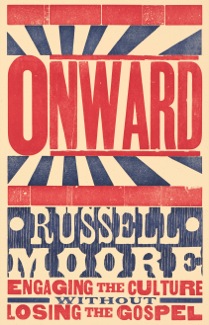
Onward: Engaging the Culture without Losing the Gospel - A Review

If you are a Christian struggling with how to find a way to positively engage the world around you while remaining orthodox, then Russell Moore’s book, Onward: Engaging the Culture without Losing the Gospel, is for you.

Moore has been on various news outlets over the past few years as a spokesman for conservative evangelicals, particular for the Southern Baptist Convention. If this has caused you to wonder what he is doing and why he says the things he says, then this book will be helpful for you, too.

Avoiding Twin Dangers

Moore is outlining the twin dangers of Christian engagement in the public square. On the one hand, it is easy for Christians to become like grumpy old people telling kids to get off their lawn. On the other hand, it also easy for Christians to leave unexamined many of the ills of society as long as it doesn't directly impact them. We can’t afford to fall into either one of the errors if we are going to reach the world with the good news of the gospel.

The thing that keeps us from falling into either of these errors is a proper understanding of the gospel. Moore begins by discussing the culture shift that has pushed Christians from the center of the cultural conversation to the prophetic edges. He is careful to note this reality reflects the fact that the values coalitions of previous decades sounded very Christian without actually being converted by the gospel. As the conversation shifted away from something that resembled a Christian ethic, the Christians that remained faithful to the gospel seemed to have two options: either compromise or get left out of the conversation. This is a false dichotomy.

Gospel Foundation, Contemporary Issues

Early on in the volume, Moore digs into the meaning of the gospel. He makes it clear that the gospel isn’t about either personal salvation or social justice; it’s about both. If the Christian church loses its understanding of personal conversion and individual redemption, she loses one of the cornerstones of the gospel message. Salvation is not based on redemption of the whole, but on Christ’s atonement for the individual. At the same time, if Christian individuals miss the central redemptive themes of historic Christianity, which offers a strong dose of the pursuit of justice in society, then they miss out on some of the key implications of their own gospel conversion; redeemed individuals seek to redeem society.

With both these aspects of redemption in mind, Moore addresses a number of major issues that are central to the contemporary cultural discussion: immigration, religious liberty, and family stability. These are social issues that tend to divide Americans from each other and are the topics that commonly lead to calls for compromise and accusations of a lack of compassion.

Convictional Kindness

This is where Moore’s call for convictional kindness comes in. Convictional kindness is standing firm on ethical norms without shame, while confronting the angry accusations of the surrounding world with a gentle spirit. The conviction is birthed from confidence in the objective moral order in creation that is witnessed to by the special revelation found in Scripture. It requires rational, well-thought through positions that are both coherent and correspond to the truth in God’s creation. Kindness is built on the understanding of our own personal need for redemption. We, too, are growing, learning people who have pasts that we may have forgotten. Those that we disagree with, even those waving fingers and shouting in our faces, are people made in the image of God who deserve to hear the message of redemption. That’s a message they won’t be able to hear if we are shouting back. In fact, joining in the shouting will keep our “conversation partners” from hearing both our arguments on the issue and the message of the gospel.

Moore’s overall argument is hugely important as Christians seek to be salt and light in a world that (still) desperately needs the gospel. He also makes subtler points that are even more significant for Christians to hear. For example, in discussing the issue of gun control or gun rights he explains that there is no single Christian position. He has a position, which he does not articulate, but he notes more significantly that no one can speak for an official Christian position. There are certainly moral elements to the question, but at the same time the bulk of the argument is prudential and legal. It would be unethical to leave loaded guns within the reach of toddlers, but the capacity of a magazine and the process for background checks for weapons are prudential questions. This doesn’t mean that the question is not significant, but that we should be careful about promoting our preferred position as a gospel truth when it isn’t. Doing so encourages wrangling within the body of Christ and it largely discredits the message of the gospel because the faulty logic is apparent to any who care to see it. In this example, the Second Amendment is a benefit of being American, not a right imbued by the gospel.

Conclusion

Onward has been published at a time that conservative Christians in America feel like they are under assault because anything resembling a Christianesque ethic is being pushed farther toward the margins. Moore helps by explaining that Christianity has always been strange and that we should continue to cling to our strangeness. We have to articulate the gospel in our homes, in our churches, and in our culture if we are to have an impact. Moore’s book is an encouragement to continue to live faithfully in private and in public, but with a confidence founded on the truth of the gospel not fueled by a majority in the polls. 

Part of Our Lives - A Review

What does your public library mean to you?

For many people, having a library card is an essential part of being a citizen. Being able to check out books independently as a child is a rite of passage that marks the coming of age.

Wayne Wiegand, sometimes referred to as the “Dean of library historians,” addresses both the political and social significance of public libraries in his recent book, Part of our Lives: A People’s History of the American Public Library.

While the subtitle indicates this is a people’s history, this is a volume more suitable for the scholar than the average reader. Wiegand’s prose is clear but dense. At times the pace bogs down in details and dates. This is a history of the people’s use of the public library rather than a history written primarily for the people that use it.

Summary

The book moves through the history of public libraries in the United States in ten chapters. Wiegand begins with the various forms of libraries, most of which were not free and available to citizens, during the colonial through early American era. He then transitions through consecutive periods in library history. In 1854 the first public library opened in Boston, then in 1876 the country celebrated its centennial. Wiegand marks the 1893 Chicago World Fair as a significant event, then he identifies the US entry into World War I. These divisions form reasonable points of demarcation for Wiegand’s history, though they are not necessarily intuitive.

Wiegand uses a mixed methods approach to present the history of public libraries. He combines an amazing depth of anecdotal research with seemingly comprehensive statistical data to put forward a detailed picture of who has used the library and for what reason. Wiegand’s purpose in writing the book was to show how the library and social change have been related. The book is thorough and informative; it paints a clear picture of how public libraries have changed with American society throughout history.

Analysis

Throughout the volume Wiegand is critical of historical librarians for their handling of socially radical issues. It seems that he thinks that public libraries should be leading cultural change instead of responding to it. (Something government entities rarely, if ever, do.) However, at the same time, he critiques librarians for attempting to be cultural leaders through selecting some literature over others. Attempts to encourage higher rates non-fiction reading are frowned on, though Wiegand approves of attempts to liberalize sexual mores. The reluctance to accept the role of a public institution as reactive instead of cutting edge institution is consistent throughout. Wiegand addresses it toward the end of the volume, but his analysis of the reality of a publicly funded institution as lagging culture comes too late and does not reflect a fully-considered analysis of the history he is recounting.

A major theme in this work is the balance between selection and censorship by librarians. Wiegand documents the tension between attempts to meet the demands for decency and the free exploration of ideas. While there were certainly abuses, Wiegand seems to come down to heavily on those that were responding to the (at the time) reasonable demands from library patrons for some items to be kept out of reach of children. Still, his point about the lengths some librarians went to keep the wrong books out of certain hands is well-taken. There is a difference between taking measures to ensure age appropriate materials are available and blocking access to challenging ideas. At the same time, Wiegand seems to accept the restriction of Little Sambo while criticizing the censoring of sexually explicit books; it seems like the definition of censoring depends on whether the content meets contemporary societal standards.

Wiegand’s ideological musings could have been better developed and his perspective reflects a progressive bias. His development, exploration, and explanation of the history itself, however, is phenomenal. This is an outstanding piece of historical writing. Wiegand demonstrates an understanding of the subject matter that is the result of a lifetime of study. From that perspective this is a masterpiece that deserves to be read and should be a landmark work on this subject for years to come. I certainly have a greater appreciation of the public library system as a result of reading the volume.

Note: I received a gratis copy of this volume from the publisher with no expectation of a positive review.

Come Rain or Come Shine - A Review

I know I’m not the only male that likes Jan Karon's books. However, I anticipate that the gender balance is a bit skewed toward the female demographic for her work. In this case, I am glad to be included, even if I’m in the minority.

Jan Karon’s Mitford series continues in her latest book Come Rain or Come Shine with the same sort of winsome storytelling and positive outcomes that have made her a frequent best seller. This latest book, released in September 2015, focuses on the few weeks before Dooley and Lace finally get married.

The storyline has jumped ahead several years since last year’s volume, Somewhere Safe with Somebody Good. This is probably good, since  the slow progress of years of veterinary training and long distance relationship may have been a bit tedious. The engagement has lasted, Dooley is just graduating from Vet school, and the star-crossed lovers are about to get married.

In many ways, Come Rain or Come Shine parallels the storyline of A Common Life, which tells the story of the wedding of Father Tim and Cynthia. Like that story, Come Rain or Come Shine focuses on the lunacy that is native to a wedding season. Karon conveys the stress of arranging the myriad details mixed with the pressure of making a permanent, life altering decision.

The majority of the story is centered at Meadowgate Farm, which is near Mitford, but far enough away to avoid recounting the history of every one of the Mitford town folk. Unlike many of the other stories, this one is told through many voices and not primarily through Father Tim’s. This appears to be the passing of the torch from Father Tim to his adopted son, Dooley.

The Big Knot, as the wedding is called, is supposed to be a simple matter with just family and friends--a simple affair that is intimate, inexpensive, and memorable. As you might suspect, the storyline is filled with the never ending stream of decisions and details that seem to complicate even the best laid plans of brides and men. Anyone who has tried to execute a wedding, simple or otherwise, will predict many of the wrinkles that arise. However, Karon is able to tell the story well enough that predictability does not detract from the pleasure of reading. In fact, although the reader can anticipate the problems, Karon reveals solutions that are sometimes unexpected and enjoyable.

There are plenty of laughs along the way. A runaway bull threatens the wedding; Harley loses his teeth repeatedly; and some of the usual contrast between the sophisticated transplants to Mitford and the mountain born natives creates tension and highlights the foibles of each. Karon seems to be able to poke at all parties without creating a caricature or demeaning either culture.

This is largely a lighthearted story, though at its edges there is the drama that anyone who knows Mitford would expect. Pauline Leeper, mother to Dooley and others, still hasn’t been fully reconciled to her kids, though there is foreshadowing that it might happen in a future volume. However, this story doesn’t take on some of the major issues that many of Karon’s stories do. We see happy resolution to many of the problems from previous stories. Lace and Dooley are getting married. Sammy Barlowe is playing championship pool on cable television and keeping his nose clean. Father Tim is showing restraint and controlling his diabetes well.

This is an escapist romance. There is enough tension and a few twists and turns throughout that make it an enjoyable read. However, like Garrison Keillor’s Lake Wobegon stories, this tale keeps the largest issues of life at bay.

Is this high literature? No. But Karon does well in developing her characters and keeping the storyline moving. A gospel metanarrative is woven through the narrative as Karon gives readers what they long for: a happy ending despite all of the turmoil and trouble.

Come rain or come shine the wedding goes off, though certainly not without the number of hiccups that make such events memorable. The promise Karon leaves us with is that the relationship between Lace and Dooley will also continue, come rain or come shine. Hopefully Karon doesn’t make us wait too long to find out how it goes.

Note: A gratis copy of this volume was provided by the publisher with no expectation of a positive review.

The Prosperity Gospel: A Constant Danger

Last weekend I heard the prosperity gospel, in a soft version, preached from the pulpit. We were visiting a church and the pastor declared (I paraphrase), "If you follow God's plan, you will prosper." It was toward the end of the sermon, when he was tacking on some duties that the congregation should perform (pray more, witness more, etc.). He certainly wasn't going full prosperity gospel, but it reflected the notion that if you do the right things, then God's got your back and will make everything work out.

That formula is an easy one to slip into, but it is so very dangerous. 

God doesn't usually make it easy for his most faithful servants, at least not according to what Scripture tells us. In fact, there is a regular pattern in Scripture that those whom God uses most suffer the most deeply.

Our hearts long for ease, but our usefulness to God requires a constant striving, which inevitably entails struggle. There is danger of a soft prosperity gospel in our lives each day because, in reality, we all want it to be true.

The problem with the prosperity gospel is that it teaches us that only when we are comfortable are we being blessed by God. That teaching can lead to despair when things aren't going our way.

The Hardcore Prosperity Gospel

The soft prosperity gospel is a constant danger to most believers, particularly American Christians, but there is a bigger, darker problem that has arisen in the heart of the wealth of America. That problem is the full-fledged, all-out prosperity gospel.

Most proponents of the prosperity gospel have learned to mask their message carefully, at least in public forums, since there has been a tendency among orthodox theologians and pastors to call them out. However, recently Creflo Dollar made the mistake of being open about his understanding of Christianity on Twitter.

He, or someone who has the keys to his account, posted a Tweet that read, "Jesus bled and died for us so that we can lay claim to the promise of financial prosperity. #ProsperityInChrist #WealthyLiving"

Dollar deleted the Tweet after being bombarded by negative comments. This screen capture was taken in anticipation of that on 8 Oct 2015.

Dollar deleted the Tweet after being bombarded by negative comments. This screen capture was taken in anticipation of that on 8 Oct 2015.

The tweet was retweeted by many, responded to by numerous critics, and generally drew a negative reaction from orthodox Christians on Twitter. As a result, Dollar deleted the tweet. Thankfully screen captures last forever. (Which is a warning for those who use social media to vent.)

Sometimes people delete tweets because they are ambiguous and can be misinterpreted. Sometimes they are deleted because of typos or because they have a dead link in them.

Dollar, or someone on his team, deleted this tweet because it was not sufficiently ambiguous. The veil was drawn back on the prosperity gospel. The message was made more clear than simply a promise of living "your best life now" and the true belief system was brought to the surface.

Deleting this tweet was an admission of guilt on the part of Creflo Dollar.

The purpose of this post is to point out the potential error and to point toward some resources for understanding and dealing with the theology of the prosperity gospel. The prosperity gospel, in many forms, is alive and well; we need to kill it in our hearts and help others to see what it really is.

Resources for combatting the prosperity gospel

Here are some helpful resources for understanding and confronting the prosperity gospel in your own heart and in the world around you.

What is the Prosperity Gospel, by Andrew Spencer.

Is the Prosperity Gospel Biblically Sound, by Andrew Spencer.

The Importance of Rejecting the Prosperity Gospel, by Andrew Spencer.

Errors of the Prosperity Gospel, by David W. Jones.

The Prosperity Gospel in My Own Heart, by David W. Jones.

The Poverty of the Prosperity Gospel, by Vaneetha Rendall.

Six Keys to Detecting the Prosperity Gospel, by John Piper.

The Prosperity Gospel: Decietful and Deadly, by John Piper.

Why I Abominate the Prosperity Gospel, by John Piper. (Video)

How to Help Friends Escape the Prosperity Gospel, by John Piper.

Confronting the Prosperity Gospel

Whenever someone writes a blog in opposition to the prosperity gospel (assuming anyone reads it), a backlash always comes from supporters of the individual criticized or the movement as a whole. Accusations are launched something to the effect that "Christians shouldn't attack other Christians," or "Have you followed Matthew 18?" The irony of commenters on blogs posting questions about Matthew 18 is often overlooked.

True enough, I haven't approached Creflo Dollar in person to confront him with his sin. However, he posted it on Twitter, which means that he put his thoughts out there for public critique.

For the first point, Christians should critique other people who claim to be Christians when they preach false doctrines. And when they do so publicly, that critique needs to be public. Paul (who was way more sanctified than I am) seems to have done just that to Peter when he was in error (Gal 2:11-13) with the hope of helping Peter and the believers that were caught in the theological error.

Frankly, this latest tweet by Dollar is only a recent proclamation of what he has previously clearly stated in his sermons and books. In other words, this tweet isn't the issue; it's the broader theological movement. (A more sustained critique of Dollar and the prosperity gospel movement can be found in David W. Jones' book, Health, Wealth, and Happiness.).

shai linne's song "Fal$e Teacher$" from his newest album, "Lyrical Theology Part 1: Theology".

The move toward defensiveness of a person or a movement is natural for those deceived by the prosperity gospel (or any other false teaching). Dollar is a charismatic preacher and he offers hope of wealth to many that strongly desire it. But it is a hope built on false doctrine, so it isn't a true hope.

However, maintaining doctrinal orthodoxy is vital to the health of the church. There is a reason that liberal denominations a dying. It's because their theology lacks the nutrients necessary to sustain them. Unfortunately, the prosperity gospel continues to flourish because of continued spiritual blindness by its adherents and much more careful (except with this tweet) presentation of the true nature of their message.  However, it remains a mushroom religion--kept in the dark and fed on manure--that can't survive when trials come.

Ultimately, the reason we should confront the prosperity gospel movement is not to win points on the internet, but because it is a false gospel. It presents the idea that Jesus came to make us wealthy. In reality, he came so that we could become holy. To lose that message is to lose the essence of God's gracious hope for the world.

This is all the reason we should need to publicly and openly oppose this movement of false teaching. It reflects true neighbor love to those trapped in the movement or susceptible to its clutches.

From Nature to Creation - A Review

In his recent book, From Nature to Creation: A Christian Vision for Understanding and Loving our World, Norman Wirzba makes a case that much of the ecological degradation that has occurred and continues to occur due to a shift in the human relationship with the world around. His argument is that the shift from seeing the world as God’s creation to seeing it as mechanistic nature has allowed disregard for and utilitarian abuses of the environment to perpetuate.

Wirzba is Professor of Theology, Ecology and Agrarian Studies at Duke Divinity school. He is highly regarded among religious environmental ethicists for his expertise on this topic and his creative approach. This, no doubt, led to his inclusion in ongoing series from Baker Academic, “The Church and Postmodern Culture,” which seeks to engage timely topics in an incisive manner.

Summary

After an introduction, the book includes five chapters. Chapter One outlines the disassociation that many contemporary individuals feel from the world around. When Nietzsche declared God to be dead it reflected the attitude of many in the world, not simply the intelligentsia. However, when the concept of God faded from the forefront of society, so did the notion of an ordered creation. This allowed the value of nature to be reduced to its utility, whether aesthetic or functional. It also tended to accelerate the sense of separation that human had developed from the created order. The Enlightenment, as diverse as it was philosophically, had tended to treat the world mechanistically and humans as superior mechanism within it. This was accelerated by the so-called death of God, and this only increased the loss of a sense of place and order.

One response to the the rise of the idea of nature was a disassociation from it. A second was the idolization of nature, which Wirzba considers in his second chapter. In some interpretations, nature was viewed as a good in and itself and the preservation of it untrammeled by human hands an act of absolute necessity. On the hand, some idolized nature for the benefits they could extract from it. Modernity, according to Wirzba, resulted in the process of humans bestowing meaning to the world  instead of discovering meaning already in the world. This led to the ultimate idolatry, which is really worship of ourselves. Viewing the world as God’s creation prevents such a perversion.

In Chapter Three, the point is that creation must be perceived as it is and that the process of rightly interpreting the world around is a necessary part of the human experience. Disassociation from the world around, which has been encouraged by many forms of technology, clouds people’s perceptions. It is thus necessary for Christians in particular to seek to gain, as much as possible, God’s perception of the world and its value. By seeing the world as it is and as it is meant to be, the idolatrous turn can be reversed.

The fourth chapter details the importance of regaining a sense of our status as creatures. Perception helps to prevent the negative development of idolatrous attitudes, but humans are only situated in the world properly when they understand themselves as creatures made by God. In this chapter, Wirzba pushes for an agrarian understanding of the world, claiming that a greater connection with the soil is both biblical and vital to rightly understanding the world. He also ties the understanding of creatureliness into good eating habits, which are contemplative of the food eaten and the time, space, and community of the eating event. This sort of romantic solution to the environmental problems will resonate with hipsters and others who are pushing through the postmodern milieu. Whether it will truly help stem environmental degradation is another issue.

Finally, Chapter Five focuses on thankfulness as “the most fundamental and honest expression of what it means to be a human being, because it is here, in the thanksgiving act, that people appreciate and attempt to live into the knowledge that life is a gift.” (131) Wirzba blames a lack of gratitude on the use of money instead of trading. Currency increases the exactness of transactions, which thus leads to a sense of completion rather than open ended thankfulness. The reduction of the environment to its monetary value, as it sometimes is in cost benefit analyses, also reduces the notion that creation is a gift from God. Wirzba comes back again to the notion that gardening helps restore a sense of thankfulness for creation since, after all, the gardener can do nothing to actually grow the plants. An attitude of thankfulness is at the heart of a right understanding of the created order according to Wirzba.

Analysis and Conclusion

Although this volume is short on practical application, it is a fine text and conveys many ideas that are worth mulling. Wirzba’s diagnosis of the problem is especially astute. Environmental degradation occurs when there is a sense of disassociation from the creation. It’s just dirt. Or, it’s only a bird. That sort of mechanistic understanding undermines compassion for other living creatures and a theocentric vision for seeing God’s handiwork in all of creation. As such, this is a worthy contribution to the series and an important book to read.

However, there are points in the volume where Wirzba—who is an good scholar—gets sloppy. For example, he makes a bold assertion: “Many theologians believe bodies to be something that must be finally overcome and left behind.” (21) The trouble is that he cites none of them. In fact, I’ve been looking for someone to make that argument so that I can include it in my dissertation. The sad fact is the no orthodox theologian actually believes that.  I have been unable to uncover a single one, though I am hoping that I find someone. It may be a sentiment in the pews of some churches, but it is certainly not a belief that is widely believed by theologians.

In another place, Wirzba appears to misrepresent the atonement, which is no small criticism for a Christian volume.  He writes, “The reconciliation of all things in heaven and on earth that the Christ-hymn in Colossians describes happens through the blood of Christ’s cross, which means it happens through the self-offering life that Jesus demonstrated in his ministries of healing, feeding, exorcising, attending to, and touching others.” (24) He is exactly correct that the reconciliation of all things happens through Christ’s blood on the cross. He would have been correct to argue that the nature of that reconciliation was demonstrated or illustrated by the way Christ lived on earth. The context is talking about living on earth and not waiting to get plucked out of physical existence, but this passage makes it seem that Wirzba is moving the atonement from Christ's substitutionary death to his obedient life; both are  important, but the penalty for sin was paid in blood, not servitude. It may be that this is simply worded poorly, but the atonement is one area that clarity is worth every moment spent.

These problems are significant. However, they do not undermine the overall value of the volume. This is an important entry in an ongoing conversation and Wirzba’s argument of the importance of understanding the essence of creation as a gift from God carries significant weight. Thus this volume has a place in the library of those seeking a deeper understanding of the contemporary issues in Christian environmental ethics.

Note: A gratis copy of this volume was provided by the publisher with no expectation of a positive review.

Review of Evangelical Ethics: A Reader

The recent anthology, Evangelical Ethics, from Westminster John Knox Press seemed promising. There has been no such collection focusing on scholarship from Evangelical Christian sources in wide circulation in recent decades. This is not due to a lack of ethical writing, but no one has previously taken up the mantle of chronicler to produce a volume. This lays a groundwork of expectation for the recent release from David Gushee and Isaac B. Sharp.

What Kind of Evangelical?

Unfortunately, this book suffers from excessive editorial interference. In the introduction, the editors acknowledge there are different understandings of Evangelicalism.

This dates back to the sociological versus doctrinal understandings that have formed a fissure between so-called progressive Evangelicals and conservative Evangelicals. The main qualification for the sociological understanding of Evangelical is claiming the title and being from a historically Evangelical tradition.

Often there is a residual discussion of the centrality of the gospel, but the many times the personal impact of the gospel is obscured by an emphasis on social activity. For conservative Evangelicals, the qualifications for the title are primarily doctrinal.

Doctrinally centered Evangelicals ask question like: Is Scripture understood to be the supreme norm? Is the gospel, including its impact on individual salvation, central to the life of the Christian? These are the primary concerns.

Gushee and Sharp acknowledge the division and then largely dismiss those who hold to a doctrinal understanding of Evangelicalism.

As a result, the most clearly identifiable Evangelicals in the list of included authors are Carl F. H. Henry and Francis Schaeffer. The selection from Henry is from The Uneasy Conscience of Modern Fundamentalism, which was chosen to illustrate how Henry had an interest in social ethics. A valid selection and a good one. Schaeffer’s selection is from How Should We Then Live. This, too is a worthy selection, though the introduction notes that his tone is “declinist” and that it seems to center on the issue of abortion, as if that was unwarranted in 1976 with Roe V. Wade a distant memory of three years previous .

Emphasis on Social Ethics

The volume is structured to minimize the significance of personal ethics. In fact, the only social issues considered in any depth in this text are economics and race. These are two worthy issues, but by avoiding personal ethics including abortion and sexual ethics, a false portrait is painted.

The image represented is also one of support for only one position on the issues discussed, as if there had been no ongoing conversation with differing views. Additionally, the issue of environmentalism is largely ignored, which is not representative of the last several decades of Evangelical thought, whether progressive or doctrinally centered.

Missing Voices

Instead of selecting texts that represent Evangelicalism as it is, the editors have selected texts that represent Evangelicalism as it is in their idealized world.

As such, minorities are significantly over-represented. This is not to discount the voice of those minorities, but if the major voices of a movement are mainly white men, then a reader that purports to describe that movement should represent the reality not the rosy vision of the chroniclers. The selections in this volume amount to historical revisionism.

The book is only about 160 pages. Most readers are at least twice that length. There was no lack of source material, so it is unclear why the volume turned out so unbalanced.

Missing from the relatively slim volume are John Stott, Oliver O’Donovan, Daniel Heimbach, the Feinberg brothers, John Jefferson Davis, John Frame, Cornelius Van Til, Wayne Grudem, Arthur Holmes, Stanley Grenz and others. Instead, a crowd of individuals who have largely rejected the inerrancy or infallibility of Scripture, which has typically been a hallmark of Evangelical theology.

In other words, this is a misrepresentation of the actual history and content of Evangelical ethics. If, as the title implies, the intent was to provide representative samples of the field, then it has largely failed.

Mixed Voices

That being said, some of the essays included are powerful. John Perkins’ testimony of being beaten and through that experience seeing the need for white men to hear the gospel is powerful. Nicholas Wolterstorff’s essay on the holistic power of the gospel for changing and redeeming the world is helpful.

Both the essay by Henry and the one by Schaeffer fairly represent a significant segment of doctrinally faithful Evangelicalism. There is some quality, but it is such a corpus permixtum that the volume has lost its center in Evangelical identity.

Certainly this highly massaged image will please those hoping to pull the Evangelical movement away from their traditional reliance on Scripture and interest in orthodoxy. That is exactly why the volume drew praise on the back cover from Lisa Sowle Cahill, who is theologically liberal. If the goal is to try to “redeem” the perception of Evangelical ethics from an emphasis traditional concern for doctrinal orthodoxy, then this book is a masterpiece.

Tragedy of homogeneity

One of the most beneficial aspects of my seminary education, both at the graduate and postgraduate level, have been the opportunities to read opposing viewpoints and figure out what makes those thinkers believe what they do. In other words, it is good to read people you don’t agree with.

This is why I read what David Gushee writes, as a general rule. He is generally sound in his reasoning even when I find his premises or conclusions unacceptable. Here I think he, along with Strong, have deprived future progressives of the benefit of an accessible, curated volume of primary sources that reflect historical reality.

The editors have thus increased the likelihood that some progressive Evangelicals and more liberal thinkers that read this volume will remain in the echo chamber of their own tradition and remain unexposed to conservative theologians. This minimizes the potential benefit of what could have been a significant volume for the long term.

Note: A gratis copy of this volume was received from the publisher with no expectation of a positive review.

Why Churches Should Have Websites

Used in original by creative commons license: http://ow.ly/SxKG4 

Used in original by creative commons license: http://ow.ly/SxKG4 

My recent relocation to a new city has driven me to a fundamental belief that a church that does not have a digital footprint is failing the community. In other words, in the American context, a church without a website is in error.

To some a website seems superfluous. What does it matter if we are preaching the Word and doing ordinances correctly? A few years ago I might have argued the same thing. However, from the perspective of someone looking for a church home, the lack of a website is a significant failure on the part of a church.

Three reasons to have a website

The first reason it is important for churches in the digital age to have a website is because without a digital footprint it is nearly impossible to find a church. As a newcomer to town I have no idea where some of these small churches are located. I don’t have a phone book and a phone book is insufficient for getting information out in this day and age anyway.

If churches want to be found by anyone who doesn’t live right next door, they need to communicate their presence. The most efficient way to do that is with a simple website.

The second reason for a church to have a website is to provide helpful information. For example, what time does the church meet? Unless the congregation takes out an ad in the phone book (which will likely cost more than a simple website), then having the only marker of the church’s existence be the name and seven digits of phone number in the yellow pages is not very helpful.

Additionally, a website can simply convey what the church believes. Are you a moderate SBC church that refuses to affirm the Baptist Faith and Message 2000? This is good to know so that people can skip over to a biblically-faithful congregation. Also, how does your pastor preach? A visitor shouldn’t have to spend several hours to visit just to find that the pastor uses a text as a springboard for a ramble through a self-help lecture. That time could be better invested looking for a congregation where Scripture is valued and there is opportunity to serve.

It doesn’t take much time or money these days to create a simple website that presents the basic facts and links in some sermon samples (even if they are the best ones). The result is that people know what to expect, where to be there, and you are more likely to get visitors that are more likely to join the fellowship.

A third reason for a church to have a website is to meet the needs of the community. How will the person in the midst of a divorce find out you have a care group to minister to that situation unless you put it online? Maybe through word of mouth, but most people depend on a web search.

How about the ways that your congregation provides emergency aid to the community? Or, if the church does job training or a clothing closet, it is insufficient to expect work conversations to really communicate the resources to those in need. When technology is so inexpensive and ubiquitous, the failure to use it should lead others to question whether the aid programs are intended to be effective.

Stewardship

Although recently someone attempted to tie the existence of church websites to the decline in SBC missions, that tie is tenuous. Perhaps it applies to churches that spend large amounts of money on top of the line sites. That isn’t the point of this discussion.

A failure to have a website is a marker that you really don’t want to have people visit. Whatever your rhetoric is, you don’t want visitors if you won’t provide information about your congregation. This is not just new move-ins to the community, this applies to those in your community that suddenly have a need that drives them to seek out a church.

When a church fails to provide a digital footprint with basic information, it puts the onus on the visitor to figure everything out. As a believer who is required by my contract to join a church, I am forced to do the legwork to find a church. However, if I did not have that driving force, it would be much easier to stay in bed on a Sunday morning than to make phone calls, visit around, and potentially miss the beginning of your service because the church didn’t publish a schedule.

A church without a website is still a church. This isn’t a question of orthodoxy. However, a church without at least a simple website is not stewarding the available technology and resources well. While this isn’t essential to the gospel, it is a gospel issue because it undermines the effectiveness of a congregation in serving the community.