Animal Farm, Economic Freedom, and Human Flourishing

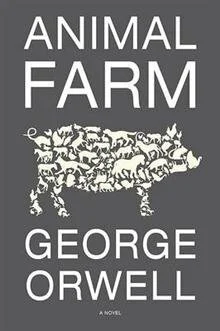
George Orwell’s Animal Farm is an important piece of literature for our age.
9780452277502.jpg

Though the main target of the satire no longer exists, this is a book that should find its way back into the curricula of upper elementary, middle, and high schools. There are a whole lot of young adults that are living in a fairy tale, hoping for communism, that would benefit from reading it seriously, too.

Based on history, however, I think that the importance of Animal Farm is greater than when Orwell wrote it and that it is useful in understanding human nature and why we should be very careful how we view each other and the role of the government.

There are several reasons why Animal Farm deserves a more prominent place in American curricula.

Why is it Important?

First, it is simply a good story, written well, and entertaining. The book is satire, but the characters are sufficiently plausible that most readers will acknowledge they’ve met that person before. It helps that the story is about animals. One of the reasons Animal Farm should be more broadly read is because it is a masterpiece.

Second, it is a brilliant example of how imaginative fiction is much more effective at carrying ideas than essays. Those meager writers who mainly write in the world of non-fiction should be blown away at how powerful Orwell’s depiction of communism captures the absurdities of that political and economic system. I have read some of Orwell’s non-fiction essays (he is an excellent essayist, too), but his 1984 and Animal Farm are much more compelling.

Third, Animal Farm provides a gateway for children to understand totalitarianism. As a child toward the end of the Cold War, I sometimes wondered how it was that the Communists could get and maintain control, if they made people so miserable. Orwell shows the way in a manner that even a child can understand.

It is interesting, however, that Orwell’s satire seems to have implications beyond his original intention.

Broadening Applicability

One of the more interesting facts about Orwell is that he was a socialist. The man lived in voluntary poverty in France for a time, had a deep sympathy for working class people in the U.K. (who were largely getting a raw economic deal), and as a result viewed socialism as the economic program most likely to help people out.

The intentions were good, but Orwell failed to account for the fact that whether socialism comes in through revolution (as with Animal Farm) or by popular vote, as he preferred, it tends to end in the same place: human misery.

One of the central tenets of socialism, perhaps the very core of it, is that the collective controls the means of production. There are, as proponents of socialism argue, multiple ways that this could happen. In the Soviet bloc, ownership was by the government. As the U.K. flirted with socialism, it was public ownership of certain industries while private ownership remained for others, under government scrutiny.

Although there are some Jacobin types on the far left who lobby for full on communism, most of the advocates for contemporary socialism view themselves as arguing for some sort of economic control by the people, funneled through a centralized planning system, but always being governed democratically.

Again, the intentions are (nearly) always to make life better. People that want socialism don’t want Venezuela, and they typically don’t believe they will get it.

Animal Farm, I think, helps show what the process of centralized control will always tend toward the abuses of the animals on Animal Farm and by the government in Venezuela.

Orwell wrote Animal Farm to mock the Soviet Union and, perhaps, to show that real socialism wouldn’t end up there, but there is little empirical evidence of a nation implementing broad economic socialism while maintaining both economic viability and a reasonable amount of personal freedom.

Those arguing that “real socialism” won’t end up like Animal Farm, are really just unthinkingly chanting, “Four legs good, two legs bad.”

Just like the sheep chanting against two legged humans, most of the advocates for socialism (or raw capitalism, for that matter) haven’t given enough thought to the system to deserve to comment. Additionally, they mistakenly believe that it is the number of legs that determines the goodness, rather than the way that power is structured. Their end goal is wrong.

Economic Freedom as a Goal

Economic freedom is important, but it should never be an end to itself. This is why so many of the arguments between contemporary socialists and capitalists is unhelpful. Economic freedom is always relative, always situated within a particular context and community, and should always remain a means to an end.

The end of economic freedom should be to enhance human flourishing.

As I understand it, human flourishing is the ability for individuals to flourish within the web of families and communities as we live out our calling to be the image of God. Others may want a more naturalistic description of that, but I’ll stick with my own worldview.

True human flourishing isn’t found in a universally level distribution of GDP across the community or in absolute personal autonomy. It must have the individual and community as complementary elements, with both playing a function.

Oddly, many of the contemporary conceptions of socialism in the United States believe they can get both absolute personal autonomy and total collective cooperation at the same time. One of the privileges of being a fringe idealist group with (so far) very little control of policy is that you can propose preposterous solutions without having to ask whether it is even possible for them to achieve the stated ends.

The trouble with popular forms of capitalism that put personal autonomy as the golden calf at the center of the platform is that capitalism requires a cooperative community to function, so the very end they pursue promises to undermine the ends they want to achieve. The trouble with socialistic proposals that see the collective as the solution is that the collective always concentrates power to a few who will use it undemocratically “for the common good” and that abuse of power inevitably demotivates the hard workers who are being deprived from the fruit of their labor for someone else’s vision of good. This is the inevitable end of socialism.

Animal Farm may have started with a revolution, but it shows the likely end of all collectivist economic systems. By using anthropomorphic animals, Orwell enables the reader to look beyond the caricatures and have sympathy or antipathy toward parties that would be impossible were they humans. The book enables important conversations as we consider the likely end of socialism, which makes it an important resource for having real discussions with a generation that seems to be lurching toward a false belief in the innocence of the collectivization of power.

Animal Farm
By George Orwell
Buy on Amazon

C. S. Lewis on Christianity as a Means to an End

The genius of C. S. Lewis is, perhaps, most clearly evident in his devotionally rewarding, theologically rich, and whimsical book, The Screwtape Letters. Those brief snippets of supposed letters from a senior devil to a junior one get at many of the issues that were wrong with Christianity in his day, which happen to be remarkably similar to those that are wrong in our day.

In Letter 25, Screwtape writes to Wormwood:

“The real trouble about the set your patient is living is that it is merely Christianity. . . . What we want, if men become Christians at all, is to keep them in the state of mind I call ‘Christianity AND.’ You know––Christianity and the Crisis, Christianity and the New Psychology, Christianity and the New Order, Christianity and Faith Healing, Christianity and Psychical Research, Christianity and Vegetarianism, Christianity and Spelling Reform. If they must be Christians let them at least be Christians with a difference. Substitute for faith itself some Fashion with a Christian colouring.”

Depending on who reads that paragraph the object to the right of the “And” will vary. It could be social justice, anti-racism, prosperity, comfort, political conservatism, or doctrinal orthodoxy (when pursued for its own sake). In other words, this isn’t a “left” or “right” issue, it is one that can impact all Christians and often the “And” is adopted in the name of making Christianity purer and more proper.

In Letter 23, we get prelude to the “Christianity And” discussion:

“We do want, and want very much, to make men treat Christianity as a means; preferably, of course, as a means to their own advancement, but, failing that, as a means to anything––even to social justice. The thing to do is to get a man at first to value social justice as a thing which the Enemy [God] demands, and then work him on to the stage at which he values Christianity because it may produce social justice. For the Enemy will not be used as a convenience. Men or nations who think they can revive the Faith in order to make a good society might just as well think they can use the stairs of Heaven as a short cut to the nearest chemist’s shop. Fortunately it is quite easy to coax humans round this little corner. Only today I have found a passage in a Christian writer where he recommends his own version of Christianity on the ground that ‘only such a faith can outlast the death of old cultures and the birth of new civilisations.’ You see the little rift? ‘Believe this, not because it is true, but for some other reason.’ That’s the game.”

Christian Mind Cover.jpg

To be clear, Lewis prized actual social justice. Many casual readers of Lewis would be surprised at just how much he wrote on particular social issues of his time in a wide range of periodicals. In some areas he was quite advanced for his time and in other areas he sounds like the dinosaur he claimed to be. But the man was always arguing toward truth from Christianity. He was not attempting to use Christianity as a means to gain something else. This prevented him from falling into the trap of “Christianity And.”

The temptation in reading a moralist like Lewis is to look at what he wrote and say, “Boy, he gave those other guys a good drubbing. Wait until I post this quote on social media.”

The proper response to reading Lewis on these issues, especially in The Screwtape Letters, is to ask that more significant question, “In what ways have I fallen into the trap that Screwtape outlines.” If we are honest, we’ll probably find that we have been at least somewhat guilty at some point. As we pursue holiness, our task is more to knock off the rough edges of our own sanctification than to point out the problems of the other folks.


Defeater Language and Critical Thinking

The habit of reflexively affirming current evolutionary theory is inculcated into new generations of students, too. For example, in a section on protein structure in a college biochemistry textbook we read:

Keep in mind that only a small faction of the myriads of possible [protein] sequences are likely to have unique stable conformations. Evolution has, of course, selected such sequences for use in biological systems.

Note that jaunty ‘of course.’ Yet we don’t have anywhere near sufficient experimental evidence for the book’s conclusion. The authors’ confidence isn’t based on empirical knowledge––it’s feigned knowledge. An unembellished second sentence would read plainly, ‘Such sequences are used in biological systems.”

Gratuitous affirmations of a dominant theory can mesmerize the unwary. They lull people into assuming that objectively difficult problems don’t really matter. That they’ve been solved already. Or will be solved soon. Or are unimportant. Or something. They actively distract readers from noticing an idea’s shortcoming. ‘Of course,’ students are effectively prompted, ‘everyone knows what happened here––right? You’d be blind not to see it––right?’ But the complacency isn’t the fruit of data or experiments. It comes from the powerful social force of everyone in the group nodding back, ‘Of course!’

When references to it can be dropped from explanations with no loss of information, when proffered evidence for it boils down to a circle of mutually nodding heads, alarm bells should blare that the theory is a free rider.

---Michael Behe, Darwin Devolves, 24-25.

Whether one agrees with Behe’s theory of intelligent design or not, this passage from his 2019 book, Darwin Devolves: The New Science About DNA that Challenges Evolution, is worthy of consideration for those that claim to seek truth.

The finiteness of the human experience requires that we absorb certain assumptions on faith. William Clifford famously claimed that accepting something as true with insufficient evidence was morally wrong. His exaggerated bid for empiricism, however, is simply impossible. We simply lack the time, energy, and objectivity to evaluate all truth claims exhaustively.

And yet, there are times when falling into the habit of accepting a consensus understanding of something can be decidedly unhelpful. At times, advances in technology and society are held back because “everyone knows” that something is true. Everyone knew that darker skin meant an inferior person through much of the early modern period. There was apparent evidence in the “primitive” quality of African culture, for example. But more often, the point was assumed in Western cultures rather than proved in more than a cursory way.

download (4).jpg

Cursory proof often takes the form of appeals to consensus to fill in limited available information, creating the image of a comprehensive and convincing argument. As Behe points out, these arguments are often much less convincing when they are presented without the logical “defeaters.”

Words like “obviously,” “of course,” and “clearly” can be useful rhetorical terms. There are points at which the evidence is so consistent that one can claim that something “clearly” indicates something else. But these are also dangerous terms that can be used to defeat sound arguments without engaging them.

When an expert in the field states that “clearly” something must be true. Or that “obviously” this leads to that, they might be skipping some important evidence. Or––a popular tactic among revisionist biblical scholars––“the best scholars argue” for a particular position they are often trying to subvert a really contentious debate by presenting a certain way of thinking as “best” when it simply agrees with their position. Orthodox biblical scholars sometimes do the same thing, of course, dismissing valuable readings from revisionist scholars without fully considering them simply because the individual does not approach the Bible as an authentic testimony to God’s working in history; that presumption does have significant impacts on the resultant reading of Scripture, but—as the saying goes—sometimes a blind squirrel finds a nut.

In any case, it’s worth thinking about the way arguments are put on display and the amount of defeater language that is used. It should raise red flags in our minds when we read “obviously,” “clearly,” or “certainly” in places where they are not needed. It may be that the author is conveying a greater amount of confidence than the evidence warrants.

The Neglected C. S. Lewis - A Review

One of the greatest frustrations for fans of C. S. Lewis is the number of fake quotes attributed to him. Some of them seems as obvious as the old joke, “Never trust information from the internet – Abraham Lincoln.” Some of the misquotes are, however, less obvious fabrications that distort people’s understanding of C. S. Lewis and undermine his legacy by trivializing it.

download (3).jpg

There are several contributing factors to the regular misquotation of C. S. Lewis. First, Lewis was a fabulous writer with a gift for turning a phrase, so he is imminently quotable. This is nowhere more apparent than in the exceedingly useful volume edited by Wayne Martindale and Jerry Root, The Quotable Lewis, which serves as a topical index of much of Lewis’s thought as well as fodder for social media posts.

A more significant contributor to the misquotation of Lewis is that too few people have read enough C. S. Lewis to recognize the difference between the true and counterfeit quotes. Many Christians know the name but have read nothing, so they like and share fake quotes out of ignorance. Many others have read some of the A-side works of C. S. Lewis: The Chronicles of Narnia, Screwtape Letters, Mere Christianity, or another of his more popular works. Nearly everything Lewis wrote has some value, so readers ought not to be discouraged. But there is an entire B-side of C. S. Lewis’s writings that are much more rarely discussed, even in academic research on Lewis and the Inklings.

Professionally, Lewis was a university level teacher of English literature. While his apologetic work was prolific and lucrative (he gave most of the money away), he also made significant contributions in his academic discipline. The books he wrote on literature and theory are often unknown even to fans of C. S. Lewis. And yet, his English Literature in the Sixteenth Century Excluding Drama was a landmark work comprehensively researched. His Discarded Image and Allegory of Love continue to be texts used in classes on medieval literature in both secular and religious academic settings.

Mark Neal and Jerry Root have set out to provide an introduction to some of the B-side works of C. S. Lewis in their recent book, The Neglected C. S. Lewis. In this relatively short volume, the authors explore some of the less popular works of Lewis that are no less valuable in understanding the mind of C. S. Lewis and, in fact, help illuminate what he does in some of his more popular works.

This is not a comprehensive volume. There are number of neglected works of Lewis that Neal and Root do not explore, likely because of space constraints. However, the volumes they do highlight are helpful. In the eight chapters of this text we get an overview of (1) The Allegory of Love, (2) The Personal Heresy, (3) Arthurian Torso, (4) English Literature in the Sixteenth Century excluding Drama, (5) Studies in Words, (6) An Experiment in Criticism, (7) The Discarded Image, and (8) Selected Literary Essays.

Some of these volumes are difficult to find (especially Arthurian Torso and English Literature), while others have been reprinted by reputable presses to ensure continued availability. The common links among them are they tend to be connected to Lewis’s proper field of study rather than his more popular apologetic work.

It might seem to some readers of Lewis enough to read Chronicles, Mere Christianity, and Screwtape, enjoy the readability and devotional quality, and move on. However, to understand the framework that Lewis is working from (which he partially unpacks in essays like “De Descriptione Temporum,” which is his inaugural address for his Chair at Cambridge), scholars and students need to read beyond the A-side of Lewis’s works into his more neglected works.

Neal and Root have done a great service to the field of Lewis studies by providing an accessible introduction to some of Lewis’s lesser-read works. This is the sort of auxiliary text that could accompany a college course on C. S. Lewis that is housed in the English Department of a university. For those engaged in the academic study of C. S. Lewis, this is an exceedingly helpful way to get an overview of and prioritize the study of volumes that are important, but off the beaten path.

The target audience of The Neglected C. S. Lewis is not the high school aficionado or the casually interested. However, this survey of some of the neglected works of Lewis is an essential part of a Lewis scholar’s library and a key resource for those looking for new areas of study in the increasingly crowded field of Inklings studies.

NOTE: I received a gratis copy of this volume with no expectation of a positive review.

Playing with FIRE - A Review

The Financial Independent, Retire Early (FIRE) movement has gone from a fringe group on a tightly networked series of blogs to a broader, more socially acceptable movement of people that are looking for a way out of the hustle and bustle of the modern economy.

In reality, the movement has been around for decades, with one of its earliest proponents being Vicki Robin, who collaborated with her partner, Joe Dominguez, to write Your Money or Your Life in 1992.

There are now multiple variations of FIRE, but the gist of the FIRE movement is to seek passive forms of income through various investments that will enable someone to live without having to rely on income from a regular, salaried job. In its most common form, FIRE leads its adherents to become frugal, saving a large portion of their incomes and investing them.

In the “traditional” FIRE movement frugality serves two purposes: (1) It enables one to save an invest a large portion of one’s income to create a source of future, passive income. (2) It reduces the overall living expense that one has, thus also shrinking the investment income one needs to truly retire early.

There are numerous stories that are regularly published by FIRE advocates that record the success of individuals that have been able to retire in their early thirties or forties. There are cases where individuals have been able to retire in their twenties, too.

Of course, there are also a number of reports of people who have attempted FIRE that have had to step back into the workforce for a variety of reasons, including the high cost of living in their chosen home, medical expenses, and others.

In 2019, recent convert to the FIRE movement, Scott Rieckens, decided to make a documentary of he and his wife’s beginning steps toward FIRE. The film includes a number of interviews with many of the key voices in the FIRE movement. Alongside the documentary, he also released a book that contains mostly the same information, with some more in-depth examples.

For those wondering what the FIRE movement is, both of Rieckens products are helpful. This provides a basic understanding of what FIRE is all about. It also provides a window into the motivation of many, like the Rieckens family, for pursuing FIRE: to have more time for family and leisure activities.

As something of a personal finance junkie, I’ve read a lot of the internet material on FIRE. It is a truly intriguing financial philosophy, but one that has particular dangers, especially for Christians.

Movie/Book Review

The Playing with Fire documentary and book, however, are not particularly compelling apologies for the movement. The concept, as presented by Rieckens, is more about the decision to be “counter-cultural” than it is about the mechanics of FIRE. Also, notably, the Rieckens’ vision for FIRE is to step out of the workforce in an arbitrary timeframe of 10-years, meanwhile holding onto the basic framework of a middle-class lifestyle. Additionally, Playing with Fire describes the early stages of the quest for FIRE, rather than presenting a vision of what the FIRE lifestyle looks like ten years after stepping out of the workforce or what it looks like to work through the years it takes to get to one’s FIRE number.

The book and documentary do include interviews from individuals who have been FIREd for an extended period of time, but in the attempt to tell a compelling story about the decision to become FIRE Rieckens neglects to sufficiently reveal why one should strive for it. The reason the Rieckens family gives is to have more time to care for their toddler daughter (which Mrs. Rieckens states will be their only child), though the math of a 10-year FIRE horizon shows that the decision is being made on the hope of seeing more of the child’s teenage years, rather than the time-intensive formative years.

In the end, individuals that already have done their research on the FIRE movement will find little of new value in Rieckens’ products. The FIRE concept is, after all, exceptionally simple. And, those who are pondering FIRE may come away with more questions than answers.

For those that aren’t aware of the FIRE movement, it’s a well-constructed documentary and the book is accessible prose. Renting the film from a streaming service may well be a decent way to spend an evening on the couch at home, but it is a beginning point, not an ending point.

Playing With Fire
Starring Pete Adeney, Brad Barrett, Jonathan Mendonsa, Vicki Robin, Jl Collins
Buy on Amazon

The Greatest Missionary Generation - A Review

Sometimes it seems there is a chasm between biography missionary and the average missionary from the trenches.

Growing up in a church that supported individual missionaries, rather than a mission board, there was a regular stream of faithful missionaries through the church with their slide shows, occasional ethnic dress, and stacks of prayer counters left by the world map with the pushpins.

But there was always a difference in my mind between the missionaries with biographies like Jim Elliot, Adoniram Judson, C.T. Studd, and Gladys Aylward.

As I’ve met more missionaries (many now labeled cross-cultural workers), read more books, and heard more stories from missionaries, I’ve realized that the differences between the missionaries with biographies and those only prayer cards are relatively small and largely circumstantial. Pioneers tend to get more credit than those that came after, better speakers or letter writers will be better remembered, and those who drew the interest of skilled writers or significant church leaders will often be more celebrated.

Make no mistake, there are unique people who do amazing things for Christ whose biographies can inspire a generation to come. Yet I’ve never met a missionary who does not have a story of trusting God that should motivate greater service in one’s present location. Most missionaries have several.

Larry Sharp’s recent book, The Greatest Missionary Generation: Inspiring Stories from Around the World, picks up stories from lesser know missionaries, most of whom will never be featured in an entire volume from a major publisher. But the anecdotes Sharp shares demonstrate clearly that the major difference between those that give their lives in service to God through international missions and those that don’t is a willingness to go.

Sharp himself served as a missionary in Brazil with his family for several decades. He then spent several decades working with Crossworld, a parachurch organization that emphasizes getting people of all professions into the world with the gospel message, and he has been a leader in the Business as Mission (BAM) movement, which has similar aims. His experience as an administrator put him into contact with a large number of missionaries whose stories he has curated into this volume.

There are several dozen missionaries featured in The Greatest Missionary Generation sorted by general topic in the thirteen chapters of the book. The common thread among them is being born at a time to have experienced World War II, thus coinciding with the generation that Tom Brokaw has famously labeled the Greatest Generation, and that they all seem to have come from seemingly insignificant backgrounds.

The pattern may not be universal in this volume, but many of the mini-biographies Sharp records begin with a summary of the individual’s background. Usually from Nowhere, USA. Most of the stories about people from the hills of Appalachia, small mid-West towns, or unknown areas of Canada. The educational background of these saints is also scant, with many of them going to Bible institutes to get just enough training to be approved by the mission board. Not that they didn’t seem to value training, but that they were chomping at the bit to get onto the field.

Each of these stories is about regular people who made a decision to live as vocational workers for the kingdom of God. That’s the main difference between them and the average person in your local church. And that is a powerful reminder that the key qualification for faithful service is willingness.

download (2).jpg

Generational analysis has been overdone and is often exceedingly uncharitable. However, the formative experiences of the so-called Greatest Generation unquestionably shaped their view of life. My own grandfather, having served in the US Navy and witnessed the invasion of Iwo Jima (something I did not find out about until his funeral), gave his life in service of the kingdom as a church planter in the mid-Atlantic region. Doing analysis after the fact, I have little doubt that the experience of witnessing the horrors of WWII and experiencing the borderline societal collapse did a great deal to diminish the importance of a profitable career for him. The same seems true of so many of the subjects of Sharp’s biographies.

Thankfully, The Greatest Missionary Generation, does not imply that they are the best generation or the only generation doing missions faithfully. Rather, it highlights the ordinariness of the missionaries and seeks to inspire a greater number of regular people to step out from their comfortable first culture lives to take the gospel to the nations. If these people with unexceptional backgrounds can do such unexceptional things, then there is hope for everyone. The biographies of the workers in The Greatest Missionary Generation are timely because these saints have either gone home to glory or will do so in the very near future. Their races have largely been run, so this is a good time to honor their work and tell their stories. The danger of getting too much praise and attention is, for most of these faithful servants, already gone.

I read this book in an afternoon. It was an excellent way to spend a Sunday, reflecting on God’s faithfulness and the response of regular people in taking the gospel to the ends of the earth. This is a book that would likely be better digested more slowly, perhaps shared a chapter at a time with kids toward the end of the day. There are enough short stories in this book to recharge a pastor’s supply of missionary illustrations or move the local Sunday School missions moment past the same dozen or so big names.

Like a lot of books on modern missions sifting through the history of the movement, there is a chapter on the faithful service of women in varying roles. Like a lot of books from interdenominational perspectives there are a few potshots thrown at those who remain faithful to the Pauline teaching on gender roles related to the pastorate. Sharp sweeps aside theological questions related to preaching and baptizing as unimportant, without grappling with the meaningful questions of the text and theological tradition. His comments on this subject largely incidental to the main content, but they do reflect a basic pragmatic approach that sits at the edge of many modern interdenominational movements: whatever gets the job done. This sounds commendable until we recognize where it has led churches with regard to their adoption of worldly cultural practices like “seeker models” that use entertainment over substance to build a crowd. It’s worth considering that the way we practice Christianity is important to the clarity and consistency of the message of Christianity. This is a minor point in Sharp’s book, but it reflects a broader trend of failing to take meaningful objections seriously when they conflict with cultural norms, or, perhaps, the adoption of a results-oriented pragmatism that conquers navel-gazing but can lead to the dismissal of important doctrinal questions.

In sum, this is an excellent book. It is well worth the time to read it. It should be part of a local church library, could be an inspiring book to read with a group, and would do well to find its way into the hands of teenagers who are considering what they want to be when they grow up. One of the most attractive aspects of the book is the celebration of some “no name” missionaries. May we get more volumes like this that demonstrate the significant impact that ordinary people being ordinary Christians in cross cultural situations can have for the advance of the gospel. The task of reaching every tribe, tongue, and nation will be completed by faithful people like these, not by big names doing extraordinary things.

NOTE: I received a gratis copy of this volume from the author with no expectation of a positive review.

Dorothy and Jack: The Transforming Friendship of Dorothy L. Sayers and C. S. Lewis - A Review

C. S. Lewis is a figure that fascinates contemporary, English speaking Christians. His writing is connected to the deep well of Medieval thought, especially the pervasively Christian tide of that thought. For the modern Christian, C. S. Lewis is a gateway to orthodox Christian thought from a different era that has been adapted to wrestle with the problems of modernity.

As a result, of the writing of C. S. Lewis biographies there is no end, and much reading of them can weary the body. Most of the biographies of Lewis in recent decades have simply rehashed old themes, picked over the same published data, and repackaged the same accounts in a slightly different structure.

And yet, periodically there are new approaches that expose different facets of Lewis scholarship. Harry Poe’s Becoming C. S. Lewis, for example, has an innovative approach and includes new data. Or Alan Jacob’s book, The Year of Our Lord 1943: Christian Humanism in an Age of Crisis, that looks at Lewis alongside other Christian thinkers like Dorothy L. Sayers, T. S. Eliot, and W. H. Auden. These varied approaches are vital to the field of study and are useful in inviting new scholars and writers into a rich community of thought.

download (1).jpg

Gina Dalfonzo has produced a delightful volume that looks at the relationship between Dorothy L. Sayers and C. S. Lewis. This account is, of course, biographical. However, by focusing on the relationship between these two great Christian thinkers and by including Sayers alongside Lewis, this moves from garden-variety biography to a valuable contribution to the literature of the field.

Sayers is the lesser celebrated of the two. Lamentably, she has not received the attention her work warrants. There are, I believe several reasons for this. First, Sayers was much more private than Lewis. While she had deep friendships and sometimes includes her own experience in her writing, it is hard to truly know Sayers by simply reading her published works. Her letters and the biographies written by friends help, but compared to Lewis, she is a stranger even to fans of her work. (The fact that she hid the existence of her son from close friends shows how private a person she was.) Second, Sayers was much more reluctant to become a spokesperson for Christianity than Lewis, so there is less of her work that deals with the topics that many Christians find so important. Third, though Barbara Reynolds has done the world a great service in editing Sayers’ letters and writing about her, Walter Hooper had more opportunity and was more effective in editing and promoting Lewis posthumously.

Though Sayers was less known, she is no less significant. Her detective fiction is par excellence. Her translations of Dante are still in print. And her essays and plays still move readers. For many young scholars who have found the field of study surrounding the Inklings to be overcrowded, Sayers is an “Inkling-adjacent” thinker with room still available for original topics.

Dalfonzo’s book, Dorothy and Jack, is an example of solid, new synthesis. Her bibliography shows little original research (i.e., there is little evidence of her diving into archives in various locations), but she has put the available information together in a helpful way. Dalfonzo has read through and correlated some of the correspondence of both figures, compared the timelines of their lives to create a roughly synchronous chronological retelling, and put together ideas from secondary sources for both Lewis and Sayers. The result is thoroughly enjoyable to read for the average reader, but original and enriching for those interested in academic studies.

Summary

This short volume is divided into seven chapters. The first chapter deals with the early life of the two friends, in some respects very similar and in others very different, and extends roughly until their first introduction to one another. Chapter Two moves into the early stages of their friendship, beginning with a fan letter written by Sayers to Lewis and through the first few years of their growing mutual admiration, which consisted mostly of letter writing. The third chapter shows how the friendship blossomed between Lewis and Sayers as they were able to give each other critical feedback alongside pointed praise. Their friendship was one of equals who valued thoughtful criticism as much as loud, undeserved congratulations. Chapter Four explores Lewis’ attitude toward women in general and the relationship both Lewis and Sayers had with Charles Williams. For those interested in the attitude of the Inklings toward women and Sayers’ own opinions on society and women, this is an engaging chapter.

The fifth chapter focuses on the worldview of both Sayers and Lewis. Both were deeply influenced by the thought of the middle ages. Lewis famously described himself as a dinosaur, which title he also ascribed to Sayers affectionately. The title was well received. To understand their unusual friendship, the reader must understand how different the two were from the rest of the world and how similar they were in their engagement in medieval thinking. Chapter Six covers Sayers’ relationship with Joy Gresham, Lewis’ late-in-life spouse. We see similarities in the personalities of Gresham and of Sayers, as well as possible sympathy between Sayers and Lewis in that both were married to divorcees. The final chapter wraps the book up, drawing together several streams and highlights the friendship as one of mutual admiration and equal respect.

Analysis and Conclusion

The book is well-researched and clearly written. Dalfonzo takes contested positions on a few topics like the Lewis-Anscomb debate, the Lewis-Moore relationship, and a few others. Readers may disagree with Dalfonzo, but there is a reason those topics are contested—the evidence is muddled at best. Perhaps more controversially, the underlying theme in Dorothy and Jack is the possibility of meaningful friendship between men and women, outside of marriage. Dalfonzo shares a vision with Aimee Byrd, as she developed it in Why Can’t We Be Friends? But Lewis and Sayers are such unique individuals that it isn’t clear they are a good test case for Byrd’s ideas. Whether one finally agrees with Dalfonzo on that issue does not diminish the value of this book.

Many readers may not notice, but for academics the use of the Sayers’ and Lewis’ first names may be a bit jarring. After all, as Dalfonzo notes, it was twelve years into their fifteen-year friendship before the two referred to each other by their Christian names. However, the quality of the research makes up for the feeling of informality (for those who care about such things) and the informality serves to illustrate the friendship between the two. This reads like a popular book, but the research will warrant consideration by a more academic audience. Sometimes one size does not perfectly fit all.

This is an excellent volume. Those interested in Lewis or Sayers should immediately buy it or, at least, put it on their wish list not to be long forgotten. It deserves a place alongside books like Humphrey Carpenters’ The Inklings, the Zaleski’s The Fellowship, and Colin Duriez’ Tolkien and C. S. Lewis: The Gift of Friendship. This is a solid work of secondary literature that makes a meaningful contribution to the study of both Sayers and Lewis, while being accessible and interesting to the casual reader.

NOTE: I was granted access to uncorrected proofs of this volume.

Reading Buechner - A Review

Frederick Buechner (spoken: Beak-ner) can be a tough nut to crack. He’s too conservative to be liberal and too liberal to be conservative. He communicates deep truths about God in powerful ways at times, and he writes in beautiful prose that helps exalt the writing of those who read him.

My first encounter with Buechner was his novel Godric, which is a fictionalized biography of a historical saint of the Roman Catholic Church. The prose is poetic, the imagery sometimes earthy, and the subject timeless. The story of a saint who was so wracked with guilt, but so venerated by the fictional biographer seeking to lionize him, makes for an interesting study of God’s grace, humility, and the nature of heroes. As it turns out, this was a good place to start, but I arrived at that starting point by accident.

download (43).jpg

Jeffrey Munroe has recently published a volume with IVP Academic, Reading Buechner: Exploring the Work of a Master Memoirist, Novelist, Theologian, and Preacher. This is the sort of book that offers a roadmap to a city filled with marvelous attractions. The book is not encyclopedic, but it introduces the reader to the various genres in which Buechner wrote: memoir, novel, theological text, and sermon.

When we read Buechner, we are reading someone who has encountered the God of the Bible and has experienced the beauty of his presence. At points the keen emotions of Buechner’s experience of God comes through even his fiction as he portrays godly sorrow over sin, a deep sense of humility, and the longing for the true, good, and beautiful. Though Buechner handles the text more as a novelist than an exegete, there are times when his flourishes on the meaning of the text help contextualize the biblical narrative in a way that helps the reader step inside the text. When Buechner writes his theology, it is a faith-filled, but provocative theology. Buechner will not always land where a conservative Christian lands, but unlike many progressive Christians, his theology is a theology of faith. Like Wendell Berry, Christians of all stripes can find thoughtful reading, even if we do not agree with the final analysis.

Reading Buechner consists of eleven chapters plus an introduction. Makoto Fukimura, an artist who is a vocal promoter of “care culture” wrote a lovely foreword. The main content of the volume is divided into four parts. Part One includes four chapters on Buechner’s memoirs. Munroe sets the four volumes in context, explaining how the story of Buechner’s life evolved over the four books, why certain details were included in later but not earlier books, and the way that some of Buechner’s early experience appear to shape his telling of his own life.

Part Two delves into two of Buechner’s novels. First is Godric, which is said to be Buechner’s best work. The second is The Son of Laughter, another of Buechner’s best works. Munroe deals with some of Buechner’s other novels throughout these two chapters, but Reading Buechner is an introduction that points the reader to the place to start to get the sense of Buechner’s work before going into many of the other works. In Part Three, Munroe shifts to an exploration of Buechner’s theology. Here it becomes apparent why Buechner can be so helpful: His theology was largely written to help non-Christians, especially skeptics and Christians disaffected by the clinical theology that often comes from the pens of scholars. Buechner’s theology takes his audience seriously and God seriously, but he does not take himself particularly seriously. He is, imperfectly, attempting to do what Lewis and Sayers recommend in translating theology into the vernacular.

In Part Four we get two chapters on Buechner’s preaching. His sermons are not strictly textual, though Buechner does include discussion of texts in faithful terms, but they are masterpieces in rhetoric and expression. The chief benefit of reading Buechner’s sermons is not as a foundation for a young preacher to build his sermonic style, but as illustrations of the power of language that should be a more regular consideration for preachers of all stripes. Munroe is careful to point out, as well, that though Buechner is ordained, he is not a regular member of a congregation, which should flavor our reading of his preaching. These are occasional sermons, not samples of the weekly grind most pastors endure, and are written as an informed outsider, not someone deeply embedded in the work of the body of Christ. The book concludes with a chapter that calls us to read Buechner for the joy that bubbles up from deep beneath the surface. Munroe then adds a personal epilogue about his limited personal relationship with Buechner. Invaluably, at the end of the volume, we get an annotated bibliography of Buechner’s work.

Munroe’s book reads well. It is informative, concise, and clear. Though it is not comprehensive, this is the sort of survey that can provide and entry point into an important writer who is off the beaten path for many Christians. Munroe is correct that more Christians should read Buechner, especially those who wrestle with words and those who are trying to translate Christian doctrine to an unbelieving world. Buechner’s imaginative language is helpful and exemplary. Also, as Munroe reminds readers repeatedly, Buechner came to faith voluntarily and later in life, which helps explain the authenticity of his faith, despite patches of non-conformity with orthodoxy. Buechner is thus not a lode star for faithful Christianity, but a companion along the way. Munroe’s book helps illustrate this. Additionally, those new to Buechner or those who have read some should appreciate the work done in Reading Buechner to provide entry points and context that will make reading Buechner a more rewarding experience.

NOTE: I received a gratis copy of this work from the publisher with no expectation of a positive review.

Human Goodness and the Perfectibility of Society

Humans were created good in the very beginning. They were good in every way. After God created the whole universe, including Adam and Eve, he looked at it all and observed it was all “very good.” (Gen 1:31) But the first humans made a choice to defy God’s command and they ate of the forbidden fruit. As a result, everything in creation was touched by a curse to remind humanity that the way the world is is not the way the world was meant to be. (Gen 3:16–19)

3411643416_08b3f04392_z.jpg

It didn’t take very long for sin to show itself in human society in powerful ways. One generation after Adam’s sin, one son murdered another in a fit of jealousy over God’s affections. (Gen 4:8) A few generations later Lamech uses his freedom and power to unjustly kill a man as disproportionate revenge for wounding him (Gen 4:23-24). Not too many generations, Scripture records, “The Lord saw that the wickedness of man was great in the earth, and that every intention of the thoughts of his heart was only evil continually.” (Gen 6:5)

Despite the wickedness of humanity and the corruption of creation, God preserved eight of his people on a boat constructed because of Noah’s faithful obedience to God’s command. After the flood, God released those eight people and the animals back onto the earth and made a covenant with both the humans and the rest of creation not to destroy it again. (Gen 9:8–17) But despite God’s grace, the old story repeated itself over and over again. Humans fell into patterns of sin that included oppression, violence, and greed. These are patterns that seem to repeat themselves down to the present day.

And yet, despite their continual disobedience, humans remain good in God’s sight. So good, in fact, that he came himself in the form of a human with the name of Jesus.

Jesus came to restore the goodness of humans and to bring salvation from sin, but the process of redemption is ongoing. Though all creation witnessed moral perfection in the person of Jesus Christ, all of creation continues to live under the effects of Adam’s sin. Even those who have been redeemed by Christ’s blood on the cross still regularly fall short of the moral goodness that God demands.

One of the central purposes of government is restrain evil. As the apostle Peter notes, we are to understand that “governors [were] sent by [God] to punish those who do evil and to praise those who do good.” (I Pet 2:14)

The government is necessary as a means to prevent the powerful from oppressing the weak. Among the things necessary for a healthy society are the rule of law and enforcement of property rights. These are proper roles for the government.

The worst documented humanitarian abuses in the world have occurred when government has moved from the role of attempting to restrain evil to creating a perfect society. According to C. S. Lewis, this impulse is common among many forms of modern government, as he noted in his essay, “Is Progress Possible?,”

“The modern State exists not to protect our rights but to do us good or make us good–anyway, to do something to us or to make us something. . . . We are less [government leaders’] subjects than their wards, pupils, or domestic animals. There is nothing left of which we can say to them, ‘Mind your own business.’ Our whole lives are their business.”

The pursuit of social improvement requires that government become engaged in social interaction. In order to move from obedience to the law to moral improvement, there must be an allegiance to the power of the government.

In modern forms of government that are seeking to perfect (or at least enhance) the moral fabric of society, that allegiance is often sought in the name of superior information, which often goes under the name of science. If government is to improve society and improvement is measured by science, then good must be scientifically measurable and the theories of advancement offered by science must be obeyed absolutely.

As C. S. Lewis writes, “I dread government in the name of science. That is how tyrannies come in. In every age the men who want us under their thumb, if they have any sense, will put forward the particular pretension which the hopes and fears of that age render most potent.”

If science is seen as the means to determine policy, then a party need merely control the direction and flavor of scientific research and publishing to change the direction of society and reinforce control. This is what is happening now in China. It is what happened through the German propaganda during WWII.

Human sin is exactly the reason why therapeutic structures of society are bound to be unhelpful, because it gives the state or community to continue to shape and reshape human behavior according to whatever the contemporary consensus is and by whatever means are socially approved. It seems like tenderness, but, as Walker Percy once wrote, “tenderness leads to the gas chamber.” Sin corrupts everything and ensures that even movements begin with good intentions don’t usually end there.

To Think Christianly - A Review

One of the challenges for Christians in modernity has been trying to integrate faith will all areas on knowledge. Some fundamentalists attempted this by simply abandoning the public square and retreating into their own corners of the world with independent publishing, music, and entertainment that mimic the world, usually at a lower level of quality, but maintain ideological purity. Some revisionists simply accept what the world produces, call it good or attempt to relate Christian themes to the very non-Christian content and argue that everything is permissible. A third response has been to attempt to engage the culture and its artifacts from a meaningfully Christian perspective and highlight the ways that the world’s wisdom is consistent with Christianity and the points of difference.

All three of these methods of relating to the world around us can be witnessed within Christian education. Christians invented the university, in part because of the Bible’s message that all of creation speaks God’s name. Thus, all of creation should be understood in unity—a uni-versity. But as modernism undermined the place of God in creation—often denying any role through deism and later his very existence through atheism—those naturalistic ideas have largely taken over the educational spaces of the world. This left many Christians without a place to stand to think Christianly.

One response to the crisis of education was to create separate Christian universities. Those take several forms, with varying degrees of openness to broader scholarship. The Christian College movement has both strengths and weakness. It rises above its worst instantiations of institutions like Oberlin, which no longer reflect their Christian heritage in any way, or some fundamentalist institutions which are notorious for tight control of messaging.

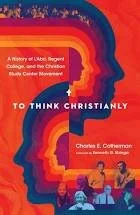
Another response to the crisis of education, however, was the creation of parachurch institutions that often ran parallel to other educational institutions with the express goal of helping Christians think about all of life from a distinctly Christian perspective. Charles Cotherman’s recent book, To Think Christianly: A History of L’Abri, Regent College, and the Christian Study Center Movement, presents an engaging account of how that parallel movement rose and has flourished.

L’Abri, of course, was the home of Francis and Edith Schaeffer in the Swiss Alps. They founded “The Shelter” as a place to ask hard questions and provide answers from an orthodox Christian perspective. That faith community grew over a period of years, primarily through word of mouth, until it became a pilgrimage for seekers, skeptics, and Christians seeking to find how to live out their faith. The Schaeffers provided hospitality for many, the gospel for all, and a safe place to seek answers in God’s world. L’Abri was a first of its kind community, which is why Thinking Christianly considers that project in the first chapter.

Chapter Two moves to a history of Regent College, which came chronologically after L’Abri and shared some themes, but was intended to bring a Christian element to other non-ministerial degrees. Cotherman details the origins of Regent College as an affiliate institution to a Canadian university. James Houston was the founder of Regent College and, indeed a significant figure within the Christian Study Center movement, which this book discusses. The informal L’Abri model of lay-training and the more formal Regent College model remain the two major options for bringing theological teaching to a broad audience.

In Chapters Three through Six Cotherman looks at four particularly Christian Study centers that tried to replicate either L’Abri or Regent College. The C. S. Lewis Institute  was originally an attempt to found a Regent like institution, but shifted to a more informal study center that exists and continues to attempt to help working professionals in multiple large metro areas integrate their faith, work and life. The Ligonier study center was very L’Abri-like when it was founded by R. C. Sproul in Western Pennsylvania. It was small, residential, and community oriented. However, the shift from audio tapes to videos drew Ligonier to shift its model, move to Florida, and focus less on community-based instruction. In California, an attempt was made to provide some discipleship in a study-center in Northern California. The center still exists near the University of California Berkeley as a Center of Distinction of the Graduate Theological Union, which has continued its existence but allowed it to chart a different path than the first two centers. Similarly, the Center for Christian Study near the University of Virginia functions to help seekers understand Christianity and Christians to integrate their studies with their Christianity. Each of these four centers looks different, but each is attempting to show how faith is consistent with and can strengthen studies in another area.

images (4).jpg

The final chapter deals with the Consortium of Christian Study Centers, which exists to encourage entities like the six discussed in the book to start, maintain, and grow. Spawned out of the same movement, this is an attempt to bring discipleship to many people who might otherwise struggle to find meaningful Christian engagement with their lives.

As storm clouds continue to gather over accreditation of orthodox Christian institutions, especially those who seek to embody biblical Christian sexuality, Christian study centers may be an attractive option for future students. Some are residential, but many are simply physically located near a campus, allowing students access to resources and fellowship that can help put the pieces together in the fractured intellectual environment of the modern university. Christian study centers have the potential of helping to develop a Christian mind. While distinctly Christian institutions of higher education have a place and should continue to exist, even when social forces disbar them from accreditation, Christian study centers may be a way to help build disciples for future generations of nurses, doctors, engineers, and teachers in a cost-effective and deeply integrated manner.

For those interested in the life of the mind, the history of L’Abri and similar institutions, and parallel educational opportunities to universities, this is a very interesting volume. It is well researched, engaging and thorough. The book focuses excessively on whether or not institutions have promoted egalitarianism of ministerial function, which seems strange given the focus is not on ministry within the church but ministry in the world. Overall, the level of interest in this niche topic seems excessive, but does overly distract from an otherwise solid book. The beginning of the book is also much more interesting than the latter portion, as the emphasis on successor organizations that many people have never heard of seems both highly selective and, at times, too far into the weeds. That fact, which might discourage general readers somewhat, is likely to increase the academic value of this book that deals carefully with the history of institutions slightly off the beaten path.

Overall, this is a useful volume, particularly for those thinking into the future about ways to help bring unity to the cacophony of the modern university. As institutions grow increasingly hostile to Christian student organizations, an independent study center may be a strong path forward for both evangelism and discipleship.

NOTE: I received a gratis copy of this volume with no expectation of a positive review.