Why I like Westerns

I enjoy reading Westerns. In fact, when I have the opportunity (or make the opportunity) to read for pleasure, it’s often to either a British mystery or a Western. In particular, I’m fond of Louis L’Amour. I blame this in part on the uncle that introduced me to L’Amour when I was a teenager. However, my appreciation of a good, clean Western is deeper than that.

It wouldn’t be worth being a theologian if I didn’t try to dissect ideas that others would simply enjoy. So, I will try to explain why I like Westerns. I think there are at least three reasons.

Three Reasons I Like Westerns

There is an escapist quality to Westerns. They are realistic, but they are set in a time and place remote from where I live. Since I reside in North Carolina, the canyons, deserts, and mountains of L’Amour’s novels allow me to get out of the four walls of my house in the wilderness or the untamed towns of a previous century.

Instead of thinking about the dissertation I should be writing, the work that is waiting, or the current political turmoil, Westerns allow me to witness a life and death struggle without the perils of actually being stampeded, shot, or hanged. Additionally, since the drama tends to be much more exciting than hunting for typos in a manuscript, the stories are more interesting than my daily life.
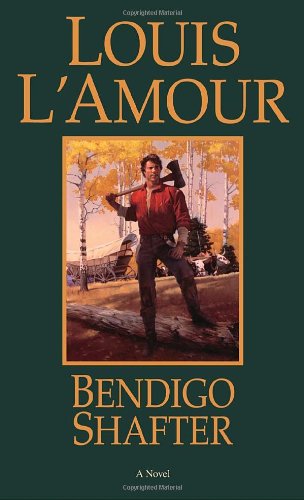
The second reason I like Westerns is that you can nearly always tell the good guys from the bad guys. Call me a simple, but I don’t like spending a hundred pages of a book trying to figure out if I should be rooting for the protagonist or wishing that the main character would get snuffed out by a vigilante.

No, give me a good, old fashioned white hat, black hat Western where you can honestly like the good guys and dislike the bad guys. L’Amour’s heroes aren’t perfect, which makes them a bit more relatable than some others. However, the bad guys are always selfish, arrogant, dirty, murdering, and dishonest. Some hold this simple dualistic perspective against Westerns, but I think it makes the genre more enjoyable. If I wanted to deal with complex emotions I’d watch a day-time talk show.

The third reason I like Westerns is that the guy nearly always gets the girl. This is where the closet romantic in comes out. Again, there isn’t a lot of drama and introspection about liking and not liking someone. Instead you get attraction, mutual admiration, and sometimes conflict. You know, the usual.

L’Amour’s stories are enjoyable because there is usually a strong female lead to complement the male lead. In a few books, the protagonist is a female. Without demolishing all types, the simplicity of romance in Westerns allows for a clean, healthy, enjoyable romance. In a world that seems to want every romance to be against type, the simplicity matters.

Conclusion

I don’t get a lot of time to read fiction, but I have a decent collection of L’Amour’s stories that I return to now and again. I’ve read some other authors, like Zane Grey, but I’ve never gotten into them. Much like my preference for reading Dorothy L. Sayers over Agatha Christie, I think this comes down to the slightly more complex characterization, while still keeping it light and fluffy.

For me, Westerns are an oasis in an otherwise rocky terrain. They allow me to be a hero without getting saddle sores. They entertain me and expand my world a little without sucking me dry emotionally. This is a good thing, I think.

A Few Things Happened at Acton University

Last week I spent four days in Grand Rapids, Michigan at Acton University. If you look for Acton University on the map you won’t find it because it is a conference, not a formal institution of higher education. However, the content is so broad and educational the creators began to call it a university.

 Acton Institute is a think tank and non-profit organization that exists “to promote a free and virtuous society characterized by individual liberty and sustained by religious principles.” They are known as free market advocates, but there is a lot more to it than that.

 The ethos is profoundly Christian, but also wholesomely ecumenical. By that I mean that the experience is ecumenical in that we were talking about our differences and enriching our common faith without negating the real, and sometimes deep, differences in our understandings of the Eucharist, role of clergy, and polity. These differences remain, but an authentic dialog between Catholics, Eastern Orthodox, and various stripes of Protestants (including a significant Baptist contingent) was made possible due to a commitment not to be contentious about the faith and a common interest in the topic at hand.

 The conference is interdenominational, intergenerational, intercultural, and interdisciplinary.

 One example of this was the informative discussion I had with an Orthodox priest about Alexander Solzhenitsyn. There were many points of difference, but I came away with a deepened perspective on the Russian Orthodox author. Of course, there were points where there was a lack of understanding as one Roman Catholic presenter noted that Catholics have the Nicene Creed while the Presbyterians have the Westminster Confession. The fundamental error in his statement went unnoticed by many, but I saw a number of folks shift uneasily as they decided to let it pass. The intent was good, so the conversation continued.

 One night I sat at supper with the president of a private, classical school in Chicago. We had a great discussion on transitioning into classical education from conventional schooling. We also talked about environmental ethics, alternative energy, and the quality of the food. He is a retired journalist, so he shared some of his reporting experience, which spanned several decades. Another night I had a long conversation with a retired efficiency expert who had consulted with companies throughout the world. He was Dutch, but had recently become an American citizen.

 Another night, I shared a table with some Nigerian pastors. They were amazed that we Americans could eat meat every night and cheesecake, too. Then, the bespectacled pastor asked me how he could get a pair of rimless glasses like mine, so we explored the wonders of online optical stores on a smartphone. His phone was nicer than mine. This was an international experience.

 Then there were philosophers, historians, lawyers, engineers, housewives, pastors, firemen, soldiers, butchers, bakers, and candlestick makers. Actually, I didn’t see any of the last three, but they may have been there. It was a profoundly interdisciplinary event.

 The highlights of the meeting was getting to meet Michael Novak, a well-known economist. Actually, I think the high point was when he asked me to get him some potato chips from the lunch line, but I’ll let you judge for yourself.

 The best lecture I went to was by Peter Kreeft. The formerly Evangelical, now Catholic philosopher from Boston College. He is an expert on Aquinas and the Inklings. His talk on Truth, Beauty and Goodness in C.S. Lewis was true, beautiful and good on its own. It was a pleasure to hear him masterfully unfold his topic and answer questions with such depth, breadth, and clarity.

 There were amazing conversations wherever you turned. People were talking about poverty alleviation efforts in their local cities, starting businesses, and funding charities. There was a fermenting energy bursting from every corner. It really is a wonderful thing.

 Everywhere capitalists, yet everywhere there was concern for human dignity and the rule of law. There is an energy in the movement. A synergistic momentum that propels attendees out of the meeting looking for a hill to take and a person to help.

 If you have a chance, you should go. It's an exciting place to meet people and consider future possibilities, and you never know where the road might take you.

"Where Are We Going?" not "Where Are We Now?"

Sometimes at conferences or even in sermons, it’s the throwaway lines that pack the most punch.

In a discussion on the nature of social justice, particularly how it has been reinterpreted and changed from its original purpose, Michael Novak made an interesting comment.

He said, “When people’s life expectancy was only into their 20’s, ‘Til death do us part’ meant something significantly different than it does now.”

In one sense this is untrue, because at the heart of it, the marriage vow has always been a lifelong commitment. There was always an intended permanence. However, at the next level in the comment, which is where I think Novak intended the audience to go, there is a meaty truth worth chewing on.

Commitment to marriage for life is something different when you only expect to live for another decade than it is if you expect to live for another sixty years. Or, rather, the nature of what is being committed to is different.

Without deconstructing marriage in this discussion, which others are doing apart quickly and violently enough, it is worth considering if some of the unraveling of marriages within the church isn’t due to a slow change in teaching about the significance of marriage.

In other words, it is one thing to commit to live with someone you don’t get along with for a decade. It is another thing to commit to deal with another person’s idiosyncrasies for three times the time you’ve been alive. I'm not sure the teaching of the church on marriage kept up with the reality of life.

The way you think about marriage, enter into marriage, and live as a married person changes based on that expectation. The difference is much like the way you pack for a weekend getaway instead of a two week vacation. There is a lot more preparation for one than the other.

Pulling back from the specific issue of marriage, this brings up the way the Church uses data and adapts the way she teaches to the changing world around her. The doctrines do not change, but the way they are expressed certainly must to keep up with the changing landscape.

This is where, as a smart aleck young evangelical, I am tempted to point out how the Church is always reactionary. But, I am part of that reaction, continually lagging behind the culture hoping to find a way to communicate within it.

When the Church, which includes me, fails to find new ways to apply old truths, we leave people to fill in the gaps on their own. God is good and Scripture accessible, but sometimes the result of such independent development isn’t good.

Instead of reading into the sign of the times, looking for where we are right now, we need to be looking for where we are going. We may be wrong, but only if we lead people to think about a way forward can we hope to have them adequately prepared for today.

Image used by CC license: http://ow.ly/OvOcL Thinking....[Explored] Ricardo Cuppini

Some Thoughts on Scripture, Theology, and Climate

It doesn’t matter if the issue is economics, the environment, human sexuality, or liturgy, when we ask what the Bible says about a topic we need to asking the question of the Bible. We should not try to construct our preconceived notions out of biblical material.

For some, this is an obvious statement, but as I read theology texts and Christianesque articles on various issues from all angles, I consistently get frustrated with the authors’ well-meaning attempts at eisegesis. It is especially frustrating to someone, like me, who views Scripture as the final norm in all matters of life and faith to fight  through an attempt to contort the text to fit their perspective.

Theology and Climate Change

One recent example is a book on Systematic Theology and climate change. Recognizing that climate change is a big deal, and that I expect Pope Francis to affirm anthropogenic climate change in his forthcoming encyclical, I am still puzzling over the approach of this book.

Scripture affirms an earth-positive ethics. That is, an environmental ethics can be built that has strong support from Scripture. What Scripture doesn’t help us with is the particulars about the data that relates to climate change or what to do about it.

This is something we are going to have to watch for in the near future, as the forthcoming papal encyclical encourages growing concern for the environment. We need to be more concerned with the environment than we are. However, we also need to balance our method of response to environmental concerns so that we do not ignore our responsibility to care for the poor, advance medical technologies, and advocate for the life of the unborn.

In other words, not everything that comes under the mantle of environmentalism can be matched up with Christianity. This is true despite the fact that we can develop a thoroughgoing environmental ethics from Scripture.

More particularly, we cannot blindly jump onto a policy bandwagon when issues like climate change come into play, even if they are entirely human caused. There are elements in the platform of many climate policy advocacy groups that don’t match a Christian worldview. We need to navigate these waters very carefully.

Challenges for Contemporary Theologians

This is what makes trying to derive a theology of climate change from Scripture. The Bible doesn’t actually say anything about the specific nature of climate change. Therefore, any theology that deals specifically with climate change will have several layers of interpretation between the text and the theology.

There is nothing wrong with applying a biblical worldview to contemporary issues. In fact, I am an avid proponent of this. However, we must do so with care so that the issue does not overshadow the text. In other words, we cannot backfit a theological paradigm to our sense of justice.

Backfitting is exactly what some theologians are doing when they construct their paradigms. They build the foundation under the existing problem.

The answer to the problem, though, isn’t to stop talking about the problem. It’s to come at it the other direction. Scripture is sufficient for every question about doctrine and life. This doesn’t mean that there is a verse in Scripture to answer every question someone can ask. We shouldn’t try to make the Bible be any more exact than it is.

Instead, this means that Scripture has the information we need to construct a worldview that will allow us to receive and apply truth that comes from the world around us. God created the world in an orderly fashion, thus all truth is God’s truth.

The main idea, then, is that we need to be cautious when we claim something as a Christian position. If we do, then it really ought to be built on a carefully formulated framework derived from Scripture. After all, that is the revelation God gave us and by which we claim to judge all ideas.

Photo credit: Bible, by Adam Dimmick. Used by permission. http://ow.ly/OqNhh 

Lessons Learned from My Comprehensive Exam

I recently passed the comprehensive examination for my PhD in Theological Studies. The moment of elation is gone now, replaced by the anticipation of the approval of my dissertation prospectus and the official beginning of the biggest writing project I have ever taken on.

What is a comprehensive exam?

For those unaware, American doctoral programs are different from those in Europe and other nations. Since we are box checkers, Americans tend to like discernible benchmarks and quantifiable progress checks.

We, therefore, have seminars or courses for our doctoral programs. (There are certainly exceptions to this with American programs that use a more typically European model, but I will generalize for the sake of simplicity). This allows a neatly compartmentalized program of study with easy to measure milestones.

At the end of coursework comes an exam. At some point every student says to himself, “This is the last test I’m ever going to take.” In reality that just isn’t so. At least not on this side of the Atlantic. We keep testing until there’s nothing left to test.

Southeastern's version of the Exam

The comprehensive exam takes different forms at different schools. Often there are differences even among programs within the same school.

My exam consisted of two parts: a written section and an oral section.

The written portion of the exam was six hours long with four essay questions. Two of the questions were two hours long and the others were one hour long. I sat at a computer in a little conference room one day a few weeks ago and wrote for six hours on one day with a one hour break for lunch.

After spending four years in the program, six hours seems like too little to demonstrate mastery of my subject. However, at several points during the day of typing my hands queried me if we weren’t done yet and could we have a break. In fact, due to the poor ergonomic arrangement of the computer (the chair is low, the desk is high, and the keyboard continually slides away from the tester) I lost feeling in my left hand and could only type with a finger until blood flow returned and normal typing could resume.

At the end of the day I produced about 14,000 words and my eyes were a little blurry. However, I survived.

The oral examination

Then began the waiting. My oral exam was scheduled for a little over a week after my written exam to allow time for the committee to grade the written product. I spent that hoping that what I wrote was cogent, if not complete in nature.

About a week later, it was time for the second portion of the exam. This consists of three faculty whose expertise is related to your subject matter asking questions about points from your written examination and looking for holes in your knowledge.

Like any good oral examination, this portion of the comprehensive exam is designed to find weak areas, to explore the extent of your understanding, and to see how you react when you don’t know the answer. After all, there is no way for a student to know more about every possible rabbit trail in a subject than the three examiners.

The interview process in this exam is challenging, but it is generally a collegial experience. The examiners are looking to test, but not destroy your confidence. By the time you get to that point, if there is a question about your overall competence it should have surfaced on the written portion of the exam.

One of the difficulties with the oral portion of the exam is discerning what question is being asked. It is much easier (though by no means easy) to write out a question that gets at what you want to know. In the oral exam it is sometimes a challenge to understand what the interviewer is looking for.

In any event, I survived. I am thankful for that. Now I just have to write a dissertation. No big deal, right?

Some Lessons Learned

  1. Begin preparing for your comprehensive exam from the first course you take. Some of my notes were helpful, some could have been more helpful. I found that even inadequate notes from earlier seminars jogged my memory and helped me study.
     
  2. Read broadly during your course of study. My subject matter is narrowly Christian ethics, I benefited significantly from reading deeply in that field. However, I was asked a question about value theory, too. Fortunately I was in the midst of a book on the subject and could address this tangential question with alacrity. Additionally, I benefited from the numerous books I read that did not apply directly to my subject area. They provided illustrations during my oral exam and moments where I wasn’t searching for specific factual information. Also, reading broadly is just fun.
     
  3. Practice the written exam. One of the most helpful things I did was create a series of written questions and practice writing essays in response. None of the essay questions exactly matched my anticipated formulations, but the process of both inventing potential questions and writing structured responses in a timed environment helped me find my own weaknesses and sharpen my arguments.
     
  4. Scope out your committee. Here at Southeastern, I work closely with the three examiners on my committee. Therefore it was fairly easy to figure out the trajectory of potential follow up questions. I also tracked down recent syllabi and course offerings from the committee so that I could see what they might have been lecturing on or reading with a class most recently. As a result, I picked up a book on virtue ethics (a favorite topic with one of the committee members) and read it the week before the exam. That came in handy.
     
  5. Try to schedule the exam to your advantage. I intentionally worked to schedule my exam for the period shortly after the spring semester ended. Why? Because that is the period of time when the committee has graded a large volume of papers, turned in their grades, and is longing to get on with their summer activities. As tired as I was from preparation for the exam, the committee was tired from the end of semester flurry of activities. This presents a strategic advantage for the examinee, since you are more likely to get the benefit of the doubt in grading. Note: Don’t tell anyone in advance that this is why you are trying to schedule your exam at a particular time.
  6. Take the exam. Many of my peers seem to live in fear of the comprehensive exam. I will attest to the fact it is a stressful event and should not be treated lightly. On the other hand, sometimes students tend to be perfectionists and work too hard to learn everything before the exam. News flash: You can’t know everything. Work hard, prepare well, take the exam before you feel completely ready. There will always be more books and articles to read. Everyone knows this. In the words of Larry the Cable Guy, “Get ‘er done.”

Wildlife in the Kingdom Come

If there is one thing most theologians are in need of it is a good laugh. After hours of poring over the sometimes terrible writing and convoluted thoughts of people we are generally in disagreement with, a little levity would seem to be a welcome thing.

I was pleased to be introduced to an old, humorous book a few months ago by Bruce Ashford. He credits Paige Patterson with bringing him to the font of amusement. Personally, I don’t care how it got to me. I just think it’s funny.

The book is Wildlife in the Kingdom Come: An Explorer Looks at the Critters and Creatures of the Theological Kingdom. It was written (and illustrated) by Ken C. Johnson and John H. Coe. Cast your memory back to the 1980’s and you may remember seeing Ken Johnson’s name as the creator and writer of McGee and Me! Or, more recently, from his work with Adventures in Odyssey. John H. Coe is actually a trained theologian who is at Biola and, amazingly, actually lists this book on his faculty page.

Wildlife in the Kingdom Come contains several dozen brief discussions of theological movements or elements of theology and a representative drawing. It is very tongue in cheek. It also leaves no theological movement protected, making fun of theologians of every stripe. The footnotes are humorous, too, citing authors such as Clark P. Nock and R. C. Sprawl.

Most of the humor is not highbrow. It relies on puns, caricatures and stereotypes. Of course, if the punchlines were too sophisticated it wouldn’t be nearly as fun to read. Who wants to work to get a chortle, anyway?

Some Quotes

I’ll give five quotes to provide a taste of the book:

“Long ago in an age when the primitive shores of the Textual Critic Coastlands were forming, a fierce and tyrannical giant roamed the earth, the terrible Textus Receptus (TR). Rising from the Erasmus Manuscript Marshes, the TR ruled these lands particularly during the Jurassic Era of King James.”

“Anyone wishing to explore the theological kingdom will inevitably encounter the Problem Passage. This terrifying creature roams the Theological Hillsides and creates extremely difficult going for the would-be traveler. By positioning himself stubbornly on the explorer’s path, the Problem Passage impeded any attempt to forge a trail toward a complete theological system.”

“In the heartland of the Teaching Timberlands that border the Pulpit Prairies thrives the ever-stoic and staunch Expository Sermon. Though less daunting and spirited than his cousin, the Topical Sermon, this meticulous creature is an instinctive digger and a study in discipline.”

“Many centuries ago zealous (and at times, unbalanced) expeditions sought to rid the Great Primitivchuch Plains of a dreaded and poisonous parasite, the Heretic. Found throughout the theological lands, the Heretic is most fond of feeding off helpless hers of Unorthodox and Neoorthodox whose diet lacks any substantial dosages of doctrine of theological presuppositions. Although small and difficult to detect at first, the bite of this malicious little pest can have devastating results. As infection forms around the bite, schism and dissension spread throughout the body of the helpless victims. This condition ultimately gives way to such fatal diseases as Arianism, Modalism, Universalism, and the Ten-Percent Tithe.”

“By far the most beautiful and colorful of all the birds in the Moral Highgrounds is the proud Pelagian. This reigning king of pomp and splendor typically spreads his impeccably plumage for all to see. His feathered feat is usually an unabashed attempt to attract as many admirers as his flock can carry. So impressive is the sight that some have suggested that his brilliant display has a blinding affect [sic]  on the admirers of this unfallen fowl.”

Conclusion

The list goes on. There are pages of these punny quips and sidelong theological references throughout. As a student of theology, I have guffawed, wheezed, snorted, and cackled at some of the jokes. My family things I’m crazy anyway, so that makes no difference.

The biggest downside of this book is that it is out of print. However, I still commend it because there are relatively inexpensive copies available used through Amazon. Trust me, theological friends, this is worth your money. It’s a skinny book, too, so it won’t be that much more weight the next time you move.

Lewis, Tolkien and the Shadow of Evil - A Review

If you’re like me, finding a grocery list written by J.R.R. Tolkien or C.S. Lewis would be a treat and make for enthralling reading. Therefore, I suppose it comes as little surprise that I enjoyed the recent book by Colin Duriez, Bedeviled: Lewis, Tolkien and the Shadow of Evil.

This book is a literary analysis that traces the theme of evil through the major works of both men, weaving through Middle Earth, Narnia and more. As an expert in the study of the Inklings, the informal club of scholars Tolkien and Lewis belonged to, Duriez demonstrates mastery of both the literature and the history of the two men.

Summary

The book is divided evenly into two parts. Part 1 focuses on the influence of the wars on the perception of evil. Although Tolkien resisted reading his works allegorically, there can be little down that his experience in World War I was influential in his work. The same is true for Lewis. The horrors of World War I, which both men experienced firsthand, including life in the trenches and being wounded, could not help but increase their understanding of suffering. This particularly since the so-called War to End All Wars was senseless in its cause and its manner.

Part Two deals with the intersection between good and evil. In particular, Duriez maps out ways that goodness overcomes sin and temptation, leads to change, and shines through with joy despite the pain of the present world. These themes are apparent in Tolkien’s Leaf by Niggle and literature of Middle Earth. They are also constantly brought to mind in most of Lewis’ works.

Analysis

Considering just the two most famous fictional works of both men, The Lord of the Rings and the seven part Chronicles of Narnia, there is a progression from a fallen state toward heavenly redemption in both works. In fact, by including all of Tolkien’s Middle Earth works and taking the Narnia sequence in chronological order with The Magician’s Nephew at the beginning, the movement through the pattern of creation, fall, and redemption is quite obvious.

What Duriez makes clear in his analysis is that there is a true, biblical notion of good and evil behind the fictional webs created by two Oxford dons. In fact, both the Roman Catholic, Tolkien, and his Anglo-Catholic friend, Lewis, were rather Augustinian in their approach to evil. That is, evil was not a thing in and of itself, it was the deprivation of goodness. This is most clearly seen in Tolkien’s descriptions of orc as twisted elves, and not a new creation. Evil is inherently non-creative, it mocks by copying but it does not make.

This perception of evil, then, shapes the way the two men view the proper response to evil. Both men questioned the widespread bombing of civilians during World War II because the optimal response to evil is not to destroy it, but to reform it. And, as they both show in their literature, there is hope for redemption. Evil will one day be beaten back and the good will win.

One of the more helpful aspects of Duriez’s book is his work on The Great Divorce. Lewis’ account of the journey of some people from Hell to Heaven often leads to questions about Lewis’ view of the eternal state and the possibility for redemption after death. Duriez helps to resist that criticism as he points out that it was not Lewis’ intention to create a work of theology that represents the way things will be after death. Rather in The Great Divorce Lewis is delving into the human psyche to show how strong the tentacles of sin are wrapped around the self, keeping people from accepting redemption even when it can be seen in its fullness.

Duriez shows how both authors presented an accurate image of the world and pointed people toward faith and hope instead of despair. The work of Lewis and Tolkien continues to be popular largely because of the realism behind the fantasy, which culminates in the eschatological victory of good over evil. Their stories, and Lewis’ apologetic work, point toward something that is great, gracious and desirable.

Conclusion

This is an enjoyable piece of scholarship. Duriez’ love for the subject comes through in every page and his vibrant prose make reading this a real joy for those that are fans of the Inklings. For those that are literary minded, this would be a good way to be introduced to or deepen appreciation for two of the greatest English authors of the Twentieth Century. For those less interested in literary analysis, this is still an enjoyable read because so much of what Tolkien and Lewis wrote about still helps to explain the human condition in our contemporary times.

Note: A gratis copy of this volume was provided by the publisher with no expectation of a positive review.

Editor's Note: This post has been modified to note the concerns of Aaron Earls (@wardrobedoor) about whether the chronological reading of the Chronicles of Narnia is, in fact, in accordance with Lewis' preference. His discussion of the concept can be found here: http://ow.ly/NSPh7 

Trevin Wax (@TrevinWax) has previously addressed the order of reading as well: http://ow.ly/NSPh7 

Guy on a Buffalo

Sometimes the internet is the bane of human existence, demonstrating how low we as a race have stooped. Meme's relating to the defense of Brittany Spears' public breakdowns, grumpy cat pictures, and defiant babies keep our social media news-feeds full. The occasional misquote of Abraham Lincoln gets thrown in just to keep us on our toes.

Still, there have been few items of high culture shared with the internet population. Of those few items of high brow culture, there are none to rival the "Guy on a Buffalo" videos that came out a few years ago.

I've embedded each of the five videos below for your viewing pleasure. Also, this makes for a quick way to find them again in the future. They are really worth watching repeatedly, much like fine movies such as "The Princess Bride" and "The Three Amigos." I might throw "Goonies" into that mix, too, though something really was lost when the octopus scene didn't make it through the final cut.

In any case, if you missed Guy on a Buffalo years ago I will explain the basic premise to you. First, there is a guy who rides a buffalo. Then a folksy singer provides a musical narration of the events in the short videos. Guy on a Buffalo gets chased by a bear, chases a bear, finds a baby, wrestles a cougar and such like.

I've heard these are authentic videos from early nineteenth century American frontier life, which truly represent how things were. They are, according to some, authentic representations of historical realities known only to some that are experiencing lasting effects of 1970's drug usage. (cough, cough)

Whatever your understanding of their historicity, I hope you find these videos entertaining and will share them with your friends. As a caution, don't consume any beverages while watching these videos, unless you are prepared to have it come out your nose.

The gripping first episode of "Guy on A Buffalo." The "guy" battles a bear and a mean-spirited Indian (Native American). Original music and narration by Jomo. http://www.thepossumposse.com EPISODE 2: http://www.youtube.com/watch?v=v5Lmkm5EF5E Get the NEW game for iPhone! https://itunes.apple.com/us/app/guy-on-a-magic-buffalo/id872395169?mt=8 Get the Soundboard App for iPhone! http://itunes.apple.com/us/app/buffalo-sounds-guy-on-buffalo/id471049475?mt=8 Video and story adapted from the now-residing-in-the-public-domain film from 1978 - Buffalo Rider.

The highly anticipated second episode of "Guy on A Buffalo." The "guy" discovers a human and tag-teams some predators with the buffalo. Original music and narration by Jomo. http://www.thepossumposse.com EPISODE 3: http://www.youtube.com/watch?v=L55dKrjxcCY Get the NEW game for iPhone! https://itunes.apple.com/us/app/guy-on-a-magic-buffalo/id872395169?mt=8 Get the Soundboard App for iPhone!

The moving and slightly aggressively-anticipated 3rd episode of "Guy On A Buffalo." The "guy" discovers and trains the buffalo and encounters some buffalo hunters. Original music and narration by Jomo of The Possum Posse. http://www.thepossumposse.com EPISODE 4:http://www.youtube.com/watch?v=WXtpNm_a4Us Get the NEW game for iPhone! https://itunes.apple.com/us/app/guy-on-a-magic-buffalo/id872395169?mt=8 Get the Soundboard App for iPhone!

The moving, extended final episode of "Guy on A Buffalo." The "guy" battles a mean case of gunshot wound, and exacts revenge on various people who have tried to kill him. Original music and narration by Jomo. http://www.thepossumposse.com Get the NEW game for iPhone! https://itunes.apple.com/us/app/guy-on-a-magic-buffalo/id872395169?mt=8 Get the Soundboard App for iPhone!

Contrary to my tongue in cheek comments above, these edited videos with the humorous songs over the top are made from a 1978 movie called "Buffalo Rider." The premise that a man rescues a buffalo that was going to be eaten by coyotes, raises it and tames it. The movie has, apparently, passed into the public domain. It has made its way to the Internet Archive, a repository for much of our cultural sludge.

The movie itself is poorly made, relies on a narrator, and appears to have actually harmed animals in the making. (This last is really not a good thing.) That being said, the movie is made and I post it here more so you can see where the humorous videos above came from than with hope that anyone will celebrate anything about the original film (which is awful based on the 15 minutes that I was able to watch). 

Here is a link to the original movie at the Internet Archive.

Memorial Day

According to many, today is the beginning of the summer season. It marks the time when many people break out white shoes, begin grilling in earnest, and generally celebrate the changing seasons. For many people, the most significant thing about this weekend is that they get an extra day off.

For Memorial Day, by Storm Crypt. Used by CC license: http://ow.ly/NmW3Y

For Memorial Day, by Storm Crypt. Used by CC license: http://ow.ly/NmW3Y

That isn’t the point of Memorial Day. The holiday was originally invented as Decoration Day, a day to honor the many dead of the American Civil War by decorating their graves. After the devastation of Work War I, it was renamed Memorial Day and was shifted to honoring all American dead from all wars.

 This is the point in Memorial Day. The point is honoring the sacrifice of those who died in the service of the country. Thus, “happy Memorial Day” is something that should not be said.

 In many churches, the Sunday before Memorial Day is a time where churches publicly honor those who have served. Often they restructure their services toward patriotic themes and some sort of recognition of the holiday. In general, I am not a fan of this approach because I think it lends itself to blending Christianity with our political loyalties and risks forming, or giving the impression of, a sort of civil religion. While I am not opposed to using a portion of the service in a prayer of gratitude, it would be hard to preach an expositional sermon that is truly patriotic in theme. Additionally, singing traditionally patriotic-themed songs in church tends to point people’s minds outward instead of upward. I think there are better ways we can be faithful citizens than incorporating such elements into our services.

 However, it is another thing for Christians to participate in Memorial Day services. In reality, we have much to be thankful for. Especially as we remember the men and women who have served our country and died in that service. Although our nation is far from perfect, we do still have freedom to gather for worship together and, for the most part, to live out the convictions of our religious beliefs. Additionally, we have a degree of physical safety even today because men and women have been willing to die in service of their country.

 In short, while some people go to Memorial Day services to honor the dead through a form of civil religion, it is entirely appropriate, in my mind, to go to a community gathering to express thanksgiving to the One True God for his faithfulness and provision through those who died in our nation’s service. This isn’t syncretism; it’s community. There will be parts of the ceremony that will be more or less consistent with my worldview, but that’s okay. This is not an expression of my faith in particular, but of community remembrance.

 Additionally, this is an opportunity to illustrate to our children the cost of war. Armed conflict isn’t just a game or an adventure. When there is discussion of sending troops in to stabilize a region or as retribution, we should recognize the hellish cost of war and think many times over, counting the cost. War is hell. War is always the result of someone’s sin. War costs many people everything they have in this life and even those that return home safely often pay a steep price.

Solemnizing this day publicly teaches children something important, and can instill a sense of the deep tragedy of human sin.

My disappointment this year is that there isn't a ceremony at the local veteran's memorial, but we'll probably pass that way anyway to pay our respects.

 I hope you have an enjoyable Memorial Day. May you be productive, get a nap, and take pleasure in having time with your family. However, I hope you also take some time to contemplate what exactly is being memorialized on this day. I also hope you will pray for the coming time when such days of memorial will be no more, when suffering is at an end.

Comprehensive Exams

Used by Creative Commons license from Alberto G. http://ow.ly/MZjw6 

Used by Creative Commons license from Alberto G. http://ow.ly/MZjw6 

Today I am taking my written comprehensive exams for the PhD at Southeastern Baptist Theological Seminary. For this program it consists of six hours at a computer typing four essays on different topics.

However, this experience and the preparation for it (the most intense parts of which always get pushed later than they should) remind me of my comprehensive for Nuclear Power School.

 The experience of taking an exam that covered Chemistry, Material Science, Systems, Reactor Theory, and several other topics was nerve wracking for all of us at 21 or 22 years of age. It seemed to us, much like Harold Abrahams in Chariots of Fire, we had a short time to justify our existences.

 The pressures of comprehensive exams were apparent to many, which resulted in one of the few officially sanctioned jokes in Naval Nuclear Power. In one of the official publications of Naval Reactors, someone inserted a sample “final exam” from Nuclear Power School.

 This has bounced around the web, so I can’t promise this is word for word what is in the NRTB, but this is certainly representative.

 If you have four hours, go ahead and give the exam a try. Or, at least think of me today trying to summarize my knowledge of Christian Ethics in 6 short hours.

Final Exam - Naval Nuclear Power School

INSTRUCTIONS: Read each question carefully. Answer all questions. Time limit: 4 hours. Begin immediately.

HISTORY: Describe the history of the papacy from its origins to the present day, concentrating especially, but not exclusively, on its social, political, economic, religious, and philosophical impact on Europe, Asia, America, and Africa. Be brief, concise, and specific.

MEDICINE: You have been provided with a razor blade, a piece of gauze and a bottle of scotch. Remove your appendix. Do not suture until your work has been inspected. You have fifteen minutes.

PUBLIC SPEAKING: 2500 riot-crazed aborigines are storming the classroom. Calm them. You may use any ancient language except Latin or Greek.

BIOLOGY: Create life. Estimate the differences in subsequent human culture if this form of life had developed 500 million years earlier, with special attention to it probable effect on the English parliamentary system. Prove your thesis.

MUSIC: Write a piano concerto. Orchestrate and perform it with a flute and drum. You will find a piano under your seat.

PSYCHOLOGY: Based on your knowledge of their works, evaluate the emotional stability, degree of adjustment, and repressed frustrations of each of the following: Alexander of Aphrodisias, Rameses II, Gregory of Nicaea, and Hammurabi. Support your evaluation with quotations from each man's work, making appropriate references. It is not necessary to translate.

SOCIOLOGY: Estimate the sociological problems which might accompany the end of the world. Construct an experiment to test your theory.

ENGINEERING: The disassembled parts of a high- powered rifle have been placed on your desk. You will also find an instruction manual, printed in Swahili. In 10 minutes a hungry Bengal tiger will be admitted to the room. Take whatever action you feel appropriate. Be prepared to justify your decision.

ECONOMICS: Develop a realistic plan for refinancing the national debt. Trace the possible effects of your plan in the following areas: Cubism, the Donatist controversy, the wave theory of light. Outline a method from all possible points of view, as demonstrated in your answer to the last question.

POLITICAL SCIENCE: There is a red telephone on the desk beside you. Start World War III. Report at length on its socio- political effects, if any.

EPISTEMOLOGY: Take a position for or against truth. Prove the validity of your stand.

PHYSICS: Explain the nature of matter. Include in your answer an evaluation of the impact of the development of mathematics on science.

PHILOSOPHY: Sketch the development of human thought, estimate its significance. Compare with the development of any other kind of thought.

GENERAL KNOWLEDGE: Describe in detail. Be objective and specific.

If you finish early turn your paper in at the table at the front of the room.