Part of Our Lives - A Review

What does your public library mean to you?

For many people, having a library card is an essential part of being a citizen. Being able to check out books independently as a child is a rite of passage that marks the coming of age.

Wayne Wiegand, sometimes referred to as the “Dean of library historians,” addresses both the political and social significance of public libraries in his recent book, Part of our Lives: A People’s History of the American Public Library.

While the subtitle indicates this is a people’s history, this is a volume more suitable for the scholar than the average reader. Wiegand’s prose is clear but dense. At times the pace bogs down in details and dates. This is a history of the people’s use of the public library rather than a history written primarily for the people that use it.

Summary

The book moves through the history of public libraries in the United States in ten chapters. Wiegand begins with the various forms of libraries, most of which were not free and available to citizens, during the colonial through early American era. He then transitions through consecutive periods in library history. In 1854 the first public library opened in Boston, then in 1876 the country celebrated its centennial. Wiegand marks the 1893 Chicago World Fair as a significant event, then he identifies the US entry into World War I. These divisions form reasonable points of demarcation for Wiegand’s history, though they are not necessarily intuitive.

Wiegand uses a mixed methods approach to present the history of public libraries. He combines an amazing depth of anecdotal research with seemingly comprehensive statistical data to put forward a detailed picture of who has used the library and for what reason. Wiegand’s purpose in writing the book was to show how the library and social change have been related. The book is thorough and informative; it paints a clear picture of how public libraries have changed with American society throughout history.

Analysis

Throughout the volume Wiegand is critical of historical librarians for their handling of socially radical issues. It seems that he thinks that public libraries should be leading cultural change instead of responding to it. (Something government entities rarely, if ever, do.) However, at the same time, he critiques librarians for attempting to be cultural leaders through selecting some literature over others. Attempts to encourage higher rates non-fiction reading are frowned on, though Wiegand approves of attempts to liberalize sexual mores. The reluctance to accept the role of a public institution as reactive instead of cutting edge institution is consistent throughout. Wiegand addresses it toward the end of the volume, but his analysis of the reality of a publicly funded institution as lagging culture comes too late and does not reflect a fully-considered analysis of the history he is recounting.

A major theme in this work is the balance between selection and censorship by librarians. Wiegand documents the tension between attempts to meet the demands for decency and the free exploration of ideas. While there were certainly abuses, Wiegand seems to come down to heavily on those that were responding to the (at the time) reasonable demands from library patrons for some items to be kept out of reach of children. Still, his point about the lengths some librarians went to keep the wrong books out of certain hands is well-taken. There is a difference between taking measures to ensure age appropriate materials are available and blocking access to challenging ideas. At the same time, Wiegand seems to accept the restriction of Little Sambo while criticizing the censoring of sexually explicit books; it seems like the definition of censoring depends on whether the content meets contemporary societal standards.

Wiegand’s ideological musings could have been better developed and his perspective reflects a progressive bias. His development, exploration, and explanation of the history itself, however, is phenomenal. This is an outstanding piece of historical writing. Wiegand demonstrates an understanding of the subject matter that is the result of a lifetime of study. From that perspective this is a masterpiece that deserves to be read and should be a landmark work on this subject for years to come. I certainly have a greater appreciation of the public library system as a result of reading the volume.

Note: I received a gratis copy of this volume from the publisher with no expectation of a positive review.

Come Rain or Come Shine - A Review

I know I’m not the only male that likes Jan Karon's books. However, I anticipate that the gender balance is a bit skewed toward the female demographic for her work. In this case, I am glad to be included, even if I’m in the minority.

Jan Karon’s Mitford series continues in her latest book Come Rain or Come Shine with the same sort of winsome storytelling and positive outcomes that have made her a frequent best seller. This latest book, released in September 2015, focuses on the few weeks before Dooley and Lace finally get married.

The storyline has jumped ahead several years since last year’s volume, Somewhere Safe with Somebody Good. This is probably good, since  the slow progress of years of veterinary training and long distance relationship may have been a bit tedious. The engagement has lasted, Dooley is just graduating from Vet school, and the star-crossed lovers are about to get married.

In many ways, Come Rain or Come Shine parallels the storyline of A Common Life, which tells the story of the wedding of Father Tim and Cynthia. Like that story, Come Rain or Come Shine focuses on the lunacy that is native to a wedding season. Karon conveys the stress of arranging the myriad details mixed with the pressure of making a permanent, life altering decision.

The majority of the story is centered at Meadowgate Farm, which is near Mitford, but far enough away to avoid recounting the history of every one of the Mitford town folk. Unlike many of the other stories, this one is told through many voices and not primarily through Father Tim’s. This appears to be the passing of the torch from Father Tim to his adopted son, Dooley.

The Big Knot, as the wedding is called, is supposed to be a simple matter with just family and friends--a simple affair that is intimate, inexpensive, and memorable. As you might suspect, the storyline is filled with the never ending stream of decisions and details that seem to complicate even the best laid plans of brides and men. Anyone who has tried to execute a wedding, simple or otherwise, will predict many of the wrinkles that arise. However, Karon is able to tell the story well enough that predictability does not detract from the pleasure of reading. In fact, although the reader can anticipate the problems, Karon reveals solutions that are sometimes unexpected and enjoyable.

There are plenty of laughs along the way. A runaway bull threatens the wedding; Harley loses his teeth repeatedly; and some of the usual contrast between the sophisticated transplants to Mitford and the mountain born natives creates tension and highlights the foibles of each. Karon seems to be able to poke at all parties without creating a caricature or demeaning either culture.

This is largely a lighthearted story, though at its edges there is the drama that anyone who knows Mitford would expect. Pauline Leeper, mother to Dooley and others, still hasn’t been fully reconciled to her kids, though there is foreshadowing that it might happen in a future volume. However, this story doesn’t take on some of the major issues that many of Karon’s stories do. We see happy resolution to many of the problems from previous stories. Lace and Dooley are getting married. Sammy Barlowe is playing championship pool on cable television and keeping his nose clean. Father Tim is showing restraint and controlling his diabetes well.

This is an escapist romance. There is enough tension and a few twists and turns throughout that make it an enjoyable read. However, like Garrison Keillor’s Lake Wobegon stories, this tale keeps the largest issues of life at bay.

Is this high literature? No. But Karon does well in developing her characters and keeping the storyline moving. A gospel metanarrative is woven through the narrative as Karon gives readers what they long for: a happy ending despite all of the turmoil and trouble.

Come rain or come shine the wedding goes off, though certainly not without the number of hiccups that make such events memorable. The promise Karon leaves us with is that the relationship between Lace and Dooley will also continue, come rain or come shine. Hopefully Karon doesn’t make us wait too long to find out how it goes.

Note: A gratis copy of this volume was provided by the publisher with no expectation of a positive review.

From Nature to Creation - A Review

In his recent book, From Nature to Creation: A Christian Vision for Understanding and Loving our World, Norman Wirzba makes a case that much of the ecological degradation that has occurred and continues to occur due to a shift in the human relationship with the world around. His argument is that the shift from seeing the world as God’s creation to seeing it as mechanistic nature has allowed disregard for and utilitarian abuses of the environment to perpetuate.

Wirzba is Professor of Theology, Ecology and Agrarian Studies at Duke Divinity school. He is highly regarded among religious environmental ethicists for his expertise on this topic and his creative approach. This, no doubt, led to his inclusion in ongoing series from Baker Academic, “The Church and Postmodern Culture,” which seeks to engage timely topics in an incisive manner.

Summary

After an introduction, the book includes five chapters. Chapter One outlines the disassociation that many contemporary individuals feel from the world around. When Nietzsche declared God to be dead it reflected the attitude of many in the world, not simply the intelligentsia. However, when the concept of God faded from the forefront of society, so did the notion of an ordered creation. This allowed the value of nature to be reduced to its utility, whether aesthetic or functional. It also tended to accelerate the sense of separation that human had developed from the created order. The Enlightenment, as diverse as it was philosophically, had tended to treat the world mechanistically and humans as superior mechanism within it. This was accelerated by the so-called death of God, and this only increased the loss of a sense of place and order.

One response to the the rise of the idea of nature was a disassociation from it. A second was the idolization of nature, which Wirzba considers in his second chapter. In some interpretations, nature was viewed as a good in and itself and the preservation of it untrammeled by human hands an act of absolute necessity. On the hand, some idolized nature for the benefits they could extract from it. Modernity, according to Wirzba, resulted in the process of humans bestowing meaning to the world  instead of discovering meaning already in the world. This led to the ultimate idolatry, which is really worship of ourselves. Viewing the world as God’s creation prevents such a perversion.

In Chapter Three, the point is that creation must be perceived as it is and that the process of rightly interpreting the world around is a necessary part of the human experience. Disassociation from the world around, which has been encouraged by many forms of technology, clouds people’s perceptions. It is thus necessary for Christians in particular to seek to gain, as much as possible, God’s perception of the world and its value. By seeing the world as it is and as it is meant to be, the idolatrous turn can be reversed.

The fourth chapter details the importance of regaining a sense of our status as creatures. Perception helps to prevent the negative development of idolatrous attitudes, but humans are only situated in the world properly when they understand themselves as creatures made by God. In this chapter, Wirzba pushes for an agrarian understanding of the world, claiming that a greater connection with the soil is both biblical and vital to rightly understanding the world. He also ties the understanding of creatureliness into good eating habits, which are contemplative of the food eaten and the time, space, and community of the eating event. This sort of romantic solution to the environmental problems will resonate with hipsters and others who are pushing through the postmodern milieu. Whether it will truly help stem environmental degradation is another issue.

Finally, Chapter Five focuses on thankfulness as “the most fundamental and honest expression of what it means to be a human being, because it is here, in the thanksgiving act, that people appreciate and attempt to live into the knowledge that life is a gift.” (131) Wirzba blames a lack of gratitude on the use of money instead of trading. Currency increases the exactness of transactions, which thus leads to a sense of completion rather than open ended thankfulness. The reduction of the environment to its monetary value, as it sometimes is in cost benefit analyses, also reduces the notion that creation is a gift from God. Wirzba comes back again to the notion that gardening helps restore a sense of thankfulness for creation since, after all, the gardener can do nothing to actually grow the plants. An attitude of thankfulness is at the heart of a right understanding of the created order according to Wirzba.

Analysis and Conclusion

Although this volume is short on practical application, it is a fine text and conveys many ideas that are worth mulling. Wirzba’s diagnosis of the problem is especially astute. Environmental degradation occurs when there is a sense of disassociation from the creation. It’s just dirt. Or, it’s only a bird. That sort of mechanistic understanding undermines compassion for other living creatures and a theocentric vision for seeing God’s handiwork in all of creation. As such, this is a worthy contribution to the series and an important book to read.

However, there are points in the volume where Wirzba—who is an good scholar—gets sloppy. For example, he makes a bold assertion: “Many theologians believe bodies to be something that must be finally overcome and left behind.” (21) The trouble is that he cites none of them. In fact, I’ve been looking for someone to make that argument so that I can include it in my dissertation. The sad fact is the no orthodox theologian actually believes that.  I have been unable to uncover a single one, though I am hoping that I find someone. It may be a sentiment in the pews of some churches, but it is certainly not a belief that is widely believed by theologians.

In another place, Wirzba appears to misrepresent the atonement, which is no small criticism for a Christian volume.  He writes, “The reconciliation of all things in heaven and on earth that the Christ-hymn in Colossians describes happens through the blood of Christ’s cross, which means it happens through the self-offering life that Jesus demonstrated in his ministries of healing, feeding, exorcising, attending to, and touching others.” (24) He is exactly correct that the reconciliation of all things happens through Christ’s blood on the cross. He would have been correct to argue that the nature of that reconciliation was demonstrated or illustrated by the way Christ lived on earth. The context is talking about living on earth and not waiting to get plucked out of physical existence, but this passage makes it seem that Wirzba is moving the atonement from Christ's substitutionary death to his obedient life; both are  important, but the penalty for sin was paid in blood, not servitude. It may be that this is simply worded poorly, but the atonement is one area that clarity is worth every moment spent.

These problems are significant. However, they do not undermine the overall value of the volume. This is an important entry in an ongoing conversation and Wirzba’s argument of the importance of understanding the essence of creation as a gift from God carries significant weight. Thus this volume has a place in the library of those seeking a deeper understanding of the contemporary issues in Christian environmental ethics.

Note: A gratis copy of this volume was provided by the publisher with no expectation of a positive review.

Review of Evangelical Ethics: A Reader

The recent anthology, Evangelical Ethics, from Westminster John Knox Press seemed promising. There has been no such collection focusing on scholarship from Evangelical Christian sources in wide circulation in recent decades. This is not due to a lack of ethical writing, but no one has previously taken up the mantle of chronicler to produce a volume. This lays a groundwork of expectation for the recent release from David Gushee and Isaac B. Sharp.

What Kind of Evangelical?

Unfortunately, this book suffers from excessive editorial interference. In the introduction, the editors acknowledge there are different understandings of Evangelicalism.

This dates back to the sociological versus doctrinal understandings that have formed a fissure between so-called progressive Evangelicals and conservative Evangelicals. The main qualification for the sociological understanding of Evangelical is claiming the title and being from a historically Evangelical tradition.

Often there is a residual discussion of the centrality of the gospel, but the many times the personal impact of the gospel is obscured by an emphasis on social activity. For conservative Evangelicals, the qualifications for the title are primarily doctrinal.

Doctrinally centered Evangelicals ask question like: Is Scripture understood to be the supreme norm? Is the gospel, including its impact on individual salvation, central to the life of the Christian? These are the primary concerns.

Gushee and Sharp acknowledge the division and then largely dismiss those who hold to a doctrinal understanding of Evangelicalism.

As a result, the most clearly identifiable Evangelicals in the list of included authors are Carl F. H. Henry and Francis Schaeffer. The selection from Henry is from The Uneasy Conscience of Modern Fundamentalism, which was chosen to illustrate how Henry had an interest in social ethics. A valid selection and a good one. Schaeffer’s selection is from How Should We Then Live. This, too is a worthy selection, though the introduction notes that his tone is “declinist” and that it seems to center on the issue of abortion, as if that was unwarranted in 1976 with Roe V. Wade a distant memory of three years previous .

Emphasis on Social Ethics

The volume is structured to minimize the significance of personal ethics. In fact, the only social issues considered in any depth in this text are economics and race. These are two worthy issues, but by avoiding personal ethics including abortion and sexual ethics, a false portrait is painted.

The image represented is also one of support for only one position on the issues discussed, as if there had been no ongoing conversation with differing views. Additionally, the issue of environmentalism is largely ignored, which is not representative of the last several decades of Evangelical thought, whether progressive or doctrinally centered.

Missing Voices

Instead of selecting texts that represent Evangelicalism as it is, the editors have selected texts that represent Evangelicalism as it is in their idealized world.

As such, minorities are significantly over-represented. This is not to discount the voice of those minorities, but if the major voices of a movement are mainly white men, then a reader that purports to describe that movement should represent the reality not the rosy vision of the chroniclers. The selections in this volume amount to historical revisionism.

The book is only about 160 pages. Most readers are at least twice that length. There was no lack of source material, so it is unclear why the volume turned out so unbalanced.

Missing from the relatively slim volume are John Stott, Oliver O’Donovan, Daniel Heimbach, the Feinberg brothers, John Jefferson Davis, John Frame, Cornelius Van Til, Wayne Grudem, Arthur Holmes, Stanley Grenz and others. Instead, a crowd of individuals who have largely rejected the inerrancy or infallibility of Scripture, which has typically been a hallmark of Evangelical theology.

In other words, this is a misrepresentation of the actual history and content of Evangelical ethics. If, as the title implies, the intent was to provide representative samples of the field, then it has largely failed.

Mixed Voices

That being said, some of the essays included are powerful. John Perkins’ testimony of being beaten and through that experience seeing the need for white men to hear the gospel is powerful. Nicholas Wolterstorff’s essay on the holistic power of the gospel for changing and redeeming the world is helpful.

Both the essay by Henry and the one by Schaeffer fairly represent a significant segment of doctrinally faithful Evangelicalism. There is some quality, but it is such a corpus permixtum that the volume has lost its center in Evangelical identity.

Certainly this highly massaged image will please those hoping to pull the Evangelical movement away from their traditional reliance on Scripture and interest in orthodoxy. That is exactly why the volume drew praise on the back cover from Lisa Sowle Cahill, who is theologically liberal. If the goal is to try to “redeem” the perception of Evangelical ethics from an emphasis traditional concern for doctrinal orthodoxy, then this book is a masterpiece.

Tragedy of homogeneity

One of the most beneficial aspects of my seminary education, both at the graduate and postgraduate level, have been the opportunities to read opposing viewpoints and figure out what makes those thinkers believe what they do. In other words, it is good to read people you don’t agree with.

This is why I read what David Gushee writes, as a general rule. He is generally sound in his reasoning even when I find his premises or conclusions unacceptable. Here I think he, along with Strong, have deprived future progressives of the benefit of an accessible, curated volume of primary sources that reflect historical reality.

The editors have thus increased the likelihood that some progressive Evangelicals and more liberal thinkers that read this volume will remain in the echo chamber of their own tradition and remain unexposed to conservative theologians. This minimizes the potential benefit of what could have been a significant volume for the long term.

Note: A gratis copy of this volume was received from the publisher with no expectation of a positive review.

The Pastor as Public Theologian - A Review

Can there be such a thing as a pastor-theologian? What would that look like in practice? Would attempting to be a practicing, professional theologian take away from ministry to the congregation?

These are some of the questions Kevin Vanhoozer and Owen Strachan attempt to address in their recent book from Baker Academic, The Pastor as Public Theologian: Reclaiming a Lost Vision.

Definitions are important here and the title is somewhat misleading. The phrase “public theologian” conjures the image of a predominately Christian society with the theologically astute sage devising and proclaiming theological concepts to the broader society. There is an element of this in the definition offered by Vanhoozer and Strachan, but not in the idealistic sense that desires a theonomic society.

In contrast, the public theologian in this volume is one that does theology primarily for an audience other than the academy or personal enrichment. Instead, the public theologian does his theology for the church primarily, to build up the body of Christ and present clear theological truths to those who lack formal training in the subject. At times this individual may contribute to academic conversations or to broader societal discussions, but the primary public is the redeemed souls within the walls of the church. By the definition offered, the pastor as public theologian studies in private, but practices and proclaims theology openly through his ministries of Word and deed.

The introduction lays the groundwork for this discussion. Vanhoozer explains his vision of the pastor theologian, arguing that such a vision existed in reality in earlier days before the contemporary management movement. In Chapter One, Strachan provides an overview of leadership patterns throughout Scripture. His conclusion is that although the title and some specifics of the roles have changed, there has been a consistent emphasis on theological leadership among the leaders of God’s people. In Chapter Two, Strachan surveys the historical role of the pastor (or priest) in leading his people theologically. His historical conclusion is that until very recently the local congregational leader has served as a theological shepherd of the church.

The book shifts, then, from an argument for the pastor as public theologian to an explanation of what that looks like. In the third chapter, Vanhoozer unpacks the purpose of the Pastor-Theologian. He argues that a primary role of the pastor is to illuminate the present culture in light of Scripture for the edification of the local church. This is designed to lead people toward the glory of God and result in evangelistic fire. Seminaries, therefore, should be primarily educational institutions rather than practical training centers. Despite the intellectual rigors necessary for the pastor-theologian, Vanhoozer argues in Chapter Four that the pastor maintains the roles of disciple-maker, evangelist, catechist, liturgist, and apologist. This should all be enhanced by his fervent study of Scripture and theology. The conclusion of the volume lists fifty-five theses on the pastor as public-theologian, which are all drawn from the text. If you have only a few minutes to grasp the content of this book, read the final chapter.

Vanhoozer and Strachan have managed to produce a reasonable, well-balanced book. There are testimonies and practical instructions written by pastor-theologians interspersed between the chapters. These men provide guidance and background that compensate for the fact that the authors are both professional theologians. Because of the mixture of theological interpretation and practical guidance, this book is extremely useful and will help shape evangelical theological culture in the future.

This is a text that is targeted toward pastors that have the training and desire to engage in theology already. It is also helpful for congregations attempting to understand the work their pastor-theologian should be engaging it. This text reveals that the Christian tradition demands much more than preaching a felt-needs sermon on Sunday and doing some counseling and hospital visitation during the week. The pastor should be doing theological work to translate that information to his congregation to disciple and form them.

The most significant weakness of this text is that it is not as helpful for the pastor who wants to be a thorough-going pastor-theologian but lacks the training and finds little opportunity to get that theological education. The vision of a pastor-theologian is good, but there is a shortfall in helping men transition into that role. It may be that a second edition can include an appendix or that a second book on the topic might be in order.

The Pastor as Public Theologian is well-written, succinct, and clear. It presents the vision of the pastor-theologian in the present context, but grounds the vision in Scripture and the historical witness of the Church. This is a volume that will have a place in future discussions among pastors and should be examined by seminary professors and administrators as they shape their curricula in hopes of preparing men to better serve the Church.

Note: A gratis copy of this volume was provided by the publisher with no expectation of a positive review.

Mapping Your Academic Career - A Review

As a PhD student (No, my dissertation is not done. Yes, I should be writing it now.) there is a mysterious land beyond the portals of graduation called “an Academic Career.” I have witnessed that this land exists, because my professors are all experiencing it. However, until recently, I have encountered very little information that can help me understand the challenges that may be ahead. (Of course, as I write this, I am an administrator at Oklahoma Baptist University. My academic career as a professor is likely to remain a secondary concern to my role in the administration.)

Gary Burge pulls back the curtain on a career in academia, using his decades-long experience and some psycho-social categories to frame a discussion of the progression of individuals through the jungles of higher education. Burge is professor of New Testament at Wheaton College, so this volume has the flavor of Christian higher education. However, the text applies to all contexts, whether “secular” or “religious.”

Summary

According to Burge, there are three main stages of an academic career. He excludes the Pupal stage, which is an indeterminate but often lengthy period before hooding occurs. These stages are divided into cohorts that are bounded by landmark events rather than age.

Cohort One is the phase where faculty are seeking tenure. This is really a pursuit of security. A quest for the knowledge that one’s academic work has been truly accepted and the brand sponsorship of a university or college has been achieved. Cohort One is characterized by frenetic activity in the scholarly realm: books, conference papers, articles, and book reviews. The young scholar is seeking to be validated and achieve sufficient clout within the academy that his or her peer vote him into the club. This is also the time when teaching skills must be gained, for often they are neglected in the road to earning a terminal degree. The absence of classroom skills has a greater potential to undermine faculty success than publishing opportunities, yet it gets much less attention than it deserves. Burge champions a meaningful mentorship process, where an older faculty invests concern and effort into the young scholar who may be struggling to connect in the classroom or even simply figure out how to put meals on his meal card.

Cohort Two is characterized by chasing success. The faculty (and perhaps the Board of Trustees) have affirmed the scholar’s ability through tenure. Now priorities can shift. Burge notes that there are basically three directions a career can take in this phase. First, individuals can achieve tenure and get distracted or lazy. They may stop publishing, stop keeping up with their field and coast to retirement. Often any success such individuals had in the classroom fades as they lose expertise in their field. Another tendency is to privatize research endeavors and to withdraw from the surrounding community in hopes of publishing a “definitive” work in the field. The third option is the golden mean, which includes publications, professional activities, pursuit of teaching excellence in relatively balanced proportion. At its best, Cohort Two closes with a sense of achieved excellence both in the classroom and in the academic field.

At the tail end of a scholar’s career is Cohort Three. This time in life has a loose beginning point. About the time earlier mentors retire, you wonder who let their kids come to the faculty meeting with voting power, and restaurants begin to give you a senior discount without asking you will have entered Cohort Three. This is the phase of professional development when some administrators consider professors a lost cause and, indeed, some of them are. This cohort usually ends in retirement, but that can be preceded by withdrawal from participation in the community, a sense of despair because no friends remain, or sometimes veneration by peers and younger scholars. At its best Cohort Three entails a shift in emphasis toward lower energy activities, opportunities to mentor younger faculty, and continued personal growth until retirement.

Analysis

Burge’s book is a quick read that would be good for many seminary and university administrators to read. It would also be useful to put into the hands of an institution’s faculty because of the helpful advice about navigating some of the pitfalls of academic life.

Based on my experience (limited as it may be) in academic life, Burge’s cohorts are a reasonable way to describe the progress through the scholarly lifecycle. As he described both the successes and the potential pitfalls, there were individuals that I know that fit those roles.

The weakness in these cohorts is that there are not clear points of delineation between some of them. For example, it is difficult to tell whether one is in Cohort Two or Cohort Three. However, this does not undermine the overall explanatory power.

This would be a useful text for both religious and non-religious audiences. However, it may have been beneficial to discuss some of the spiritual dimensions of some of these cohorts instead of relying on mainly psychological categories. Perhaps another text would be more apt for that purpose, but a deeper discussion of changing spiritual disciplines over an academic career would have been beneficial.

This is well worth the time and money. If you are looking for a text for a professional development discussion group, to work through in a mentorship relationship, or for personal enrichment as an administrator in higher education, this volume would be a good choice.

Note: A gratis copy of this volume was provided with no expectation of a positive review.

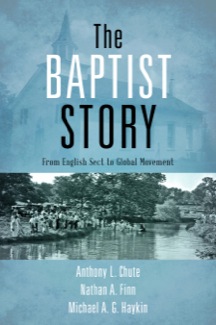
The Baptist Story - A Review

There has been a need for a new textbook on Baptist History for some time. Leon McBeth’s book, The Baptist Heritage had its day, but his presentation of Baptists was slanted toward his perspective on a number of issues. Also, McBeth’s book was published in 1987 before the culmination of the SBC’s conservative resurgence.

As such, The Baptist Story: From English Sect to Global Movement is a welcome volume. Three historians collaborated to write this 300-page volume. Anthony Chute serves at California Baptist University, Michael Haykin teaches at Southern Baptist Theological Seminary, and Nathan Finn recently left Southeastern Baptist Theological Seminary for Union University. The collaborative effort is helpful on a textbook that covers hundreds of years of data because each man has a different area of expertise.

The Baptist Story aims to tell the tale of Baptists from their beginnings to the present in an irenic matter. Besides eating, Baptists excel at quibbling over seemingly trivial matters. The priesthood of all believers (or freedom of conscience) has at times given rise to a contentious spirit in some. The three authors of this work seek to give an even handed explanation for the origins of Baptists, the historic soteriology of the Baptists, and some of the social ills that Baptists have tolerated or even aggravated. This is neither a whitewashing nor an exposé.

Summary

The book contains three sections. The first section deals with Baptists in the 17th and 18th centuries. This is the period of Baptist beginnings, through a time of persecution and possible extinction. At the end of that period, however, Baptists were growing and beginning the modern missionary movement in hopes of taking the gospel to all parts of the globe.

In section two, the authors trace Baptist History through the 19th century, which was a time of rapid expansion and rise to prominence of the Baptists. In particular, the low-church approach of Baptists with little requirement of formal education of clergy allowed a more rapid growth. It also led to theological ignorance, which made Baptists subject to fragmentation and heresy in the face of the challenges of Modernism.

Section three documents the twentieth century through the present. The impact of the World Wars, the Social Gospel, and Liberation Theology are all documented in these chapters. So is the continued growth of Baptists in most lands. The book would be remiss if the Conservative Resurgence of the Southern Baptist Convention were neglected, so thankfully the coverage of that important topic is adequate.

The fourth section outlines some of the basic beliefs of Baptists: those things that make Baptists distinct from other denominations. This final section is the only prescriptive section of the volume; the remainder of the volume is fairly even-handed historical description. Even in this prescription, though, the authors are attempting to describe what has historically made Baptists different. It is apparent, though, that many of these things are also held to be good by them.

Analysis

The greatest contribution of this volume is that it provides an updated resource for those seeking to teach or understand Baptist History. Nearly thirty years after McBeth’s book was published, it was beginning to fall out of favor in many circles. Bebbington’s volume, Baptists Through the Centuries, will likely remain popular. However, The Baptist Story provides a different perspective on Baptists that may be more helpful for American students and better adapted to the college level.

This volume has explanatory power. It is readable and informative. It explains the Baptist movement without devolving into petty critique and promotion of factions. This is a book that explains the Baptist story in a global context, shedding light on the 1/3rd (or so) of worldwide Baptist believers that live outside of the United States. As such it serves to explain the American story and illuminate the global story beyond a missionary narrative. This is a book worth owning.

The Baptist Story aims to be a college level textbook and to provide visual cues along the way. There are textboxes with primary source quotes and pictures of key individuals and locations throughout the text. In addition to these graphics, it would have been beneficial for the volume to include charts and timelines that provide visual representations of the historical progression of Baptists. The Baptist history is complex, so that there is a constant battle between sorting information topically and chronologically. Timelines and charts would have helped readers navigate the transitions.

Another potential improvement for a second edition would be to add a glossary with some of the key theological terms. This is not a theology textbook, it is a history. Still, when concepts like the Social Gospel and Liberation Theology are mentioned, it would be convenient to have a brief explanation close at hand. It is impossible to understand the history of a religious movement without a firm understanding of some contours of the theology. A future edition could be enhanced by supplementing the text with a brief theological glossary.

Conclusion

This is an outstanding overview of Baptist History. I wish it had been published when I took my Baptist History nearly a decade ago. I read thousands of pages of primary sources to gain a similar understanding of the sweep of Baptist History. It is my hope this book will find a prominent place in theological education of Baptist students in the future, as well as in local churches as a means to explain how we got where we are.

The Baptist Story: From English Sect to Global Movement
$36.99
By Dr. Anthony L. Chute, Dr. Nathan A. Finn, Michael A. G. Haykin
Buy on Amazon

Note: A gratis copy of this book was provided by the publisher with no expectation of a positive review.

Environmental Stewardship - A Review

It is a rare thing to be well-read in a discipline and to come across a book that is strikingly different. The experience is refreshing, but it happens only exceptionally.

Wipf and Stock released a new translation of a book by J. Douma, a Dutch ethicist, this year. His volume, Environmental Stewardship is sufficiently distinct from other treatments of the topic that it was a pleasure to read and genuinely novel.

Although the book was released in English in 2015, it was originally published in 1988. This means that Douma’s volume is not “current” in the sense that it includes all of the latest literature. It is academically valuable, however, because it introduces a number of German and Dutch sources that are not often considered in English writing on the topic of Environmental Ethics.

Additionally, because Douma was outside of the main discussions of Environmental Ethics in the United States, he provides a strongly alternative perspective that is neither right nor left of others, but different. This makes the reader rethink existing paradigms because he approaches the same old issues from a unique perspective. Still, Douma’s perspective is both well-reasoned and biblically faithful.

Summary

The book has five chapters. In Chapter One Douma surveys the issues of Environmental Ethics and begins to consider who could be at fault for the problems in the environment. Douma interacts with Lynn White’s famous thesis, which is that Christianity is to blame for the world’s environmental ills. However, Douma also interacts with the earlier and apparently more strident critique of Claus Jacobi, another Hollander. Douma’s critiques of both men are strong and much more helpful than many others who have interacted with them. In particular, Douma notes that White’s thesis is really that the ecological crisis is the product of a democratic culture. He is the first to make that assertion, but it rings true. Douma also notes that technology is most strongly critiqued only when it has a negative impact on the environment. In contrast, however, often technology is very good for the environment. Douma is shaking his finger at the hypocrisy of many environmentalists.

In Chapter Two Douma explains the biblical case for environmental stewardship. He undermines the dominion concept and offers an authentic stewardship model. There is no doubt Douma sees humans as part of yet unique within the created order. The correct attitude toward nature is neither anthropocentric nor cosmocentric but theocentric. Yet Douma’s theocentricity recognizes the special place humans have as alone being made in the image of God. Douma argues for a critical understanding of the cultural mandate. Humans are to cultivate the garden, but to do so with a long future in view.

The third chapter outlines Douma’s proposed solution to the environmental issues of the day. He calls for a right attitude to be inculcated in people, such that technology is embraced for its beneficial properties and personal restraint is exercised well. He argues for a common sense approach to improving environmental conditions instead of a romantic plea for a return to a previous day. Those days weren’t better for a number of reasons. In this chapter Douma moves quickly through a number of issues from nuclear power to animal rights. Douma is dealing with attitudes, which means the nearly thirty years between his writing and the present do not undermine the value of his proposed solutions.

The final two chapters deal with the particular issue of genetic engineering. Chapter Four discusses it in general, while the final chapter discusses it in relationship to humans. Douma is careful to note the potential consequences of genetic engineering. Many of those consequences will not become apparent until long after the first steps have been taken. In principle, however, Douma is not opposed to genetic engineering, though he insists it should be done for the right reasons, with particular controls, and within limits. He discusses in detail some of the risks and benefits of genetic testing for early diagnosis and potentially creating designer children. Some of what Douma foresaw as potentially adverse conditions from genetic engineering has come to pass. So too have many of the positives. Still, Douma’s perspective is worth reading despite its dated content.

Conclusion

This book is worth reading because it is so far outside of the stream of environmental ethics that it reopens settled questions and has the potential to improve dialog. For the scholar writing on the topic of environmental ethics, Douma’s footnotes and bibliography are a goldmine of sources from well off the beaten path.

This book is part of an answer to a growing concern in my mind of the need of a well-written, deeply considered environmental ethics that is consistent with an evangelical theology. In general, Douma provides that. At worst, Environmental Stewardship should enhance the conversation by reopening “settled” questions by forcing consideration from a new angle.

Note: A gratis copy of this volume was provided by the publisher with no expectation of a positive review. 

Is There Really Anti-Christian Bias?

Are Christians a persecuted minority or just a bunch of whiners? The answer you get to that question depends on who you ask. In some cases the answer is that both are true. In other cases the reality is that Christians overreact to other people’s dislike of their positions. However, according to sociologist George Yancey, there really is an anti-Christian bias in the United States, though it does not yet amount to persecution.

Both because of the question he picks up and the manner in which he answers it, Yancey’s latest book may be one of the most significant popular level books published this year. This is a book that will be a helpful resource for many pastors and laypeople for years to come.

Summary and Analysis

Yancey’s recent book from IVP Books is a popularized version of his co-authored academic tome, So Many Christians, So Few Lions. In Hostile Environment: Understanding and Responding to Anti-Christian Bias, he repackages the peer reviewed statistical research with careful analysis and thoughtful applications of the lessons learned. This is a book that pastors, professors, seminary students, and any Christian seeking to live and work in our culture should read.

A key term in Yancey’s book is Christianophobia. Personally, I dislike the word because the “phobia” tag has been co-opted and misused for people that have rational objections to the position or behavior of a minority. Yancey, however, carefully defines the term and uses it consistently throughout; this makes his usage palatable. His chosen definition is that Christianophobia  is “an irrational animosity towards or hatred of Christians, or Christianity in general.”  This definition seems fair. It captures what should be a fairly narrow slice of people that act irrationally negative toward Christians.

The research Yancey presents demonstrates that Christianophobia is not nearly as rare as we might hope. In fact, Yancey has showed that in academia in particular more than half of academics believe they are justified in rejecting Christians from tenure applications or simply not hiring Christians for academic positions to begin with. Yancey asks the pertinent and obvious question: Would it be OK to say you wouldn’t hire another demographic category or deny them tenure because of their inclusion in that demographic? The answer right now, according to Yancey’s research, is that most people refuse to consider that a valid question.

Yancey is not claiming there is an active conspiracy to ruin the lives of Christians: American Christians are not experiencing persecution like that of Christ-followers in other nations. Neither is he claiming that it is impossible for Christians to get jobs, earn a living, or be in some ways accepted in society. He is, however, claiming there is often an overt and acknowledged bias against Christians in society. He also argues that in general those who demonstrate Christianophobia view anti-Christian as acceptable. In other words, there are a number of people that just don’t like Christians and they think that is perfectly fine. 

Unlike some of the other societal biases, like anti-Semitism and Islamophobia, Christians in the West rarely have to fear for their physical safety. Yancey argues this is because “those who tend to have Christianophobia are in a better position to punish Christians in nonviolent ways because they possess more social power than those who tend to exhibit overt racism, Islamophobia or homophobia.” This makes anti-Christian bias more difficult to track, yet the surveys Yancey conducted demonstrate it is a real thing and relatively widespread.

Yancey salts the chapters with comments excerpted from the surveys conducted as a part of one of his academic studies. He chose them because they were representative, not because they were the most extreme examples of anti-Christian bias. I won’t quote them here, but the bile of them is rather telling. It is worth noting that the comments were from an anonymous survey, but that may eliminate some of the sugar coating that might otherwise exclude clear expression of opinions. The frankness of many of the comments is revealing, because it demonstrates an overt dislike of Christians that would be unacceptable for any other demographic.

Analysis and Conclusion

Hostile Environment is balanced in pointing out the inconsistencies in the Christian witness in the public square. Christianity is divided with many who claim the label being largely assimilated to the ethics of the culture. Or, on the other hand, many of those who are doctrinally orthodox are often shrill and inconsiderate when making their arguments. Sometimes the bias against Christians is deserved. However, Yancey points out, that bias goes much deeper than internal problems between self-described Christians can explain.

Toward the end of the book Yancey offers suggestions on how to remain a faithfully orthodox Christian and educate people about what that really means. He also provides some practical suggestions on how to deal with anti-Christian bias. These final two chapters are perhaps the most significant of the book, though not the most eye opening. There is room for further development and discussion on these topics, but Yancey does well to begin that discussion.

Yancey’s book is a must-read.  It appears that anti-Christian bias will remain a real thing and it is becoming even more politically acceptable to publically declare discriminatory beliefs against Christians and celebrate practicing such discrimination. If the Church is going to avoid capitulating doctrinal ground because of social pressure, we must think through how we are to live. If our children are going to learn how to be faithful in society, they must know something of the resistance to their beliefs. 


Note: A gratis copy of this volume was provided by the publisher with no expectation of a positive review.


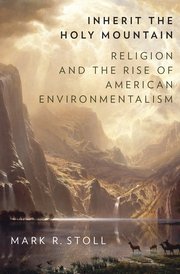
Inherit the Holy Mountain - A Review

How has religion influenced the rise of American Environmentalism?

According to some contemporary voices, religion is largely detrimental to hope for humanity, whether that is related to peace, economics, or environment. The answer, according to some, is to get religion out of the public square. The sooner that is done, some argue, the better for all aspects of humanity and nature.

Mark Stoll, Associate Professor of History and Directory of Environmental Studies at Texas Tech University, presents a different understanding of the relationship between religion and environmentalism. Instead, what he shows is a deep connection between Christianity, particularly Protestant versions, and American Environmentalism.

To be fair, mostly Stoll finds examples of lapsed Christians who have become advocates for the environment. However, he is careful to show how the theological understandings, many of which linger long after Christ is rejected, point toward value of nature apart from humans. Beneath his argument is the subtle but important reality that materialism––the rejection of anything supernatural––tends to undermine environmentalism as much as the worst caricature of a Christian Fundamentalist who is anticipating annihilation of the earth and subsequent recreation.

Summary and Analysis

Stoll begins with the early Calvinists who settled in the colonies, even before they were Christian. He points toward their desire for order, realization of the effects of sin on the created order, and value of creation as something given by God as necessary contributors to an environmental ethics. Creation was to be used by humans, but always with respect to the God who designed it and provided it.

When excessive logging took place in the early days of America, the Puritans and others set up rules to limit those activities in order to reduce erosion and improve environmental conditions for everyone. The early Americans, with their desire for law and order worked to establish parks for the good of all, common spaces, and farming communities built around small communities and small churches.

John Muir, who founded the Sierra Club, and Gifford Pinchot, a major proponent of the conservation movement, both grew up in the church. Though one favored preservation and the other conservation, both found value in nature because they had a sense of religious awe toward it. In other words, there was a connection in their minds between awe engendered in their youths toward God to the sense of awe they felt when they were surrounded by the sweeping grandeur of nature.

Most of the environmentalists through American history have been connected to some form of Calvinism, particularly Presbyterianism. However, Stoll shows that many other thinkers with a religious bent, such as Thoreau and some from Baptist tradition, contributed to individual appreciation and action toward environmentalism. According to Stoll, it has been African Americans, Catholics, and Jews who have recently emerged to become leading voices for environmentalist in recent years. It seems some of these traditions have a stronger interest in communitarian efforts.

Throughout the book Stoll uses discussions of artists, their methods, and the subjects they represented. Sometimes this seems to narrow the focus a bit, since I would prefer a more theological and sociological analysis, but Stoll is probably on to something with his analysis of art from a given era. It is the artists that apply their worldview to the scenes around them to interpret and explain what they are seeing to their audience. In many cases, due to their visual representation, their messages are conveyed more clearly than the ideas that are freighted by words, which tend to change meanings more significantly over time.

This book is a pleasure to read. It has explanatory power. There are still some loose ends that I have questions about, such as where the Fundamentalists are in all this and why Stoll thinks they went wrong. However, Stoll has combed through a large number of sources from a significant sweep of history to write a book that ties a lot of key concepts together. This is a book well worth the time and money to read.

Note: A gratis copy of this volume was provided by the publisher with no expectation of a positive review.