Our Only World - A Review

Reading Wendell Berry is always interesting, whether it is his fiction or his essays. The man has a way with words and the recent essay collection, Our Only World, is no exception.

The ten essays in this volume were written between 2010 and 2014. Some of them are the text of speeches. Others were published in various magazines. All of them are worth reading, even if you don’t agree with where Berry lands on issues.

If you haven’t read Berry before, do it. It may be better to begin with some of his novels, but they are worth the time, whatever you read.

He’s an advocate for rural life in Kentucky. His writing focuses on establishing a sense of place where you live, putting down roots, and being part of the community. There is wonder in what he writes and a quiet power.

He is a Christian of sorts, though he often stands on the liberal end of spectrum on social issues. He’s personally opposed to abortion and thinks it is wrong, but he admits in this collection that he’d help someone else get an abortion. He also argues that marriage precedes government, so he wonders aloud if the government has any business defining it. Many people wonder that, but Berry argues that since the government shouldn’t define it, marriage should mean whatever people want it to. At the same he argues for an order to creation and bases his environmental ethics on it. His single essay on this topic is perhaps the least convincing in this collection, but whether you agree with his logic or not, he writes well and makes his readers think.

Berry's Environmental Ethics

Berry’s bread and butter is in his arguments for taking care of the land. When he writes about his sustainable farming practices it makes me want to get a team of horses and farm. There is a sense of beauty in Berry’s description of life on his small acreage farm. His writing evokes a desire for a sense of place, a sense of belonging somewhere and to a group.

Even in the first, somewhat disorganized essay, which is aptly called “Paragraphs from a Notebook” there is a sense of beauty and balance in the writing. Though there is no direct link between the blocks of text that splash in sequence across the page, there is a cohesion of thought to it.

Berry writes, “We need to acknowledge the formlessness inherent in the analytic science that divides creatures into organs, cells, and ever smaller parts or particles according to its technological capacity.” This idea is the link between his paragraphs. It is the idea that animates his worldview.

Integrity, perhaps, is the theme of much of what Berry presents to the world. Beware artificial divisions, even between humans. He offers, “The phrase ‘be alone’ is a contradiction in terms. A brain alone is a dead brain. A man alone is a dead man.” Humans need one another. We are part of something greater, and should seek to be part of something greater than ourselves.

For Berry, conservation is the pursuit of integrity of the land, a search for wholeness. The farmer becomes part of the farm, not its master. He is part of the dirt that he walks on. The citizen is part of the community and should not strive to be somewhere else. Place is important because it is part of being integral. Integrity is the way you are, not just a sense of moral character.

Berry’s essays call the reader back to the sort of world that is coherent and whole. It feels like he’s describing a day and age that has been gone for generations and perhaps only ever existed in novels that romanticize country life. But for Berry such an integral sense of belonging is an eschatological hope, and one that he hopes for many more to realize in this life. Maybe some folks can.

In one essay about a trip to visit a forest in Pennsylvania Berry describes logging practices that he argues respect the goodness and integrity of the forest. The work is done by horse, which is a common theme for Berry, and it is done with a view to leaving the forest healthier, not for maximizing short term profit. The owner of the forest is part of the forest and loves it. He wants to use it wisely, and profit from it reasonably, but still leave it intact for another generation.

That’s another major theme in Berry’s essays. Take the long view. Don’t maximize profits today, but look for ways that a reasonable profit can be had for years to come. Both in forestry and farming, Berry is lobbying for a long term outlook.

Conclusion

Even though I disagree with Berry about many things, he makes me think well to figure out why he isn’t right. I’ve not met the man, but he seems like the sort of person I could enjoy a cup of coffee with even as we heartily debate an important topic. Reading Berry is learning how to argue well and graciously. Maybe someday he’ll win me over to more of his ideas.

Pick up this book and read it. It’s worth the time. But don’t rush through the essays. They are worth taking slowly and enjoying along the way. Our Only World is a volume that deserves to be considered and appreciated. Each of the essays is a little gem that can be appreciated on its own. Though perhaps Berry would argue the essays deserve to be held together with a sense of integrity.

Note: I received a gratis copy of this volume from the publisher with no expectation of a positive review.

Under Our Skin - Benjamin Watson Discusses Race in America

When Benjamin Watson, a Tight End in the NFL, wrote a Facebook post in the aftermath of the Ferguson, MO decision, some hailed it as a “race-baiting” others saw it as an attempt by at least one person to try to make sense of the racial tension in our world.

The thing is, whether we all like to admit it or not, race is still an issue in the United States. For the most part we’ve gotten over the biggest obstacles to living with one another: Jim Crow has been repealed, discrimination based on ethnicity is forbidden, and society doesn’t generally tolerate overt racists.

However, that doesn’t mean that the issue is settled. It isn’t. And the reason that we need to talk about it is so that we can identify and begin to root out subtler forms of bias against other races.

Benjamin Watson’s book, which was co-authored by Ken Petersen, tries to bring gracious light on the issue from the perspective of one African-American. This is a book that will make you think, even if you don’t agree with all of the details. That is, it will make you think as long as you take the time to read it and try to see what Watson is really communicating.

Summary

The book includes an introduction and eleven chapters. The topics of ten of the chapters come directly from the bullets in Watson’s original, viral Facebook post.

Watson begins with anger, but he recognizes what it is and moves beyond anger to establish a gracious tone. He invites the reader in to his perspective on the status of race relations in general and the Ferguson decision in particular. This chapter shows that our starting point can shape how we view the justice of the ending point. Instead of arguing with his readers, he tries to show why he arrives at his perspective.

That’s really the point of the book. It makes the reader aware that there is another perspective and that it is rational. In the end, the reader chooses to believe it or not, but a fair reader should walk away with a better understanding of Watson’s view of race in the United States. Although he certainly doesn’t speak for all African-Americans, his perspective is authentic and winsome. It can’t hurt much to think about things from his point of view.

In much the same way, the remaining ten chapters examine emotions that Watson experienced in response to the Ferguson decision. Introspection, embarrassment, frustration, fearful confusion, and sympathetic sadness are among them. Add to these things feeling offended and hopeless, but at the same time encouraged and empowered. Watson walks through how all these emotions were a part of his response. He does this without giving into any of them or becoming so rational that he discounts the power of the emotions.

Reaction

This isn’t a book on theology with a linear argument that I can critique. Even if it was, that isn’t the point of the book. The point of the book is to get the discussion about race going. It is intended to get one side to see that there is more to the conversation than facts and figures; simply showing that overt racism has been banned is not the end of the story. It is intended to show the other side how to begin a discussion without so much anger that your words can’t be heard.

I think that Watson succeeds in providing a gracious beginning point for conversation.

Watson’s book helps me, a white man, to better understand what it’s like to see things from his perspective. He puts into gracious terms some of the bits and pieces of testimony I’ve heard from friends that are part of racial minorities. I can’t have ever experienced these things, but I can certainly appreciate his perspective better now because he presents his case so carefully.

It is shameful that for many people on the political right simply talking about race has become a divisive political issue. Of course, often that idea is intentionally promoted, as some try to use racial division to paint the other side into a corner. But the issue is too important to allow it to driven by politics.

When we are talking about race, we are talking about people made in the image of God. We are talking about how we treat one another and whether justice is being done. Those are gospel issues, not merely political issues. This is a conversation that we can’t afford to skip out on. This deserves a deep discussion and consideration of where we are as a society, not merely a cursory head nod to equality.

I am thankful for Watson’s book and that he took the time to write it. He’s making enough playing football that he didn’t have to take the time, and yet he did. I’m thankful for the way he engaged the question so that I could benefit from his perspective.

In the end, I’m hopeful that reading this book has helped me see things a bit more clearly and gives me the ability to have a bit more empathy. I’m hopeful that others will read the book and have a similar experience.

Note: I received a gratis copy of this volume in exchange for an honest review.

Here is a video Watson did with The Gospel Coalition on this topic: 

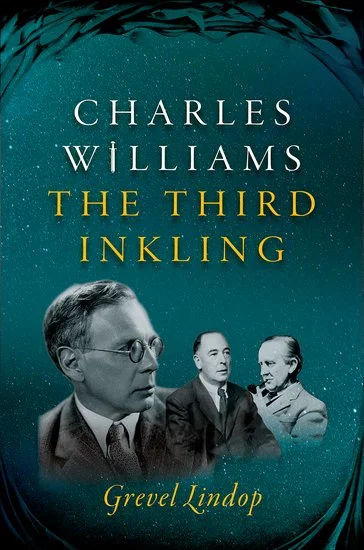
Charles Williams: The Third Inkling - A Review

Charles Williams stands in literary history among the group of men called the Inklings.  Most famously, that group includes J.R.R. Tolkien and C.S. Lewis. Often Owen Barfield is mentioned along with them, too.  Williams gets discussed but often on the fringes—a much less known person than Lewis or Tolkien. He remains known, in part, because of his association with the other two.

Whereas there are many biographies (authorized and otherwise) on Lewis and Tolkien, there have been few on Williams. Recently Oxford University Press has published a lengthy biography on Williams by poet and literary critic, Grevel Lindop.

Who is Williams?

It is appropriate that OUP publish this biography of the third Inkling because Williams’ biography is as much the history of OUP as it is the story of his own life. He worked for many years as an editor at Amen House, the London office of the Oxford University Press. During World War II, he worked for OUP in Oxford proper.

For the student of English literature, particularly of modern British literature, Williams’ life and work is interesting because of his interactions with the intelligentsia of that era. He corresponded in detail with Dorothy L. Sayers. He was friends with T.S. Eliot. He interacted with Dylan Thomas and Gerard Manly Hopkins and others. Some of these, even more than Tolkien and Lewis, are names that haunt the syllabi in colleges to this day. Williams helped shape the literary history of the English language due to his significant position as an editor of volumes, curator of anthologies, and author of prefaces and introductions. Lindop chronicles the work of Williams quite adeptly along those lines.

Williams was also a creator of literature. He wrote poetry, plays, and novels. Some of them are still in print today. In this endeavor Williams was, perhaps, no less avid than some of his more popular friends. However, he was much less successful.

Although he wrote numerous novels, plays, and poems, he was regularly in financial difficulty. (This stemmed in part due to the low wages paid by OUP.) Yet he, like many other creative people, was frantic to put his vibrant imaginations onto paper and thus bring others into the worlds he was creating. He often published without pay and when he was paid, it was often very little. In that regard little has changed in the literary world.

He was enthralled with the Arthurian legends as well as with mystic and sometimes occult practices. Williams was involved in several secret organizations that incorporated various magical rituals, mystical concepts such as sharing the pain of others, and syncretistic practices that melded Christianity with pagan rites. Most of what Lindop describes is rather benign and not dark magic, as it were, but Williams had shaky theology to say the least.

His Theology and Praxis

Williams was obsessed with his notion of Romantic Theology and wrote a book by that title. The concept is that through romantic love one could have a spiritual experience. Lindop deals with this in some detail, but it is not a fully orthodox conception of worship. However, it points toward some of the disturbing aspects of Williams’ amorous life.

He married a woman for whom he experienced something akin to love at first sight. He and his wife, whom he nicknamed Michal after David’s wife, remained married until his death just before the end of World War II. However, Williams was not faithful to her in any true sense of the word.

According to Lindop, it does not appear that Williams committed physical adultery with any woman. However, he committed many emotional affairs with young women around the office of Oxford University Press. In these relationships Williams often released sexual energy through mildly sadomasochistic practices like light spanking, striking palms with rulers, and other minor forms of “discipline.” Often these encounters occurred in broad daylight in the offices of OUP. In many of these interactions, Williams acted as a spiritual mentor to the young ladies, thus inculcating their devotion and submission to his odd practices.

Williams also developed the idea that the biblical mandate to “bear one another’s burdens” included the ability to suffer by proxy for an individual—to take on the physical and emotional pain of someone, whether known or not, and thus reduce it. He was quite active in organizing these activities among what seems to be a fairly broad group of spiritual followers. 

Relative Obscurity

The unwholesome affections and spiritualism help explain why Williams, even when he is read, does not resonate with as wide an audience as Lewis and Tolkien. Certainly, as Lindop documents, Williams was as innovative as the two more famous Inklings, perhaps even more innovative. But his gospel was tainted by spiritualism and distorted understanding of love. This cannot help but come through in his writing. While Lewis and Tolkien are telling the greatest story ever through their myths, Williams was caught up in spiritualism that effectively drew his mind from the truth.

Also, where Lewis and Tolkien understand joy and hope, Williams led an unhappy and unfulfilled life. He was constantly nervous. He was always something of a social oddity. He withdrew from his family often to be creative and productive. Lindop paints the portrait of one who well knew suffering, but little knew joy. This, too, seasons his writing and helps explain why he continues to be read but rarely devoured by generations of devotees, like those that follow Lewis and Tolkien.

Lindop’s biography of Charles Williams is good. The research is well done, with many footnotes and ample evidence of thorough research into Williams’ extensive correspondence and his voluminous literary estate.  This is a book that needed to be written and has been written well. If it fails to inspire as much as a biography of another Inkling, that is likely because a fair telling of the life of Charles Williams cannot be a happy story if it is to be an honest one.

Note: I received a gratis copy of this volume from the publisher with no expectation of a positive review.

Knowing Christ - A Review

J. I. Packer’s volume, Knowing God, is a classic for the ages. It is clearly written, theologically deep, and profoundly inspiring. Reading Packer is an experience every Christian should have as soon as they are able.

In the introduction to his recent volume, Knowing Christ, Mark Jones references Packer’s book and pitches his own volume as another attempt in the same vein. He aspires to help his readers to know Christ better, which is a significant goal to say the least.

Jones describes his book in these words:

This book is not polemical (i.e., disputational), but it is still theological. It is also (I pray) devotional. This is a book for God’s people, not the academy. This is a book designed to give God’s people a glimpse of the person of Christ. In short, I write that people may know Christ better than they already do, and so love him more.

Summary

With that target in mind, Jones divides his book into twenty-seven chapters. He covers topics like “Christ’s Dignity,” “Christ’s Faith,” “Christ’s Resurrection,” and “Christ’s Names.” Each of the chapters is eight to ten pages long with multiple headings. It is structured as a book that can be read easily and in segments. The prose is lucid, which makes the book accessible even when the theology is deep. Jones offers many references to Scripture throughout that point the careful reader back to the text, which is the source of much of our knowledge of Christ. He also quotes from the Puritans frequently and quotes some of them at length.

As a theologian, this was a fun book to sit down with at night in my armchair. It did lead me into a deeper appreciation for Christ. It reminded me of much truth about the Savior and helped me think through aspects of Christ’s existence, such as the faith that he demonstrated throughout his life. At the same time, it encouraged me to want to know Christ better and brought to mind the center of the Christian faith, which is the life, death, and resurrection of Christ.

This is the sort of book that an educated layperson could pick up and enjoy as well. The structure makes it suitable for a book study, with short chapters and study questions for each chapter in the back of the volume. In the end, whether someone agrees with everything Jones has written here, it is impossible to read this book as a Christian and walk away without having a deeper Christology in some way.

Critique

The weaknesses of the book fall along two fronts. First, Jones loves the Puritans and he draws from them very frequently. As someone who enjoys Puritan theology, I recognize that sometimes they said things so well and in prose that is just far enough removed from modern English to accentuate its theological profundity through shifting cadence. At the same time, those that lack the same love for the Puritans may wonder why some of the quotes are necessary and question the level of authority Jones grants them.

The second weakness of the volume is that at times Jones overstates his case on questionable points. For example, in his discussion of Jesus asking the beloved disciple to take care of his mother, Mary, Jones writes:

We might say that his death for sinners would have been completely ineffectual if he had not entrusted his mother to the care of John. That is to say, if Christ had not uttered these words from the cross, we would be in hell; but he kept God’s law in life and ‘in death’.

Clearly Jones is referring to Christ keeping the fifth commandment to honor his father and mother. However, Jones’ claim is overly strong for the evidence that we have in the text.

Since Christ did utter these words, and the result was the fulfillment of the fifth commandment, it is logically necessary for Christ to utter the words to perfectly fulfill the law. Yet, it does not seem to follow that if Christ had not uttered those words or if we had not received the words through divine revelation, that our salvation would be incomplete. In other words, there could have been other ways for Christ to fulfill the law that Jones has not considered; or it could have happened “off stage.”

This is a minor criticism, but there are a few places where overstatements by Jones made me scratch my head a bit. In the end, they led to some good discussions with my wife (who also read the book), and may prove to do the same if this is read in a group setting.

Conclusion

This is a good book and one that many Christians will find enlightening and inspiring. Pastors might consider recommending this for those that need stimulation to grow in their faith. Seminary students may read this to keep the fire of faith burning brightly. All Christians will find that reading this is well worth the time.

Knowing Christ
$14.25
By Mark Jones
Buy on Amazon

Note: Banner of Truth provided a gratis copy of this volume with no expectation of a positive review.

Writing Theology Well - A Review

I’m deep in the throes of dissertation writing. This means that a volume like Lucretia Yaghjian’s Writing Theology Well: A Rhetoric for Theological and Biblical Writers is of great interest. I want to have a done dissertation most, but I want to have a good dissertation at the same time. Therefore, a book on theological writing that made it to a second edition seemed an excellent one to review.

Summary

The book consists of four parts. Yaghjian begins by discussing theological rhetoric. This includes considering the context of the writing, focusing on inquiry, reflection, and persuasion, and using tools of identification, correlation, suspicion and construction. Part Two deals with the task of research, documenting that research well, and some chapters on exegesis and hermeneutics. The third part emphasizes writing style, with a focus on discovering one’s voice and the use of analogy, metaphor, etc. This section also deals with some basics of sentence and paragraph construction and delves into the vital art of revision. The fourth section focuses on writing in “new contexts,” which goes from the writing of international students, to various forms of online writing.

Writing Theology Well is a volume that contains many of the basic elements of a writing guide. There are helpful guidelines and checklists for the revision process, some ideas about structuring arguments, and a healthy emphasis on writing techniques that aid clear communication. As a guide to writing, this volume has the necessary framework to be helpful.

The promise in a book like this is that it tailored specifically for a particular type of writing, namely, theological writing. As I transitioned from my undergrad in English to writing for a technical audience in nuclear power to taking seminary courses, there were often points of frustration where a tool that I had used in a previous life was no longer acceptable. For this reason Writing Theology Well held out the promise of a helpful tool that I could benefit from and that I’d recommend to others.

Analysis and Conclusion

My praise for Writing Theology Well will be somewhat limited. This volume will be most helpful in particular theological contexts. It would not have been very helpful at the conservative seminary that I attended for several reasons.

First, the book begins with an emphasis on writing a theological reflection paper well. That is certainly a noble pursuit, but in my decade of seminary (to date) I may have written three reflection papers. These were also not simply essays on my perspective on a doctrine or theological topic, but usually reflections on a book. For good or ill, assuming some continuity among conservative seminaries, there is little call for the sort of introspective reflection paper outlined here.

Second, the emphasis on embracing one’s context and not attempting to rise above it would not be helpful in a conservative seminary. The goal in most conservative seminaries is to get the students to experience theology outside of their own context, which is why there is a high value on research papers over reflection essays. This sometimes results in the prohibition of first person pronouns, which is at times a tedious requirement. However, forcing the student to write from outside of themselves is often helpful in breaking them out of the rut of their own experiences. None of my professors actually expected the students to attain objectivity, but we were all supposed to try. The focus on embracing context has positives, and perhaps a place later in theological education, but the emphasis on writing subjectively would not transfer well in conservative academia.

Third, most of the examples of writing for consideration were from feminist or other post-modern sources. This means that the reader has to try to get past the content of the theology (largely segregated from its supporting arguments), and the logical presuppositions of the excerpts, to try to get to the point of evaluating the style. Of course, I’m sure if the shoe were on the other foot, someone with another bias might have as much difficulty evaluating conservative sources. The trouble is that many of the passages that were supposed to show off the beauty of the prose were so skeptical toward traditional forms of Christianity that it would never matter how wonderful the writing was from. In that sense, this book misses the mark by failing to emphasize that the content is more important than the style, though style is certainly significant. At the same time, I thought some of the author’s comments on being faithful to the text in her discussion of hermeneutics was beneficial.

In the end, this is probably a very fine book for a particular context. Yaghjian puts the fundamentals of writing on display in a way that is consistent with the best “how-to” manuals. Her emphasis on planning, revising, and structure are right on the mark. This is a volume that many will probably find helpful for writing, but most likely not in more conservative contexts.

Note: I received a gratis copy of this volume directly from the publisher with no expectation of a positive review.

How to Read the Bible - A Review

I often read books that I disagree with. It is necessary to read the intellectually challenging disagreement with scholars who oppose my view. This drives me to question whether my answer, their answer, or another might be right.

Recognizing that Harvey Cox is, at least from my conservative Evangelical position, a liberal scholar, I picked up his recent volume, How to Read the Bible with some interest and hope for a fruitful conversation.

This is a popular level book, written with few footnotes and more as a summary of Cox’s religious experience than as a means of engaging in serious debate. 

As such, Cox’s audience appears to be Christians who have not engaged with Scripture seriously and wonder what method the wise sage who has spent a long career proclaiming a version of progressive Christian theology from the respected halls of Harvard Divinity School might encourage them to use. It is, in reality, an apologetic for a liberal approach to Scripture from a post-modern liberal Christian. This statement is not meant in the pejorative (as the label liberal often is) but to clarify my understanding of the author’s actual intent, which is distinct from what he may have actually accomplished; according to his own hermeneutic, his accomplishment will be evaluated as something distinctly different based on the one who actually reads the volume.

Summary

How to Read the Bible is a layman’s book on hermeneutics. It has assumptions (often exposed, but seldom stated) and shows how to apply them to the text of the Bible.

After a personal introduction, which places the book in the context of Cox’s faith journey, there are ten chapters in the text. In them Cox walks through his method of reading of Genesis, Exodus, Joshua, Job, the prophets, two chapters on the Gospels (though one ignores John entirely), the Pauline Epistles, and Revelation. The tenth chapter is a summary of Cox’s hermeneutic, which is focused on a contemporary reading of the text. The book has a conclusion in which Cox answers the logical question that arises from his deconstruction of Scripture, namely, “Why should we read the Bible at all?”

Qualification

For Cox, this book is no doubt a very personal book; in fact, the first person pronoun and his own anecdotes prevent reading it any other way. He is explaining how he reads the Bible and gains some spiritual value from it. As such, it would be easy to turn these critiques into accusations against Cox’s faithfulness. That is not my goal. Cox no doubt holds the faith commitments that he has, which have some ties to historic Christianity, sincerely. This book helps to reveal what shape they have and why, but the book does not lead me to question the fact that he believes something about God that approximates a form of historic Christianity and is very personal to him.

Despite this personal nature of the book, he did publish it publicly, which means that it is fair game for analysis and critique. This is not a private expression of faith that, like a discovered diary, should be left alone until the author is deceased.

Assumptions

The logical question that arises from this text on how to read the Bible is why it should be read at all. This is a serious accusation that Cox seems to recognize at the end of the volume and begin to address, but, to my mind he fails.

Cox begins with the assumption that the Bible is solely a human book. In fact, given the option, it seems fairly clear that Cox recommends discarding the notion that any biblical data is factual. He allows that Jesus and Paul did exist, but nearly every other apparent factual claim in Scripture is best rejected at first blush. If some things in the Bible actually happen to correspond to historical truth, this is coincidental to the spiritual truth of Scripture and largely irrelevant.

Additionally, biblical scholarship that rejects traditional understandings of the text or modifies what the text seems to say about history are to be preferred over other scholarships. Throughout the volume, Cox consistently refers to his preferred group of scholars as “the best scholars” or “most scholars.”

In fact, one of the prevailing assumptions that seems to drive Cox’s hermeneutic and general approach to biblical studies is that anyone who accepts the prima facie reading of the Bible is intellectually deficient or ignorant.

For example, the hypothesis that has recently been published that presents a late domestication of camels is valuable explicitly because it undermines the historicity of Scripture and because “it require[s] one to move beyond a literalistic view of the Bible to a more mature comprehension.” (pg. 44) In other words, if only those that believe the Bible to be factually accurate would read the New York Times, which popularized the recent archaeological theory, they wouldn’t be so immature as to believe that Scripture was true. The problem is that the archaeologists conclusions were drawn from a limited data sample and appears to have been interpreted by the New York Times to maximize circulation with a controversial headline rather than critically interact with the study.

Similarly, just a few pages later, Cox discards the notion of the miracle of manna in Exodus by arguing, “The meaning of the ‘miracles’ of Exodus is that these people [i.e., the Israelites of the 7th century B.C.E who he believes wrote the Pentateuch] believe that it was through God’s grace and justice that they were escaping from slavery, and they told their story in their own idiom. Mature and imaginative students of the Bible try to get inside that worldview. They do not simply reject it as superstitious or recast it in terms of modern, if often improbable, scientific rationalizations.” (pg.47)

In other words, speaking from the enlightened cultural perspective of the 21st century, we can know with certainty that these miracles did not happen. This solves two problems simultaneously: (1) It eliminates the weird pseudo-scientific theories about how pre-scientific people may have misinterpreted natural phenomena; (2) It eliminates the need for believing in a God who can do miracles.

While I am thankful for the first result, the second result seems unnecessary unless one has accepted the reigning paradigm of naturalism, which allows for only regularity in the natural world. In other words, it requires that God, whatever that being is, does not interfere in history.

From the Pen of Skeptic

At times, Cox seems to be reading the text as a scoffer. He describes the account of the spies of Israel and Rahab as a “dinner-theater fluff piece” (pg. 69) Thus we should read the accounts of the conquest of Canaan much like school boys read Virgil’s Aeneid (pg 76); they're interesting and have some literary value, but certainly aren't true because, after all, a recent book argues that the entire Israelite history may be incorrect, since the Israelites were likely just Canaanites who banded together against their neighbors and created an elaborate nation-myth to justify their actions (pg 76). Since the Pentateuch is just political propaganda, Cox writes, “I do not believe it is necessary for current readers of the Bible to slog through all these grisly verses [about the reasons given by God for destroying the Canaanites.]” (pg. 74)

This brings back that pertinent question that came to my mind while I was reading this volume, why would you read it anyway? I’ll get back to that in a moment.

Cox continues his way through various representative genre’s of Scripture. Job is “explicitly ‘fictional’" (pg. 79); the prophets have meaning according to how modern revolutionaries decide to use them (though not in an absolutely unconditional sense) (pg. 105); the canonical gospels are merely a result of the winning political faction; the synoptic Gospels are a composite of factually erroneous interpretations of history written too far after the events they depict to be remotely accurate; Paul likely didn’t write most of the letters attributed to him and things we find ethically objectionable are either his misunderstandings or later textual additions; and Revelation can be nothing more than an inspiring poem by a political revolutionary.

It is fair to note that few of these assertions are supported in the text; but it is also important to realize that this is not a scholarly volume. Cox merely assumes the validity of scholarship built on the so-called Higher Critical methods and ignores conservative scholarship as immature or poor. This is an evidence of his bias, but should not be counted as a criticism against his method in this volume.

Again, I wonder, why bother reading it if nearly everything that it reports is questionable?

Spiritual Benefit

Cox believes that there is spiritual benefit in reading Scripture. He intimates this throughout. It can inspire the contemporary reader to pursue justice. This he makes clear in the Introduction, where he recounts the inspiration that African American civil rights activists found in the Exodus stories. While he sat bored in his cell (having been arrested during the same demonstration), the segregated African American detainees preached to each other from the account of Moses.

This reading and contemporary application, he notes, is in accordance with the “full-orbed holistic way I have termed ‘spiritual.’” (pg. 8) But it isn’t clear that such a reading is possible once the reader has rejected the factual content of Scripture as mere political fiction.

In other words, if the Bible is just a human book, with a great percentage of it written for political purposes, then why should it be trustworthy for spiritual readings? Why would one trust Scripture more than a contemporary novel for spiritual information?

Cox wrestles with this in part toward the end of the volume, “Why should I spend any time writing yet another book about this strange old collection? One answer is that the Bible helps us to know who God is, and for many people, perhaps most, that is enough. But there is another reason. The Bible also helps us heed the counsel of Socrates to ‘know thyself,’ and the wisdom of all the religious traditions teaches that the knowledge of God and the knowledge of ourselves are inseparable.” (pg. 230)

Of these two reasons that Cox offers, it isn’t clear how the shreds of Scripture are helpful any longer in knowing God. He has taken pains to debunk the supernaturalness of God throughout the volume. Gone is the miracle-working God. Gone is the redemptive God that chose a people. Gone is the God that is holy and worthy of judging sin.

The second reason Cox presents is more true to what the tattered text of the Bible can do once it has been explained away by Cox’s “mature” hermeneutic. Once all of the parts of Scripture that conflict with the contemporary reader’s worldview are eliminate, what is left is a reflection of the individual from the ancient text. It isn’t clear why it would take over two hundred pages to explain this fact.

Conclusion

Cox’s book is an excellent example of the reader-response hermeneutic at work. He combines this post-modern approach that rejects a desire for objectivity with an acceptance of the validity of modernistic biblical scholarship to work his way through many genre’s of Scripture.

This is a helpful book because Cox explains what many Christians do on a regular basis. What is masked in the liberal pulpit is made clear in this volume.

In the end, the deconstruction of Scripture and rejection of the supernatural reminds me of C. S. Lewis’ description of creating “men without chests.” They are bidden to be moral, but the means for their morality has been removed. Though this is not Cox’s purpose in writing the book, his demonstration of the failure of the liberal theological method has explanatory power for the slow death of many liberal churches.
NOTE: A complimentary copy of this volume was provided by the publisher for review with no expectation of a positive outcome.

The Story of God's Love for You - A Review

The Jesus Storybook Bible by Sally Lloyd-Jones is my favorite Bible storybook available. The illustrations by Jago are interesting and faithful to the text. The audio version, narrated by David Suchet, is well produced and engaging. It is a product that the whole family has enjoyed greatly since it was released several years ago.

When Zondervan announced the forthcoming release of a grown-up version of the book, The Story of God’s Love for You, I was intrigued. I wasn’t sure how well the story would convey without the pictures.

As it happens, this little volume does stand well on its own without the illustrations. While I still prefer the full version of the book, the big kid’s version is almost as good.

BEGINNING AS THE JESUS STORYBOOK BIBLE

For those that haven’t encountered The Jesus Storybook Bible, the approach is worth considering. Most Bible storybooks focus on particular scenes in Scripture that seem most likely to be interesting to a young audience. Thus, while still well-told, a regular refrain tales make their appearance in most Bible storybooks: David and Goliath, Noah and the Ark, Moses and Pharoah, Jesus calms the storm, etc. These are the same stories that I was raised on in Sunday School and seemed to come up with a regular frequency.

Often missing from the traditional approach to children’s Bible storybooks is any sense of the big picture. How does the crossing of the Red Sea fit into the bigger picture of the Bible? Is the Bible just a loose collection of hero tales and miracles? The metanarrative of Scripture has been tragically lacking in many books intended to bring Scripture down to the cognitive level of children.

As a result, many children grow up in the church with no sense of what God is doing through the Bible. This has allowed young Christians to fall prey to skeptics who assault the apparent inconsistencies between the miracle-less present and the supernatural accounts of the past. It has created a broader culture may know that David and Goliath is a story about little beating big, but is unaware that this has the additional significance of being God’s anointed one defeating the seemingly unconquerable evil. In other words, David and Goliath tells a piece of the bigger story of Christ defeating evil in the world.

Sally Lloyd-Jones takes those stories, which have been made to trite and simple over the years of Sunday School tradition, and reinvigorates them with a theological approach. She tells us,

The Bible is most of all a Story. It’s an adventure story about a young Hero who comes from a far country to win back his lost treasure. It’s a love story about a brave Prince who leaves his palace, his throne—everything—to rescue the one he loves. It’s like the most wonderful of fairy tales that has come true in real life.

You see, the best thing about this Story is—it’s true.

There are lost of stories in the Bible, but all the stories are telling one Big Story. To Story of how God loves his children and comes to rescue them.

This approach unites the stories in Scripture into a tapestry of wonder, which is woven (often untidily) through with the golden thread: Jesus saves because God loves his creation. Lloyd-Jones communicates that truth so simply a child can comprehend it, but without dissolving the polychromatic hues of Scripture into a monochrome mass of christocentric allegory.

STANDING ON ITS OWN

Even having lost most of Jago’s lovely illustrations, the text Lloyd-Jones wrote is edifying. It takes a reader willing to put up with a bit of child-like simplicity and sometimes silliness to enjoy the volume. Her prose is playful, which could make the adult concerned with being grown-up disdain this volume.

However, taken on its own merits and enjoyed for what it is (an entertaining retelling of an amazingly complex story), The Story of God’s Love for You gets along quite well. For the seasoned saint who needs encouragement, there are reminders of God’s always surprising affection for us on nearly every page. At times the capricious retelling highlights an aspect of a story that would have otherwise remained obscure to the accustomed eye, which always tends to read what the mind already knows.

This volume may also have use in introducing new believers to the big picture of Scripture. Again, the attitude of the reader makes a great deal of difference. However, Lloyd-Jones hits the high points and provides a basic hermeneutic that can help the novice to see the purpose in many of the stories of the Old Testament. They aren’t just weird fables of an outdated God; they are pieces of the bigger story, which is the most exciting story of all.

Note: A gratis copy of this volume was provided by the publisher with no expectation of a positive review.

The Gospel According to Heretics - A Review

Have you ever wondered if Apollinaris was actually Apollinarian? Or how about Ebion? Was he really an Ebionite?

If you’ve ever dabbled in Christology or Church History, you’ve probably encountered these questions. If you haven’t been exposed to those intellectual concerns, then you may not have heard of such oddly named villains of the early church. However, these are perennial debated figures with often excoriated views.

In The Gospel According to Heretics, David Wilhite explores the panoply of historic heretics in one accessible volume. For the MDiv student in Church History I or whichever theology course covers Christology this is a goldmine of summary, analysis, and further footnotes.

SUMMARY

Wilhite covers ten different heresies in the ten chapters of his volume. There is a simple formula to each chapter, which is helpful for progressing through the text simple. He begins with a summary of what the accusers of the heretics said, then he breaks down what the available primary sources say the heretic taught. Next he outlines the orthodox response to the alleged teaching of the heretic.

The book progresses chronologically through the major heresies of the early church. It begins with Marcion, who is said to have argued that Jesus is a new and different God than the one of the Old Testament. The second chapter covers the Ebionite heresy, also called adoptionism, which denies the deity of Christ. In Chapter Three, Wilhite tackles the Gnostics, who denied the humanity of Jesus because of their stark dualism. The subject of the fourth chapter is the modalism of Sabellius, who allegedly argued that God exists as either the Father, Son, or Spirit at separate times. In Chapter Five the most famous heretic of all, Arius, is analyzed; the subordinationism attributed to Arius, which argues that Jesus was divine, but not quite equal with God forms the subject matter.

Wilhite comes down the backstretch of the volume with Apollinaris to whom is attributed the argument that Christ has a human body but a divine mind, which challenges his full humanity. Nestorius is the topic of Chapter Seven, especially his argument that the Son of God is a divine person that inhabits the human Jesus. In the eighth chapter the monophysitism of Eutyches is the subject matter; he is alleged to have taught that Jesus is half man and half divine and thus a sort of super-human hybrid. Chapter Nine takes on the iconoclasts who argued that Jesus must not be depicted, which seems to challenge the notion of an incarnate Christ. Then in the tenth chapter, Wilhite outlines the heretical Christology of Muslims, which portrays Christ as merely a human prophet and not divine. Finally, Wilhite concludes the book with a call for gracious interaction by both the orthodox and the heretical, though he recognizes that both exist.

ANALYSIS

The debate about whether the heretics discussed in Church History courses were really heretical is the subject of many seminary papers and late night debates over coffee. Wilhite does not definitively end any of those debates, but The Gospel According to Heretics does present a helpful tool for those discussions and papers (for any seminary students reading this).

Wilhite approaches his topic with the mind to revise the received traditional accounts. However, unlike other revisionist church histories, Wilhite is not out to argue that there is no orthodoxy. Rather, his argument is that there is an orthodoxy that Christianity should be centered around and the the early Christological debates helped in its formulation and documentation. It is simply that the historically accepted accounts of the heretics themselves may have been overblown. The doctrines the heretics represent are and were bad, but their locus is, perhaps, historically unrecoverable. This approach makes Wilhite’s book both edifying and informative.

The chief weakness of this volume is one that others may see as a strength. In some ways, Wilhite’s call to an irenic attitude toward contemporary heretics, in light of the perhaps wrong treatment of historical heretics, is a positive. However, there are situations in which a refusal of those in teaching positions to recant non-orthodox positions warrants vocal and vehement refutation. Wilhite is right to call for this to be handled as generously as possible, but in the face of a proud heretic, that individual may indeed need to be removed from positions of power, which in the case of a pastor or professor may cost him or her a livelihood. If legitimate heresy actually distorts the gospel, then it is a big deal and should be resisted accordingly, which seems to be downplayed in The Gospel According to Heretics. At the same time, Wilhite’s call for patience and humility is an important one to create the balance of speaking truth in love.

This is one of those books that has the potential to become a favorite textbook for years to come, if it remains in print. Wilhite’s careful research, vibrant writing, and simple outlines make this accessible volume a useful tool for years to come.

Note: A gratis copy of this volume was provided by the publisher with no expectation of a positive review.

Inventing American Religion - A Review

In our interminable run-up to the next U.S. Presidential election, we are regularly bombarded with information from a variety of sources about how each of the candidates from both parties are doing in the polls. Often these poll results, whether from Pew Research, Gallup, or another organization, include information about how a particular candidate is faring in a particular religious demographic.

There are some who question how those religious profiles are constructed and whether they are, indeed, accurate.

In the newly released book, Inventing American Religion: Polls, Surveys, and the Tenuous Quest for a Nation’s Faith, Robert Wuthnow outlines the rise of scientific polling, the increasing influence of the religious questions in them, and the more recent decline in support for the published poll results.

Summary

Wuthnow’s thesis is “that the polling industry has influenced—and at times distorted—how religion is understood and portrayed, particularly in the media but also to some extent by religious leaders, practitioners, and scholars.” He argues this thesis is eight chapters.

The introduction outlines the early history of public polling and surveys the breadth of the history that Wuthnow goes on to unpack and interpret in the remaining seven chapters. Chapter Two covers the early attempts to do comprehensive surveys to assess public opinion. Such surveys were accurate for local issues, but they were time consuming, expensive, and unable to establish broader public opinion. Still, they were a common tool used by social organizers like Du Bois. In the third chapter, Wuthnow outlines the rise of George Gallup, who pioneered the use of the scientific poll to assay public opinion on a broader scale; since Gallup was a self-professed Christian, he asked religious questions in his polls, which began the process of examining the impact of religion on social and political positions.

Chapter Four highlights the differences between scientific studies, which are usually carried out by scholars, and public opinion polls. Wuthnow explains that polls are designed as quick hit diagnostics, based on an attempt to gain a rough idea of a person's opinion with as few questions as possible. In contrast, scientific studies ask more probing questions. As a result, scientific studies tend to be more narrowly focused, but they also tend to have more precise explanations for the results. Scientific studies go after the “why” not merely the “what.” In the fifth chapter, the evolution of the pollster as pundit is discussed. In 1976, the so-called year of the evangelical, the religion question become more important. Suddenly Gallup’s years of asking about religion began to pay off. Additionally, the people doing the polls began to interpret them for the media audiences. It’s easy to see how possible misinterpretations can result. This trend to question the polls has grown since that point; for some, the promise of punditry undermines the possibility of objectivity in the polls.

In the sixth chapter, Wuthnow describes the falling confidence in polls. This was due to the conflation of pundits and pollsters. It also has to do with the changing demographic of respondents. Initially people would answer the phone and respond to polls, but that began to change. Response rate became an issue and the questions about the demographics of those actually responding to polls arose. Additionally, external observers (though not the pollsters themselves) began to question some of the ways conclusions were drawn. These observers began to notice fluctuations in some of the responses, such that the percentage of church goers varied widely across a six-month span in some cases. Chapter Seven discusses the breaking down of the fourth wall, when pollsters began to take polls about polls. The answers began to show a growing distrust in the accuracy and usefulness of polling. However, Wuthnow argues that the influence of polling is far from gone. He notes, “Polling studies demonstrate that polling rarely has discernible effects on election outcomes, but it offers background information that draws attention to how candidates are doing and reinforces implicit perceptions that some issues are more important than others.”

Wuthnow concludes the book by surveying the state of polling in Chapter Eight. Polls are still important, but they aren’t the trusted sources of information they once were. They are now more likely to be used as sermon illustrations or points for beginning a more in depth process of investigation. Polls continue to suffer due to lowering response rates. People's lives have become saturated with polls, opinion questions, and other calls for feedback. In a world of big data, politicians and corporations are turning away from using polls as ultimate grounds for decisions; better information is available in usage statistics from Facebook, Twitter, and other sources. Additionally, the history of polls continues to show that the categories being used to define religion are no longer adequate (if they ever were). The future of polling, particularly related to religion, is indeterminate. It is unlikely that polls will disappear, but criticisms of polls may continue to reduce their importance. Time will tell.

Analysis and Conclusion

Wuthnow’s book is timely. Polls are regularly published; their results are lauded as sure truths by the 24-hour media cycle by pollsters and the talking heads. Real people, on the other hand, are asking more and more whether the results are trustworthy. After all, we think, when is the last time I was asked to respond to a poll? Most of us don’t even answer the phone when we don’t know the number. Our experience drives us to question the validity of polls, whether that is just or not.

Inventing American Religion is part history and part critique. His history shows what has happened and, it seems to me, explains is very clearly. His critique is a telling warning about how polls have been abused and how to avoid being mislead by them. At least it provides grounds for asking further questions, something that is nearly always a worthwhile endeavor.

The weakness of this volume is that it highlights a problem--the potential unreliability of polls--but it fails to provide a solution. This, of course, was not part of his thesis. However, if Wuthnow had any suggestions about how to improve the use of polls or interpret them better, it would have been good to include them.

In the balance, this is an important book for academics and pastors who want to use polls in their papers, books, and sermons. Wuthnow's point is well made: polls may not be trustworthy and misreading the data may well lead the consumer astray.

Note: Oxford University Press provided a gratis copy of this volume with no expectation of a positive review.

Onward: Engaging the Culture without Losing the Gospel - A Review

If you are a Christian struggling with how to find a way to positively engage the world around you while remaining orthodox, then Russell Moore’s book, Onward: Engaging the Culture without Losing the Gospel, is for you.

Moore has been on various news outlets over the past few years as a spokesman for conservative evangelicals, particular for the Southern Baptist Convention. If this has caused you to wonder what he is doing and why he says the things he says, then this book will be helpful for you, too.

Avoiding Twin Dangers

Moore is outlining the twin dangers of Christian engagement in the public square. On the one hand, it is easy for Christians to become like grumpy old people telling kids to get off their lawn. On the other hand, it also easy for Christians to leave unexamined many of the ills of society as long as it doesn't directly impact them. We can’t afford to fall into either one of the errors if we are going to reach the world with the good news of the gospel.

The thing that keeps us from falling into either of these errors is a proper understanding of the gospel. Moore begins by discussing the culture shift that has pushed Christians from the center of the cultural conversation to the prophetic edges. He is careful to note this reality reflects the fact that the values coalitions of previous decades sounded very Christian without actually being converted by the gospel. As the conversation shifted away from something that resembled a Christian ethic, the Christians that remained faithful to the gospel seemed to have two options: either compromise or get left out of the conversation. This is a false dichotomy.

Gospel Foundation, Contemporary Issues

Early on in the volume, Moore digs into the meaning of the gospel. He makes it clear that the gospel isn’t about either personal salvation or social justice; it’s about both. If the Christian church loses its understanding of personal conversion and individual redemption, she loses one of the cornerstones of the gospel message. Salvation is not based on redemption of the whole, but on Christ’s atonement for the individual. At the same time, if Christian individuals miss the central redemptive themes of historic Christianity, which offers a strong dose of the pursuit of justice in society, then they miss out on some of the key implications of their own gospel conversion; redeemed individuals seek to redeem society.

With both these aspects of redemption in mind, Moore addresses a number of major issues that are central to the contemporary cultural discussion: immigration, religious liberty, and family stability. These are social issues that tend to divide Americans from each other and are the topics that commonly lead to calls for compromise and accusations of a lack of compassion.

Convictional Kindness

This is where Moore’s call for convictional kindness comes in. Convictional kindness is standing firm on ethical norms without shame, while confronting the angry accusations of the surrounding world with a gentle spirit. The conviction is birthed from confidence in the objective moral order in creation that is witnessed to by the special revelation found in Scripture. It requires rational, well-thought through positions that are both coherent and correspond to the truth in God’s creation. Kindness is built on the understanding of our own personal need for redemption. We, too, are growing, learning people who have pasts that we may have forgotten. Those that we disagree with, even those waving fingers and shouting in our faces, are people made in the image of God who deserve to hear the message of redemption. That’s a message they won’t be able to hear if we are shouting back. In fact, joining in the shouting will keep our “conversation partners” from hearing both our arguments on the issue and the message of the gospel.

Moore’s overall argument is hugely important as Christians seek to be salt and light in a world that (still) desperately needs the gospel. He also makes subtler points that are even more significant for Christians to hear. For example, in discussing the issue of gun control or gun rights he explains that there is no single Christian position. He has a position, which he does not articulate, but he notes more significantly that no one can speak for an official Christian position. There are certainly moral elements to the question, but at the same time the bulk of the argument is prudential and legal. It would be unethical to leave loaded guns within the reach of toddlers, but the capacity of a magazine and the process for background checks for weapons are prudential questions. This doesn’t mean that the question is not significant, but that we should be careful about promoting our preferred position as a gospel truth when it isn’t. Doing so encourages wrangling within the body of Christ and it largely discredits the message of the gospel because the faulty logic is apparent to any who care to see it. In this example, the Second Amendment is a benefit of being American, not a right imbued by the gospel.

Conclusion

Onward has been published at a time that conservative Christians in America feel like they are under assault because anything resembling a Christianesque ethic is being pushed farther toward the margins. Moore helps by explaining that Christianity has always been strange and that we should continue to cling to our strangeness. We have to articulate the gospel in our homes, in our churches, and in our culture if we are to have an impact. Moore’s book is an encouragement to continue to live faithfully in private and in public, but with a confidence founded on the truth of the gospel not fueled by a majority in the polls.