Did God Break the Law?

Recently a pastor of a megachurch declared that “God broke the law for love” when our sins were atoned for on the cross. The preacher's motives were good—he wanted to express the wonder of the gospel in terms people can understand—but his theology is terrible. In fact, there is direct biblical evidence that undermines his claim. Additionally, even without the direct claims of Scripture, God breaking the Law would undermine centuries of orthodox understanding of the nature of both God and the Law.

More significant than knowing who made this theological blunder is understanding why it is incorrect. It is easy to bash someone for being in error. It is more important to explain why they are in error, because it is much more likely to edify the body. The purpose of this post is to explain how we know that God did not break the Law.

Biblical Evidence

When Jesus died on the cross for our sins, that action did not break the Law. He fulfilled the Law by bearing the punishment for the sins of others. He paid our insurmountable debt as a substitutionary sacrifice once and for all. Taking the penalty for others did not, in itself, violate the Law.

Where do we get this in Scripture? For one, Jesus himself says in Matthew 5:17: “Do not think that I have come to abolish the Law or the Prophets; I have not come to abolish them but to fulfill them.”

Assuming we accept that all three persons of the Trinity are equally God, we have pretty good evidence here that the God did not break the Law.

Rather than breaking the Law, Christ fulfilled it. Failing to keep the Law is sin. We know that Christ was tempted just like we are but he did not sin.

He did this in his life and ministry by keeping Law in every way, though he sometimes kept the Law in a manner that confused many of the religiously wise of his day.

In some cases, the way that Jesus lived out the Law was different from the way that it had been interpreted by the Pharisees and Sadducees, who were the religious elite of his day. Thus, they got upset when he healed on the Sabbath and had contact with people that were taboo.

In these cases, Jesus points to the Law and explains how he is fulfilling it. In most cases, he points to the principle behind the particular expression of the Law. For example, when Jesus’ disciples pluck and eat grain on the Sabbath, they are accused of breaking the Law. Instead of telling his accuser that the law didn’t matter, he explained that “The Sabbath was made for man, not man for the Sabbath.” (Mk 2:27)

In other words, Jesus explains that the Law still applies, but that the practices built around the Sabbath had a different function than what was commonly understood. The point of Sabbath was not to enforce inactivity, but to offer rest and remind the Jews that their financial well-being depended on God. The Sabbath was a gift from God, it was not meant to be an onerous duty.

Looking back at Matthew 5:17-20, we get a fuller picture of the relationship between the Trinity and the Law and it does not point to God breaking the Law but to the continued force of the Law for true worshipers:

Do not think that I have come to abolish the Law or the Prophets; I have not come to abolish them but to fulfill them.  For truly, I say to you, until heaven and earth pass away, not an iota, not a dot, will pass from the Law until all is accomplished. Therefore, whoever relaxes one of the least of these commandments and teaches others to do the same will be called least in the kingdom of heaven, but whoever does them and teaches them will be called great in the kingdom of heaven. For I tell you, unless your righteousness exceeds that of the scribes and Pharisees, you will never enter the kingdom of heaven.

We know simply based on the words of Christ that God did not break the Law, because heaven and earth have not passed away. Until that happens, Christ calls his followers to teach and follow the Law, though how that is fleshed out in contemporary Christianity is a topic for another post.

God Can’t Break the Law

The clear evidence of Scripture shows us that God did not break the Law when Christ paid the penalty for our sins. But we didn’t need that evidence (though I’m glad we have it) because the very nature of God and the Law prevent God from breaking the Law.

This goes back to a famous philosophical dialog in Plato, which is referred to as the Euthyphro Dilemma. I’ll leave you to read that on your own.

To summarize the dialog, however, the two horns of the dilemma are whether the Law is good because God declared it to be good or whether the Law was given because God recognized it as good. In both cases, there is a good God and a good Law.

However, neither explanation of the goodness of the Law and the goodness of God is sufficient.

In the first case, if God arbitrarily declared certain things to be good, then the Law is no longer grounded in the moral order of the created order or in God’s character. In other words, there is little reason to expect that obeying God would naturally result in better ordered societies and greater peace with universe. At some point in the future God could change the Law so that a new set of things is good.

For example, though God has declared not murdering to be good, by this logic he could have just as easily declared murder good. If this explanation of the relationship between God and the Law is accepted, then the Law is arbitrary and God may be capricious.

In the second case, if God merely recognized the Law as good and chose to communicate it to his people, then the Law precedes God and God himself is bound by the Law. This is problematic because it implies that there was something that exists prior to God. Additionally, in this understanding of the relationship between God and the Law, the Law becomes the supreme norm of the universe instead of God. In theory, God could sin in this second understanding. Indeed, according to the megachurch preacher’s statements, God did sin by violating the moral order of the universe. (However, it is unlikely that the preacher actually believes this implication.)

Both of these explanations fall short of orthodoxy. Neither describes a God who is worthy of worship in the way that Christians recognize. Thus, a third explanation of the relationship between God and the Law is needed.

This third option is that the Law is good because it reflects the character of God. In this solution God is self-existent, logically and temporally prior to all else, and wholly good. The Law reflects his character, in part. By conforming to the Law, the Israelites were communicating something about God to the surrounding peoples and to each other. Thus, the Law was never about earning salvation it was about worship and evangelism.

There’s another way to explain this. God is the ultimate good in the universe. He is essentially good and there is no mixture of evil in him. God wants his creation to be good, like him. Therefore, he tells his people to be holy as he is holy (Lev 11:44-45). To show how to do this, God gave his people the gift of the Law. The Law reflects his character, so that by obeying the Law—by embodying the Law—his people were acting consistently with God’s character.

Based on this logic, then, God cannot break the Law. To break the Law would be to deny his very character. It would, so to speak, unGod God. He would cease to be good and thus cease to be worthy of worship. The view that God can break the Law is questionable. The view that God did break the Law draws close to blasphemy, if the speaker rightly understands the import of his words.

This third view of the Law is consistent with the Reformed understanding that has been passed down through the ages. It is part of the foundation of argumentation from Natural Law in other traditions, as well. There is nothing new under the sun, so in this case, being aware of historical theology could have saved confusion for many.

Conclusion

As I began by stating, the bad theology that God broke the Law was proclaimed for a very noble purpose: to illustrate the astounding reality that the God of the universe took action on our behalf to redeem us. This is part of the gospel message, and an important part. I am thankful that the earnest preacher is trying to communicate that message.

However, logic and sound theology don’t become unnecessary when we try to preach the gospel. It is important to preach Christ and to preach Christ rightly. Understanding the relationship between God and the Law is important, and particularly important because this third understanding requires stability in moral norms throughout history. It is, in fact, the basis for the claim to objective morality within Christianity.

Obviously, there is more to be discussed about the relationship between the Mosaic Law and Christianity. However, that is a topic for another day. Suffice it to say that there are reasonable answers to that question. In the meanwhile, we should never say that God broke the Law because that is logically impossible and contrary to Scripture.

Christian First, Not Republican

As we try to figure out just what is going on with the political right and the GOP implodes after what should have been a layup to nominate a true political conservative for President of the United States, Francis Schaeffer’s political analysis from the early 1980s offers some explanations of our present situation.

Even four decades ago, Schaeffer saw the fractures in the political right. The stress of the ongoing election process is revealing the fault lines just about where Schaeffer predicted them to be. In light of this, his advice for the faithful Christian to hold political relationships loosely is sound.

A Profile of the Silent Majority

Schaeffer’s argument was basically that the political right, which included the so-called “silent majority” was really a complex confederation of loosely affiliated segments. Although there was some cohesion, there was little commonality between the various segments of the “silent majority.”

[One] factor to take into consideration as we look at shifts in the culture is what in the 1970s was called “the silent majority.” That silent majority, we must understand, can still in the 1980s elect to office anyone it wants to elect. But it is imperative to realize that the silent majority is divided into two parts—a minority and a majority. Unhappily, today’s politician who wants to get elected has pressure on him to appeal to both.
The minority of the silent majority are, first, Christians (and therefore have absolutes and real principles on which to base their actions and judgments) and, second, those who have at least a Christian memory and still believe in absolutes, even if their basis for those absolutes is inadequate. However, the majority of the silent majority are those who really live in a post-Christian world. They may or may not go to church, but they have no real absolutes in mind and they have only two values—personal peace and affluence. Personal peace is not to be equated with pacifism. Rather, it is the attitude: “Let me alone; don’t let trouble at home or abroad come near my door. Just give me peace, personal peace.” And then there is the affluence: the more of everything the better. So with the majority of the silent majority, what we have is not a theoretical materialism but a practical materialism.

The calculation has shifted in the thirty years since Schaeffer wrote, but his analysis is still helpful. Now, in the minority of the silent majority are the Christians, who we see voting for legitimately conservative candidates in the 2016 Presidential primaries. Most of these folks recognize bluster when they see it and understand the cancerous danger of a lack of integrity, so they look for a candidate who has firm values, demonstrates character, and represents himself reasonably.

The other sliver of the former minority, are the sort-of Christians, many of whom identify as evangelical—a term that seems to have lost meaning—but rarely attend church. This second group has some Christian memory and usually a belief in absolutes of some sort, but has little basis for it. Therefore, when a candidate promises, however disingenuously, to serve their interests, they claim Christianity and deny the principles of their supposed religion in pursuit of their own interests.  This group has become a part of the majority of the silent majority. In many cases there is a conflation of nationalism and pseudo-Christianity among this group, which leads to a civil religion that inspires allegiance but often falls short of orthodoxy.

The largest portion of the so-called silent majority lack an absolute standard grounded in an infinite God. However, they feel economic pressure, perhaps due to foreign trade, and are concerned about safety due to immigrants and radical terrorists. For these individuals, the key is to gain power in order to stem the tide of compromise and the maintain a rough status quo that will allow for a continued prosperity or recapturing the sense of prosperity from a few years ago. The slow creep out of the economic slump of 2008 has fueled a continued dis-ease and desperation in this group who really just want personal peace and affluence. This group is more concerned with gaining power than being faithful to principles.

As I see it, this coalition has been shredded by this recent presidential election. One group has sought a compassionate, conservative vision for the future of the nation. Another group has sought rigid adherence to principles, not always recognizing that the expression of those principles may change somewhat when the surrounding culture changes. A third group has sought a strongman to bring them power so that they can return to a former sense of well-being; the principles of conservatism are of little consequence. And thus the political Right is fractured by potentially irreconcilable factions.

The Mushy Middle

Somewhere in the middle, between the political Left and the so-called silent majority there is another pool of unpredictable voters. These are the former rebels who, having found continued unrest and revolution unsuitable for long term prospects have settled down to seek affluence and personal peace, much like the people in the majority of the “silent majority.”

Although these individuals may vote for the political right at times, Schaeffer argues that they do not have values consistent with traditional forms of conservatism. Instead, they are simply seeking comfort, ease, and rest after the turbulence of their youths.

They are not really “conservatives”; they only want their piece of personal peace and affluence. If they do not get what they want in regard to these, there will be a swing of the pendulum. Neither the majority of the old silent majority (the old bourgeois), nor this New Bourgeois (nor the two together) is a base for a stable society.
They may for a time be cobelligerents with the Christians (the minority of the silent majority), who base their votes and their discussions on absolutes, on biblical principles and values. But we must not confuse either the old majority of the silent majority (the old bourgeois) nor the New Bourgeouis as true allies, or as those who can, or will, provide a base for a stable society.
 Essentially, as far as the sociological realities of the time in which we not live are concerned, the New Bourgeois substantiates and reinforces the old bourgeois. Of course, often they do not like each other, and there are and will continue to be tensions between the two; but as far as their sociological results are concerned, there is no essential difference between them.
The New Bourgeois usually couldn’t care less where the affluence comes from. Many would just as soon get a job from 9:00 to 5:00 to pay their bills. So long as they can do whatever pleases them, that’s enough. The utopian visions of Henry David Thoreau and Jean-Jacques Rousseau have disappeared.

Here in the mushy middle, this group is again pursuing comfort, though typically in a different manner than the majority of the silent majority. However, principle is not the clear driver for this group either, unless it is the principle of self-interest.

When the consensus of culture points in a vaguely biblical direction, this group can be expected to support it as long as they are basically left alone. However, when social pressure is exerted, they will quickly abandon contested positions for another position and join in criticizing those who adhere to some sort of absolutes.

Cobelligerents, Not Allies

The willingness of the mushy middle to bolt when the winds of consensus appear to be shifting explains why, in The Church at the End of the Twentieth Century, Schaeffer writes:

Christians must realize that there is a difference between being a cobelligerent and an ally. At times we will seem to be saying exactly the same thing as those without a Christian base are saying. If there is social injustice, say there is social injustice. If we need order, say we need order. In these cases, and at these specific points, we would be cobelligerents. But we must not align ourselves as though we are in nay camp built on a non-Christian base. We are an ally of no such camp. The church of the Lord Jesus Christ is different—totally different; it rests on the absolutes given to us in Scripture.
My observation of many young pastors and others is this: suddenly they are confronted by some two camps and they are told, “Choose, choose, choose.” By God’s grace they must say, “I will not choose between these two. I stand alone with God, the God who has spoken in the Scripture, the God who is the infinite-personal God, and neither of your two sides is standing there. So if I seem to be saying the same thing at some point, understand that I am a cobelligerent at this particular place, but I am not an ally.”

The failure to understand that allegiance to a party should be held lightly in comparison to allegiance to the persons of the Triune God explains much of the handwringing among conservative evangelicals over which president campaign to support, if it comes down to a choice between two nearly equal evils, or whether a third party candidate is an option.

The so-called silent majority has fractured as the culture has shifted. The biblical memory of the culture is fading or entirely lost. The faithful Christian must now choose, and the choice in this election may well be to cast a protest vote. Such a vote in some cases may be naïve idealism, but faced with a choice of two significant evils, Schaeffer is right to argue that it may be necessary to pick a third alternative.

CONCLUSION

It is eerie at times how Schaeffer’s diagnosis from three or four decades ago seem to be playing out in real life. His predictions of the so-called culture of death are a reality. No less prescient are his premonitions about politics, particularly in the U.S. In many ways, we are where he thought we would be. In the face of that, Schaeffer’s continual hope in the goodness of God should encourage us to live life faithfully.

The hard choices of this time are nothing new under the sun. However, this is largely uncharted water for the cultural memory of orthodox Christians in the U.S. If the choice in November is between two nearly equally corrupt individuals, then a third party may need to be an option. We can be cobelligerents with the world, but never allies.

Note: Since I wrote this, Trevin Wax has posted along the same lines. His is, no doubt, better. It is certainly worth reading: http://ow.ly/ZNTfv 

The Myth of Big Church Success

There was recently a flap in the Evangelical world over a mega-church pastor castigating parents who attend small churches. Although he has since apologized for his baseless and offensive rant, he is not alone in holding the idea that bigger is better. This is, in fact, a common misconception particularly in the American life, and it isn’t a new fault.

In many ways a prophet, Francis Schaeffer was not silent on the temptation to believe that bigger is better:

Nowhere more than in America are Christians caught in the twentieth-century syndrome of size. Size will show success. If I am consecrated, there will necessarily be large quantities of people, dollars, etc. This is not so. Not only does God not say that size and spiritual power go together, but He even reverses this (especially in the teaching of Jesus) and tells us to be deliberately careful not to choose a place too big for us. We all tend to emphasize big works and big places, but all such emphasis is of the flesh. To think in such terms is simply to hearken back to the old, unconverted, egoist, self-centered Me. This attitude, taken from the world, is more dangerous to the Christian than fleshly amusement or practice. It is the flesh. 

This is a failure that many churches and Christian institutions fall into. Sometimes we believe that if we are doing things right, then our organization will grow.

There are times that is a helpful perspective to have. If right doctrine is well preached, healthy community outreach happens, and personal evangelism is faithfully practiced, then it stands to reason that in many cases a church will grow. However, that may not be the case at all times.

The Future Winnowing

In fact, it may be that in the very near future there will be little the local church can do to grow, humanly speaking. The Holy Spirit may move through churches for revival. May it be so! Shy of that, many churches will likely continue to see declines in attendance as nominal Christians fade away. Although we are certainly a long way away from straight out persecution, the social advantages of being Christian are fading and will continue to fade for the foreseeable future.

As that reality takes hold, pastors who have founded their self-worth on the size of their congregation will find themselves in despair. That fleshly part of their heart, which was so fed by continued growth, may be pinched when numbers dwindle due to a changing society.

It is at this point that the temptation to view bigger as better is most dangerous. Facing the discouragement of shrinking crowds with an internal pressure to grow, then one of the options may be to make the “church experience” more palatable. This may occur through doctrinal compromise in some cases. More often, it will likely be reflected by adding more lights, widgets, and other attractions to entertain folks away from more docile worship services. This is a sort of competition between local outposts of the Kingdom of God that can be decidedly unhealthy.

The Bigger Pond Mentality

A second way that the desire to seek a bigger crowd demonstrates itself is the progression of churches that some pastors go through in their careers. They start small in an entry level church and work their way up toward a bigger church with a larger facility, more services, and a bigger paycheck.

Of course, it does not help that many congregations presently foster this unhealthy progression by requiring years experienced with demonstrable success in a previous pastorate for their pastoral candidates. There is little doubt that in the end, larger congregations will get better, more practiced preaching, but the downside is that it treats smaller churches as a minor league system to feed the staffs of larger churches.

In this sense, recent criticism of small churches has a point. Many smaller churches may indeed have poorer preaching with pastors who are just doing their time until they can move to a bigger field of service. However, having been to seminary with many small church pastors, I believe that most of them, even the ones hoping to move to a congregation that can pay their bills, are doing the best they can with the skills they have in the situation they are in.

It’s not the men that I find fault in, it’s the system that is flawed. The most recent critic is just a man giving voice to what so many believed anyway, but weren’t saying.

The Prosperity Problem

What Schaeffer doesn’t call out in his quote, however, is the connection between the Prosperity Gospel and the attitude that spiritual success results in more dollars, people, and whatever.

Of course, there isn’t really so much a connection as a unity.

This is what makes the “bigger is better” attitude so dangerous for the contemporary minister. It is the Prosperity Gospel. This means that setting out to simply get bigger because you believe that it means God is blessing can be an indicator of practical heresy. The doctrine preached from the pulpit may be sound and not reflect the egregious errors of the prosperity preachers, but the staff meeting may reflect a flawed celebration of growth for its own sake.

This leads to the simple caveat, which I won’t elaborate on, that small is not necessarily better, either. I’m partial to a smaller congregation, but the practical heresy of small church asceticism is no less deadly.

A Possible Solution

The best solution for the problem is to seek to do ministry better by the power of the Holy Spirit. That’s a truism but worth pondering.

Instead of worrying about doing ministry with numerical growth goals, it will be more practical to do them with the hope of growing the depth of the disciples. That and being true to the context that God has placed the ministry in. That seems like a trite solution, but it is the best general solution that there is.

God may well grow your ministry, but if your goal is for the size of your ministry to grow, then you may need to check your heart. Of course, that should be a regular practice for all of us.

Our Only World - A Review

Reading Wendell Berry is always interesting, whether it is his fiction or his essays. The man has a way with words and the recent essay collection, Our Only World, is no exception.

The ten essays in this volume were written between 2010 and 2014. Some of them are the text of speeches. Others were published in various magazines. All of them are worth reading, even if you don’t agree with where Berry lands on issues.

If you haven’t read Berry before, do it. It may be better to begin with some of his novels, but they are worth the time, whatever you read.

He’s an advocate for rural life in Kentucky. His writing focuses on establishing a sense of place where you live, putting down roots, and being part of the community. There is wonder in what he writes and a quiet power.

He is a Christian of sorts, though he often stands on the liberal end of spectrum on social issues. He’s personally opposed to abortion and thinks it is wrong, but he admits in this collection that he’d help someone else get an abortion. He also argues that marriage precedes government, so he wonders aloud if the government has any business defining it. Many people wonder that, but Berry argues that since the government shouldn’t define it, marriage should mean whatever people want it to. At the same he argues for an order to creation and bases his environmental ethics on it. His single essay on this topic is perhaps the least convincing in this collection, but whether you agree with his logic or not, he writes well and makes his readers think.

Berry's Environmental Ethics

Berry’s bread and butter is in his arguments for taking care of the land. When he writes about his sustainable farming practices it makes me want to get a team of horses and farm. There is a sense of beauty in Berry’s description of life on his small acreage farm. His writing evokes a desire for a sense of place, a sense of belonging somewhere and to a group.

Even in the first, somewhat disorganized essay, which is aptly called “Paragraphs from a Notebook” there is a sense of beauty and balance in the writing. Though there is no direct link between the blocks of text that splash in sequence across the page, there is a cohesion of thought to it.

Berry writes, “We need to acknowledge the formlessness inherent in the analytic science that divides creatures into organs, cells, and ever smaller parts or particles according to its technological capacity.” This idea is the link between his paragraphs. It is the idea that animates his worldview.

Integrity, perhaps, is the theme of much of what Berry presents to the world. Beware artificial divisions, even between humans. He offers, “The phrase ‘be alone’ is a contradiction in terms. A brain alone is a dead brain. A man alone is a dead man.” Humans need one another. We are part of something greater, and should seek to be part of something greater than ourselves.

For Berry, conservation is the pursuit of integrity of the land, a search for wholeness. The farmer becomes part of the farm, not its master. He is part of the dirt that he walks on. The citizen is part of the community and should not strive to be somewhere else. Place is important because it is part of being integral. Integrity is the way you are, not just a sense of moral character.

Berry’s essays call the reader back to the sort of world that is coherent and whole. It feels like he’s describing a day and age that has been gone for generations and perhaps only ever existed in novels that romanticize country life. But for Berry such an integral sense of belonging is an eschatological hope, and one that he hopes for many more to realize in this life. Maybe some folks can.

In one essay about a trip to visit a forest in Pennsylvania Berry describes logging practices that he argues respect the goodness and integrity of the forest. The work is done by horse, which is a common theme for Berry, and it is done with a view to leaving the forest healthier, not for maximizing short term profit. The owner of the forest is part of the forest and loves it. He wants to use it wisely, and profit from it reasonably, but still leave it intact for another generation.

That’s another major theme in Berry’s essays. Take the long view. Don’t maximize profits today, but look for ways that a reasonable profit can be had for years to come. Both in forestry and farming, Berry is lobbying for a long term outlook.

Conclusion

Even though I disagree with Berry about many things, he makes me think well to figure out why he isn’t right. I’ve not met the man, but he seems like the sort of person I could enjoy a cup of coffee with even as we heartily debate an important topic. Reading Berry is learning how to argue well and graciously. Maybe someday he’ll win me over to more of his ideas.

Pick up this book and read it. It’s worth the time. But don’t rush through the essays. They are worth taking slowly and enjoying along the way. Our Only World is a volume that deserves to be considered and appreciated. Each of the essays is a little gem that can be appreciated on its own. Though perhaps Berry would argue the essays deserve to be held together with a sense of integrity.

Note: I received a gratis copy of this volume from the publisher with no expectation of a positive review.

Passing Along Thick Christianity

Most people try to pass along their beliefs to their children. Even the atheists that claim that all religious education is child abuse are, by virtue of making such a claim, demonstrating a dominant worldview claim that they hope their children will latch onto.

Used by Creative Commons License. Via Flickr: http://ow.ly/YEqPy

Used by Creative Commons License. Via Flickr: http://ow.ly/YEqPy

The rationale for this is simple. If someone actually believes his religion is true in an objective way, then it follows that he will hope his child will also believe that the same religion is true. This is because truth about the world tends to make the world easier to live in.

For the sincere Christian believers, the content of their belief may be passed to their children either as thick belief or as thin belief. Surely there is room on the spectrum between these points for degrees of each, but the ends of the scale are useful to illustrate my point.

What is Thick Christianity?

Thick Christianity is a doctrinally sound, ethically rich, gospel saturated faith. This is not to say that it is overflowing with systematic theology (though it may be), or that every choice made is moral (which it certainly won’t be), or even that conversion will occur in the children. Conversion is the work of the Holy Spirit, thus even when thick Christianity is communicated some children may never be born again. However, children who have been exposed to thick Christianity will be able to explain the content of and rationale for the Christian faith whether they have personally accepted it or not.

I have heard it said, though I no longer remember by whom, that in one generation the gospel is loved and known. In the second it is assumed. In the third it is forgotten and abandoned.

This pattern can be witnessed in the fall of once boldly Christian institutions into a malaise of unbelief within a few short generations. A prime example of this is Oberlin University in Ohio. Once it was a robustly Christian institution, but a search of the website now reveals that the gospel is no longer central to their mission. The same phenomenon can occur in churches and denominations. A congregation that was once vibrantly faithful can so easily fall into cultural Christianity in a few years if the central message of the gospel is assumed for a while. Later it will likely be neglected and changed or forgotten. At that point a church becomes a social club and a university becomes just another non-profit educational establishment. There is still some value for society in these mediating institutions, but the transformational power of the gospel is lost.

Thin Christianity is more subject to this sort of generational attenuation than is thick Christianity because thin Christianity lacks the substance that would sustain it. We should expect this, because early in Scripture we get evidence of the importance of living thickly for the propagation of faithfulness between generations.

In Deuteronomy 6, which is part of Moses’ farewell to the Israelites, he affirms the important theological truth of the oneness of God. (v. 4) Then he commands them, “You shall love the Lord your God with all your heart and with all your soul and with all your might. And these words that I command you today shall be on your heart.” (vv. 5-6) In other words, theological truth must result in right ethical action for the believer. The oneness of God led to worship both through adoration and through action. This is part of living a thick Christianity and not merely being a hearer of the word. (cf. Jas. 1:22)

But there is more to the story. Immediately after this Moses gives another command to his audience, “You shall teach them diligently to your children, and shall talk of them when you sit in your house, and when you walk by the way, and when you lie down, and when you rise.” (v. 7)

The significance of verse 7 is not that teaching should be done when sitting, walking, lying down, or rising, but rather that all of life is teaching opportunity for communicating a thick Christianity to our children. Teach them not just the “what” of Christianity, but the “why.” This is what makes a Christianity thick. It is a form of Christianity that is lived, authentic, and grounded in substance. This is the sort of Christianity that has a hope of being sustained across generations.

Ultimately, God does the work of salvation in our children. However, if our Christianity is true, it makes sense to live it in such a way that our religion cannot be reduced to a weekly routine or a set of prohibitions.

What is Thin Christianity?

Despite what some might expect, a thin Christianity is not necessarily unorthodox. Someone can be a faithful Fundamentalist with (mostly) biblical doctrine and live a thin Christianity before their family. There are many faithful Christians that have the right doctrine, but they often do not know why. In other cases, they do understand the basis of their doctrine, but fail to communicate it effectively to their children.

The difference is the depth of living in Christ. Our kids are with us all the time and they can tell when we’re going through the motions. Thin Christianity may have all the right motions, but it is often missing the most important emotion: joy.

A Call to Live Christianity Thickly

Thankfully, sometimes God takes thin Christianity and uses it to make Christians that live thickly. Grace is a wonderful thing.

But it is a much better thing to pass on a thick Christianity to our children. That way they get the benefit of doing the right things for the right reasons, of being faithful and experiencing the joy of knowing Christ richly, and of being able to reference a heritage of thick Christianity when they live well before their children. And by living well I don’t mean getting everything right, I mean pursuing the joy of the Lord in all things.

This is, I think, what Paul was getting at when he wrote Colossians 3:12-17:

Put on then, as God's chosen ones, holy and beloved, compassionate hearts, kindness, humility, meekness, and patience, bearing with one another and, if one has a complaint against another, forgiving each other; as the Lord has forgiven you, so you also must forgive. And above all these put on love, which binds everything together in perfect harmony. And let the peace of Christ rule in your hearts, to which indeed you were called in one body. And be thankful. Let the word of Christ dwell in you richly, teaching and admonishing one another in all wisdom, singing psalms and hymns and spiritual songs, with thankfulness in your hearts to God. And whatever you do, in word or deed, do everything in the name of the Lord Jesus, giving thanks to God the Father through him.

Secularism is not the Answer

NOTE: This is not a post about Islam. Although the story that inspired this post was about opposing Islam with secularism in France, this is not a commentary on the validity of various forms of that religion.


I listened to an NPR story the week before Christmas that piqued my interest. The story was about an important issue in light the contemporary debate about religion, terrorism, and the public square. It dealt with an attempt by one French woman to promote secularism to young Muslims in France. 

The whole thing is about four minutes long and is worth a listen.

While the author of the article, Eleanor Beardsley, doesn't provide overt commentary on the woman's activity, this is an article that is promoting a particular view of religion. The activist, Ziaten, is promoting secularism and Beardsley is implicitly lauding it.

Here is an excerpt from the transcript that illustrates the argument:

Amand Riquier, the principal of the high school Ziaten is visiting in the northern suburbs of Paris, says so far, no students have radicalized. But teachers are always looking for the signs, such as a sudden and zealous display of religiousness.
Secularism is one of France's most important values, up there with equality, fraternity and liberty. In French schools, neither students nor teachers can come to class wearing religious symbols such as the Muslim veil or the Jewish skullcap.
Riquier says Madame Ziaten's visit is important.
"She'll be able to explain to them that secularism in schools is not meant to constrain their faith, but is a necessary principle for us all to live together in harmony and equality," he says.
Ziaten tells the students how she moved to France from Morocco at the age of 17. She tells the kids this country gave her — and her French-born children — every opportunity.
She says boys like Mohamed Mehra, and those who attacked Paris this year, were abandoned by their families and society. She says they are utter failures who know nothing about Islam.
Islam is not at war with Europe, Ziaten emphasizes. She tells the students that some are trying to turn Islam into an identity. But it's a religion, she says, and it's a private matter.
"Your identity is French," she says. "And you have a future to build in France."

Enforced Secularism

Based on this worldview, religion is a private matter. It doesn't belong in the public square. 

The argument here is that banning religious expressions in public is necessary for living together. The signs of trouble are when students begin to live religiously.

Used in unaltered form via Creative Common License: http://ow.ly/WleKO

Used in unaltered form via Creative Common License: http://ow.ly/WleKO

In other words, religion is ok unless you actually live like it's true. The only forms of religion that are acceptable, by this standard, are those that don't make a difference in the way that you live.

Unfortunately, that defies the very nature of religion. Every meaningful religion makes demands. Sometimes those are consistent with the standards of the world and at other times they are not. Telling people they can't live out their faith is telling them that their faith does not matter, and that their religion isn't true. That is problematic.

In this case, it makes the assumption that the values of secularism are superior to all other religions. 

The Values of Worldviews

There is no such thing as a neutral worldview. Every worldview has values.

Beardsley acknowledges this in her article, "Secularism is one of France's most important values, up there with equality, fraternity and liberty."

The naked public square isn't naked; it's filled to the brim with values that make totalizing demands on life. In this case, one of the most significant values is 'secularism,' which in this context appears to mean denying the significance of religion.

So secularism is making religious claims, but without the argumentation. This doesn't promote liberty, it promotes a tyranny of the mind and soul. It makes absolute claims on every part of life, but without the warrant for it.

Conclusion

I've heard it said that Europe is usually a generation ahead of the US culturally. Many people make moral arguments based on what Europe does, especially about social policies. The assumption appears to be that they are doing it right and the US is dragging behind. However, before we support the tyrannical secularism that France has, we need to consider whether true religious liberty should be sacrificed for that purpose. Not allowing people to practice their religion openly and being overtly hostile to public demonstrations of faith may make it easier to live together, but it may make it harder to live.

While France's anti-religious policies may limit the radicalization of Muslims in public, it may also override the basic right to a freedom of conscience. That seems a high price to pay for peace.

Under Our Skin - Benjamin Watson Discusses Race in America

When Benjamin Watson, a Tight End in the NFL, wrote a Facebook post in the aftermath of the Ferguson, MO decision, some hailed it as a “race-baiting” others saw it as an attempt by at least one person to try to make sense of the racial tension in our world.

The thing is, whether we all like to admit it or not, race is still an issue in the United States. For the most part we’ve gotten over the biggest obstacles to living with one another: Jim Crow has been repealed, discrimination based on ethnicity is forbidden, and society doesn’t generally tolerate overt racists.

However, that doesn’t mean that the issue is settled. It isn’t. And the reason that we need to talk about it is so that we can identify and begin to root out subtler forms of bias against other races.

Benjamin Watson’s book, which was co-authored by Ken Petersen, tries to bring gracious light on the issue from the perspective of one African-American. This is a book that will make you think, even if you don’t agree with all of the details. That is, it will make you think as long as you take the time to read it and try to see what Watson is really communicating.

Summary

The book includes an introduction and eleven chapters. The topics of ten of the chapters come directly from the bullets in Watson’s original, viral Facebook post.

Watson begins with anger, but he recognizes what it is and moves beyond anger to establish a gracious tone. He invites the reader in to his perspective on the status of race relations in general and the Ferguson decision in particular. This chapter shows that our starting point can shape how we view the justice of the ending point. Instead of arguing with his readers, he tries to show why he arrives at his perspective.

That’s really the point of the book. It makes the reader aware that there is another perspective and that it is rational. In the end, the reader chooses to believe it or not, but a fair reader should walk away with a better understanding of Watson’s view of race in the United States. Although he certainly doesn’t speak for all African-Americans, his perspective is authentic and winsome. It can’t hurt much to think about things from his point of view.

In much the same way, the remaining ten chapters examine emotions that Watson experienced in response to the Ferguson decision. Introspection, embarrassment, frustration, fearful confusion, and sympathetic sadness are among them. Add to these things feeling offended and hopeless, but at the same time encouraged and empowered. Watson walks through how all these emotions were a part of his response. He does this without giving into any of them or becoming so rational that he discounts the power of the emotions.

Reaction

This isn’t a book on theology with a linear argument that I can critique. Even if it was, that isn’t the point of the book. The point of the book is to get the discussion about race going. It is intended to get one side to see that there is more to the conversation than facts and figures; simply showing that overt racism has been banned is not the end of the story. It is intended to show the other side how to begin a discussion without so much anger that your words can’t be heard.

I think that Watson succeeds in providing a gracious beginning point for conversation.

Watson’s book helps me, a white man, to better understand what it’s like to see things from his perspective. He puts into gracious terms some of the bits and pieces of testimony I’ve heard from friends that are part of racial minorities. I can’t have ever experienced these things, but I can certainly appreciate his perspective better now because he presents his case so carefully.

It is shameful that for many people on the political right simply talking about race has become a divisive political issue. Of course, often that idea is intentionally promoted, as some try to use racial division to paint the other side into a corner. But the issue is too important to allow it to driven by politics.

When we are talking about race, we are talking about people made in the image of God. We are talking about how we treat one another and whether justice is being done. Those are gospel issues, not merely political issues. This is a conversation that we can’t afford to skip out on. This deserves a deep discussion and consideration of where we are as a society, not merely a cursory head nod to equality.

I am thankful for Watson’s book and that he took the time to write it. He’s making enough playing football that he didn’t have to take the time, and yet he did. I’m thankful for the way he engaged the question so that I could benefit from his perspective.

In the end, I’m hopeful that reading this book has helped me see things a bit more clearly and gives me the ability to have a bit more empathy. I’m hopeful that others will read the book and have a similar experience.

Note: I received a gratis copy of this volume in exchange for an honest review.

Here is a video Watson did with The Gospel Coalition on this topic: 

Immigration and Unbiblical Reasoning

Politics brings out the worst in people. It really does.

A picture of the Alabama Baptist newspaper taken from Twitter. The author's name was smudged intentionally.

Sometimes it also brings out the worst people, but that is another topic for another day.

At times, politics can cause people to speak up who shouldn’t because they haven’t given time to fully vet their ideas or allow someone else to help them think through the implications of their reasoning. This if forgivable when someone is at the open mic at a townhall meeting—we’ve all said things poorly when we were on the spot. However, when you write something for publication—perhaps in the state Baptist newspaper—it should really be carefully considered by some friends so you don’t say anything foolish.

Recently a pastor in Alabama wrote an ill-conceived letter to the editor of the Alabama Baptist newspaper where he demonstrated a ridiculous level of biblical ignorance.

The letter is a call to block Syrian refugees from entering the U.S. I happen to disagree with a wholesale restriction of immigration based on religious grounds. However, I accept that other people can get to a different answer than I do within the bounds of orthodox Christianity. That question is not the point of this post.

It is the letter writer's reasoning that is both dangerous and questionable. It displays a blatant ignorance of clear Scriptural teaching.

The Position and Argument

The basic position: “I am against allowing the refugees the rights to America’s soil and my neighborhood.”

He uses several points to support his argument:

1.           The Old Testament called for putting the Canaanites under the ban because of the impact of intermingling with idol worshipers on the people of Israel.

2.           The Syrians are not the author's neighbors because they don’t “value the same standards of life and way of life that I value.”

3.           Allowing Syrians into the country will destroy our children’s future because (at least these) Muslims hate Christianity and America.

4.           The increase of an American Muslim population will not lead to a growth in or of Southern Baptist Churches.

I don’t think I am misrepresenting his arguments as they are written. See the article in the picture in this post.

America and Israel

Let’s assume for the sake of discussion that the position to exclude all Syrian refugees is acceptable. Even so, his basis for the argumentation is unbiblical and in danger of subtly conflating America with Israel, if it doesn’t do that overtly. This is bad hermeneutics.

With regard to God’s call for the Israelites to be the instrument of divine judgment on the Canaanites, and not to intermingle or intermarry with them, the letter writer gets the biblical facts right but the application wrong.

America is not Israel. Post-1948 Israel is not identical to the Israel of Scripture. The idea that God’s command to destroy the Canaanites or not to settle near them or make alliances with them applies to contemporary Christians in a religiously plural nation-state is unquestionably false.

I don’t think the author is calling for the extermination of non-Christians living nearby, but even seeking an underlying principle in the passage that there is a Christian mandate to pursue religious homogeneity through political means is unsupportable.

Christians should participate in the political system, but Christianity is not a political entity. Nowhere did Paul (for example) call for such an application of the OT law for contemporary believers because many of those commands were part of the civil law, which was given to the nation-state of Israel for a specific purpose at a specific time.

By introducing this as support for a ban on immigration of individuals from a particular religious tradition, the writer is introducing a strange hermeneutic that would be very difficult to apply consistently.

Are You My Neighbor?

The author didn’t have to make it all the way to the Bible to eradicate the error in his letter regarding who is his neighbor. VeggieTales would have sufficed. However, had Pastor the man chosen to consult his Bible before making a statement on politics in public, he would have discovered that Jesus already gave a pretty clear indication of what constitutes a neighbor.

Luke 10:25-37 is Jesus’ explanation, by way of a parable, of who someone’s neighbor is. Without going into full-blown exegesis, I can say with confidence that Jesus utterly rebuts the notion that, to use the words from the Baptist newspaper, “My neighbors are the people that value the same standards of life and way of life that I value.”

Now, it may be that the people who live in the geographical region surrounding the letter writer indeed fit his description. However, the ethical mandate to care for the neighbor applies to people that don’t look like us. Therefore, the author is dead wrong when when he says that helping refugees “is not a matter of loving your neighbor.”

Again, there are different ways of doing this that don’t involve allowing immigration to the U.S. But at no point can a Christian affirm the truthfulness of the Bible and and properly affirm such a statement as it stands.

The Hatred of Muslims

The third argument is that we shouldn’t let Syrians in because of their “unknown background but known hatred for Christianity and America.” Letting them in will be bad for future generation because they “will destroy any future our children may have.”

First, not all Syrians are Muslims. That may not be true in the long term, based on the reports of slaughter and persecution of Christians by ISIS. However, this assumption is just factually wrong.

Second, all Muslims do not hate Christianity and America. This is like saying that every Christian acts like a member of Westboro Baptist Church. Or like saying that every Christian (or any Christian) thinks that people should be stoned for adultery.

It is aggravating when atheists and others make stupid accusations about Christianity based on the actions of sub-Christian groups like Westboro Baptist Church. I argue that WBC’s actions are not representative of what the Bible teaches. And yet, the people at WBC believe they are doing what God wants them to do because they misread the Bible. Still, I deserve not to be judged for WBC's bad theology.

Similarly, when atheists ignore hermeneutics and argue that contemporary Christianity is bound to the OT civil law, it is frustrating. They often lack the nuance (or concern) to read Scripture through the lens of the Christian tradition. Their argument is annoying because it misrepresents my position due to their ignorance.

If this misrepresentation is unacceptable to us as Christians, we should be careful about similarly misrepresenting others, including Muslims.

I do not deny that acts of terrorism have been perpetrated by Muslims. I do not deny that those violent Muslims believe they are interpreting their holy writ properly. I do not deny that I can read pieces of their scriptures and come to the conclusion that Islam is an inherently violent religion. However, I am also not steeped in their tradition and hermeneutics, so I’m not qualified to adjudicate who are the normal Muslims and who are the crazy fringe. I am capable of discerning by comparing it with the Bible that it is a false religion that does not save, but for me to make absolute statements about the political nature of Islam in its present expressions is inappropriate.

In fact, many Muslims vocally decry the violence of the Muslim extremists.  To be fair to them (just as I’d like the atheist to be fair to me as a Christian) I should accept the fact that Islam has diverse manifestations and I should not, based on my inexpert Koranic hermeneutics, reject all Muslims from entering into the U.S. due to their religion.

A third rebuttal of this point is a simple call to common sense and a hope for religious liberty. We cannot have religious liberty for some and not for all. By arguing for excluding Muslims from American based on their religion, this pastor is feeding the anti-religious bias that is growing in the U.S.

All religions are not equally true, but if religion is to have a place in our society we cannot pick and choose who gets favors and who doesn’t. That is exactly what the non-establishment clause of the Constitution was designed to protect against.

Exclusion for Church Growth

The last argument in the letter is that allowing Syrian refugees to enter the U.S. will increase the number of mosques and not SBC churches.

He is likely correct here. If there are more Muslims in the U.S. (recognizing that many of the Syrian refugees are, in fact, likely to be Muslim) there will be more mosques. And, they are unlikely to build or plant new SBC churches.

So what?

The argument that we should expand immigration because it will bring the nations to hear the gospel in the U.S. is weak. It is likely true if Christians are living faithfully, but it is a shaky foundation for a political decision.

The refugees are likely to bring their religion with them to a new country. But that in and of itself is not a reason to ban them from entering.

This goes back to a fear of legitimate religious freedom, which necessarily results in plurality of (but not necessarily within) religions. It also points toward the misconception of America and a Christian nation analogous to Israel.

America is not a new covenant incarnation of old covenant Israel. Certainly there is a strong heritage of Judeo-Christian thought in the U.S. that we all benefit from. I do not deny that many of the Puritans intended to build a theocratic society and likened their settlement to Israel.

However, the founding documents of the United States were not inspired by God. We do not have a charter to bring Christianity to the world through political means. In fact, to do so is to abuse our government and to seek the sort of Messianic kingdom that Christ expressly refused to establish during his sojourn on earth.

In short, the final argument is his weakest, but the most revealing. He displays a sub-Christian nationalism that conflates Christianity with America and misapplies the gospel to political rather than spiritual redemption.

Conclusion

As I have said, I think there are legitimate ways to arrive at an immigration policy that excludes victims of the ongoing violence in Syria. I recognize there are legitimate concerns for mass immigration based on recent events in Europe. (On the other hand, I think that Alan Noble’s recent article in Christianity Today helps to explain a way forward that accounts for those concerns.)

Arguing for restrictive immigration policies is one thing, but the writer shreds his Bible and puts himself in an untenable position with his reasoning. His conflation of American nationalism and Christianity is a more dangerous concern than potential religious influence of Syrian refugees.

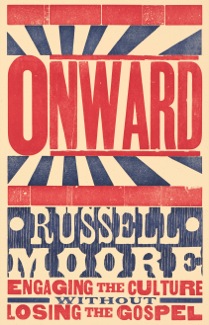
Onward: Engaging the Culture without Losing the Gospel - A Review

If you are a Christian struggling with how to find a way to positively engage the world around you while remaining orthodox, then Russell Moore’s book, Onward: Engaging the Culture without Losing the Gospel, is for you.

Moore has been on various news outlets over the past few years as a spokesman for conservative evangelicals, particular for the Southern Baptist Convention. If this has caused you to wonder what he is doing and why he says the things he says, then this book will be helpful for you, too.

Avoiding Twin Dangers

Moore is outlining the twin dangers of Christian engagement in the public square. On the one hand, it is easy for Christians to become like grumpy old people telling kids to get off their lawn. On the other hand, it also easy for Christians to leave unexamined many of the ills of society as long as it doesn't directly impact them. We can’t afford to fall into either one of the errors if we are going to reach the world with the good news of the gospel.

The thing that keeps us from falling into either of these errors is a proper understanding of the gospel. Moore begins by discussing the culture shift that has pushed Christians from the center of the cultural conversation to the prophetic edges. He is careful to note this reality reflects the fact that the values coalitions of previous decades sounded very Christian without actually being converted by the gospel. As the conversation shifted away from something that resembled a Christian ethic, the Christians that remained faithful to the gospel seemed to have two options: either compromise or get left out of the conversation. This is a false dichotomy.

Gospel Foundation, Contemporary Issues

Early on in the volume, Moore digs into the meaning of the gospel. He makes it clear that the gospel isn’t about either personal salvation or social justice; it’s about both. If the Christian church loses its understanding of personal conversion and individual redemption, she loses one of the cornerstones of the gospel message. Salvation is not based on redemption of the whole, but on Christ’s atonement for the individual. At the same time, if Christian individuals miss the central redemptive themes of historic Christianity, which offers a strong dose of the pursuit of justice in society, then they miss out on some of the key implications of their own gospel conversion; redeemed individuals seek to redeem society.

With both these aspects of redemption in mind, Moore addresses a number of major issues that are central to the contemporary cultural discussion: immigration, religious liberty, and family stability. These are social issues that tend to divide Americans from each other and are the topics that commonly lead to calls for compromise and accusations of a lack of compassion.

Convictional Kindness

This is where Moore’s call for convictional kindness comes in. Convictional kindness is standing firm on ethical norms without shame, while confronting the angry accusations of the surrounding world with a gentle spirit. The conviction is birthed from confidence in the objective moral order in creation that is witnessed to by the special revelation found in Scripture. It requires rational, well-thought through positions that are both coherent and correspond to the truth in God’s creation. Kindness is built on the understanding of our own personal need for redemption. We, too, are growing, learning people who have pasts that we may have forgotten. Those that we disagree with, even those waving fingers and shouting in our faces, are people made in the image of God who deserve to hear the message of redemption. That’s a message they won’t be able to hear if we are shouting back. In fact, joining in the shouting will keep our “conversation partners” from hearing both our arguments on the issue and the message of the gospel.

Moore’s overall argument is hugely important as Christians seek to be salt and light in a world that (still) desperately needs the gospel. He also makes subtler points that are even more significant for Christians to hear. For example, in discussing the issue of gun control or gun rights he explains that there is no single Christian position. He has a position, which he does not articulate, but he notes more significantly that no one can speak for an official Christian position. There are certainly moral elements to the question, but at the same time the bulk of the argument is prudential and legal. It would be unethical to leave loaded guns within the reach of toddlers, but the capacity of a magazine and the process for background checks for weapons are prudential questions. This doesn’t mean that the question is not significant, but that we should be careful about promoting our preferred position as a gospel truth when it isn’t. Doing so encourages wrangling within the body of Christ and it largely discredits the message of the gospel because the faulty logic is apparent to any who care to see it. In this example, the Second Amendment is a benefit of being American, not a right imbued by the gospel.

Conclusion

Onward has been published at a time that conservative Christians in America feel like they are under assault because anything resembling a Christianesque ethic is being pushed farther toward the margins. Moore helps by explaining that Christianity has always been strange and that we should continue to cling to our strangeness. We have to articulate the gospel in our homes, in our churches, and in our culture if we are to have an impact. Moore’s book is an encouragement to continue to live faithfully in private and in public, but with a confidence founded on the truth of the gospel not fueled by a majority in the polls. 

The Prosperity Gospel: A Constant Danger

Last weekend I heard the prosperity gospel, in a soft version, preached from the pulpit. We were visiting a church and the pastor declared (I paraphrase), "If you follow God's plan, you will prosper." It was toward the end of the sermon, when he was tacking on some duties that the congregation should perform (pray more, witness more, etc.). He certainly wasn't going full prosperity gospel, but it reflected the notion that if you do the right things, then God's got your back and will make everything work out.

That formula is an easy one to slip into, but it is so very dangerous. 

God doesn't usually make it easy for his most faithful servants, at least not according to what Scripture tells us. In fact, there is a regular pattern in Scripture that those whom God uses most suffer the most deeply.

Our hearts long for ease, but our usefulness to God requires a constant striving, which inevitably entails struggle. There is danger of a soft prosperity gospel in our lives each day because, in reality, we all want it to be true.

The problem with the prosperity gospel is that it teaches us that only when we are comfortable are we being blessed by God. That teaching can lead to despair when things aren't going our way.

The Hardcore Prosperity Gospel

The soft prosperity gospel is a constant danger to most believers, particularly American Christians, but there is a bigger, darker problem that has arisen in the heart of the wealth of America. That problem is the full-fledged, all-out prosperity gospel.

Most proponents of the prosperity gospel have learned to mask their message carefully, at least in public forums, since there has been a tendency among orthodox theologians and pastors to call them out. However, recently Creflo Dollar made the mistake of being open about his understanding of Christianity on Twitter.

He, or someone who has the keys to his account, posted a Tweet that read, "Jesus bled and died for us so that we can lay claim to the promise of financial prosperity. #ProsperityInChrist #WealthyLiving"

Dollar deleted the Tweet after being bombarded by negative comments. This screen capture was taken in anticipation of that on 8 Oct 2015.

Dollar deleted the Tweet after being bombarded by negative comments. This screen capture was taken in anticipation of that on 8 Oct 2015.

The tweet was retweeted by many, responded to by numerous critics, and generally drew a negative reaction from orthodox Christians on Twitter. As a result, Dollar deleted the tweet. Thankfully screen captures last forever. (Which is a warning for those who use social media to vent.)

Sometimes people delete tweets because they are ambiguous and can be misinterpreted. Sometimes they are deleted because of typos or because they have a dead link in them.

Dollar, or someone on his team, deleted this tweet because it was not sufficiently ambiguous. The veil was drawn back on the prosperity gospel. The message was made more clear than simply a promise of living "your best life now" and the true belief system was brought to the surface.

Deleting this tweet was an admission of guilt on the part of Creflo Dollar.

The purpose of this post is to point out the potential error and to point toward some resources for understanding and dealing with the theology of the prosperity gospel. The prosperity gospel, in many forms, is alive and well; we need to kill it in our hearts and help others to see what it really is.

Resources for combatting the prosperity gospel

Here are some helpful resources for understanding and confronting the prosperity gospel in your own heart and in the world around you.

What is the Prosperity Gospel, by Andrew Spencer.

Is the Prosperity Gospel Biblically Sound, by Andrew Spencer.

The Importance of Rejecting the Prosperity Gospel, by Andrew Spencer.

Errors of the Prosperity Gospel, by David W. Jones.

The Prosperity Gospel in My Own Heart, by David W. Jones.

The Poverty of the Prosperity Gospel, by Vaneetha Rendall.

Six Keys to Detecting the Prosperity Gospel, by John Piper.

The Prosperity Gospel: Decietful and Deadly, by John Piper.

Why I Abominate the Prosperity Gospel, by John Piper. (Video)

How to Help Friends Escape the Prosperity Gospel, by John Piper.

Confronting the Prosperity Gospel

Whenever someone writes a blog in opposition to the prosperity gospel (assuming anyone reads it), a backlash always comes from supporters of the individual criticized or the movement as a whole. Accusations are launched something to the effect that "Christians shouldn't attack other Christians," or "Have you followed Matthew 18?" The irony of commenters on blogs posting questions about Matthew 18 is often overlooked.

True enough, I haven't approached Creflo Dollar in person to confront him with his sin. However, he posted it on Twitter, which means that he put his thoughts out there for public critique.

For the first point, Christians should critique other people who claim to be Christians when they preach false doctrines. And when they do so publicly, that critique needs to be public. Paul (who was way more sanctified than I am) seems to have done just that to Peter when he was in error (Gal 2:11-13) with the hope of helping Peter and the believers that were caught in the theological error.

Frankly, this latest tweet by Dollar is only a recent proclamation of what he has previously clearly stated in his sermons and books. In other words, this tweet isn't the issue; it's the broader theological movement. (A more sustained critique of Dollar and the prosperity gospel movement can be found in David W. Jones' book, Health, Wealth, and Happiness.).

shai linne's song "Fal$e Teacher$" from his newest album, "Lyrical Theology Part 1: Theology".

The move toward defensiveness of a person or a movement is natural for those deceived by the prosperity gospel (or any other false teaching). Dollar is a charismatic preacher and he offers hope of wealth to many that strongly desire it. But it is a hope built on false doctrine, so it isn't a true hope.

However, maintaining doctrinal orthodoxy is vital to the health of the church. There is a reason that liberal denominations a dying. It's because their theology lacks the nutrients necessary to sustain them. Unfortunately, the prosperity gospel continues to flourish because of continued spiritual blindness by its adherents and much more careful (except with this tweet) presentation of the true nature of their message.  However, it remains a mushroom religion--kept in the dark and fed on manure--that can't survive when trials come.

Ultimately, the reason we should confront the prosperity gospel movement is not to win points on the internet, but because it is a false gospel. It presents the idea that Jesus came to make us wealthy. In reality, he came so that we could become holy. To lose that message is to lose the essence of God's gracious hope for the world.

This is all the reason we should need to publicly and openly oppose this movement of false teaching. It reflects true neighbor love to those trapped in the movement or susceptible to its clutches.