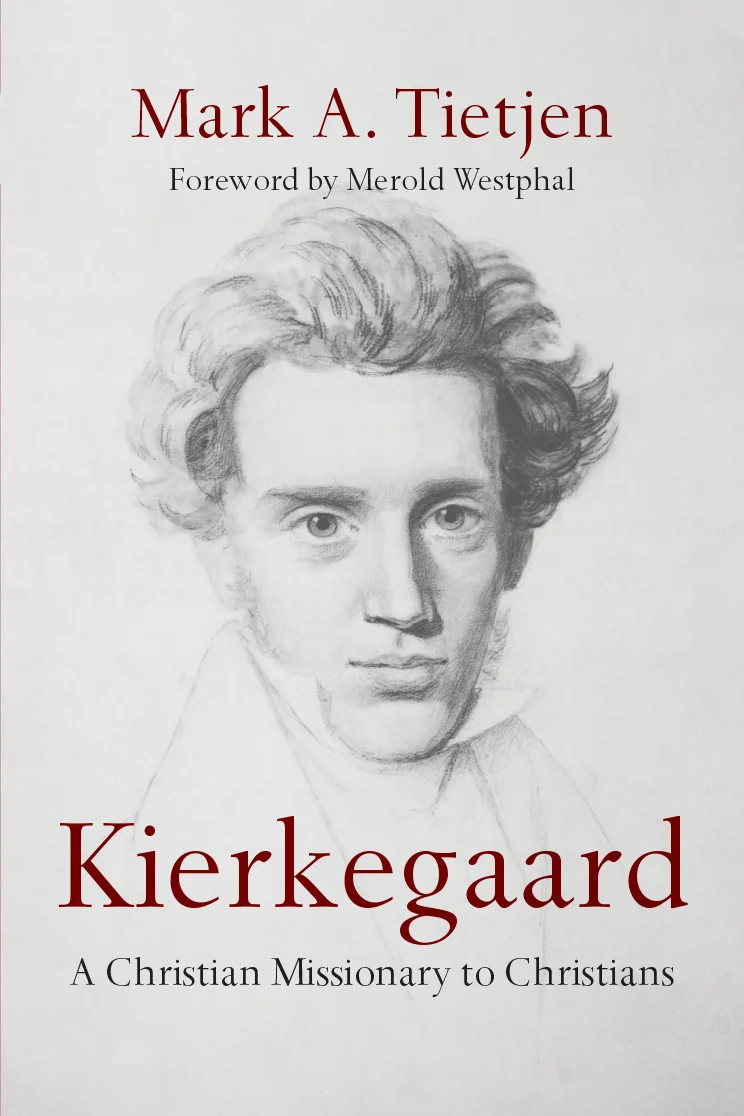
Political Church - A Review

As C. S. Lewis once wrote, “A sick society must think much about politics, as a sick man must think much about his digestion.” By this metric our society is very diseased. Even given the special focus on politics caused by it being a Presidential election year, society is excessively focused on politics because our society is a festering wound of dislike and division.

One might think a book on political theology would simply contribute to the excessive focus on politics and the sickening mix of politics and religion that we are seeing with the Religious Left openly lobbying for their flawed candidates and the Religious Right arguing for theirs, too.

However, in the hangover from this election, the church will do well to pick up Jonathan Leeman’s recent book, Political Church: The Local Assembly as Embassy of Christ’s Rule. This is the book on nutrition for the glutton suffering from indigestion after binging on junk food.

The thesis of Leeman’s book is that “the church is a kind of embassy, only it represents a kingdom of even greater political consequence to the nations and their governors. And this embassy represents a kingdom not from across geographical space but from across eschatological time.”

This would be a dangerous theory if Leeman were arguing that the church has the same political purpose as a parliament or congress. There is a difference between the church and the state; they have overlapping magisteria but different means of influence. Leeman’s vision of the church and the state is not of two kingdoms, but of a single kingdom with state and church reflecting the authorities of the current kingdom and the future kingdom, respectively. Leeman stands well within the Augustinian tradition via a deep interest, though not uniformity, with Oliver O’Donovan.

Summary

This is not an introductory volume on political theology. Leeman’s discussion is a distinct approach to the place of the church in contemporary politics, but understanding this volume requires a fair understanding of the various political theologies that he is critiques and is building upon.

At the same time, Leeman’s volume begins a step before many others do by addressing some of the basic questions that one must understand before attempting a political theology. The first two chapters of the volume address the important questions, (1) What is politics? and (2) What is an institution? The various meanings of these terms are discussed in some depth before moving on. Though Leeman leaves some flexibility in the terms for his own use, his discussions of historic definitions provide context for the remainder of the book.

The next four chapters outline a positive political theological using a biblical theology as a foundation. The chapters run along the progression of creation, fall, redemption, and restoration.

The chapter on creation places God at the center of all politics. He made this world and is the just and righteous judge of all things. It is his authority that is represented through the work of both the government and the church. The nature of politics is shaped by the nature of the creator God.

In dealing with the fall, Leeman goes beyond the actual original sin of the primal couple to discuss how falleness has influenced all human interactions since that time. Leeman walks through the biblical storyline to show how sin has influenced government and increased the need for its justice.

The chapter on the politics of the new covenant focuses on the ongoing need for the work of the cross to be done in public. This means repentance, forgiveness, and good natured striving for the common good. Leeman is careful to distance his view from theonomy. In fact, he notes that attempts to bring about the eschatological kingdom on earth now never end well. Instead, Christians should work to apply the gospel as much as possible to earthly situations as one would expect of citizens on the new covenant kingdom.

The last chapter deals with the politics of the kingdom. However, this doesn’t refer to the eschatological kingdom, but is an especial focus on the polity of the local congregation. Leeman exercises his Baptist muscles in talking about the importance of church membership, credo baptism, and right practice of the Lord’s Supper. These are elements of the church that prefigure the coming kingdom. By being faithful to justly administer its own borders, the church stands as witness to the kingdom that is to come. The church is a political body because its policies and ministry influence the world, though it begins at a very local, individual level.

Analysis

Leeman’s book is a helpful approach to political theology because it begins with the narrative of Scripture and asks what the text says about the church’s political engagement. By beginning with the ideas of Scripture and working out, he formulates a much more distinctively Christian political theology.

In other words, political theology generally begins with a vision of what good is, which is often derived from an interpretation of Scripture. However, most political theologies then apply an extra-biblical method to achieve the desired goods.

For example, the Social Gospel movement sought (or seeks) to bring about the kingdom largely through a Rawlsian approach to government that favors strong individualism and a preference for government engagement in solutions at nearly every level. This approach then creates an implicit need for the church to pursue justice by seeking greater government control and introducing more radical human freedoms. The church’s main role in this vision of political theology is as a lobbyist to influence the state’s earthly authority.

A similar criticism could be levelled against movements that are more theologically conservative, as well.

The point is that Leeman’s volume offers an approach that is designed to constrain the Church to her proper role in pursuing a right polity within her own area of influence. The message of the gospel as it is preached in the church should affect all of life, but the authority of the Church in the present age is somewhat limited. Leeman’s biblical theological approach to political theology helps to keep the church in her lane, and rightly focused on the gospel.

Leeman’s point is that the church is an inherently political institution. When it is functioning well, it cannot help but influence the world around with the message of the gospel. If the church fails to equip people and influence communities toward justice, as it is biblically defined, it has failed in its mission. However, when the church begins to engage in politics to increase redistribution of wealth through taxation or enforce certain moral codes through judicial means, then the church has exceeded its authority. Between these failures is the proper political role of the church.

This is a helpful resource for those who are familiar with the general content of political theology. Leeman’s approach is innovative and fresh. It is distinctly biblical. As such, it is a useful resource for those seeking to live rightly in our fallen world.

Note: I received a gratis copy of this volume from the publisher with no expectation of a positive review.

Speaking of Ethnicity

Race relations in the United States is becoming a third rail topic. Better to discuss politics and religion than to suggest there might be ongoing patterns of systemic racism in some circles.

If social media is any indication, some groups seem to think that by even discussing racial differences, others are fomenting and accentuating racism.

In extreme cases this is true. However, in most cases, the people discussing racial issues are dealing with the real difference between the minority and majority experience in the United States.

The Myth of Color Blindness

One of the arguments against discussing race is the argument that society should be “color blind.” The term means that we should not consider the color of people’s skin when making evaluations of people and their work.

Image Credit: Old Couple, used by CC license, http://ow.ly/oA8T303zFnk

Image Credit: Old Couple, used by CC license, http://ow.ly/oA8T303zFnk

I believe that most people engaged in discussions of race relations see “color blindness” as a desirable outcome in the long term. In Martin Luther King, Jr.’s iconic “I Have a Dream” speech, part of his dream is that people will not be judged by the color of their skin. Someday a future generation may reach that point.

Despite the desire to have a world in which skin color does not matter, that world does not exist now. We have a world in which ethnicity and skin color still do matter much more than they should.

At this point, there are some who will swoop down onto my argument like a vulture to point out certain statistics. What I’m speaking of here is more than just statistics—whether the statistics support certain percentages of killings by ethnicity or disparate academic outcomes.

I’m speaking of the observed reality that my middle-class, professional, African-American friends have on average been pulled over many more times than I have for no more apparent cause. I’m speaking of the reality of my own observations of minority males of color being treated differently than me by authorities even while we were both in uniform. I’m speaking of the internal impulse in my own mind to make snap judgments about people based on their appearance.

I like statistics (in fact they are a fun part of my job), but they don't always tell the whole story. Sometimes they tell a different story than reality.

To claim that skin color does not influence societal evaluations is foolish. It’s like a person ignoring an infection in a limb.

Our Wounded Reality

Imagine if you get a cut in your finger while working a dirty job. You ignore the pain and keep working. You tell your hand that it is OK and that it is just like your other uninjured hand. Both hands are equally valuable to you, therefore it should stop hurting. Meanwhile it gets infected. However, you don’t clean the wound or treat it. You tell your hand that the cut was inflicted a couple of days ago and that it hasn’t been cut recently, so it should stop aching. Slowly the infection may heal, if conditions are right. Or, quite possibly, ignoring the legitimate needs of your hand could cause the infection to spread and perhaps even blood poisoning to set in.

At best, the neglected hand heals itself but may scar significantly or take longer to fully heal due to the lack of medical care. At worst, the blood poisoning spreads and kills the individual with the injured hand. In both cases consequences could have been avoided by taking timely, appropriate action.

Few people would ignore an injured hand. Instead, most people react to a cut by getting first aid, keeping it clean, and treating the injured hand differently for a time. The common sense understanding is that the wounded hand may have different needs for a time.

There is wisdom in recognizing there is a difference between the hands and taking care of the wound.

Our contemporary reality of race relations is something like this analogy.[1]

The Reality of Injury

To provide just one example, African-Americans were economically and socially harmed by American society by being enslaved and later by unjust laws that were in place in the middle of the last century. There are enough evidences of ongoing negative racial bias that we need to accept that such bias continues to exist in some cases. (See: the alt-right movement)

There has been legitimate injury done that will necessarily take time to heal. It may also take focused attention to promote healing, which includes at least being free to talk about racial differences without being accused of fomenting division.

Until healing occurs, we need to recognize that there are differences in society between the experiences of people of different ethnicities. Stereotypes built on generations of observed behavior, depictions in entertainment media, and self-selected identities all impact the experience of people in the United States. It takes time to change these deeply seated societal ideas, but the first step is to recognize they exist. Someday we may be able to be “color blind,” but we aren’t there yet. In many cases we really aren’t that close.

Moving Toward Change

We should long for the day when ethnicity is a point of interesting difference, like discussing where people grew up and what their favorite home-cooked food is. However, the experience of racial minorities in the United States is often significantly different than that of the majority. If you want to know what sorts of differences exist, talk to a few minorities. Their experiences will be unique, but some common patterns will tend to emerge if the sample size is large enough.

Unless we address the injustice of some of those differences, the healing process will not progress very quickly. Unless people are free to explain what is wrong without being accused of hate and division, we can never have meaningful conversations.

We can certainly have meaningful discussions about the best ways to deal with our differences. There is no simple solution for undoing the intentional harm inflicted in and by previous generations. There is no single, easy method of eliminating the often obscure, but deeply seated biases of contemporary perceptions.

However, until people are allowed to have open, charitable conversations about the existence of differences because of ethnicity, society will be unable to move to the next phase of healing.

[1] The analogy obviously breaks down at some point. I am not inferring that racial minorities are somehow infected limbs that should be removed from society. Quite the reverse. I am hopeful that this analogy will illustrate the interconnectedness of society and the value in promoting social healing for overall health. Just as one does not blame the hand for being wounded, we should not blame minorities for past ills inflicted by society.

The Marvelous Pigness of Pigs - A Review

God created nature so that it has integrity. Different pieces of creation have purpose according to the way God designed them. These differences are part of God’s design. There is a moral order in the created order that should be honored.

When humans distort the moral order of the created order, it results in evil, suffering, and sin. This is true whether it is the distortion of human reproduction, relational development, or farming practices.

I share this understanding of the moral order of the created order with Joel Salatin, who recently wrote The Marvelous Pigness of Pigs.

Forgiveness Farming

Salatin is a libertarian farmer. He runs Polyface farm, practicing what he calls forgiveness farming. His method of farming entails stewarding his farm, with both crops and animals, in a way that mimics natures patterns and harnesses the processes of nature. Therefore, he eschews monoculture, but instead rotates crops and animals on a regular basis.

Farming for Salatin is about feeding his family while making the world a better place. He is careful to emphasize that maximizing profit by outpacing the ability of his land to replenish itself is not a goal. In fact, it’s exactly the sort of thing that Salatin works to prevent.

Salatin is a somewhat more modernized version of Wendell Berry and Gene Logsdon. He recognizes that the farm should only produce at nature’s pace and that farmers need to take the long view of economic stewardship. At the same time, both Berry and Logsdon are strong proponents of more rustic farming methods. In particular, they both advocate horse farming.

In contrast to Berry and Logsdon, Salatin does not eschew innovation, but he still keeps a close eye on the patterns in nature. Find what makes a pig healthy and allow it those conditions. In this manner, Salatin's perspective on farming is much less romantic and much more realistic than that of Logsdon and Berry. As a result, his vision of farming has a better chance of implementation.

Preaching to the Choir

For those already questioning the factory farm methods, The Marvelous Pigness of Pigs. Even for those who are just skeptical and wondering if there is another way, Salatin presents a case that will seem like common sense.

This volume, however, offers more eloquent argument than compelling data. Those committed to agribusiness will not find The Marvelous Pigness of Pigs very convincing. This is a nice book full of anecdotes, not a scientific argument.

Though Salatin is a farmer, the subtitle of the book seems to indicate the topic of the book includes a broader environmental ethic. It’s certainly present in Salatin’s writing for those equipped to find it. Respecting the integrity of creation is the beginning of a robust Christian environmental ethics. However, the focus of the book quickly slips into Salatin’s wheelhouse: the evils of the factory farm, the benefits of his methods of farming, and the importance of good quality food.

Some Points of Weakness

Overall, the book is an engaging read. Salatin is nothing if not an interesting writer. There is a theological point in the book that is well worth listening to.

At the same time, this volume falls short of excellence on several important levels. First, Salatin’s writing style is raw. In trying to make the book entertaining he significantly overwrites in places. There are exaggerations, sandbags, and linguistic flourishes that would have made good blog posts, but make reading several hundred pages tedious. Good editors should have assisted Salatin in writing better. Toward the end of the book, Salatin repeats himself a lot. Statistically speaking, most people don’t finish books. However, those of us who do finish books like to find original content at the end, too.

Second, the book is theologically anemic. There is no doubt Salatin is an engaged and faithful Christian. However, the book lacks awareness of basic doctrinal teaching. Salatin has familiarity with Scripture, but his repeated misuse of texts to make points is grating. In many cases Salatin makes a sound, biblical point, but uses an unrelated proof text to support it. Additionally, the translation of Bible quotes seems to have been selected for words that match his point, rather than faithfulness to the text and context of Scripture. These are the sorts of weaknesses I expect to find in independent blogs on the internet or self-published e-books, not in books from established publishing houses.

Third, the thesis of the book undermines a holistic environmental ethics. According to Salatin, “The thesis of this book is simple: all of God’s creation, the physical world, is an object lesson of spiritual truth.” (pg. xiv) This sort of matter-spirit dualism is the cause of much of the heartbreaking failure of many fundamentalist and evangelical Christians to engage in environmental ethics. The physical world is not merely an object lesson for spiritual truth. It is not even mainly an object lesson for spiritual truth. The basis for a Christian environmental ethics must include the inherent value of the present creation. Minimizing that value by describing God’s creation as a mere object lesson does not provide the best or most biblically faithful foundation for Christian environmentalism.

Some Points of Strength

Despite these critiques, Salatin should be applauded for engaging in a discussion of environmental ethics from a conservative Christian perspective. As my own doctoral research has shown, there is too little positive engagement by conservative Christians on the topic. As a Bob Jones University graduate (and previous alumni of the year), Salatin may help some Christians who have written off environmental concern as “earth worship” see that there is value in caring for the environment.

I also celebrate Salatin’s continued efforts to recognize the unnecessary suffering of animals that occurs in some modern factory farms. In particular, Salatin’s call to utilize the market to entice meat producers to change their methods is a healthy approach. If people begin to demand meat from animals whose God-given value is recognized during their lives and in their deaths, then some unjust practices can be eliminated without the inevitable secondary consequences of additional governmental regulations.

Conclusion

There is much to be praised in this book. Salatin does well to show that one can be an orthodox Christian, committed to the fundamentals of the faith, and still be concerned with proper, loving stewardship of creation. However, there were significant opportunities for a more theologically robust case for creation care in this text. Salatin failed to take them. The book is only moderately successful as a result.

Note: I received a gratis copy of this volume from the publisher with no expectation of a positive review.
Every Good Thing - A Review

Some Christians seem to doubt the goodness of the world around. They take the opposition of “the world, the flesh, and the devil” to mean that somehow the material world around is sinful and must be repudiated.

This position has its roots in an exaggerated application of Jesus’ commands to seek the kingdom first and store up treasures in heaven. These commands are intended to call Christians away from the this-worldly focus that tends to consume our minds by virtue of proximity.

The anti-world attitude has been popularized in Christian hymns like, “This world is not my home, I’m just a-passin’ through.”

We have reason to hope in the coming restoration of all things. This is an eschatological hope. However, that hope should inspire action in this world, not cause Christians to withdraw into a bunker mindset.

The balancing act between hoping in heaven and working in this world can be difficult, but it is absolutely necessary.

The recent book from David W. Jones, Every Good Thing, is a valuable resource for Christians seeking to balance heavenly mindedness with this-worldy goodness.

Every Good Thing is an intentionally introductory volume, which has as its main goal the reunification of the Christian life. We are called to be seven-day Christians, who apply biblical ethics to each decision, and every situation. We are driven, because of the demands of a biblical worldview, to see each area of our life as subordinate to the lordship of Jesus-Christ. Jones’ recent book helps with that reunification.

Summary

The book is brief, with a little over 100 pages of text, but in a small format. It is designed to be easily read, digested by a wide audience, with clear lines of application. The format is ideal for a short term book study in a small group or use as a text in a discipleship context.

The first of six chapters provides a foundation for the remainder of the volume, defining terms and outlining how Jesus’ life and ministry fits into the discussion of goodness and the material world. Chapter two deals with work and vocation. The topic is en vogue in conservative Christian circles, but mainly because it has been neglected for a number of years. This chapter charts a course for reuniting the Christian life through a better understanding of calling.

The third chapter seeks to balance out the idea of work and vocation with a discussion of rest and Sabbath. One of the possible side-effects of viewing work as an opportunity to serve God is that it will cause a restless, relentless push for productivity. That isn’t the point, as Jones stresses in the third chapter. Rather, rest and Sabbath are gifts from God to balance the goodness of human productivity with the joy of God’s provision.

Chapter four outlines a biblical theology of wealth and poverty. Here, Jones pushes back against attitudes that see spirituality as necessarily connected to financial prosperity. He fights the errors of the so-called Prosperity Gospel as well as the competing errors like asceticism. Christians need to value the world properly, which generally means walking a narrow road between extreme errors.

In the fifth chapter, Jones takes on the idea of valuing creation and stewardship. Environmental ethics has generally gotten a bad rap among conservative Christians. Part of this is that much of the environmental movement has gone head over heels for anti-human attitudes that run contrary to Scripture. However, there is a strong place in Christian theology for rightly caring for the creation God has entrusted to humans. Jones makes a good case for that in this chapter. He then closed in Chapter Six with some summary comments, pointing toward areas for further study.

Analysis and Critique

This book’s greatest limitations are in its format. The accomplished scholar will pick up this brief volume and wonder what it adds to the scholarly discussion. The answer to that is simply, nothing. No chapter is comprehensive. There are no footnotes. Every rabbit trail is not chased. A particular set of assumptions about Scripture and theological method are made and not defended. That is the nature of this book as an introductory volume.

Conversely, the greatest strengths of this book are in its format. The layperson or young theological student can pick this book up and gain a quick understanding of a conservative perspective on the relationship between Christianity and the surrounding world. It is grounded in a distinctly orthodox worldview, and intended to bring people into the conversation that might otherwise not be exposed to these important ideas. 

This book fills a desperate need for the Church. It helps form the connection between a Christian worldview and the world around. Jones has written winsomely and carefully. This is a book that would serve well in a number of settings in the local church, and would be a particularly useful tool in discipleship activities with young Christians.

Note: I received a gratis copy of this volume from the author with no expectation of a positive review.

Freedom of Religion is Freedom of Conscience

One of the biggest problems facing Christians in the United States is a decreasing tolerance for religious viewpoints. More precisely, there is a decreasing tolerance for people actually living out the religious viewpoints that they claim to believe.

Image used by CC license. "It depends on the cage that you're in" by Guercio. http://ow.ly/1ddp300xhpi

Image used by CC license. "It depends on the cage that you're in" by Guercio. http://ow.ly/1ddp300xhpi

Part of the growing pressure on religion is the fallacious assumption that religious thinking is somehow in a different category than non-religious thinking. This assumption is based on a naturalistic worldview that assumes that anything religious is inherently fictitious and therefore arbitrary.

The denigration of religious freedom because of a dismissal of religion as a category fails to recognize the significance of freedom of conscience. It threatens the ability to live in a pluralistic society because it values one totalizing worldview over all others. Opponents of religious freedom think that infringing on the conscience of believers will make the world a better place, but they fail to recognize that religious freedom is simply a subset of freedom of conscience.

The Unfounded Assumption

Making the unfounded assumption that religious thought is somehow inferior to supposedly non-religious thought allows people to argue there is no valid basis for declining to purchase potentially abortion inducing drugs or distribute them to others. When someone makes the assumption that religious thought is purely fiction, then there is no basis for not preferring the supposedly non-religious thought that is dominant in society.

By this way of thinking, religion is just make believe. Therefore, if someone bases a moral determination about a medicine which terminates a pregnancy on that religious foundation, there is no reason to honor that belief. After all, morality based on the make believe doesn’t really count, does it?

But this sort of argumentation—more often assumed than stated—begs the question.

In other words, instead of considering whether someone may have a legitimate basis for choosing not to purchase drugs that may end the life of a child, it merely states that any grounds that do not support unrestricted abortion are illegitimate because they have a religious foundation.

There are several problems with this sort of argumentation.

What’s Wrong With Discarding Religious Reasoning

First, it is incorrect to assume that only religious arguments can oppose abortion. For example, using a basic Kantian categorical imperative, an argument can be made that abortion is wrong because if everyone killed their children, then the human species would die out. Unless that is a desired end, then there is a case to be made in opposition to abortion on non-religious grounds.

There are other cases than abortion inducing drugs in which arguments made on religious grounds could be made on non-religious grounds. The fact that many irreligious people have accepted the dominant worldview that truth is merely a social construct limits the number of people making reasoned arguments contra the current societal consensus. However, unless one assumes that the dominant social construct is always correct, there is little reason to reject all other thinking (religious or otherwise) based on the popularity of post-foundational epistemological assumptions.

Second, simply because an argument has a religious foundation does not necessarily mean that is invalid. In order to rationally hold that belief, one would have to first prove that the religion itself is invalid. While some are convinced that all religion is false, the vast majority of humans in the history of the world (including most currently living) do not agree.

However, the invalidity of religion is exactly what so many contemporary moral arguments in the public square simply assume. This allows people to reject arguments they find inconvenient based on the genetic fallacy, without considering the merits of the opposing position or whether there may be legitimate grounds for dispute. In other words, religion is false, therefore any arguments based on religious principles must also be false, therefore do what popular opinion in society demands.

This is Too Important

If these were merely internet chatroom arguments about the existence of God or the eternal nature of the human soul, then the fallacious argumentation wouldn’t be as dangerous. But the problem is much more significant.

The coercive power of the United States government has grown to the point that it is impacting life or death decisions. The current administration’s regulations that require the purchase of drugs that may cause the termination of pregnancy make a huge moral statement and place a grave moral burden on many believers.

This issue is not one of trivial concern, since it is literally a life or death issue. Those that hold that terminating a pregnancy is a moral evil have reasons for objecting on the deepest level to purchasing or distributing the means by which a life is unjustly ended.

But arguments that hold that abortion is wrong are most often framed in religious terms. In the contemporary social milieu, the assumption is often made that religion is fiction, therefore religious arguments are unimportant. Therefore, any accommodation for faithful religious practice that excludes the purchase and distribution of abortion inducing drugs is invalid.

This sort of argumentation is narrowly circular and fails by being insufficiently self-reflective.

What if every religion isn’t false? What if every belief system isn’t merely a social construct? What if the question of life and death is so important that there needs to be room for dissent, especially in favor of not contributing to needless deaths? What if the social construct that assumes that religion cannot represent truth is incorrect? What if religious and supposedly non-religious thought are in the same category?

These questions are typically not asked, nor permitted to be asked in public debate. Supposedly non-religious thought has gained the ascendency in popular discussions and religious liberty has been pushed into the corner. And yet, religious liberty is nothing more than freedom of conscience.

Freedom of Religion is Freedom of Conscience

Freedom of conscience requires that we do not coerce behaviors when there is a reasonable basis for objection. This is what allows someone who is a non-religious, consistent pacifist to be excused from military service. It doesn’t mean that we have to agree with the person’s thought, but freedom of conscience requires us to leave room for those who have reasonable objections to live consistently with their convictions. There are cases to be made for exceptional circumstances, where someone might need to be coerced, but those are exceptions to a general practice.

Freedom of religion is simply freedom of conscience built on a reasonable basis that is not purely naturalistic. Just as those who believe that eating meat is murder should not be forced to purchase meat for the office barbecue, those who believe terminating a pregnancy is murder should not be forced to buy abortion inducing drugs for their employees. Similarly, those who believe that some religious services denigrate their religion should be permitted to decline participation in those services.

Religion is not another category of thought from non-religious thinking. At least, it is not for those who actually believe what their religion teaches.

This raises an important concern. Couldn’t someone falsely claim their conscience did not allow something simply because of personal dislike or bias? Yes. However, just as we must allow for some abuse of the welfare system to occur so that a necessary safety net is available for those that actually need it, we need to allow for some abuse of freedom of conscience due to irrational and unjust biases.

This is part of the tolerance needed to live in a pluralistic society. There needs to be room for people to disagree with us, even if we don’t like the basis of their disagreement. This is especially true when it comes to issues of prime significance, like desacralizing religious ceremonies and issues of life and death. If people are not free to disagree in those significant issues, then there really is no room for freedom of conscience.

We need to learn to disagree with respect, but there needs to be room for open disagreement if we are to have any legitimate freedom at all.

Three Political Dangers of Moral Relativism

There are three political options that offer strong temptation on a regular basis in a relativistic world. For individuals whose morality is unpinned from an objective reality, these are logical possibilities not temptations. In other words, these three political options are viewed as a menu of choices rather than a list of dangers when relativism is the accepted epistemological basis for morality.

As we sort through the muddle of mixed morality, we need to recognize these dangers for what they are. Until we recognize them, we can take no positive steps to avoid them. I have been helped recently by reflecting on the moral situation in Tolkien’s The Lord of the Rings as it reveals much about contemporary politics.

Lesser of Two Evils

The first political danger is to choose the lesser of two evils.

In a fallen world, sometimes we do need to accept proximate justice. We must work toward what good we can accomplish, recognizing there is much good that is left undone. Such compromise is necessary sometimes, but not always. There are times when we must reject false dichotomies and choose a third option.

Photo Credit: Battle of Vera by Lord Willington1815 http://ow.ly/4nkjpl Used by CC license.

Photo Credit: Battle of Vera by Lord Willington1815 http://ow.ly/4nkjpl Used by CC license.

In the case of politics, this sometimes means that we attempt to impact the future by voting for a cause that is certain to fail in the present. This is why there is a case for a write-in ballot or voting for a third party in an election. It is unlikely that such a candidate will win in our present circumstance, but it gives evidence that we will not be forced to choose the lesser of two evils. In politics, we will never choose perfectly nor have perfect options to choose from, but sometimes the two options presented by our system are simply unpalatable.

There is justification for choosing the lesser of two evils in some cases, such as amputating a limb instead of starving because a hand is pinched in a rock. Before we get to that point, however, we should consider whether there are other options.

Without a thorough acceptance of the existence of objective good, it is unlikely that someone will look past two mediocre options to find a third option that better matches the moral order of the universe.

This danger can be witnessed in Saruman’s alliance with Mordor in an attempt to defeat Mordor. On the one hand he saw a total defeat of good by Mordor if he did not establish his own empire. On the other hand he could see that he would have to use many of Mordor’s methods to build an empire capable of resisting. The lesser of two evils seemed to him to be to turn Orthanc, his little kingdom, into a mini-Mordor in hopes of achieving the lesser of two evils.

At some point, he made a logical choice in his own mind, but it becomes clear later in the narrative of The Lord of the Rings that he did not sufficiently consider a third option that was not evil at all. This led him to use Mordor’s tactics to fight Mordor, and ultimately corrupted any good he could have hoped to accomplish.

When in Mordor

The second political danger that regularly presents itself is to use unwholesome tactics simply because the opponent uses them. This approach recognizes that evil will be done through the unwholesome tactic, but the abuse of power is justified for some later good.

Tolkien captures the essence of this error in his classic work. The One Ring offered such a draw it leads to the corruption of the formerly good Saruman. The desire for power turns him to corrupt means to gain it, supposedly for the common good.

It was, arguably, with the intent to do good (as he understood it) that Saruman sought power. There were justifiable motivations for Saruman’s alliance with Sauron. Power, if used well, can lead to doing good. But such power when concentrated in the wrong hands, is a danger in itself. It proved to be too great a lure to Saruman. His invitation to Gandalf to betray his friends reveals the dangerous trajectory of the utilitarian logic of such political alliances:

“A new Power is rising. Against it the old allies and policies will not avail us at all. . . . This then is the one choice before you, before us. We may join with that Power. It would be wise, Gandalf. There is hope that way. Its victory is at hand, and there will be rich reward for those that aided it. As the power grows, its proved friends will also grow and the Wise, such as you and I, may with patience come at last to direct its courses, to control it. We can bide our time, we can keep our thoughts in our hearts, deploring maybe evil done by the way, but approving the high and ultimate purpose: Knowledge, Rule, Order; all the things that we have so far striven in vain to accomplish, hindered rather than helped by our weak or idle friends. There need not be, there would not be, any real change in our designs only in our means.”

In his attempt to draw Gandalf to join him, he offers the lure of power through the One Ring:

“The Ruling Ring? If we could command that, then the Power would pass to us.”

But Gandalf recognizes the problem with such a quest for power, even if it was intended to be used for good. The good that is done via evil means, in this case through the use of the One Ring, would turn to evil. The goodness of the result would be diminished and ultimately corrupted because of the unwholesome means that are used to reach the desired goal.

A moral relativist will be unlikely to recognize this, because when there is no objective good there can only be a calculus of benefit for a majority. In such a calculation, the inconvenience of a few is less significant than the relative good of a larger number.

Redescription of Good

A third political danger is to redescribe something that is evil as good. This is the ultimate fruit of moral relativism as it is being fleshed out in our society.

Saruman did not see his own corruption. He had not only assumed the end justifies the means, he had begun to redefine a negative end as good to cover his immoral actions.

Thus even after sending his armies to destroy and enslave his neighbors he still tried to lure Gandalf in to his plot to gain power. He still couched his goals as being for the ultimate good. Saruman saw his perverted domination of Middle Earth as a moral good. As he said to Gandalf after being unmasked as a traitor,

“Much we could still accomplish together, to heal the disorders of the world. Let us understand one another, and dismiss from thought these lesser folk! Let them wait on our decisions! For the common good I am willing to redress the past, and to receive you.”

But Tolkien provides a foil to that relativism in the character of Gimli the dwarf:

“The words of this wizard stand on their heads, [Gimli] growled, gripping the handle of his axe. ‘In the language of Orthanc help means ruin, and saving means slaying, this is plain.’”

In this passage, Saruman is demonstrating a consistent postmodern epistemology and Gimli recognizes it. He has redefined “help” and “saving.” Gimli, being grounded in an objective epistemology, recognizes this and calls him out. Simply by changing the terms evil did not become good, though things can be made confusing through that process.

The Present Context

I realize that I demonstrate a degree of nerdliness in using the Lord of the Rings to illustrate my points. However, this is the purpose of good literature. It delights and instructs. It tells us something about who we are as humans and not simply what is happening in a fictitious world. In this case, it helps us recognize some of the dangers of relativism.

Our world is swimming in a relativism that is largely unrecognized. To many people, the acceptance of any sort of non-relativistic understanding of morality is a form of violence. We may have reached a critical mass of relativism where a plea to the self-referential incoherence of absolute relativism is incomprehensible. It seems to me that this is so.

Despite this overwhelming relativism around us, we cannot fall prey to it. In order to remain faithful to the True, the Good, and the Beautiful, we cannot use the means of the world to stand our ground. We need to be aware of these political dangers and stay away from them. There is an objective moral good in the universe. We need to avoid compromising it by using flawed methods to achieve a supposed good.

Everyone is a hero in their own story. Relativism provides an easy path to self-justification. It does, however, leave one exposed as an evildoer in the presence of a real, holy, and objective God. We need to remain faithful to our objective epistemology and avoid these three pervasive political dangers.

Kierkegaard - A Review

Sometimes it seems like the Church is asleep at the wheel. Some Christians cheerfully abandon cherished beliefs and live as if the gospel didn’t matter. Others act like forgiveness is for wimps and neighbor love is best expressed by yelling arguments to someone securely wrapped up in a headlock. Søren Kierkegaard may part of an answer to some of these problems.

I know that the answer to many modern conundrums can be found in Church History. However, I must say that I’m surprised to find so much that speaks directly to the present situation in Kierkegaard.

Like many evangelicals, I have avoided Kierkegaard. First, there is the eternal problem of how to say his name without sounding like an idiot. Second, I’m really not a big fan of philosophy. This is mainly because I see a lot of philosophy that has abandoned the pursuit of knowledge and has drifted into a pursuit of esoteric and sometimes solipsistic niggling. Third, everyone has always told me that Kierkegaard is a liberal. Combine these three things together and you have a recipe for bypassing Kierkegaard.

But Kierkegaard may be just what the doctor ordered for 21st century Christianity. According to Mark Tietjen, he’s much more orthodox than I’ve been led to believe and he’s always trying to be faithful. Most importantly, the main thrust of his work was intended to revive the gospel in Denmark. It had simply become too easy to be a Christian and play along. One became Christian by simply by being Danish and occasionally participating in churchish activities.

In addition to the laity presuming their Christianity, the clergy seemed to have lost sight of the purpose of preaching. The Danish church leaders talked about the Bible, but were ineffective in bringing it to bear on the lives of their congregants. There are some circles even among my strongly orthodox peers where that is the present condition. Frankly, it’s the sort of error that I am drawn to.

Enter Kierkegaard

In his recent book Kierkegaard: A Christian Missionary to Christians, Mark Tietjen shows how Kierkegaard’s writing can be used to help call Christians back to a more faithful life in Christ. According to this book, Kierkegaard can be best understood as a prophet explaining the weaknesses of the faith of the people of God. This is not an introduction to Kierkegaard’s work, but an apology for his usefulness for the contemporary Christian Church.

After a brief introduction, the book contains five chapters. In Chapter One, Tietjen gives a biographical overview of Kierkegaard, an apology for philosophy, an apology for Kierkegaard, and a brief overview of his work. In the second chapter the topic of conversation is Kierkegaard’s Christology. Tietjen highlights the fact that Kierkegaard was calling his readers to understand the radical, offensive truth of Christ as God-man. This is a truth that was being (and is again) overwritten by the redefinition as sin and.

Chapter Three discusses how Kierkegaard is helpful in showing what it is to be human. The psychological influence of Kierkegaard is highlighted here and the sinfulness of despair. Kierkegaard calls for the Christian to hope all things, even when things are hard. In the fourth chapter the topic is the Christian witness. Kierkegaard’s work was designed to rouse Christians to live rightly and allow the gospel to permeate their every day lives. In fact, as Tietjen describes it, Kierkegaard felt that right living was the most effective apologetic. In Chapter Five, Tietjen outlines Kierkegaard’s position on Christian love built around the three theological virtues. In a world that tends to misunderstand the nature of love, the refined nuance of Kierkegaard’s position could well be valuable.

Summary and Conclusion

As someone who has read a little of Kierkegaard, I cannot evaluate how accurate Tietjen is. I’ll leave that to other reviewers. However, Tietjen states that his goal “is to convince Christians as I have been convinced that Søren Kierkegaard is a voice that should be sought and heard for the edification of the church.” In my opinion, he has met his goal. I am encouraged to read more Kierkegaard and will recommend that to my friends.

This book met my expectations. I am intrigued by Kierkegaard and will read him soon. Tietjen provides a suggestion for secondary sources that introduce Kierkegaard, so there is a place for me to begin my understanding. In reading this book, I was encouraged, once again, by a figure from Church History that there is nothing new under the sun. The Church has been down this road before and, in this case, Kierkegaard helps to provide the necessary answer. This was an encouragement in a time when I needed some, so I’m thankful for the book.

Note: I received a gratis copy of this volume from the publisher with no expectation of a positive review.

Now and Later

We err as humans in placing either too much or too little focus on money. On the one hand, we can spend recklessly and damage our futures by locking ourselves in a cycle of debt. On the other hand, we can hoard money and focus on always having a growing savings account.

Both positions are errors. Both positions place a person under the lordship of money. Both extreme positions must be avoided by the Christian, though likely there are a range of positions between the two poles which are acceptable.

Instant Gratification

Money by bfishadow, used by Creative Commons license. http://ow.ly/4n6FxR

Money by bfishadow, used by Creative Commons license. http://ow.ly/4n6FxR

The tendency to err on one side of a balanced approach is part of human nature. As recent history seems to indicate, human nature is biased toward instant gratification rather than the delay.

No doubt an anthropologist could explain to us that such a bias toward immediate gratification is a result of evolutionary heritage. No doubt our ancestors, they might argue, lacking refrigeration must have gorged themselves on meat before it spoiled. This natural and explicable urge would explain in logical terms the human bias toward immediate consumption.

I struggle to accept such an explanation. First, I doubt some of the basic allegation that such social behaviors as inherited instinctively rather than largely learned. Second, I see a stronger explanation in the psychological reward of receiving something or consuming something. It simply feels good to get something now.

Whatever the reason for the quest of instant gratification, it has deleterious results for many people in contemporary culture.

Financial Struggles

A recent article in the Atlantic provides a testimony of someone who has decent earnings, but still lives from paycheck to paycheck. A week by week approach is reality for many more than just the working poor or the poor of any kind.

Neal Gabler, who penned the article, rightly points to his own choices for his family’s continued struggles. At least mostly.

Gabler notes that when struggling, his family failed to downsize. They made the choice to send their children to private schools, to live in New York City and later Long Island though his work could have been done anywhere. This led to his being in the large group of Americans who would be unable to cover a relatively modest $400 emergency. His choices paid a large part in the problem. In most cases, there are reasonable justifications for these decisions, but they led toward a state of seeming perpetual financial struggle.

But some of his decisions were made by using an expectation of the economy that differed from reality. Gabler notes that the economic conditions have changed since his childhood. The economy has not seen the robust growth in wages of earlier days. In fact, as he notes, the hourly wage has largely stagnated since 1972. Despite this, the value of benefits has grown significantly. This historic expectation colored Gabler’s vision of future potentialities.

Most of us expect to make more next year than we make this year. We expect to see our salaries grow due to cost of living increases and due to merit increases. But Gabler’s article shows the danger of counting on a particular future outcome.

Predicting the Future

Before going on, I must submit two qualifications. First, I am not condemning Gabler for his errors. Given past history, expecting growth in income would be a fair prediction. Many have made the same mistake. Second, some sort of reliance of future income is reasonable. Otherwise very few people would take a mortgage of any length. The trouble is not that Gabler and others count on future earnings, but that they are too optimistic about the future.

We do not know what tomorrow holds. However, we have pretty good evidence there will be a tomorrow. Put those two things together and we should, it seems, make reasonable and unassuming predictions about the future.

Such cautious predictions about the future are what make the difference (often, not always) between a week by week budget crisis and a path to financial solvency. We cannot know the future so any expectation may be proved wrong, but it is easier to adapt to a brighter future than we expected than to rely on future growth in earnings.

God’s Control of the Future

James cautioned his audience against expecting too certain a future.

Come now, you who say, “Today or tomorrow we will go into such and such a town and spend a year there and trade and make a profit”— yet you do not know what tomorrow will bring. What is your life? For you are a mist that appears for a little time and then vanishes.  Instead you ought to say, “If the Lord wills, we will live and do this or that.” As it is, you boast in your arrogance. All such boasting is evil. (James 4:13-16)

Some traditions have taken this passage and created a pattern of speech that adds the proviso, “Lord willing,” to every futuristic statement. That may be a helpful didactic tool to remind people that the future is depended upon God, but I don’t think it is necessarily the intended result of James’ instruction.

James is teaching people to depend on God and not to rely on their own wisdom and plans for the future. This should lead us to be cautiously optimistic. When it comes to managing money that we have stewardship of today, it should lead us to ask whether God is providing for future needs with money that he has given us today.

There are certainly many applications of the principle that James is teaching here. However, one of them should be that we should be cautious about spending tomorrow’s dollars today. God controls the future. He may choose to grow our income in a way that outpaces inflation. Or, he may choose to move us to a different vocation with a lower salary. In the end, we can trust in his providence to meet our daily needs, but we should not presume that his providence will include funding our present desires.

As we steward the resources God has allotted us, we should be generous toward the Lord, but more cautious toward our own desires. God will meet all our needs, but he may not give us whatever we want.

Procrastination and the Christian Life

Are you a procrastinator? 

You don't have to answer right now.

The reality is that most of us tend to procrastinate about some things at some times. For example, even an individual that files taxes on the first possible day may put off getting health screenings. Or, the person that starts and finishes every task at work early may delay making other decisions in life.

In a humorous TED talk, blogger Tim Urban describes the mind of a procrastinator and makes an important point that should resonate with Christians. 

Put off whatever else you were doing for 15 minutes and watch him describe the mind of the procrastinator. But make sure its okay if you laugh, because you probably will at some point.

If you've watched his talk, you should recognize the big point here. We only have a limited number of weeks, so we should avoid putting off the important things.

Urban would likely arrive at a different set of important things than a Christian would (or should), but the principle is generally the same.

Who have you not shared the gospel with? What important work are you putting off? What progress toward sanctification are you neglecting?

Redeem the Time

In Ephesians 5:15-17, Paul writes:

Look carefully then how you walk, not as unwise but as wise, making the best use of the time, because the days are evil. Therefore do not be foolish, but understand what the will of the Lord is.

We should accept that the will of God for us is, in general terms, for us to become holier and thus glorify him through everything we do. There may be more particular things that we are called to do, but everything in God's will should fall into the category of things that increase our sanctification and bring him glory.

But there is a key phrase here, which should convict all of us. Paul tells the Ephesians to walk carefully, "making the best use of the time."

He doesn't recommend making a productive use of the time or just not doing bad stuff in the time.

In fact, the reason that Paul gives for making the best use of the time is because the days are evil. This means that procrastination--and the instant gratification monkey--are things that we need to fight against. They are part of the world and flesh that we need to overcome.

Conclusion

Like everything else in life, we can err by fighting procrastination to an extreme degree so that we fail to enjoy our lives. 

We shouldn't be afraid to enjoy free time in our lives and to take pleasure in playing with our children. However, most of us fall on the procrastination side of the spectrum, so there is a lesson for us here.

Finding Purpose

Q. What is the chief end of man?

A. Man’s chief end is to glorify God and enjoy him forever.

This is where human purpose is found. Not in our sex lives, our hobbies, our careers, or our citizenship. Human purpose is found in our position relative to a holy, just, and powerful God.

Our purpose is not to find greater success in life, liberty, and the pursuit of happiness. While we are blessed to live in country that reasonably enables the opportunities to pursue prosperity, economic and physical well-being is not the purpose for our existence.

FINDING MEANING

Francis Schaeffer helpfully reminds his readers of this truth. He writes,

“Today, people constantly ask, ‘Does man have a purpose?’ In some areas of the world man is told that he has meaning only in reference to the state. In other places he is told that he has meaning only in his sexual life. . . . But all of these turn into sawdust in his hands. The Bible gives us a quite different answer: The purpose of man—the meaning of man—is to stand in love as a creature before the Creator.” (Schaeffer, Genesis in Space and Time)

Modernism encouraged pursuit of objectivity to a fault. The idea was that a human could absolutely know what was objectively true.

Post-modernism rejects the notion that humans can know objective truth, and in its more virulent forms it rejects the idea that there is objective truth. The first rejection is warranted, because a flawed, finite human can never know truth fully and objectively. The second rejection is cause for despair, because never will there be opportunity to firmly plant ethics on something that matters.

More, by Vern. Used by Creative Commons License. http://ow.ly/ZDEFL 

When I say “ethics” many think of the ability to evaluate situations to determine what should be done or should have been done. That is certainly part of the ethical task, but it falls far short of a robust understanding of the role of ethics, particularly in the Christian life.

Ethics is worship. It is the way that we evaluate future and past decisions to determine what we should do and whether it will fulfill our main purpose, or our chief end, of glorifying God and delighting in him. It entails assessing decisions, but even more significantly it requires comparing them to a standard.

WE NEED A STANDARD

When it comes to our perception of the world, we can recognize that we always have a bias, which usually entices us to redefine truth to our advantage. On the other hand, in order for that sentence to have any meaning, there must be a truth to be redefined.

Humans need a purpose in life that they can be oriented toward. When humanity rejects the objective truth of the Creator, they reflexively invent something else to judge themselves.

As John Calvin notes in his Institutes,

Man's nature, so to speak, is a perpetual factory of idols.... Man's mind, full as it is of pride and boldness, dares to imagine a god according to its own capacity; as it sluggishly plods, indeed is overwhelmed with the crassest ignorance, it conceives an unreality and an empty appearance as God.... To these evils a new wickedness joins itself, that man tries to express in his work the sort of God he has inwardly conceived. Therefore the mind begets an idol; the hand gives it birth.... Daily experience teaches that flesh is always uneasy until it has obtained some figment like itself in which it may fondly find solace as in an image of God. (1.11.8)

When humans abandon the idea of a Supreme Being against whose justice our lives our judged, we will find purpose or meaning in something else. Schaeffer includes sex on the list. He also includes the human relationship to the state, by which is is not simply indicting excessive nationalism, but also socialism that sees all human rights as granted by the state.

We were made for more than that. However, when an objective moral order in the created order is abandoned because the idea of their being a Creator is rejected, humans cannot live with the void that is created. They create something new to anchor their hopes and aspirations in and to judge their actions and the actions of others.

The human heart is an idol factory. When God is rejected, the void must be filled by an undefined notion of “love” or the good of the state. There is always something in reality.

Philosophers may claim that there is no objective truth, but human reality demands an external reference point. When we reject the true objective reality, the human heart or society will create another.

CONCLUSION

As an apologetic, this essay will fail. It isn’t an apologetic, but a reminder of where most people live—with a false reality—and what we need to resist as Christians.

The world will constantly pull us away from our chief end. It is the task of the Christian to continually come back to the central purpose of our lives: to glorify God and enjoy him forever.