Is Governance Apart from Government Possible?

How much government is sufficient? What sort of governance is appropriate?

Contrary to popular belief, the common view even among free market advocates is that some government is good. Most people argue government is necessary to enforce contracts, ensure market participants act in good faith, maintain law and order in the street, etc.

Edward Stringham’s recent book, Private Governance: Creating Order in Economic and Social Life, seeks to upend that common view. What he ends with is a thesis that points toward valuing and celebrating private governance, which is an idea vastly different that anarchy.

Summary

The book is divided into three uneven parts. Part One consists of three chapters that explain what private governance is and why it is often preferable to government. Part Two contains eight chapters in which Stringham walks through historical and modern examples of private governance in action. Part Three has three chapters attempting to summarize the lessons learned about private governance from the previous eleven chapters.

As Stringham outlines in his introduction, “Private Governance describes some of the major mechanisms that private parties use to produce social order and highlights how modern markets would not be possible without them.” Basically, he is describing the reality that the government cannot effectively regulate the market, no matter how hard it tries. That, however, is something entirely different than saying the market is unregulated.

The “legal centralist” view, as Stringham calls it posits the law as a sort of Deus ex machina that can step in to settle disputes, enforce contracts, and make everything go just right. Even among free market advocates, there is still a strong acceptance of legal centralism.

Instead, Stringam argues, club rules are both more effective, more fair, and more likely to result in mutually acceptable outcomes. Voluntary associations, which are a bedrock of a free society, are typically more effective in governing because they tend to be interested in overall success, not merely seeking self-justification or simply unconcerned for the outcome as much of the government can be.

This is a bold thesis, so Stringham provides a number of case studies to illustrate when private governance worked well in the absence of legal support. The most startling example is of the world’s first stock market, which was founded in the early 17th century in Amsterdam. The early market had a wide range of securities with contracts that the government expressly refused to enforce. And yet stock in the East India Company and other ventures were traded successfully between willing market participants. New derivative forms of stock were invented and futures contracts arranged, all without legal enforcement.

Similarly, the London Stock Exchange arose as a club designed to self-regulate to ensure fair play among its members. Because access to the market was not guaranteed, it encouraged right dealing. So, Stringham is showing, it isn’t that there was no governance, it is that the governance came from non-legal, club-style regulations.

Self-governance led to the creation of mandatory reporting requirements and audit requirements in some stock exchanges. However, those who were willing to accept more risk could form different privately regulated exchanges that managed risks less rigorously.

Stringham provides several other very interesting examples where, undeniably, private governance worked more effectively that legal structures could have. He recounts how PayPal uses private governance to ensure good faith on the vast majority of transactions; transactions that are too small to make legal recourse worthwhile. He recounts the successful use of private police forces in San Francisco when the government was unable or unwilling to deal with threats. He also spends a chapter talking about self-governance, which can be more successful than we allow often simply because of common grace. Stringham spends a chapter outlining the role and benefits of arbitration. He also helps to explain how private governance actually helped mitigate the 2008 financial crisis and how government action significantly contributed to the problems.

Whether you accept his final thesis or not, the examples he provides all illustrate the possibility of significant, complex forms of private governance that help markets and the people who engage in them flourish.

In the last few chapters, Stringham seeks to show how government strips away agency from the customer by intruding in the relationship between the customer and the company. He argues that more often than most acknowledge, governments cross over the threshold from helping to hurting those in the market. Surprisingly, he applies his thesis to the economic philosophy of Hayek and argues that Hayek was too strongly reliant upon government to regulate the market. Stringham concludes the book with an appeal to continue to value private governance, to argue for it, and to seek to reduce imperial entanglements in the market as much as possible.

Analysis and Conclusion

Stringham’s thesis is thought provoking. He argues it well and provides a number of case studies that illustrate clearly how private governance succeeded when most people would expect it to fail. While he didn’t pull me all the way into his camp in eschewing reliance on government enforcement, he does provide a great deal to reflect upon.

Significantly, it isn’t clear that Stringham adequately considers that lack of parity between customers and many corporations. For example, mandatory arbitration clauses are now included in many contracts as a standard feature. So, for example, customers defrauded by Wells Fargo’s malicious creation of accounts on their behalf were prohibited from legal action because of an arbitration clause. When there are no other legitimate options (most banks use some form of this clause), it creates a situation where the customer gets a far worse deal by some accounts. There is more to deal with on this topic, so I hope to conversation continues in the future.

Private Governance: Creating Order in Economic and Social Life
$34.48
By Edward Peter Stringham, Edward P. Stringham, Edward Stringham
Buy on Amazon

Note: I was given a gratis copy of this volume with no expectation of a positive review.

A Book for Our Times

Trevin Wax is among the most astute cultural commentators of our day. It is not uncommon for a thorny question to arise in the public square only to find he has dealt with it concisely and clearly on his blog the next day. He reads the culture well, understands a biblical worldview well, and writes very well.

This is Our Time: Everyday Myths in Light of the Gospel is no exception to Wax’s normal standard of clarity and excellence. In this volume, Wax considers eight significant myths that are especially significant to the present milieu, unpacks them and their significance in our world, and shows how a biblical worldview undermines them. In each case, Wax seeks to show how authentic Christianity has a better answer to offer than the cultural myth.

SUMMARY

Wax dissects eight myths that are cultural flashpoints. In the first chapter, he shows how the smartphone functions to alter our perception of reality. Smart phones tie us in to the world around us, make us feel smart because we find information quickly, and allow us to expose every moment of our lives (really just the good ones) to the world in an instant. In Chapter Two, Wax tackles the storytelling of power of Hollywood. He avoids the typical moralistic finger-wagging about too much sex and focuses on the power of story and the greater imaginative scope available to those with a regenerate mind.

Next Wax examines the faulty pursuit of happiness, which is often based more clearly on a goal destined to fail us. Instead, Wax notes that the Christian gospel offers us hope apart from the usual trappings of happiness our culture advertises. Chapter Four wrestles with the myth that consumerism will make people happy. This is the cause of so much heartache and misery in our world, but Wax reveals how it pales in comparison to our hope in Christ.

In the fifth chapter, This is Our Time, deals with the sense of dis-ease Christians often have in the world. The myth is that we should feel at home in this present world, but Wax shows how we should always long for a perfect future not to try to make our world like a supposedly great past. Chapter Six tackles the modern myth that marriage is fundamentally about human happiness. Instead, Wax demonstrates that, as God intended it, marriage is about sanctification and giving glory to God.

Chapter Seven offers a reflection on the changing standards for sex in our culture, noting that self-control and chastity have become insults rather than virtues for society. Wax argues that sex cannot be both everything and nothing as culture claims, but that it must serve the purpose ordained by the Creator if it is to satisfy. In the eighth chapter, the author takes on the pervasive myths of eternal progress and constant decline. Both narratives are compelling for different reasons, but they often distract from our true hope in Christ.

ANALYSIS

Books that provide cultural critique are a dime a dozen. They have been standard fare for theologically conservative Christians for decades. When I inherited my grandfather’s library, I got dozens of books that had scathing critiques of the culture of previous decades.

In most cases, those critiques were just and warranted, but This is Our Time does something many cultural critiques fail to do: it explains why the gospel is better. That is what makes Wax’s book so helpful; it exposes the myth as a fraud and tells the true story in a deeper, more powerful way.

By telling the gospel truth instead of simply condemning, Wax equips his reader to share the good news. He fills out the necessary understanding of repentance, which is turning away from wrong doing and pursuing the good.

By writing such pointed cultural commentary, Wax has produced a volume that is a treasure for our time. The downside is that This is Our Time is distinctly time-bound. In twenty years, the volume will provide an excellent example of how to write cultural critique for the benefit of the church, but its shelf life as an antidote for the ills of our age is limited.

Therefore, people should snap up This is Our Time in the near term. Read this book. Talk about it in your small groups and consider not just the content, but the way Wax has put together his critique. This volume is a gift to the church, but it needs to be read in our day if it is to have its best impact.

Note: I received a gratis copy of this volume from the publisher with no expectation of a positive review.

We Need the Substitutionary Atonement

Not too long ago someone told me in an off-hand manner that the Conservative Resurgence of the Southern Baptist Convention should have never happened.

The Cross by Michael Craven. Used by CC License. http://ow.ly/RDIe30aJ2tm

The Cross by Michael Craven. Used by CC License. http://ow.ly/RDIe30aJ2tm

I tend to agree, but for different reasons. I’ve heard the Conservative Resurgence objected to based on it being divisive. Inasmuch as it was divisive (and for some it certainly was just a power play), it is a shame that the split happened.

However, most of the people I’ve heard object to the Conservative Resurgence do so because they don’t think that the doctrines in question were worth dividing over. Typically, these are individuals who are sympathetic with revising gender roles in the church and who want to undermine belief in the reliability of Scripture.

Those two issues were certainly the most discussed issues during the controversy in the SBC, which has become known as the Conservative Resurgence. In reality, though, they were simply the tip of the iceberg for a deeper theological debate. There were legitimate heresies that were being tolerated in the seminaries and churches of the SBC and the denomination needed to be called back to doctrinal faithfulness.

One of the major outcomes of the Conservative Resurgence was the formation of another association of Baptist churches. The Cooperative Baptist Fellowship (CBF) formed to support those churches who disagreed with the SBC on key doctrinal disputes. The CBF became a home for theological liberals and moderates.

The moderates were those who were willing to tolerate the erosion of traditional Christian doctrines, as long as they didn’t go too far. At least, that was the general idea. In truth, many moderates ended up tolerating outright theological liberalism, which eats at orthodoxy and the essentials of Christianity like a canker.

A Recent Example

A case in point is a recent opinion article by a Kentucky-based CBF pastor, who is a regular contributor to Baptist News Global, a partner organization to the CBF. The author, Chuck Queen, argues against the substitutionary atonement:

Popular Baptist preachers and evangelists over the years have emphasized trust in Jesus’ substitutionary death as essential for salvation. It is such a staple in many Baptist churches that pastors, even though they don’t believe it themselves, refuse to touch it.

He goes on:

Many Christians believe this to be the gospel truth. To deny this truth is to deny Christ. But this theory of the redemptive significance of Jesus’ death is seriously flawed. The major problem with substitutionary atonement is the way it imagines God. This interpretation of Jesus’ death makes God the source of redemptive violence. God required/demanded a violent death for atonement to be made. God required the death of an innocent victim in order to satisfy God’s offended sense of honor or pay off a penalty that God imposed. What kind of justice or God is this? Would a loving parent make forgiveness for the child conditioned upon a violent act?

His argument against the substitutionary atonement is actually a portion of a known heresy called Socinianism. It has huge theological and Christological problems. Sam Storms has helpfully posted a summary of this doctrine previously, in which he notes that the Socinian rejection of the substitutionary atonement requires a rejection of the essential justice of God. That is, Socinians must reject the idea that God must be just; instead he can simply ignore sin. Here is Socinus in his own words:

“If we could but get rid of this justice, even if we had no other proof, that fiction of Christ’s satisfaction would be thoroughly exposed, and would vanish” (De Servatore, III, i).
“There is no such justice in God as requires absolutely and inexorably that sin be punished, and such as God himself cannot repudiate. There is, indeed, a perpetual and constant justice in God; but this is nothing but his moral equity and rectitude, by virtue of which there is no depravity or iniquity in any of his works. . . . Hence, they greatly err who, deceived by the popular use of the word justice, suppose that justice in this sense is a perpetual quality in God, and affirm that it is infinite. . . . Hence it might with much greater truth be affirmed that that compassion which stands opposed to justice is the appropriate characteristic of God” (Praelectiones Theologicae, Caput xvi; Bibliotheca Fratrum Polonorum, I, 566).

The Problem of Justice

The CBF pastor contends that God does not have to be consistent in his justice in order to be just. He argues,

If God is sovereign, as advocates of substitutionary atonement contend, then God is the source of all justice. God is not subject to some sort of cosmic principle of justice outside of God’s own nature. If God chooses to simply forgive sin the way a loving parent would forgive sin, without requiring some sort of pay off or sacrifice, there is no one to tell God that God is violating the demands of justice. God sets the standards of justice.

This sounds good to some, but what Queen has essentially done is simply picked one of the two wrong choices in the Euthyphro Dilemma. He is right to note that moral justice is not an absolute imposed on God, but he is 100% wrong to assert that God simply makes up what is just. This is a huge theological problem.

If God can simply change the rules at any point, then your sin today could be tomorrow’s self-sacrifice. There are many within the ranks of the sexual revolution that hope this is true: they hope that earlier condemnations of sexual immorality have been revised by God to say that more sex is good as long as it is “loving.” Or, they might hope that despite the clear prohibition of killing innocents as a private individual in the Ten Commandments, it is now a good thing to commit an abortion. This would be convenient.

The proper answer to the Euthyphro Dilemma is “none of the above.” God isn’t bound by a moral law that existed prior to him. Neither can the moral law—and the just application of that law—change. Instead, the moral law is a reflection of God’s character. There is a reason that many times during the giving of the law, God commands the Israelites, “Be holy as I am holy.” (e.g., Leviticus 11:44) Since God does not change (cf. James 1:17), the moral law that reflects his character does not change.

But apart from the logical problems that Queen faces in trying to create a God that changes, he has many scriptural problems. The most obvious is Paul’s statement in 1 Corinthians 15:3-5:

For I delivered to you as of first importance what I also received: that Christ died for our sins in accordance with the Scriptures, that he was buried, that he was raised on the third day in accordance with the Scriptures, and that he appeared to Cephas, then to the twelve.

In contrast, let us compare Queen’s comments:

Jesus didn’t have to die in order to make atonement to God for sin.

And,

Jesus didn’t die because God needed a sacrifice. Jesus died because the powers that be had him killed.

Paul claims that the atonement is of first importance. Queen claims that the real issues is that “the sacrificial images employed by Paul and other New Testament writers carry a lot of baggage.”

This should not be overlooked. Queen is arguing that Paul got the core of Christianity wrong and that he has misled the vast majority of Christians since his time. 

In other words, what Queen is saying is that Scripture is wrong. He is also saying that orthodox Christianity for millennia have been wrong.  And they are wrong not about something that resides on the edge of Christian conviction, but the very heart of the message of Christianity.

Queen is arguing that the definition of the gospel—that Christ died for our sins—is wrong.

This is why I am thankful for the Conservative Resurgence. We may spend time fighting about politics, but at least we can all agree on the gospel. As for Queen, we should pray that he repents and places his faith in Christ for the propitiation of his sins. I'm not sure what he places his hope in otherwise.

No Legitimate Support is Offered

The strongest part of Queen’s defense is that he has struck first and anticipated the logical response of orthodox Christians. He anticipates that those of us foolish enough to accept Scripture and traditional Christian doctrines will argue that the atonement that is at the center of the gospel is at the center of the gospel. By anticipating the argument, he is inoculating some of his readers against the response. But careful readers won’t fall for his trap.

Queen never explains why his capricious, ever changing god is consistent with the God of the Bible. Instead, he simply asserts that “the God of Jesus, however, does not need to be propitiated.”

He also inserts an ahistorical fact with no evidence that the so-called Constantinian shift pushed substitutionary language to the forefront of the Church’s discussions of God. This is a theory in search of support, which Queen can’t provide because it doesn’t exist.

The reason the Eucharist has been a part of the Church’s liturgy since the beginning is because it remembers the significance of Christ’s death on the cross. It isn’t just a nice way to remember a nice guy that died because of injustice. If that were the case, there are a lot of Christian martyrs we should remember with meals.

Similarly, baptism, when properly performed, recalls the significance of Christ’s death, burial, and resurrection.

It’s almost as if Jesus Christ himself and the authors of the New Testament anticipated the false gospel Queen and others like him present. In fact, they did.

Instead of making an argument, Queen makes some assertions based on a twisted, anemic idea of a false god that provides no justice. He makes no effort to deal with significant texts of Scripture, like the letter to the Hebrews, which makes it clear that “without the shedding of blood there is no forgiveness of sins” and that Christ is the sacrifice that enabled our sins to be forgiven. (Heb 9:15-28)

Conclusion

The cross is absolutely necessary for the forgiveness of our sins. If you lose the substitutionary atonement, you lose the gospel. There are certainly other aspects and significances of the atonement, but if we miss Christ’s sacrifice on our behalf, then we’ve missed a central truth of Christianity. I'm thankful for the SBC where, despite our warts, we aren't arguing about gospel basics.

As we celebrate Christ’s death on the cross, his burial, and his resurrection, ponder the truth of the substitutionary atonement. It is bloody and horrid. It’s meant to be. He took our place. We deserved that fate. However, it’s also joyful, because God used Christ’s sacrifice to make a way for our redemption.

Hallelujah, what a savior.

Basic Economics - A Review

Thomas Sowell recently announced his retirement from writing regular columns. As an advocate of realistic economics with a free market emphasis who dealt with facts rather than political talking points, his common sense approach that relies on economic realities rather than wishful thinking made him a helpful voice in contemporary economic discussions.

Having just finished reading the fifth edition of Sowell’s Basic Economics: A Common Sense Guide to the Economy, I would advocate that this book be read widely. For those unschooled in economics (or who haven’t read anything about it since High School), I would recommend beginning with Henry Hazlitt’s Economics in One Lesson, followed closely by Gwartney and Stroup’s Common Sense Economics. Those books are helpful because they are much shorter and even more basic than Basic Economics, but Sowell’s volume belongs on the reading list because it more closely follows the syllabus of a basic economics course and is thus more comprehensive.

As an economics textbook, Basic Economics does not differentiate itself by having a unique table of contents. Sowell covers prices and markets, industry and commerce, work and pay, time and risk, national economics, international economics, and some select special economic issues. This is little different than any other college level text.

Sowell distinguishes his volume in three ways:

(1)      There are no equations in this volume. Even my high school economics course (which was a while ago) included graphs and equations that were supposed to demonstrate the validity of what the author(s) were writing. However, Sowell is not equipping his readers to become economists, but to become economically literate. For some who learn better through visual representation, the absence of graphs may make this book a bit less helpful.

(2)      To compensate for the absence of graphs, Sowell includes a multitude of plain language, everyday examples to illustrate the principles he is describing. Given the number of examples and the basic connections he makes with every day concepts, the absence of graphs and equations is well compensated for. Rather than leaving the concept in the abstract, Sowell makes the effort to give concrete examples, which helps convey the message more clearly than other texts I have read.

(3)      Sowell’s Basic Economics is written largely in plain language. Certainly there are terms that have particular meanings that Sowell takes pains to define. However, the number of those terms is small. This is a book that, despite its impressive length, is intended to communicate economic reality to an audience that is not familiar with the terms. Sowell does quite well in writing so that even a theologian or an ethicist with little training in economics can understand the concepts.

These distinctions make Sowell’s book a great way for non-economists to learn about the principles that undergird financial systems, markets, and political decisions related to the economy.

As the number of advocates for socialism rise, having people that understand economics and why socialist systems inevitably collapse will be increasingly necessary. Sowell provides the tools that help the reader understand why rent control creates housing shortages, minimum wage hikes keep low skilled workers unemployed and impoverished, and general attempts to establish government control of markets tend to have deleterious effects in the long term on everyone. These aren’t political statements as much as evidential arguments from historical data. Sowell’s book helps to provide a framework and language so that everyday people can understand why government interference in markets tend to make things worse.

Basic Economics is a book for our times. It is somewhat imposing with over 600 pages of content, but there’s a lot to talk about. The chapters are fairly evenly divided with enough headings and subheadings that the book is readable in short sittings. And this is a book that deserves to be read.

Basic Economics
$27.19
By Thomas Sowell
Buy on Amazon

Reclaiming Hope - A Review

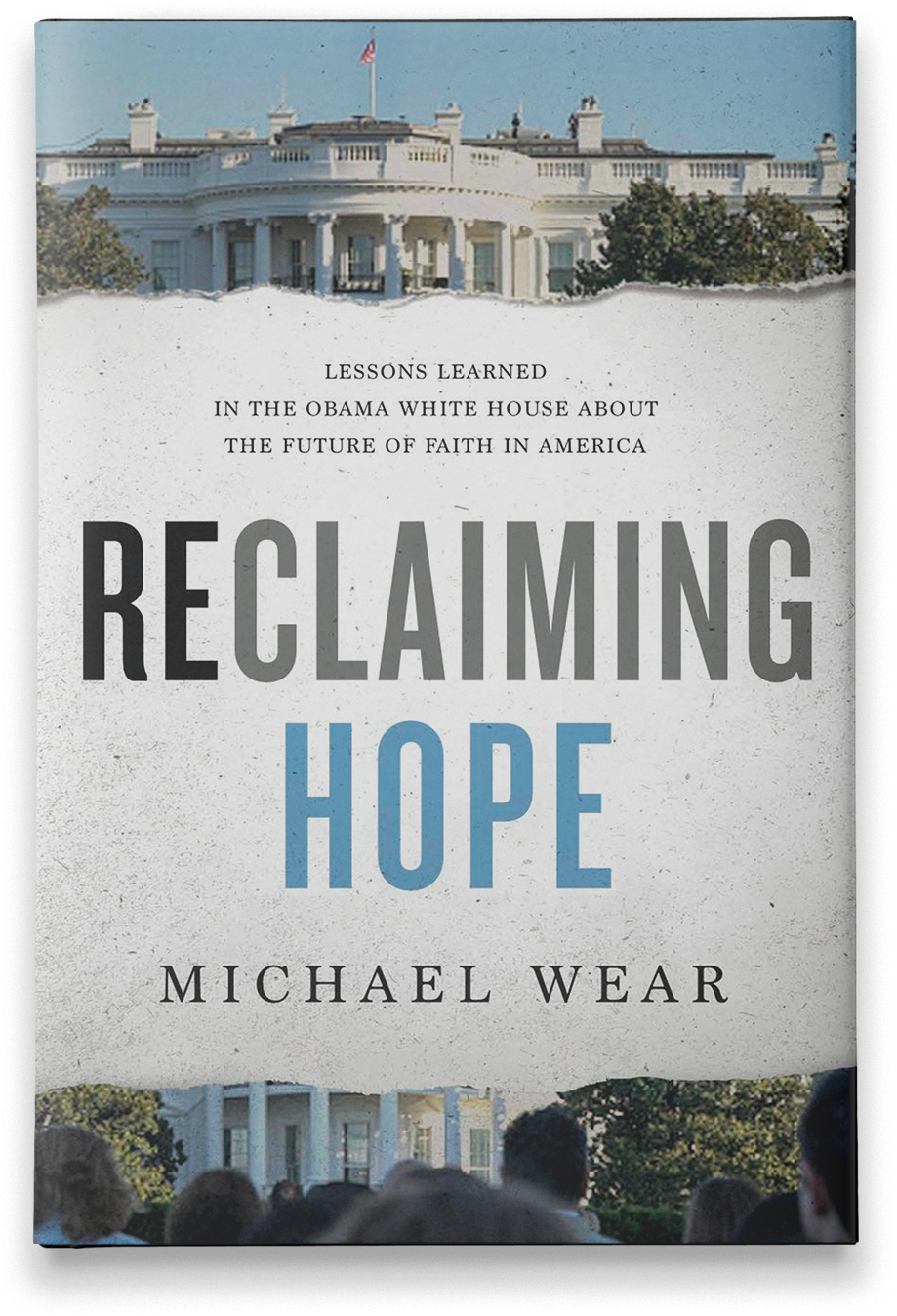
Michael Wear’s recent book Reclaiming Hope is a call for Christians to remain hopeful about the future, despite the misuse and abuse of religion in politics in recent years. Although similar messages have been promoted and led to failure, Wear’s message is a worthwhile one: authentic Christian hope should lead to Christians continuing to participate in politics as Christians. This means that we need to seek the good of the city in which God has placed us and remain critical of both political parties.

Wear is one of the many in the millennial generation who believe that greater government participation in redistribution of wealth is a good thing. The front half of the book recounts his alignment with the Obama White House on the good of passing the Affordable Care Act, which has made purchasing medical insurance legally required with financial penalties for those who choose not to participate in the market. Wear recounts Obama’s use of religious language in supporting things as way that faith can influence policy. For those that oppose the seemingly ever increasing growth of the government through programs like the Affordable Care Act, the front end of the book seems like a bit of tedious hero worship of President Obama. Those who find themselves so frustrated should continue on through the volume. Wear is recording the events as he saw them at the time, though he appears to more critically examine those events later in the volume.

Aside from Wear’s bias toward the government as a means for achieving economic justice, a portrait of the President Obama’s faith begins to emerge. Wear, a socially conservative evangelical Christian, participated in both of Obama’s campaigns and in the first term White House Staff as part of the faith outreach. Part of Wear’s job was to counter the attacks on Obama’s faith, which came from more conservative Christians based on Obama’s apparent support of the continued legalization of abortion and other causes supported by the platform of the Democratic National Convention.

The portrait of Obama’s faith that emerges is of an authentically faithful, liberal Christianity. In this sense, I am not using liberal as a dismissive insult, but to qualify the form of Christianity that Obama appears to hold and to have held. That is, a Christianity that truly holds to certain tenets of the orthodox faith, but sees fit to accept other elements that do not accord with biblical Christianity when historical orthodoxy appears to conflict with modern understandings of the world. This is the sort of Christianity that sees the gospel as primarily a call to social justice rather than personal conversion that leads people to pursue true justice in society in response to God’s justice. Wear, whose doctrine appears to be more consistently orthodox than Obama’s, paints a portrait of a President who sees the impetus toward apparent goods from within Christianity and finds motivation from that, but who may not have accepted the authority of Scripture over all areas of life and practice.

The first half of the book recounts the Obama political machine’s pursuit of doctrinally conservative Christians and efforts to enact a unifying vision for politics. The second half of the volume, however, outlines the ways that the Obama White House subverted those processes, discarded efforts to meaningfully work for a common vision of the good. This failure to seek common cause is highlighted by the Obama Administration's refusal to drop the contraceptive mandate despite the large number of Roman Catholic Bishops who would have otherwise have supported the measure. Wear documents his frustration that the White House staffers were unable or unwilling to understand that prohibition of contraception is a longstanding, significant tenet of Roman Catholic doctrine and to unnecessarily impose a violation of conscience on Roman Catholics in the marketplace would result in alienation of a large base. Additionally, Wear recounts the instant amnesia sexual revolutionaries developed in their efforts to excoriate and persecute those who held a vision of marriage that even Obama held until 2011. Wear reveals a political machine that, at least in part, did not (and likely still does not) understand the place and power of faith in the lives of the faithful of many religions.

Later chapters document the anti-religious influences in the White House overcoming the efforts of Wear and other faithful staffers. This was punctuated by the DNC’s overt pushing of social advocate, shock-value entertainer Lena Dunham’s video comparing voting for Obama in 2008 with her first sexual encounter. Also, the Obama campaign in 2012 used profanity laced e-mails to rally support. The shift into a post-religious White House (which is not to say a post-religious Obama) could be seen in the demonization of Louie Giglio prior to the 2013 inauguration, whose 20-year-old sermon expounding traditional sexual morality was sufficient to result in many public attacks and his ouster from praying at the inauguration. As Wear notes, “In 2009, our diversity demanded we accept that there will be voices we disagree with in public spaces. In 2013, diversity required us to expel all dissent.” (pg 190) This is the reality that many have experienced, which has alienated many of the faithful from the Democratic National Convention, and has helped to push some to vote against Hillary Clinton in the most recent election.

Wear closes the volume with a constructive appeal to a biblical concept of hope, which Christians alone can bring to politics. Whatever policy disagreements I have with Wear, these chapters are helpful. The loss of real hope is detrimental to politics, it leads to fragmentation, hatefulness, and eventually a politics that must win at all cost for fear or retribution. If nothing else, this last section is worth the price of the book, since it reveals the reality of socially conservative, faithfully living evangelicals who have participated in politics with the Democratic National Convention and don’t hate orthodox Christianity. Wear’s willingness to communicate his basis of support for some of the DNC’s policies while seeking to effect change from within. He should be honored for such efforts.

This is a helpful book in many respects. It undermines the notion that being a faithful, socially conservative Christian prevents engaging in politics with the DNC. It provides a glimpse to some of the machinations of the political machine, which should cause both the right and left to question exactly who wrote and how sincerely are meant statements that seem faithful from politicians. It may be that people like Wear are, in good faith, helping politicians craft statements that allow them to seem rather than be truly faithful. Finally, and perhaps the most important lesson in this bleary eyed post-election season, Wear’s volume reminds the reader that we cannot cease participating in politics even when both parties hold positions repugnant to faithful Christians. We must, necessarily, seek to gracefully engage in politics for the common good as we best understand it. We must also seek to be gracious with those with whom we disagree and seek to critique their policy, not their faith.

Note: I received a gratis copy of this volume as part of the launch team for this book. There was no expectation of a positive review.
More than Enough - A Review

Most of us live in this world unaware of how wealthy we are. We have much more than what we need. As people in the United States, or even much of the so-called developed world, we have more resources available than royalty in previous ages.

More-than-Enough.jpg

Lee Hull Moses seeks to address this condition and provide a Christian approach to living in our state of wealth. Her book, More than Enough: Living Abundantly in a Culture of Excess is an attempt to navigate through the tangle ethics of a global economy, with a myriad of decisions each day. This book is focused on showing how Christians should live in light of their situation.

Moses is Senior Minister of the First Christian Church in Greensboro, NC. The congregation she leads is part of the left-leaning United Church of Christ. A liberal approach to Christianity significantly colors the volume, and helps to explain where she lands in so many ways.

The volume is comprised of thirteen chapters, in addition to an introduction and conclusion. In the first chapter, she begins by calling the reader to desire to live well as Christians; she wants her readers to delight in daily existence. Chapter Two offers the assertion that we (middle class Americans) have plenty and need to learn when to accept we have enough. The third chapter decries the complexity of living a simple life: it just isn’t as easy as the books usually suggest. Chapter Four is a lament for injustice in this world.

In Chapter Five, Moses uses two texts of Scripture to commend generosity and self-limitation to the reader. Zacchaeus and the rich young ruler represent this paradigm for her. The sixth chapter offers a confession of her own wastefulness and indulgences, like buying candy that she fears may have chocolate sourced by child slaves, and taking a vacation trip to Barcelona, Spain. Chapter Seven addresses the plague of stuff—too much of it, more of it than needed, and much of it never really appreciated. The eighth chapter speaks of the Sabbath, the theory of which Moses pulls from Walter Brueggemann, with a call to practice it in contemporary society.

The ninth chapter calls for people to pursue social justice, particularly to seek the good of neighbors. In Chapter Ten, Moses celebrates hope and finds energy for her pursuit of justice in the future reconciliation of all things. The eleventh chapter documents Moses’ work to increase government expenditures on social programs some see as necessary to bring about justice. Chapter Twelve calls the reader to delight in the good things in life, which is about where the volume began. In the thirteenth chapter, Moses discusses participation in Christianity—particularly the mainline denomination—and finding continuity and future meaning related to her God’s goodness. The conclusion ends with plaintively, with a statement that there is good and bad in the world, but she hopes it gets better.

There are several strengths to this volume. First, Moses avoids the trap of idealism all too common with volumes on the topic of social justice and excessive wealth. She recognizes that sometimes we make decisions that are considered by some to be less than good because we don’t have time to research more, drive farther for a product, or simply walk instead of driving. By including a confession of her own failings and the sometimes murkiness of her own decisions, Moses captures the complexity of life in our contemporary world. This makes he volume more convincing than some advocates of a certain version of social justice.

Second, Moses recognizes the very apparent reality that the United States is awash in wealth. Much of the perceived financial pressure middle class families feel is self-caused, as they pursue a lifestyle that is just a little beyond their means. Life really is more delightful if we desire less and delight in what we have. Additionally, her assertion that Christians should be exemplars for others living in contentedness on less than others is biblically sound.

Despite these strengths, Moses’ approach has some deficiencies. The most striking is the absence of a real gospel, of propitiation, of actual forgiveness of sin. Moses does define sin in the volume, but she describes it as human action that interrupts to flow of God’s love rather than an offense against a holy God. (52) The deepest weakness of this volume is that Moses senses her own guilt, but does not seem to understand that the solution to the guilt is not marching in the state capitol or buying so-called fair trade products, but in throwing herself on the mercy of God and receiving relief from her guilt through Christ. Instead of building her faith on the completed work of Jesus Christ, Moses claims, “The faith we affirm is built on the hope of a future reconciliation, a promise that the world will be made whole.” (97) This is vastly different than Paul’s claim that the resurrection is of first importance. We have to have the resurrection before we can have that future reconciliation.

The missing gospel is due as much to the absence of a real, personal God through the volume. It appears that for Moses the most significant relationships on earth are those between her and other humans. In fact, the entire volume reflects an attempt at self-justification by attempting to mitigate human suffering. Moses puts herself at the absolute center of her Christian experience, and seems to believe others should view themselves as the center of their own. Therefore, she does not ask whether what she does pleases an almighty, holy, personal God. Rather, she asks whether she’s done enough to assuage her guilty feelings about her wealth and privilege. The book is built on a foundation of what appears to be moral therapeutic deism.

The efforts Moses suggests to bring about equality of outcomes tend to be built on growing the government and forcefully redistributing wealth. Moses claims that the government’s role is to “make sure nobody gets left out or left behind.” This is a far cry from pursuing justice, which is what Scripture repeatedly affirms as the role of government. By calling the government to enforce equality, Moses is asking it to do something that it simply cannot do in concert with pursuing justice.

In addition to a questionable definition of government, Moses also falls prey to the popular myth of a zero-sum economics. She views her own consumption as morally dubious because she sees whatever she uses as taking away from others. This approach to economics is common, but is certainly not universally accepted. It is also undermined by the fact that the percentage of the world’s population living in poverty is declining, contrary to her assertion that the “rich get richer and the poor get poorer.” (43) While there is too much poverty in the world, Moses fails to recognize the vast improvements in human welfare that have been made possible very recently, and that many who own nearly nothing in this world’s goods are among the most wealthy.

This book holds out a great deal of promise. There is too much injustice in this world. There are structural biases in our nation that need to be addressed. Many times companies and politicians are motivated by selfish gain rather than the common good. Individuals and families waste too many resources and ignore too much evil in this world. The topic is a worthy topic.

However, Moses’ approach is unsuccessful because it lacks the potency of the gospel, which motivates the regenerate to do justice, and love mercy in this world. It is the gospel that should inspire Christians in the West to work toward economic systems that recognize the goodness of human contributions and the justice of protecting private property. It is the holiness of God that should enflame the hearts of the Church to action. What Moses offers is a motivation built on a feeling of sadness due to personal guilt. Thank God that he provided a way for so much more through the cross.

Note: I received a gratis copy of this volume from the publisher with no expectation of a positive review.

The Wealth of Humans - A Review

There is little question that economic structures and human participation in economy have shifted over time. With shifts from feudalism to mercantilism to forms of capitalism to the present blend of socialism and capitalism that exist in most democratic societies today the humans engaged in the economy have adapted to the changes or fallen by the wayside.

Consider, for example, the difference between the expectations for work in the mid-Twentieth century and today. People anticipated working for the same company for the majority of their careers not too long ago. Now, it is surprising when someone stays with one employer for the duration of their working years. The tenure of some employees at many corporations is measured in months instead of years and there is no promise of a pension, only an employer match in a 401K.

Discussions of work and vocation haven’t always kept up with the shift in working conditions, which makes Ryan Avent’s recent book, The Wealth of Humans: Work, Power, and Status in the Twenty-First Century, a helpful contribution to the discussion of work and economics. Avent is a senior editor and columnist for the left leaning magazine, The Economist. As such, some of his analysis supports ideas more at home in democratic socialism than in a more consistently free market economics; there are several occasions where Avent argues for Keynesian solutions to stagnation and increases in government spending on social benefits. However, overall, Avent’s analysis of the changing workplace in the Twenty-first century is helpful and adds to the literature in the field.

Summary

Avent surveys the topic in twelve chapters in addition to the introduction. The chapters are grouped into four parts with three chapters each.

In Part One, Avent surveys the shifting employment landscape. The rise of digital technologies have served to increase productivity, which has in turn created a glut of labor. This means that many low skilled workers find themselves either automated out of work or in a precarious situation. He continues by discussing the effect of automation: the glut of labor. Avent notes that although there is a real possibility of a short term disruptions in the workforce, either opportunities will open up, people will re-tool for new careers, or some mediating stasis of working hours and income will be attained. However, the potential for a significant societal disruption exists and could be significant if society fails to make preparations for the upcoming shifts. Avent predicts wage stagnation and income inequality; he also predicts that the lower economic strata will demand a different means of wealth distribution in light of their limited opportunities.

The second part outlines the changing realities in the digital economies. With the glut of labor on the market, there is little to push wages higher, which he predicts will increasing lead to calls for government solutions. He also notes that while labor is plentiful, the contemporary marketplace has increased the value of corporate culture over machinery and other traditional capital resources.

Part three discusses some of the shifts of the digital economy. He notes that there is an increase in income inequality among individuals, which he classifies as a sort of injustice. He also argues that on an international level, there have been some nations that are seemingly perpetual winners and some seemingly consigned to a permanent developing status. Avent then argues that the digital, demand based economy leaves economic systems at risk of self-perpetuating periods of low demand, such as has been witnessed in the slow-recovery after the recent Great Recession. His solution to this problem, consistent with his Keynsian presuppositions, is an increase in government spending and stacking on national debt. He does, however, recognize some of the ways government interventions have increased the recent economic turmoil.

The fourth part discusses the economic and political problems of the digital revolution. He discusses the increasingly popular solution for redistribution of a government facilitated Universal Basic Income. He argues that such a solution is unlikely to success in the longterm, and that work has value for enhancing a human sense of wellbeing. He rightly recognizes that the problems of income and economic inequality relate not simply to wealth, but also to social structures and attitudes. Economic contentedness depends as much on the definition of the good life as the actual income. He also notes that the economic conditions and growing instability and insecurity present and opportunity for both the radical left and right to provide populist solutions to problems; a reality that is being realized in the U.S. and in the U.K. among other nations. He concludes the section rather inconclusively with an expectation that some sort of seismic shift will occur, though he doesn’t know exactly what. Given the complexity of predicting the future, this is probably a fair way to end.

Analysis and Conclusion

Overall, Avent’s arguments and analysis are well thought out and nuanced. He avoids simplistic analysis and one size fits all solutions. Though he begins from a Keynsian foundation, he remains critical of certain typical aspects of that system. This is, overall, a well reasoned and informative book.

In particular, his recognition that work is not merely a way to put bread on the table, but a part of having human agency, of feeling valued, and of contributing to society is healthy. Where some who predict the coming disruption of the digital economy see Universal Basic Income as a silver bullet solution, Avent recognizes there are significant flaws in that as a final solution.

Whatever your preference for economic systems, Avent’s book is worth the time to read. He argues carefully, presents his case clearly, and acknowledges basic truths about human nature.

Note: I received a gratis copy of this volume with no expectation of a positive review.

Hillbilly Elegy - A Review

I’ve now read the much discussed book by J. D. Vance, Hillbilly Elegy: A Memoir of a Family and Culture in Crisis. It was promised to be a gritty read, revealing the reality of poverty in the Appalachian region that is often overlooked. The book largely lives up to its reputation.

Vance notes early on that it seems odd for someone his age—he’s in his early thirties—to write a memoir.  Unlike the biographies of young Christian athletes that seem to lurk on the shelves of Christian bookstores, Vance’s memoir is not presumptuous but worth the time it takes to read it.

So much time and effort is spent in explaining urban poverty. The breakdown of the urban family. The overloading of the urban school systems. Often the term “urban” is a code word for racial minorities.

While cyclic poverty is an issue in cities, Vance exposes the reality of rural poverty and shows that in many ways it may just as severe a problem as the urban variety. In fact, for some, rural poverty has a strong potential to be more severe. One reason for this is that many of the resources the urban poor rely upon are simply unavailable for the rural poor, or they are located too far away to be useful.

Vance succeeds in painting an accurate picture of some of the worst off among the so-called hillbillies. Having grown up in the foothills of the Appalachians, surrounded by people that fit the description of Vance’s hillbillies, I’ve heard some of the stories, seen some of the stress on kids, and smelled some of the misery he’s talking about. Thankfully I’ve never lived it, but it was close by. (I’m thinking about, for example, my friend whose dad was in jail for killing his mom with a hammer while high on some form of drugs.) Reading Vance describe what he went through gives me a bit more empathy for some of my acquaintances who were surviving bad situations.

If there is one key takeaway from reading this book, it should be empathy. It is likely that Vance’s story represents both the low end of hillbilly culture with the drug addicted mother, revolving door father-figures, and unawareness of the outside world. At the same time, it also represents an atypical result where someone was able to overcome the difficult start and had the talent to make it to and graduate from Yale’s law school. However, reading about the domestic abuse and social stigma Vance dealt with should work to kill some of the unforgiving dismissal of hicks, bumpkins, and swamp people that is common in suburban and urban culture. (I state that it is common based on anecdotal data, rather than empirical evidence)

Just as telling the stories of ethnic minorities suffering simply because of their ethnicity are part of the narrative of identity politics on the left, so might listening to stories of legitimate hardship among the many white, rural poor are a necessary part of understanding the perspective of a large swath of the nation.

Vance’s story helps explain why it took me years to be able to understand the racially stilted form of identity politics common among some of my more liberal and well to do friends at the Naval Academy. I knew that poverty, broken families, and systemic disadvantages were not solely owned by today’s preferred protected classes. Thankfully, I’ve had good people patiently explain why systemic injustice is still largely a racial issue instead of screaming at me. I’ve also known enough ethnic minorities to hear their stories to understand the biases against them and lived in the South long enough to recognize the historical proximity of Jim Crow to today.

At the same time, many more cosmopolitan Americans still fail to recognize that being among the rural poor can be nearly as socially damning as being an ethnic minority, but without the protection of the media, the judicial system, and the cultural left. Hillbilly Elegy helps explain why some people don’t believe in “White Privilege” and think that affirmative action is a form of vile racism. They feel feel like they are on the bottom of the social ladder and the zero-sum game policies of the political left keep them down. In some cases, that’s likely the case. As Vance explains, being white doesn’t grant as much social capital as those who equate whiteness with established families and well-positioned social networks seem to believe. It’s not that there is no benefit in some segments of society to being white, but that it isn’t quite the pass to an easy life that some seem to describe.

Hillbilly Elegy doesn’t answer every question about the white working class and its struggles. It doesn’t offer a master theory that will unite the nation politically after a turbulent election year. The book is not an academic treatise that considers all potential historical causes, nor does it reconcile all of the possible sociological implications of rural poverty. However, this memoir of a kid who lived rough but is doing pretty well so far helps to give a view into a world that many people never see from the interstates. It challenges racial narratives and, if read for empathy’s sake, could break down some of the bubble many appear to live in.

Note: I received a gratis copy of this volume with no expectation of a positive review.

Against White Identity Politics and Religious Registration

For all of the tizzy that some people are in over the election and the counter finger-wagging from others, there are some signals of significant causes for concern. There have been a number of false reports that have come out about the transition team and, since they supported the prior assumptions of many, they have been run with. This is problematic. However, through the noise of exaggeration and misreporting of news, there are some signs that ought to concern people of good conscience.

Against the White Genocide Movement

This election has revealed that there are good people that are becoming attracted to a movement for white ethnic identity, which is often described as opposing “white genocide” or “cultural Marxism.” As a response to the perpetual hammering of identity politics on the left, it is an understandable development. However, as a strategy for unity and justice, it is doomed to failure. Any political system that seeks disunity over unity should be rejected. The United States has already tried separate but equal once. It failed. It was mostly separate, but hellishly unequal. We should not think about going there again.

As Christians, our identity is first in Christ. As Paul tells us clearly, in the church “there is not Greek and Jew, circumcised and uncircumcised, barbarian, Scythian, slave, free; but Christ is all, and in all.” (Col 3:11) The church is a fundamentally political institution. We have “immigration policies” in which we offer membership to believers who have participated in the initiation rite of baptism by immersion. (At least in the Baptist context.) We seek justice in our relationships toward one another. However, the church is doomed to fail in the pursuit of justice if it retains distinctions based on nationality or ethnicity.

Photo: Lighting Strike by Fabio Slongo. Used by CC License:  http://ow.ly/48DR306gJNI

Photo: Lighting Strike by Fabio Slongo. Used by CC License:  http://ow.ly/48DR306gJNI

The future of the church is unity across ethnic barriers. This is the image we see in Revelation 7, “I looked, and behold, a great multitude that no one could number, from every nation, from all tribes and peoples and languages, standing before the throne and before the lamb, clothed in white robes with palm branches in their hands, and crying out with a loud voice, ‘Salvation belongs to our God who sits on the throne, and to the Lamb!’” This is not a vision that should fuel ethnic division or even permit us to countenance such as the body of Christ. While we are unlikely to attain to this vision while on earth, this is what we should pursue today.

Rejecting white nationalism or white genocide does not equal a call for an “open border” immigration policy. (A common accusation against many on the right and left by those supporting white identity politics.) The United States has the right to set immigration policies that take into account the good of its citizens—this is a function of nation-states in our day, and is not inherently unjust (although it may be pursued unjustly). However, the perception of some (and some that I’ve seen who claim to be Christian) is that we must build a movement of white ethnic solidarity and ban all immigration or risk being overcome. The second is implausible, despite ridiculous claims to the contrary. The first should be anathema to Christians given our eschatological hope in a supremely diverse chorus of voices joined in worship.

Against Religious Registries

Recently someone actually went onto national television to argue for a registry of Muslim believers. Or, at least, he argued there was precedent for it. Much news can be made of this person’s relation to the incoming administration. Of greater concern for me is that such a terrible idea should never have seen the light of day outside of a condemnation of our distant past.

The person speaking was correct to note that the U.S. has a precedent for registering people. He was also correct to note that during World War II we registered and interned ethnic Japanese, some of whom were immigrants. There is a precedent for such a registry.

However, the internment of ethnic minorities during World War II is an instance of protectionist government overreach. This is a black mark on our nation’s history, not the sort of historical event we should dust off and try to recreate in the present. We should not even consider it an option, though I will engage in a thought experiment for the sake of discussion.

Let’s assume we create a registry of everyone in religion X. To do so, we have to ask ourselves how we will determine whether someone is part of that religion. Is it attendance at a worship service? Is it being born into a family that has at some point attested to being part of religion X? Is it having grown up in a nation that is perceived to be predominately filled with religion X? What happens if someone converts to another religion? How do we determine whether that conversion is authentic?

All of a sudden, the government is trying to make decisions about things that it is simply not qualified to do. Religion isn’t ethnicity, where a family tree justifies inclusion. Even when dealing with ethnicity, how much is too much? One parent? One grandparent? A brother in law? For religion, the government would have to ask a different, more nebulous set of questions.

The obvious and necessary outcome is that the government steps into the role of religious authority. Person A has demonstrated sufficient effort to be considered Christian even though he grew up in a Muslim home. At the same time, since Person B simply stopped attending the Mosque and hasn’t picked up another active religion, should he be considered to still be Muslim? Unless he eats some bacon and draws a cartoon of Mohammed? Would open sacrilege be sufficient (or necessary) to change a classification?

Suddenly, I’m catching a whiff of the Inquisition. That’s not a high point in human history, much less in Christian history. I’m also hearing echoes of the persecution of the Jews under the Nazi regime. Certainly it wouldn’t start there and it might never get to that extent, but the echoes of that horror of the persecution of the Jews should be enough to steer us clear.

So what happens when the anti-theists get hold of the government? Now we can get parallel registries of Muslims and Christians. No worries, they will just be keeping tabs on people of faith. Why? Just to keep everyone safe and ensure the government knows what is going on. And then to perhaps ensure that we don’t have people of certain faiths in certain government positions. Does this sound like a dystopian fiction? Yes, but it’s only a step or two beyond registering Muslims, which someone felt comfortable bringing up as a possibility in a TV interview.

This is the sort of thing that Christians (and any reasonable people) should speak against. It’s not a good idea. It’s not going to make us safer. It’s not going to end well. If we’re for religious liberty for some (ourselves?), then we need to hold out the same rights for all. That needs to be the principle we stand on.

The government does not have the wherewithal to regulate religion. The common good is not enhanced by the government regulating religion. Making people register their religious affiliation is not simply information gathering, it is regulating. We must keep this power away from the government.

Just a Media Overreaction?

One of the tragedies of contemporary society is the 24-hour news cycle. This creates the problem of the proliferation of interviews of people who might know someone that knows something speaking authoritatively about stuff. There is such a need to fill the airwaves that they bring people that might float the idea of something like a Muslim registry on national television. This, then, fuels dozens of hot takes (like this one), replays, edits, and discussion panels. Sometimes the furor is over nothing.

I’ll be glad to find out that this suggestion is really nothing. Unfortunately, there are some that will hear it and begin to think that such a simple encroachment on civil liberties is really worth it to prevent the explosion of another IED or another religiously driven night-club shooting. Because of the protectionist stance some (particularly whites) are taking, this will begin to sound like a good idea. Reading Twitter and some of the Alt-Right propaganda sites provides evidence that this idea isn’t just nothing.

Sometimes there is an overreaction that deserves to be neglected. The media cries wolf too often, as a rule. However, we can’t let their failures in the past prevent us from seeing problems in the present. These are issues that have the potential to take root in the minds of some in our churches and we should be careful not to let sin get a foothold.

The purpose of this post, therefore, is not to fuel the overreaction, but to offer some consideration for the ideas that are actually being floated as plausible and to encourage Christians to think about how these ideas betray the gospel (as with white nationalism) and put impartial justice in jeopardy (as with the Muslim registry). People are actually talking about some of these things as if they are good ideas. They aren’t, and we should make sure that the church is clear in standing against them.

There is No Second Order Guilt

There is no such thing as second order guilt.

This election, economic reasoning, and so many of our choices would be greatly simplified if more people were aware of this.

What is second order guilt? I’m glad you asked.

Freedom by Osajus, used by CC license. http://ow.ly/TL2U305uPoi

Freedom by Osajus, used by CC license. http://ow.ly/TL2U305uPoi

Second order guilt is a situation where you are morally culpable for the actions of someone else that led to your actions or resulted from your actions. It is the basis for many contemporary decisions, but it is not really a thing.

For example, some people argue that if you purchase clothing and that clothing was made by a slave somewhere that you are morally culpable for the person’s slavery. Or another example: some people argue that if the government funds abortions and you pay taxes that you are morally guilty of abortion.

If these sound compellingly familiar, it is because a great deal of argumentation in the public square is based on this sort of reasoning:

“Don’t use the Firefox browser because their CEO supports marriage.”
“You have to vote for X because if Y wins there are going to be more abortions in the US. Therefore, if you vote for Z and Y wins the blood of those babies is on your hands.”
“I buy fair trade coffee because I don’t want to be guilty of abusing poor Peruvian farmers who sell to non-fair trade companies.”

Where the Real Complexity Lies

There are two separate pieces to consider here. First, there are decisions that we make to leverage our economic or political power to bring about social change. Second, there is the actual assignment of guilt. It’s important to recognize the difference.

Boycotting a company over their policies is completely licit and ethically permissible. I think that evangelicals have gone off the rails and use it altogether too much as a blunt object, but people are free to leverage their money to bring about social change. The sugar boycotts that were implemented to help end slavery in Britain were useful both for raising awareness and for putting economic pressure on the plantation owners that used slave labor.

The risk in boycotting is that if it is used too much it loses its impact. Often, too, the products or companies that replace the banned product are nearly as bad or bad in other ways, so there is a great deal more moral ambiguity than people generally allow.

The second is the more significant issue. For many boycotters (or this year, political activists), in order to increase participation, they leap from making boycotting a power play to assigning moral guilt for a failure to participate.

Part of this, I think, is because for many people the ills that are driving the boycott are really that important. Also, there is the fact that no one wants to admit that they are really just making a power play and trying to beat someone else into submission. That’s what a boycott really is. It can be described in a more genteel way, but it is simply a legitimate means of coercion.

However, since the mushy middle, which is the vast majority of the population, is unlikely to take significant action based on a desire to reshape society through genteel economic pressure, activists often inspire commitment to their cause by claiming that someone who doesn’t participate in the boycott is participating in the evil that is driving the boycott.

Like sex outside of marriage, this idea sells, but it isn’t actually biblical. We aren’t guilty of unjust violence even if we pay taxes to a government funding an unjust war. We aren’t guilty of abortion simply because the federal government funds Planned Parenthood in lieu of health centers that provide health services and not abortion. We aren’t guilty of sexual assault because we vote for a particular candidate, nor necessarily for condoning it. (Now, if we minimize the actions...that is another story.)

Biblical Basis

I will provide one Old Testament example that there is no second order guilt, two examples from Paul, and one example from the life of Jesus. Other examples could likely be provided, however, these should be sufficient for this format.

In the Old Testament, in 2 Kings 5, after Naaman is healed, he expresses concern about bowing to an idol in the house of Rimmon while supporting his master. In reality, he was both bowing and facilitating the false worship of his master. However, his heart was not worshiping, he was merely fulfilling the terms of his employment and his patriotic duty. Elisha’s simple comment, “Go in peace,” provides evidence that Naaman was not going to be held accountable for false worship because he in some way helped his master honor a Rimmon. There is no second order guilt in that situation.

Second, Paul urges Christians to submit to a government in Romans 13:1-7. The reader should remember that the Roman government would kill Christians, commit what we would now call war crimes, and generally be barbaric by our contemporary standards. At the same time, Christians were to submit. They did not become guilty for the sins of the nation that they were submitting to. Paul didn’t indicate that by failing to protest or attempt a coup that they were guilty of the war crimes committed by the Romans. In fact, despite the fact that some of their taxes would pay for instruments of torture used against Christians, Paul tells the Christians to pay taxes (13:7).

Third, Jesus himself encourages people to pay tribute to the occupying nation that had desecrated the temple, slaughtered many of his countryman, and would someday kill him despite his absolute innocence. Despite these ills that such tax money would enable, Jesus did not hold himself or others guilty for paying such taxes. There is no second order guilt.

Fourth, dealing with the issue of conscience directly and commerce secondarily, Paul declares eating meat sacrificed to idols licit in 1 Corinthians 8. Buying meat from animals that had once been sacrificed to idols helped to finance the false worship. And yet Paul’s concern is with whether the eating the meat will violate someone’s conscience due to its having been sacrificed to idols. The purchase of the meat, which could support the false worship, is not considered. In fact, Paul makes it clear that it’s not the eating of the meat itself, but the individual’s sense that it is wrong; violating the individual's conscience is the problem. There is no second order guilt.

But My Conscience

The obvious rebuttal to the final example is that a person’s conscience can make the eating of temple meat a sin. This is correct. You can put yourself into a state of conscience over an otherwise good act that makes it a sin to do it. However, Paul calls the conscience that is thus violated weak. The reader is left to infer that mature Christians should not have concerns--at least that they should not make a practice of looking for concerns of conscience.

The upshot is that someone should not violate their conscience or encourage others to violate their conscience, but at the same time, Christians shouldn’t look for ways to create a labyrinth of conscience to navigate.

Synthesis

There is no second order guilt. Someone does not become guilty of abortion because they vote for someone who affirms revoking the Hyde Amendment. People do not become guilty of sexual assault because they vote for someone who has bragged about sexual exploits. Consumers do not sin by buying coffee that was produced under unjust circumstances. Property owners don’t become guilty of crimes committed on their property.

This does not free us from making wise decisions. We should look for proximate justice in our political and commercial activities. Christians will be wise to avoid supporting companies that force people to work in unsafe conditions. They will be wise to choose political candidates that on the whole affirm a biblical concept of holistic justice whenever possible. The Christian property owner should not be negligent in fencing his property or lighting it if crime is a significant problem.* However, these are matters of prudence.

Christians must pursue justice, but that is inevitably a messy affair in our world. For some Christians, advocating for a free market is equivalent to celebrating the moral evil of greed even when it can be shown to alleviate poverty in many cases. For other Christians, voting for a party that celebrates abortion at their national convention is reprehensible even though others view their redistributive economic policies as a moral necessity. In these cases, we are better off arguing the issues rather than binding each others’ consciences and repudiating one another.

What we must not do, however, is attempt to assign second order guilt to someone else because we don’t like their purchase, political party, or policies. That is simply unbiblical.

* (There may be laws that exceed the actual moral culpability regarding property use. In these cases, submission to the government entails following proper codes and local ordinances. To neglect these codes would be sin.)