Hillbilly Elegy - A Review

I’ve now read the much discussed book by J. D. Vance, Hillbilly Elegy: A Memoir of a Family and Culture in Crisis. It was promised to be a gritty read, revealing the reality of poverty in the Appalachian region that is often overlooked. The book largely lives up to its reputation.

Vance notes early on that it seems odd for someone his age—he’s in his early thirties—to write a memoir.  Unlike the biographies of young Christian athletes that seem to lurk on the shelves of Christian bookstores, Vance’s memoir is not presumptuous but worth the time it takes to read it.

So much time and effort is spent in explaining urban poverty. The breakdown of the urban family. The overloading of the urban school systems. Often the term “urban” is a code word for racial minorities.

While cyclic poverty is an issue in cities, Vance exposes the reality of rural poverty and shows that in many ways it may just as severe a problem as the urban variety. In fact, for some, rural poverty has a strong potential to be more severe. One reason for this is that many of the resources the urban poor rely upon are simply unavailable for the rural poor, or they are located too far away to be useful.

Vance succeeds in painting an accurate picture of some of the worst off among the so-called hillbillies. Having grown up in the foothills of the Appalachians, surrounded by people that fit the description of Vance’s hillbillies, I’ve heard some of the stories, seen some of the stress on kids, and smelled some of the misery he’s talking about. Thankfully I’ve never lived it, but it was close by. (I’m thinking about, for example, my friend whose dad was in jail for killing his mom with a hammer while high on some form of drugs.) Reading Vance describe what he went through gives me a bit more empathy for some of my acquaintances who were surviving bad situations.

If there is one key takeaway from reading this book, it should be empathy. It is likely that Vance’s story represents both the low end of hillbilly culture with the drug addicted mother, revolving door father-figures, and unawareness of the outside world. At the same time, it also represents an atypical result where someone was able to overcome the difficult start and had the talent to make it to and graduate from Yale’s law school. However, reading about the domestic abuse and social stigma Vance dealt with should work to kill some of the unforgiving dismissal of hicks, bumpkins, and swamp people that is common in suburban and urban culture. (I state that it is common based on anecdotal data, rather than empirical evidence)

Just as telling the stories of ethnic minorities suffering simply because of their ethnicity are part of the narrative of identity politics on the left, so might listening to stories of legitimate hardship among the many white, rural poor are a necessary part of understanding the perspective of a large swath of the nation.

Vance’s story helps explain why it took me years to be able to understand the racially stilted form of identity politics common among some of my more liberal and well to do friends at the Naval Academy. I knew that poverty, broken families, and systemic disadvantages were not solely owned by today’s preferred protected classes. Thankfully, I’ve had good people patiently explain why systemic injustice is still largely a racial issue instead of screaming at me. I’ve also known enough ethnic minorities to hear their stories to understand the biases against them and lived in the South long enough to recognize the historical proximity of Jim Crow to today.

At the same time, many more cosmopolitan Americans still fail to recognize that being among the rural poor can be nearly as socially damning as being an ethnic minority, but without the protection of the media, the judicial system, and the cultural left. Hillbilly Elegy helps explain why some people don’t believe in “White Privilege” and think that affirmative action is a form of vile racism. They feel feel like they are on the bottom of the social ladder and the zero-sum game policies of the political left keep them down. In some cases, that’s likely the case. As Vance explains, being white doesn’t grant as much social capital as those who equate whiteness with established families and well-positioned social networks seem to believe. It’s not that there is no benefit in some segments of society to being white, but that it isn’t quite the pass to an easy life that some seem to describe.

Hillbilly Elegy doesn’t answer every question about the white working class and its struggles. It doesn’t offer a master theory that will unite the nation politically after a turbulent election year. The book is not an academic treatise that considers all potential historical causes, nor does it reconcile all of the possible sociological implications of rural poverty. However, this memoir of a kid who lived rough but is doing pretty well so far helps to give a view into a world that many people never see from the interstates. It challenges racial narratives and, if read for empathy’s sake, could break down some of the bubble many appear to live in.

Note: I received a gratis copy of this volume with no expectation of a positive review.

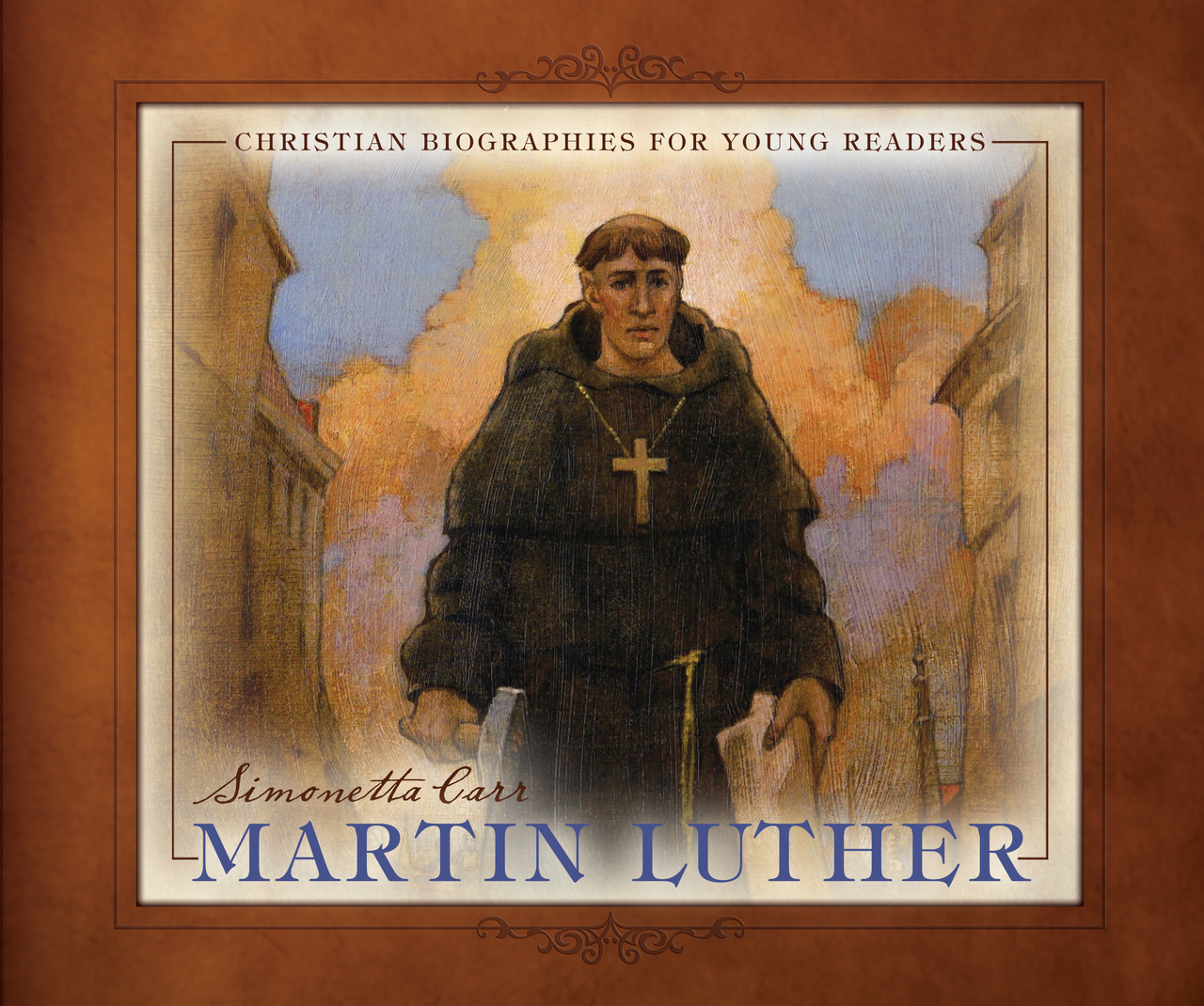
Martin Luther - A Children's Biography

October 2017 will mark 500 years since Luther published his famous 95 Theses, which are often said to have kicked off the Protestant Reformation. A recent children’s biography on Luther by Simonetta Carr provides a delightful way to introduce the early German Reformer to children.

This volume is the latest edition in the series, Christian Biographies for Young Readers, which is published by Reformation Heritage Books. It is a beautifully illustrated, full color volume, that is likely to delight the reader even as it instructs.

Often children’s biography falls into the trap of hero worship. Obviously, a publisher like Reformation Heritage views the Protestant Reformation in a positive light. Thus it stands to reason they would celebrate Luther’s life and contribution to Church History. Carr, however, manages to avoid the pitfall of hagiography by presenting Luther’s story with its good and bad points.

This book critiques Luther for his coarse language and diatribes against the Jews later in his life, but it does not let those real, yet unfortunate failings diminish the impressive and exciting story of the monk turned Reformer. Roman Catholics or others who view the Protestant Reformation as a tragedy, and thus see Luther mainly negatively, will likely balk at the generally positive view Carr presents of his life and work. However, for most Protestant Christians, this volume strikes the proper note.

In recounting the life of Luther, Carr celebrates the recovery of the gospel from the twisted medieval traditionalism espoused by the Roman Catholic Church in the 16th century. Unlike many histories, this volume rightly argues that indulgences were the presenting problem, but the deeper issue was the loss of the gospel in the regular teaching of the Roman Catholic Church. That is why Luther’s ministry was so important; he was not dividing the universal church, he was seeking to preserve the gospel and was subsequently attacked by the traditionalists who elected to remain in error.

Some biographies work best if told as a story. Because of Luther’s wide range of activities and overall significance, Carr chose to tell his story in roughly chronological, but mostly topical chunks. There are seven chapters with 4-7 pages each. The chapters discuss his early life, clerical training, desire for reform, alienation from Roman Catholicism, attempts at Reform, marriage and family life, and broader ministry. The volume also includes a timeline, a collection of interesting facts about Luther, and a selection from Luther’s Short Catechism. Even young readers will walk away with a sense of the importance of Luther and an understanding of his life and work.

Much like other biographies in this series, Carr’s book about Luther is full-color throughout. Carr combines new illustrations from Troy Howell with historical engravings and paintings, along with photographs of some of the sites as they appear now. This breaks up the text and makes the book as a whole a feast for young eyes. (Older eyes will appreciate it, too, and may have to be reminded this book is for the kids.)

Whether you are looking for a gift for a child, seeking a volume for homeschool history, or simply building your library, this volume is worth purchasing. It is historically accurate, delightfully illustrated, with an appropriately critical tone. It represents both a celebration of the recovery of the gospel with a recognition of the pervasiveness of human sin, even among our heroes. Reformation Heritage Books should be applauded for continuing the series and publishing excellent children’s volumes like this one.

NOTE: I received a gratis copy of this volume from the publisher through Cross Focused Reviews with no expectation of a positive review.

For the Cause - A Tribute to Southeastern Baptist Theological Seminary

I started seminary in the fall of 2005. I’ve been a student at Southeastern since the Spring of 2007. I graduated with my PhD in December, 2016. It’s been a long road.

Despite that long road, however, I look back and am grateful for the opportunity to have studied at Southeastern. As a graduate of the United States Naval Academy, I know something about loyalty to an alma mater. (By the way: Beat Army!) Everything at USNA is geared toward imbuing the ethos of a professional naval officer. It’s in the facts that are memorized, the habits that are inculcated, and the courses that are studied.

I enjoyed (most of) my time at USNA, but was always somewhat surprised at the number of people that didn’t really believe in the mission. The thing is, you could be a good Company Officer or a good midshipman and not really believe in the mission. After all, people would say, it doesn’t really matter if your shoes are shined, it’s whether you can get the job done. There was often a subversive disbelief under the veneer of compliant excellence.

That contrasts distinctly with ethos of Southeastern. I have both worked there and been a student there. There are few shined shoes, but the school as a whole is one that has bought into its mission. That makes a huge difference.

Southeastern’s mission is pretty simple: “We seek to glorify the Lord Jesus Christ by equipping students to serve the church and fulfill the Great Commission.”

I had that mission memorized long before we moved to Wake Forest because every chapel sermon includes an introduction with Danny Akin’s voice announcing it. No one can get away from it because it hangs on many of the light poles throughout the campus and adorns the syllabus of each course offered through the institution.

More significantly, Southeastern’s mission animates the institution.

The school is certainly not a perfect organization. However, even its failings tend to lead to it falling in roughly the right direction. Having a clear mission and broad buy-in for that mission keeps the institution on track and calls it back even when it strays.

In this case the mission is easy to get behind. It’s an institution of higher learning, but one distinctly organized around theological education. The students, staff, and faculty that are drawn to the institution are those who have a strong desire to do something (they may not know what) for the glory of Christ and in service of his church.

Recently, the institution adopted a new school hymn. That was good, because the previous one was a dirge that did little to inspire. Southeastern’s school hymn is now a song by the modern hymn-writers, Keith and Kristyn Getty, called “For the Cause.”

As I listened to the song the first time, and the hundred times after, I could not help but recognize that it reflects exactly the ethos of the institution. It’s not just a slogan, it’s actually the driving idea behind the institution.

At graduation rehearsal, Danny Akin addressed the prospective graduates. In his simple address, it became apparent that his mission is the same as Southeastern’s mission. That’s part of why everyone else’s mission tends to blend in with it and become just like it.

If I were to do a study on the impact that a unified mission and vision could have on an organizational structure, I might choose to use Southeastern as an example. It’s an institution of higher learning dedicated to a simple, but important ministry: equipping men and women for service for kingdom of Christ.

I’m thankful for Southeastern Baptist Theological Seminary. Being surrounded by such a cloud of witness as the students, staff, and faculty pulling in the same direction was a terrific experience. It shaped me in ways I probably do not understand.

Southeastern is a going seminary, so I have friends in places of service around the globe. They were all equipped by Southeastern. More importantly, however, they were shaped and focused by the culture at the institution.

We sang “For the Cause” at the conclusion of the ceremony on Friday. It was a powerful moment, standing in the front row of a crowded chapel, hearing hundreds of voices heartily singing out in unison:

Let it be my life’s refrain
To live is Christ, to die is gain.
Deny myself
Take up my cross and follow the Son.

I'm confident the students and faculty meant it deeply, too. That makes a huge difference. In fact, it’s what makes Southeastern as special place. I’m now employed at Oklahoma Baptist University, but I will always appreciate my time at Southeastern Baptist Theological Seminary.

Wesley and the Anglicans - A Review

If you’re like me, you probably don’t know that much about how Methodism separated from the Church of England. There were a few minutes of discussion in my Church History II class about John Wesley trying to keep his people inside the Church of England, but having it fall apart shortly after he died. That’s about all I knew, though if you had asked me, I would have credited it to some of the theological differences between the Anglican communion and the revivalistic Methodists.

In his recent book, Wesley and the Anglicans: Political Division in Early Evangelicalism, Ryan Danker gives a much more nuanced account. Even if the origins of Methodism are not a major interest for you, this book is enjoyable for students of historical theology.

Danker’s argument, fleshed out in nine chapters, is that the the divisions between John Wesley and the Anglicans were much more than theological. In fact, they were not primarily theological. After all, the same Church of England that eventually spit out the Methodists remained hosts to some Unitarians and other heterodox (and perhaps some heretical) theologians. Instead, the chief points of dissent between the Church of England and Wesley were those related to politics.

Summary

Chapter One outlines the characteristics of English Evangelicalism, which included Methodists, but also included more traditional members of the Church of England and dissenters on the outside of the sanctioned church. The second chapter places Wesley within the context of English Evangelicalism. He lived on the edge of acceptable circles, given his seeming drift toward dissenting ecclesiology combined with a surprising desire to remain within the high church tradition. He was at once too radical and too conservative for many English Evangelicals.

In Chapter Three, Danker surveys the vast array of pamphlets and tracts published about the Wesleys and by the Wesleys, which served to confuse people regarding the actual position of the Methodist movement about many issues. Fake news and propaganda had a place in this dispute as well. The fourth chapter considers the influence that political history in England had on the Methodist movement. As outliers on the ecclesial scale, the drift away from the Anglican communion caused many to remember the negatives of Cromwell and his revolutionaries. Indeed, there were echoes of ethical stringency among the Methodists that brought back unpleasant memories of Puritan political hegemony. This added to the negative view many had of Wesley and his followers.

Chapter Five reflects on the territorial tensions caused by Wesley and his large network of lay preachers. Parishes were generally divided by geographical boundaries, but Wesley’s unsupervised, unsanctioned lay preachers went to wherever their message was needed. This led to tension between Evangelical Anglicans who saw Methodist preachers making inroads in their territory, making it more difficult for them to reform. The sixth chapter documents how this tension was even increased as the Methodist lay preachers began to administer the Lord’s Supper, which was traditionally reserved for ordained clergy. This is a theological issue that gave momentum to the departure of the Methodists from the Church of England upon Wesley’s death.

Chapter Seven records the shifting political tide against the Methodists, as young men practicing some of the methodistic practices were expelled from state universities. This increased the attempts of the reform-seeking Evangelical Anglicans to distance themselves from the irregularities of Methodism and aided in the final alienation of Wesley’s tribe. Chapter Eight attempts to paint Wesley as a reformer in line with earlier forms of Christianity rather than the English reformation. Danker concludes the volume in the ninth chapter documenting Wesley’s final attempt to be reconciled to the Evangelical Anglicans, which eventually failed and caused him to drift farther from the Church of England.

Analysis

As a Baptist theologian reading about the life of Wesley and the split with Anglicanism, I found myself unfamiliar with some of the nuances of the history Danker expounds. His book, for me, was informative and engaging. It provides a gateway into the conflict of the origins of the Methodist denomination.

Danker argues his thesis well. He makes a solid case that there was much more to the division between the Wesleyan tradition and the Church of England than a dispute over Arminianism and Calvinism. (These are Danker’s terms on page 13.) Based on the story that Danker tells, it is clear that political tensions, territorial feuds, and a whole host of very human difficulties caused the final schism between the Methodists and the Church of England.

Whether Danker is right in his final analysis or whether he has overlooked significant evidence is a matter for the Methodists and Anglicans to fight out. I’ll bring my popcorn and enjoy the debate.

However, as a theologian and one who appreciates Church History, I applaud the care in Danker’s analysis to show that this is a complicated question. Too often history falls prey to the magic bullet explanation that neutralizes all counter arguments and makes simple that which is complex. That is what the Arminian/Calvinism split explanation has been for surveys of Church History and the reason for the Methodist exodus. Danker does well to show that there was much more at play. Humans are complicated creatures and our theological debates are often driven by more than simply the doctrinal question at hand. Here is a nuanced account of how one historical debate unfolded.

This volume could have been improved had Danker added a chapter laying out the accepted arguments for the split. He mentions in passing the soteriological explanation traditionally given in his introduction, but for those of us who have little background in Methodist/Anglican history, a bit more fleshing out would have been beneficial. That criticism aside, this is a helpful and interesting book that a student of Protestant Church History and Theology will likely find instructive and enjoyable.

Note: I received a gratis copy of this volume from the publisher with no expectation of a positive review.
Darwinism as Religion - A Review

Although most of the time I’ve encountered Darwinian evolution as a theory it has been within the context of apologetic debates, I’ve never before heard someone from the other side of the debate admit the truth that is very obvious to many Christians. This truth is, namely, that Darwinism functions much like a religion.

To many, the assertion that Darwinism has religious traits is offensive. After all, the reason some adhere to Darwinism is not because they have rationally examined it and accepted it over alternatives, but because it provides a set of defeater beliefs against traditional religions, especially Christianity. In fairness, some have examined Darwinism in comparison to the creation story in Scripture and believe that atheistic evolution better explains the universe than does the possibility of creation by a deity, no matter how long it may have taken. However someone who affirms a form of Darwinian evolution should recognize there are faith structures at work.

Michael Ruse is no proponent of creationism or Christianity, but his thesis is pretty simple: “I argue that evolutionary thinking generally over the past 300 years of its existence, and Darwinian thinking in particular since the publication of [his] two great works . . ., has taken on the form and role of a religion.”

Ruse is not claiming that evolutionists believe in a supreme being, but rather, “in the way that evolution tries to speak to the nature of humans and their place in the scheme of things, we have a religion, or if you want to speak a little more cautiously a ‘secular religious perspective.’”

What Ruse does argue is that the are ordering principles and moral demands that people have derived from evolutionary thought during its rise and sustenance. Just as deities have inspired beautiful poetry and prose, so, too, have authors used the muse of random chance plus time to serenade the world with their art. Darwinism has become for some a suitable replacement for the Christian God.

Summary

This volume is an analysis of pre-Darwinian and Darwinian evolutionary thought. He begins with the rudimentary ideas of evolution that preceded Darwin. He offers a quick summary of Darwin’s theory and its early reception, emphasizing the many of those who heard his theories early on recognized the potential for them to serve in replacement for the creator God. These are the first four chapters. The sub-thesis of these chapters is that Darwin’s most signal contribution was being able to transition evolutionary thought from pseudoscience to popular science.

In Chapter Five, the emphasis shifts. Beginning in this section through the end of the volume, Ruse is demonstrating that through Darwin, evolutionary thought “became a secular religion, in opposition to Christianity.” Ruse recognizes that evolutionary thinking requires faith just as Christianity requires faith; it posits thinking in traditional theological categories just as Christianity does. In fact, because of its competition with Christianity for dominance in the world, Ruse spends the remainder of the volume outlining, to some extent, a systematic theology of evolution.

He begins with God. Ruse argues that evolutionary thinkers like Thomas Huxley active sought to replace God with evolution. Thus, he and others had to deal with topics like suffering and meaning in life. Something had to be used to fill the God shaped vacuum and some evolutionary thinkers sought to do that through Darwinian evolution. Meaning, then, becomes not about glorifying the creator God, but fulfilling your evolutionary destiny. For some that appears to have been enough.

Evolutionary thinking is largely seen by some Christians as a theory of origins. It is, in fact, on these lines that the greatest Christian criticism of non-theistic evolution is levied. Instead of seeing God as the eternal creator, they tended to begin with the material as inexplicable and eternal. This left some, like Thomas Hardy presenting the world in somewhat pagan terms in order to avoid the hopeful message of Christianity.

Ruse traces literary evidences of other doctrines, like humanity, race and class, and ethics. Another sharp critique against evolutionary thought from Christians has been the difficulty in founding morality. Thus, Ruse’s efforts to explain how Darwinian thinkers produced a new formula for ethics. It is basically that morality is founded in the evolution of pro-social behaviors in culture. This explanation worked for the likes of Herbert Spencer, George Eliot, and Thomas Huxley, but it worked in part because of the Christian ethos of the culture. There was division even among evolutionary thinkers on the foundations of morality, as Ruse shows that even Jack London anticipated some source for morality besides a properly evolved human nature. Whether one agrees with the foundations of morality developed by evolutionary thinkers or not, Ruse’s chapter is invaluable in showing how they attempted work it out in their literature.

There are similar formulations for topics such as sex, sin and redemption, and the future in Ruse’s book. His exposition of these themes, which are direct answers to Christian questions, are well done. Ruse effectively shows how evolutionary thought has developed in categories that correspond to most theistic religions. He closes out the book with chapters on Darwinian theory as it developed and is developing and reflects on the continued strife between traditional Christian understandings of the world and Darwinian thought.

Analysis

The summary above does not do justice to the subtlety and significance of Ruse’s demonstration of the religious aspects of Darwinism. He is working from the works of poets, novelists, and playwrights. While they might not be as ideologically precise as a professional philosopher, artists tend to reflect a more full-bodied, authentic expression of ideas than the careful, precise, sometimes defensive words of those engaged in philosophical fencing. In other words, writers tend to say what they actually think something means, not just the pieces of the puzzle that are defensible. Apologists tend to be more coy and to phrase their counter-arguments less clearly when they are difficult to defend.

As Ruse covers his selected topics through literature, it becomes clear that the sense of religiosity that Christians tend to find in evolutionary thinking is actually there. In other words, Ruse exposes that Darwinism is really a religion, with tenets of faith, concern for orthodoxy and the like.

Demonstrating the religiosity of Darwinism doesn’t automatically discount its credibility, but it does put it on an even footing with Christianity in terms of its content. In other words, instead of being able to claim that evolutionary theory is an impartial, scientific truth, Ruse shows that as it is often proclaimed—by Darwinists, neo-Darwinists, and other evolutionary apologists—evolutionary theory is simply a competitor to other religions.

This is an important step, because if this reality is accepted, it means that Darwinian thinking and its later evolutions should be subjected to the same sorts of rationalist critique as revealed religions such as Christianity. It means that apologists for evolutionary faith over against Christianity must do their leg work to engage the Christian faith and demonstrate the value of their own faith system. Ruse is helping the discussion to be more honest.

Such a calling to honest self-evaluation and openness to legitimate discussion is a good thing for the dialog for evolutionary thinkers and Christians. Recently proponents of unguided evolution have come to ridicule anyone that presupposes a divine being who is engaged in design and creation. They claim this is because of science, but as Ruse shows, the basis of their assertion is really a serious of quasi-religious faith assumptions.  After all, evolutionists must still grapple with where it all came from and why there is something rather than nothing. That isn’t science, it needs religious thinking to explain it. Simply positing that aliens sent life to earth is really just cheating, because it isn’t far from aliens to God in reality—at least not as far as the need for belief. In fact, given the possibility of revelation, there is much less evidence of aliens than there is God.

Conclusion

Darwinism as Religion does not end any discussions. It is a solid literary analysis by a well-read, fair-minded author. Instead of killing discussions or proving anyone’s point absolutely in the whole evolution vs. Christianity debate, it shows that the debate is necessary and that those who dismiss Christianity as irrationally faith based need to pay attention to the faith assumptions that got them where they are.

Ruse has done a great work to produce this volume. It adds to the field of scholarship on the topic and is a great addition to the library of both Christians and atheists seeking to understand the historical and literary presentation of evolutionary thought.

NOTE: I received a gratis copy of this volume with no expectation of a positive review.

A Fun Activity for your Family

Some extended family time is upon us. Once you’ve exhausted the possibilities for polite discussion, you may be wondering what you should do or talk about.

 In some families, this may be the time that the traditional family game of Twister is launched. However, for those of more sedate minds, other games may be in order. Some games are entertaining, some humorous, some dauntingly boring, and some just plain fun.

 I’m here to suggest a fun game that can fill your afternoon even if you didn’t plan ahead. In fact, all you need for this game is a timer (like the one on your cell phone), some paper, and writing utensils.

 This is a version of Madlibs, but without the prefabricated story.

Photo used by CC License. For credit: http://ow.ly/zcxK306twQu

Photo used by CC License. For credit: http://ow.ly/zcxK306twQu

 The gist of the game is that everyone will answer a series of questions by writing down a clause of a sentence. At the end, the resultant sentences will be read aloud. Typically much hilarity results, especially if you have an odd assortment of ages, interests, and personalities.

 You’ll want to set a timer for 15-30 seconds (otherwise someone will think too hard), announce one of the questions, have people write on their papers, then fold their answer back and pass the paper along.

 The game can be played with any number of players, however, I would recommend having five or more. We recently played with a group of college students, ourselves, and our kids.

 There are five questions that participants will need to write a clause in response to:

  1.  Who did it?
  2.  What did they do?
  3. Where did they do it?
  4. When did they do it?
  5. Why did they do it? 

Since we just played this game, I’ll produce some of the results below: 

My stinky dad
Searched for the formula to turn iron into gold
At the North Pole
After mother said to
To get back home. 
[Two Participants]
Ate a stack of pancakes
On the moon
As the sun rose and the choir sang Old MacDonald in falsetto voices
Because she forgot bubble gum.
 16 yellow monkeys with names that start with ‘z’
watching TV
in Fred’s stomach
while Ronald Reagan was President
to win one million dollars. 
Everyone in this house
Stacked some coins
On Hoth
As the snow fell on a quiet July evening and the banjo music lilted on by
Because no unicorn had come 
Princess Leah
Landed terribly
In a ramshackle house on the edge of a cliff in Texas
In the 1600s
To feed mom carrots. 
George Washington
Flew upside down deliberately
In New York
On November 18, 2016
To be able to retire early and learn to play shuffleboard. 
 
Doctors in the Soviet Union
Got soaking wet in the rain
In Greece
In 1812
Because no one had ever asked her to the prom. 
Dr. Wierdo
Advertised on the internet
At McDonalds
Before dinner
To destroy the dark side forever. 
A co-op of ladies making and selling jewelry
Did the hokey-pokey
Down by the river side
In the second century of the new republic
Since her mother hadn’t ever seen her left toe uncovered.

Obviously, all of these are a load of nonsense, which is exactly why they were so much fun. If you are bored, or in need of some cooperative levity, I recommend playing this simple game.

Against White Identity Politics and Religious Registration

For all of the tizzy that some people are in over the election and the counter finger-wagging from others, there are some signals of significant causes for concern. There have been a number of false reports that have come out about the transition team and, since they supported the prior assumptions of many, they have been run with. This is problematic. However, through the noise of exaggeration and misreporting of news, there are some signs that ought to concern people of good conscience.

Against the White Genocide Movement

This election has revealed that there are good people that are becoming attracted to a movement for white ethnic identity, which is often described as opposing “white genocide” or “cultural Marxism.” As a response to the perpetual hammering of identity politics on the left, it is an understandable development. However, as a strategy for unity and justice, it is doomed to failure. Any political system that seeks disunity over unity should be rejected. The United States has already tried separate but equal once. It failed. It was mostly separate, but hellishly unequal. We should not think about going there again.

As Christians, our identity is first in Christ. As Paul tells us clearly, in the church “there is not Greek and Jew, circumcised and uncircumcised, barbarian, Scythian, slave, free; but Christ is all, and in all.” (Col 3:11) The church is a fundamentally political institution. We have “immigration policies” in which we offer membership to believers who have participated in the initiation rite of baptism by immersion. (At least in the Baptist context.) We seek justice in our relationships toward one another. However, the church is doomed to fail in the pursuit of justice if it retains distinctions based on nationality or ethnicity.

Photo: Lighting Strike by Fabio Slongo. Used by CC License:  http://ow.ly/48DR306gJNI

Photo: Lighting Strike by Fabio Slongo. Used by CC License:  http://ow.ly/48DR306gJNI

The future of the church is unity across ethnic barriers. This is the image we see in Revelation 7, “I looked, and behold, a great multitude that no one could number, from every nation, from all tribes and peoples and languages, standing before the throne and before the lamb, clothed in white robes with palm branches in their hands, and crying out with a loud voice, ‘Salvation belongs to our God who sits on the throne, and to the Lamb!’” This is not a vision that should fuel ethnic division or even permit us to countenance such as the body of Christ. While we are unlikely to attain to this vision while on earth, this is what we should pursue today.

Rejecting white nationalism or white genocide does not equal a call for an “open border” immigration policy. (A common accusation against many on the right and left by those supporting white identity politics.) The United States has the right to set immigration policies that take into account the good of its citizens—this is a function of nation-states in our day, and is not inherently unjust (although it may be pursued unjustly). However, the perception of some (and some that I’ve seen who claim to be Christian) is that we must build a movement of white ethnic solidarity and ban all immigration or risk being overcome. The second is implausible, despite ridiculous claims to the contrary. The first should be anathema to Christians given our eschatological hope in a supremely diverse chorus of voices joined in worship.

Against Religious Registries

Recently someone actually went onto national television to argue for a registry of Muslim believers. Or, at least, he argued there was precedent for it. Much news can be made of this person’s relation to the incoming administration. Of greater concern for me is that such a terrible idea should never have seen the light of day outside of a condemnation of our distant past.

The person speaking was correct to note that the U.S. has a precedent for registering people. He was also correct to note that during World War II we registered and interned ethnic Japanese, some of whom were immigrants. There is a precedent for such a registry.

However, the internment of ethnic minorities during World War II is an instance of protectionist government overreach. This is a black mark on our nation’s history, not the sort of historical event we should dust off and try to recreate in the present. We should not even consider it an option, though I will engage in a thought experiment for the sake of discussion.

Let’s assume we create a registry of everyone in religion X. To do so, we have to ask ourselves how we will determine whether someone is part of that religion. Is it attendance at a worship service? Is it being born into a family that has at some point attested to being part of religion X? Is it having grown up in a nation that is perceived to be predominately filled with religion X? What happens if someone converts to another religion? How do we determine whether that conversion is authentic?

All of a sudden, the government is trying to make decisions about things that it is simply not qualified to do. Religion isn’t ethnicity, where a family tree justifies inclusion. Even when dealing with ethnicity, how much is too much? One parent? One grandparent? A brother in law? For religion, the government would have to ask a different, more nebulous set of questions.

The obvious and necessary outcome is that the government steps into the role of religious authority. Person A has demonstrated sufficient effort to be considered Christian even though he grew up in a Muslim home. At the same time, since Person B simply stopped attending the Mosque and hasn’t picked up another active religion, should he be considered to still be Muslim? Unless he eats some bacon and draws a cartoon of Mohammed? Would open sacrilege be sufficient (or necessary) to change a classification?

Suddenly, I’m catching a whiff of the Inquisition. That’s not a high point in human history, much less in Christian history. I’m also hearing echoes of the persecution of the Jews under the Nazi regime. Certainly it wouldn’t start there and it might never get to that extent, but the echoes of that horror of the persecution of the Jews should be enough to steer us clear.

So what happens when the anti-theists get hold of the government? Now we can get parallel registries of Muslims and Christians. No worries, they will just be keeping tabs on people of faith. Why? Just to keep everyone safe and ensure the government knows what is going on. And then to perhaps ensure that we don’t have people of certain faiths in certain government positions. Does this sound like a dystopian fiction? Yes, but it’s only a step or two beyond registering Muslims, which someone felt comfortable bringing up as a possibility in a TV interview.

This is the sort of thing that Christians (and any reasonable people) should speak against. It’s not a good idea. It’s not going to make us safer. It’s not going to end well. If we’re for religious liberty for some (ourselves?), then we need to hold out the same rights for all. That needs to be the principle we stand on.

The government does not have the wherewithal to regulate religion. The common good is not enhanced by the government regulating religion. Making people register their religious affiliation is not simply information gathering, it is regulating. We must keep this power away from the government.

Just a Media Overreaction?

One of the tragedies of contemporary society is the 24-hour news cycle. This creates the problem of the proliferation of interviews of people who might know someone that knows something speaking authoritatively about stuff. There is such a need to fill the airwaves that they bring people that might float the idea of something like a Muslim registry on national television. This, then, fuels dozens of hot takes (like this one), replays, edits, and discussion panels. Sometimes the furor is over nothing.

I’ll be glad to find out that this suggestion is really nothing. Unfortunately, there are some that will hear it and begin to think that such a simple encroachment on civil liberties is really worth it to prevent the explosion of another IED or another religiously driven night-club shooting. Because of the protectionist stance some (particularly whites) are taking, this will begin to sound like a good idea. Reading Twitter and some of the Alt-Right propaganda sites provides evidence that this idea isn’t just nothing.

Sometimes there is an overreaction that deserves to be neglected. The media cries wolf too often, as a rule. However, we can’t let their failures in the past prevent us from seeing problems in the present. These are issues that have the potential to take root in the minds of some in our churches and we should be careful not to let sin get a foothold.

The purpose of this post, therefore, is not to fuel the overreaction, but to offer some consideration for the ideas that are actually being floated as plausible and to encourage Christians to think about how these ideas betray the gospel (as with white nationalism) and put impartial justice in jeopardy (as with the Muslim registry). People are actually talking about some of these things as if they are good ideas. They aren’t, and we should make sure that the church is clear in standing against them.

Lessons Learned from my Dissertation Defense

I still have that feeling of contentment in light of last Tuesday. Not because of the results of the election, but because I successfully defended my doctoral dissertation. I’ll leave the politics to others; frankly, I’m just glad this election cycle is over.

Photo: The Leeds Library. Public Domain: http://ow.ly/QmT0306bLEN

Photo: The Leeds Library. Public Domain: http://ow.ly/QmT0306bLEN

Seminary has been the best decade of my life. I started on my Master of Divinity in the Fall of 2005. It’s now the Fall of 2016 and I’ve finally completed the final step of the process. All that remains are a few typographical revisions and graduation. I’ve invested the arm and a leg that it costs to get regalia, so that’s out of the way.

For the handful of folks that read my blog and are interested, I’ve been summarizing some lessons learned from each stage of the game. Today I’m going to do the same for my dissertation defense.

Readers should recognize that some of this depends on your topic, discipline, and committee composition. However, in general, here are the lessons I learned:

1.         You really do know more about the topic than your committee. Most of my life, the person giving the examination knew the answer before asking the question. However, at my defense, there were multiple occasions that my examiners asked questions out of legitimate curiosity or simply because they weren’t aware that the literature pointed a different direction. Being able to cite specific examples and argue cogently why I wrote one thing and not another was important, and my argument was accepted because I was more current and more deeply read on my topic than the examiners.

2.         Sometimes the committee is asking questions just to see how you’ll answer. After spending years looking up to the professor, now the professors are asking you for your judgment. There were a few questions that they asked that seemed to be more concerned with the manner that I answered them than what I said. Confidence is important, but so is humility. I admitted my knowledge, but it was important to admit when we went beyond what I had researched.

3.         Part of the defense, at least at Southeastern, is an assessment of character. This was more than just a test of knowledge. The committee wanted to see what I had learned about myself from the process. For me, one of the most important lessons was to have a greater degree of compassion for the authors whose imperfect books I read. There were points in my dissertation that I knew were not as strong as others, but at some point I had to accept that was the best I could do right now and move on. Other authors are doing the same.

4.         The extra time I spent making the dissertation readable paid off. There is little doubt from the comments of my committee that working to make the prose as clear as possible encouraged them to give me grace in other areas. Readability does not replace good content, but it was worth the effort. I think that the work on the front end helped contributed to the positive outcome that includes no mandatory revisions. I have some typos to fix, but only a few hours of work.

5.         The best dissertation is still the done dissertation. Even with changing jobs and moving halfway across the country last year, the dissertation still took me only about a year and a half to write. It was much better to push through than to drag it out for two or three years. (This assumes that you aren’t waiting on research, etc.) It was worth it to write nearly every day, give up some family fun and push to completion even when taking a week off would have felt really good.

6.         I benefited greatly from choosing my general topic (environmental ethics) at the beginning of my program. That allowed me to read broadly, explore various tangential topics in seminars along the way, and finally find a good working thesis.

7.         The best way to prepare is to re-read your dissertation and review your bibliography and footnotes to refresh who the conversation partners are. I also made sure I checked the committee’s publication lists to see if there was something they were thinking about that I should be prepared to discuss.

All in all, I’m glad to be done. It was a long process; I learned a lot about my topic and about myself. Now I need to set out a research agenda for the next few years. There is a stack of books on my shelves and another set in my Amazon wish list that I have been putting off and want to catch up with. I have some kids to play with and a laundry list of small projects around the house to do. Oh, the places we can go.

Preparing my Defense

Today I defend my dissertation. I imagine it will be something like this video. I'll let you know when I'm done.