Christian Worldview - A Review

It is a rare thing for me to immediately re-read a book like a kid racing from the rollercoaster exit to the queue for its entrance. The recent translation of Herman Bavinck’s Christian Worldview made me do just that.

download (24).jpg

This is a book that I read quickly the first time to get the sense and begin to prepare a review, but I was so surprised and delighted by both how well the argument is constructed and how significant it is for our time that I went back through the short volume again, more slowly, with my pen in hand, marking deliberately and often as I went.

Bavinck was the successor to Abraham Kuyper as professor of systematic theology at the Free University of Amsterdam. Kuyper has been the better known name in some evangelical circles, but recent translation of Bavinck’s four volume dogmatics and, last year, of the first volume of his Reformed Ethics has increased Bavinck’s popularity.

Any popularity is well-deserved.

Christian Worldview is a masterpiece. The argumentation is precise, the language is beautiful, and the explanator power of this concise volume is invaluable. Many thanks to the translation team and to Crossway for ensuring this volume was made widely available in English.

A portion of the volume was originally presented as a lecture, which may explain its eloquence. This is a translation of a revised version of the earlier presentation, as well, which may have rounded off rough patches. However it came to be, it is excellent.

After the usual frontmatter by the translators and a brief introduction by the author, the book moves into three chapters. The first deals with the relationship between epistemology and reality, the second moves onto existence and change, and the third tends toward the ethical outcome of a Christian worldview.

Bavinck is mainly arguing against the scientific naturalism of the day. One of the common responses of even the faithful in his day was to separate the sacred and secular, since the laws of nature were deemed independent of the supernatural. In one sense, the entire project is an effort to show the unity of all knowledge and being in creation under one Creator. Along the way, Bavinck shows how failing to understand the transcendent nature of God and the value of the classic trascendentals—truth, beauty, and goodness—leads to human misery.

The whole book is a reach treatise explaining that Christianity is not merely one possible explanation for the way things are, nor is it merely the best. Christianity is the only possible comprehensive explanation for reality. Christianity does not contain a message of salvation, it is salvation. That is, to be (properly speaking) Christian is to be at peace with the Creator. All other worldviews lead to distress and eventual destruction.

Bavinck is effective at combatting many of the ills of his time without being combative. Although he does directly address some philosophies, the main focus of this short volume is to present a positive picture of Christianity. Negative examples are provided largely to show a contrast or to indicate where the lines of demarcation are.

One intriguing aspect of this book, which was first published in 1904 and revised in 1913, is that Bavinck effectively describes where the last century has taken us. He looks along the trajectory of modernity and calls most of the shots correctly. Certainly, he does not describe landing on the moon or iPhones, but he does note that naturalism puts society on a fast track to tyranny, because the autonomous moral self must exist within a society that is governed. When objective moral norms are rejected, the only options left are the tyranny of a majority through democracy or of the few through socialism, but the governance must be by force. There can be no grounds for cooperation and cohesion apart from an objective reality, in this case Christian theism, so governance must be by force.

From paragraph to paragraph, page to page, and chapter to chapter, I found substance, beauty, and wisdom. Even for those who disagree with some aspects of Reformed theology, this volume would be a beneficial resource. This is a book that will bear repeated readings and likely improve every time.

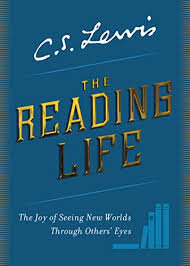
The Reading Life - A Review

For the publishing companies that hold the rights to the works of C. S. Lewis, his continued popularity has been a regular stream of income for decades. Whoever signed that contract with Lewis and, later, his literary estate, probably has a plaque somewhere in the building.

Over the years, revenue from Lewis’s work has been increased by repackaging some of his essays under different titles. The list of titles overlap across volumes published under his name, but to get access to a comprehensive set of Lewis’s shorter works has traditionally been very expensive, due to the sheer number of titles that one had to purchase. (There is actually a single volume collection of Lewis’s essays and short works, but it is out of print, expensive, and hard to come by.)

I am, as a result, a little skeptical when gift-sized books with excerpts of Lewis’s work are published. Some of those volumes add little value to Lewis’s legacy, but consist of quotes everyone knows or repackaged portions of his already popular works. They are cotton candy for those who like Lewis, but don’t want to go through the work to thoughtfully engage his lengthier works.

The recently published volume, The Reading Life: The Joy of Seeing New Worlds Through Others’ Eyes, is a welcome surprise. It manages to present Lewis’s thoughts on a particular topic while increasing interest in Lewis as a whole. In short, this short book of Lewis excerpts is more than a marketing ploy, it is a quality contribution to Lewis studies.

Those that are only somewhat familiar with Lewis are often surprised by how much he wrote. Beyond his A-side books, like The Chronicles of Narnia, Mere Christianity, and The Screwtape Letters, there are a wide range of equally or more significant books—his B-side books--that many people never touch and are generally unaware of. The Reading Life includes a number of passages from Lewis’s more popular works, but also includes extended sections from some of his less well-known writings. There are also excerpts of letters in the back of the book, which illuminate Lewis’s thoughts on the subject from a less-formal context.

The result of the careful curation of Lewis’s writing on reading is that those interested in seeing what Lewis has to say about this particular topic now have what amounts to a curated index of passages to use for further research. Those that simply want to geek out reading something from their favorite author on their favorite topic will also find benefit, as the passages chosen are lengthy enough to be engaging and give a sense of Lewis’s style. In short, this book is valuable to the researcher and to fan, though for different reasons.

This is no work of stodgy, formal scholarship. But it was an enjoyable way to spend a few hours comfortably curled up in my armchair. It was fun to enjoy the curated volume without feeling like I had descended into a kitschy puddle of sentimentalism. I commend this book to those who enjoy C. S. Lewis and reading.

NOTE: I received a gratis copy of this volume with no expectation of a positive review.

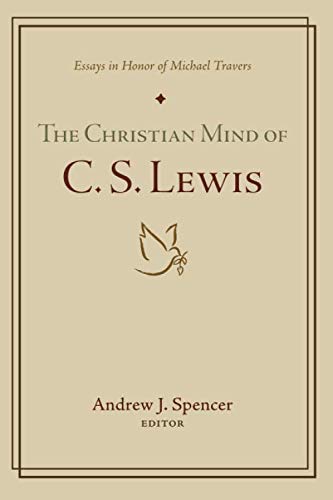
The Christian Mind of C. S. Lewis

According the Walter Hooper, the man who became the executor of C. S. Lewis’s literary estate, Lewis did not expect to have his books read for long after he died.

That is, of course, the way of it for even many good writers and careful thinkers. During their lives, when they are writing essays and giving lectures, their books sell because they are on trending topics and there are regular reminders that a certain book exists.

People continue to find C. S. Lewis helpful for several reasons. Unlike many academic writers and moralists, Lewis wrote children’s books that are enjoyed by a wide swath of people, both those inside and outside his ideological camp. This means that Lewis’s other works have a fighting chance of being picked up, even if someone wasn’t initially very interested in an essay entitled, “Religion and Rocketry.”

In his intellectual biography of Lewis, McGrath explains Lewis’s ongoing popularity by three reasons:

1.       The continued value of his apologetic work.

2.       His religious appeal.

3.       His use of imagination in defense of the faith.

I think these three are valid, but one needs to go a little further to get at the heart of the reason for the continued sales of the works of C. S. Lewis. Michael Travers noted another reason beyond those offered by McGrath:

In addition to these reasons, there is an underlying reason for Lewis’s ongoing important: he wrote about things of first importance, timeless truths that he thought we needed to hear. In his writings, Lewis taps into the essential human condition in such a way that we catch glimpses of truths we had forgotten or perhaps suppressed, especially in our modern, Post-Enlightenment culture. One of these truths is that everyone is on a journey, hoping for heaven, even when we do not know it or refuse to admit it.

Travers’s explanation gets at the concept of the Christian mind of C. S. Lewis.

Lewis remains fascinating to many Christians at varying levels of education and experience, and across denominational boundaries, primarily because he gets at the heart of what it means at piece to live with the Mind that imagined the universe, set its boundaries, and controls the course of history. The Christian mind provides evidence of the truth of reality and how to live within that truth.

download (1).png

Lewis is one of a number of Christian thinkers who had the Christian mind. In his own time Dorothy L. Sayers and Francis A. Schaeffer had a deep understanding of reality and were able to point people toward it. Abraham Kuyper and Herman Bavinck overlapped with Lewis, but also had the Christian mind. As we look back in Church history, the number grows: Thomas Aquinas and Augustine of Hippo both thought and wrote with the Christian mind.

At a most basic level, the Christian mind is one that recognizes the enduring truth, goodness, and beauty of God. It is therefore drawn perpetually to asking questions about the true, the good, and the beautiful. This is a vision of reality that sees integrity in the universe because God himself, the eternal Three-in-One, is perfectly simple and without division. Comprehending this reality, even to the limited degree possible, entails looking at the wonder of reality outside of our own minds. Truth is discovered by observation, not introspection. The Christian mind is, therefore, one that is more interested in the world around than in itself.

I recently edited a collection of essays in honor of a friend and mentor, Michael Travers. In that volume, eleven authors from different fields of study consider the Christian mind of C. S. Lewis as it was presented in his work and as it applies to other significant topics of interest.

The book contains an essay by Michael Travers on Lewis’s apologetic of hope, which opens the book with a grand view of C. S. Lewis’s vision of the world. There is also a delightful chapter by Michael’s daughter, Elizabeth, on Desire and Love in The Chronicles of Narnia.

Aside from personal connections, there are several essays by well-known Lewis scholars in the book. James Como contributed an essay on C. S. Lewis as a master builder, demonstrating Lewis’s rhetorical genius. There is also a chapter from Leland Ryken who gets at one of Lewis’s sources: John Milton. Ryken’s chapter shows how the Christian mind understands all of life to be a stewardship before the Lord.

Heath Thomas contributed a chapter correcting C. S. Lewis’s writings on the Psalms of Lament and demonstrating that Lewis appears to have grown in his understanding of lament later in life, particularly in his Letters to Malcolm. Daniel Estes explains the significance of the integration of faith with all of life, something at which Lewis excelled. There are also essays in Lewis’s ethics in That Hideous Strength and The Abolition of Man, his concept of the “Inner Ring,” disinterested love in Screwtape and The Great Divorce, and an essay that puts Lewis and Schaeffer in dialogue on apologetics and epistemology.

In each of the diverse essays attempts to show readers where Lewis was pointing, since Lewis himself viewed his work as less significant than the one to whom he was pointing. This is a book with a heart attuned to both evangelism and doxology, concepts that are deeply intertwined and vitally important to the Christian life.

If you are fan of C. S. Lewis, or looking for an introduction to the wide range of work he did, this volume would be a good place to start.

NOTE: I edited this volume. If you buy a copy, I might get a tiny fragment of the money, which might eventually bring the hourly rate of my efforts up from deeply negative to zero dollars lost per hour. My more significant motivation is that Michael Travers was a dear friend and some of the essays in this volume are just plain good.

Socialism Sucks - A Review

I requested a review copy of Socialism Sucks: Two Economists Drink Their Way Through the Unfree World on a whim. The title is provocative and the subtitle sounds intriguing (if not a model of virtue). Given the title, I expected the book to be somewhere beyond polemical into the range of bellicose. Thankfully, the coauthors, Robert Lawson and Benjamin Powell, are not mean drunks.

download (22).jpg

Lawson is a professor at SMU and, perhaps more significantly, is one of the co-creators of the Economic Freedom of the World index. Powell is executive director of the Free Market Institute and a professor at Texas Tech. There are men who are convinced that a free market it the best economic system. They are libertarians. And, apparently, they enjoy good beer.

The premise of the book, which was proposed via a slightly tipsy text, is that these two economists would travel to various countries impacted by socialism and sample the local beverages while they examine the health of the economy. Their journey takes them from Sweden through China and all the way back to the United States. The chapters are a mix of reporting from ground level and discussion of economic principles. Who would have expected that when going on a pub crawl with these men, readers would learn something about economics?

After an introduction that begins with salty language and breezy prose, the authors go to Sweden. The beer in Sweden is good, though expensive. Of course, Sweden is not a socialist country, so the quality of the beer is not surprising, given Lawson and Powell’s thesis of the deficiencies of socialism. However, the beer is also notably expensive because of the high taxes needed to support Sweden’s bulky welfare system. Sweden is, in fact, able to support their generous welfare system because they have one of the freest economies in the world.

Next stop on the journey is Venezuela. The authors actually spend more time in Colombia along the Venezuelan border, because it isn’t safe to enter Venezuela. But what they see is tragic. The once-prosperous nation of Venezuela has residents streaming across the border to Colombia on a regular basis to get goods (like diapers and sugar) that are simply unavailable in their home country. Inflation is so bad that the authors exchanged a US $20 for a foot-high stack of large denomination Venezuelan currency (and they likely got the short end of the stick). The collapse of the economy in Venezuela is, as Powell and Lawson explain, largely due to attempts at price control, seizure of private property by the government, and strict controls on imports and exports. Oh, and beer is generally unavailable in Venezuela because the government won’t allow them to import hops.

After that dreary visit, they go to Cuba. It is, according to some, a paradise of free medical care. What tourists find when they venture off the beaten path is a dreary socialism that is barely making ends meet. There are some restaurants, but their menus are nearly identical and bland. The hotels run by the government are mediocre at best. The beer is bland and low quality. Cars are exorbitantly expensive, even for moderately functional units.

The third stop on the journey is North Korea. This time the authors do not actually go into the country because they have a friend who spent over a year in a labor camp for his visit. What they see from a neighboring Chinese city is a radical difference between the extreme poverty of North Korea’s socialist economy and the pseudo-capitalism of China. These libertarian professors even choose to forgo a strip club with North Korean girls, not because of any sexual virtue, but because they realize that many of the staff at the club are trafficking victims who were merely looking for a way out of North Korea. The misery of North Korea is even more striking when the prosperity in South Korea is considered in comparison. In this chapter, Powell and Lawson drink Swedish beer again, because there is no North Korean beer. In China, however, the beer is cheaper than in Sweden because the taxes are lower.

Although China is governed by the Communist party, there have been significant market reforms in the past few decades. Thus, the authors call it “fake socialism.” There are, to be sure, still significant aspects of the Chinese economy that are not free. What China has is crony capitalism, which is an advance on socialism, but still effective in keeping many Chinese people from prospering.

In Chapter Five, Lawson and Powell’s excellent adventure takes them to Russia and Ukraine, which are hungover from the socialism of the Soviet empire. Their visit to the epicenter of communism serves as a reminder of the millions of people enslaved and slaughtered to make socialism work. One of the most striking vignettes in this chapter is the prevalence of abortion, particularly when the Soviets were in power. It was not something that was particularly good for women, contrary to recent attempts to whitewash abortion and the Soviet regime. According to an estimate by Soviet gynecologist Archil Khomassuridze, “women in the Soviet Union had between five and eight abortions for each birth.” (pg 97) It was done in an assembly line manner, as this quote from a feminist magazine outlines:

“You go into a hall splattered with blood where to doctors are aborting seven or eight women at the same time; they’re usually very rough and rude, shouting at you about keeping your legs wide open et cetera….if you’re lucky they give you a little sedative, mostly Valium. Then it’s your turn to stagger out to the resting room, where you’re not allowed to spend more than two hours because the production line, you see, is always very busy.”

The libertarian authors are not opposed to abortion, but they still find this outcome of socialism horrid. The prevalence of abortion was largely driven by the unavailability of birth control and resistance to large families due to economic difficulties. The medical conditions were representative of the socialist approach.

On a more positive note, the next destination is the Balkan nation of Georgia. Since they have become free from Soviet rule, markets have begun to flourish thanks to the work of several of their leaders and laws intentionally written to encourage development. The result is an economy that is beginning to grow and recovery from the misery of socialism. It takes times to recover and the ugly Soviet-era buildings remind visitors of the joylessness of socialism. Since the fall of the Soviets the local wine industry has flourished. It was an age-old craft that the Soviets sought to eliminate, but local grapes fermented by local methods have made Georgia a stop for wine tasters in Europe as the country opens up to free markets.

In Chapter Seven the authors return to the United States to visit a conference of American socialists in Chicago. They attended multiple sessions to hear about socialism from those who are advocating for it. Then, they proceeded to the privately owned bar down from the convention to casually interview conference attendees over glasses of beers with socialist brands. What Lawson and Powell discover is that there was almost no discussion of actual socialism at the convention and, when asked, conference goers thought that socialism was about support for abortion, queer ideologies, and freeing the oppressed, immigrant rights, and Black Lives Matter. The two economists were politely confused by the failure of the supposed socialists to understand the ideology they were advocating for. Their theory is that, like many cults, the real economic socialists are allowing the conversation to stay on the popular topics instead of revealing the black center of the ideology.

Each of the chapters is a mix of stories about their travels, with a heavy emphasis on the quality of the booze, the food, and the hotels, and economic principles written at an accessible level. Though its title is splashy and some of the language salty, this is an ingenious way to get some people to understand why socialism really isn’t a good thing for anyone except those at the center of power. This is an example of winsomely explaining a topic so that an unusual audience might listen. This might be the only way to get some college sophomores to actually move beyond the memes into some meaningful economic theory.

NOTE: I received a gratis copy of this volume from the publisher with no expectation of a positive review.

Who Killed Civil Society? - A Review

We often take it for granted that the bulk of social issues have a government funded solution with a complex bureaucracy behind it. Is someone out of work? To the unemployment office they go to fill out forms, search for jobs in the database, and collect a check. Are they short of funds for food? There is a program to issue a card with funds that can be spent at certain retail outlets to fill the pantry. Privately funded soup kitchens, shelters, and other programs exist, but they often serve as contractors for the government, subject to the rules laid down by the centralized bureaucrats. Or, such charities exist on the margins to fill in gaps until the real help from the government can get there.

Many of these social issues used to be dealt within civil society rather than through governmental policies and programs.

download.png

The rise of the government as the primary welfare agency is an artifact of the late industrial era. Prior to around the turn of the 19th to 20th century, the majority of civil welfare was funded and conducted on a private basis. There are certainly cases where those organizations fell short of excellence, but one thing they were able to do was help transmit norms and values that might help people adapt to the system and succeed within it.

One of the more significant misconceptions about poverty is that it is primarily material. There are certainly material aspects to poverty, but simply writing a check, giving a credit card for food, and subsidizing rent are insufficient to overcome poverty. Those who live in poverty often see it as a spiritual and emotional condition, as much as it is a lack of material resources.

Government programs can be very efficient at proving material relief, but by their very nature, they often discourage helping solve non-material problems. While the government may have better resources to meet physical needs, civil society might be more efficient at helping change values and behaviors that contribute to material poverty.

Who Killed Civil Society? The Rise of Big Government and Decline of Bourgeois Norms tells the story of the shift from civil society functioning to alleviate poverty to the dominance of government programs. Simultaneously, this also accompanied the shift from the transmission of “bourgeois” values to supposedly value-free providence of material aid. The author, Howard Husock, tells the story through the biography of six significant figures who were engaged in seeking to improve the lot of the poor.

This short book has six content chapters with a brief introduction and conclusion. The introduction tells the story of the author’s father who passed through civil society as an orphan and came out as a success case. The biographies include significant historical figures within the poverty alleviation movement such as Charles Loring Brace, Jane Addams, Mary Richmond, Grace Abbott, Wilbur Cohen, and Geoffrey Canada. From Loring Brace to Cohen, the biographies chart an arc from concern for imparting values while helping the poor to primary focus on alleviating the physical symptoms of poverty. The final example is of an African American who was exceptionally successful in changing the trajectory of the lives of poor African Americans living in rough neighborhoods.

The author’s affiliation with the Manhattan Institute, which favors free markets and limited government, as well as the subtitle of the book make it fairly obvious that Husock begins with the assumption that government as the primary solution to poverty is not the best option. However, the book is an even-handed discussion of the historical facts. This is not a diatribe against big government, but a call to recognize that even if government is a large part of the solution to poverty, we cannot rely on that.

There is a segment of the population who view bourgeois norms like thrift, hard work, and aspiration, as a form of oppression. For those that believe that the system is irredeemably gamed, this book will likely be of little interest. However, for readers trying to figure out why poverty seems to be increasingly generational, Husock has some possible answers. It may be that teaching people they are victims of the system is less effective in alleviating poverty than helping them to succeed within the system. That is the essential argument of Husock’s book.

This historical account shows how and why the transition from civil society to government programs happened. It was well intentioned advocates seeking to alleviate the physical symptoms of poverty, which they believed to be the cause of social ills. However, the data seems to support Husock’s thesis that this was not necessarily a good thing and that the lack of appropriate values tends to encourage and exacerbate the physical symptoms of poverty.

Marvin Olasky’s book, The Tragedy of American Compassion, traces a similar trajectory from civil society to government programs as the solution to poverty. Who Killed Civil Society? and Olasky’s book complement each other well and could be paired to good effect in a course on poverty alleviation. Their agreement, however, could be explained by the fact that both are right-leaning thinkers.

However, more recent books by left-leaning authors tend to make similar cases about some of the issues with government programs for poverty alleviation and the need for civil society. Daniel Hatcher’s book, The Poverty Industry: The Exploitation of America’s Most Vulnerable Citizens, outlines many of the abuses by government programs that entrap and victimize those they are intended to help. Hilary Cottam’s book, Radical Help, details her efforts to create programs in the UK’s expansive welfare state that rebuild the fabric of civil society.

If we are serious about poverty alleviation, we need to talk about what the actual causes of poverty are. Then we need to ask how to eliminate those causes. Even as the fabric civil society continues to fray at an increasing rate, it is becoming clear to the left and the right that whatever the funding model, civil society is necessary to prevent and eliminate the symptoms of poverty.

Husock’s book is an interesting read, especially for those wondering how the contemporary welfare state in the U.S. evolved. The book handles a contentious issue fairly, though the author clearly has a point of view. At the same time, the biographies are handled so sympathetically that it is possible for readers who strongly favor limited government to see why these individuals sought to alleviate poverty primarily through the growth of government programs. This book makes a solid argument that a return to encouraging hard work, thrift, and planning deserves more attention and care than the contemporary system tends to allow. Whatever the funding model is, Husock makes a strong case that teaching norms would do a great deal to improve society.

NOTE: I received a gratis copy of this volume from the publisher with no expectation of a positive review.

Karl Barth's Political Theology

One model of political engagement for contemporary Protestant Christians can be drawn from the 20th century, Swiss theologian, Karl Barth. Barth is perhaps more well-known for his copious systematic theology, Church Dogmatics, or his public feud with his colleague, Emil Brunner, over the function of natural theology in shaping Christian doctrine and practice. However, amid his other, more famous works, Barth also produced a coherent, tested, and helpful political theology.

Barth was a citizen of Switzerland, but taught in German Universities beginning in 1921. During this period between the World Wars, Barth witnessed the rise of the National Socialist German Workers’ Party, more commonly known as the Nazi party, with its infamous leader, Adolf Hitler. As a citizen of a neighboring nation, Barth observed the changes in German society, particularly in German Christianity, from within. He was eventually expelled from Germany in 1935 due to his resistance to the Nazi party, particularly his opposition to efforts to institute governmental control of various German churches. One result of Barth’s lived experience was the development of a political theology that maintains active engagement of Christians in politics while preventing churches from either controlling or being subsumed by the government.

Historical Challenge

In its essence, Nazism is not simply a political movement, but a worldview (weltanshaung) for the German people. One of the foreseeable consequences of the punitive sanctions enforced by the Allied victors of World War I in the Treaty of Versailles was the impoverishment of the German nation, which resulted in a sense of bitterness and desire for relief from oppression. The Nazi platform was, as a result, geared toward restoring national pride through a comprehensive social program that included such infamous institutions as the Hitler Youth, which aimed to build support for the rising National Socialist party and its vision for Germany from an early age.

The smothering nature of such a worldview program could not leave the independence of the German churches alone. As Arthur Cochrane observes, “The National Socialist ideology was actually a political religion.” (Cochrane, 1976, p. 21) At the heart of this political religion was the exaltation of the Aryan race, which began to take on cult-like characteristics, particularly when Hitler’s virulent hatred of the Jews began to spread. In his infamous screed, Mein Kampf, Hitler blamed Europe’s Jews for most of the problems of German, writing, “It was the Jews who plotted the First World War, and they are the power behind Germany’s two archenemies: international capitalism and international Bolshevism.” (quoted in Cochrane, 1976, 23) The National Socialist movement was, thus, in many ways a religious movement. Hitler’s vision was for “the State to control and to direct every area of life. All social, cultural, and economic life was supervised by the Party.” (Cochrane, 1976, 29) This included total control of churches. (Barth, 1939, p. 5)

karl_barth.jpg

Early on in his political career, before taking power, Hitler had deceived Christians regarding his position on independence in church doctrine and practice. Cochrane notes, “In Mein Kampf he [Hitler] stressed that the part would be neutral with respect to the confessional or denominational differences. . . . He maintained that Church and State should be strictly separated, and he condemned political parties that owed allegiance to any particular denomination . . .” (Cochrane, 1976, p. 35) Is should have been obvious early on, however, that National Socialism was a totalizing worldview that could not exist peaceably with Christianity or any other religion. Yet, on the 23rd of March in 1933—in the lead-up to his 1934 election—Hitler reiterated, “The rights of the Churches will not be diminished, nor their position as regards the State altered.” (Quoted in Barth, 1962, p. 24) Many Germans believed him.

Despite Hitler’s claims to the contrary, once in power, Hitler began placing officials in the ecclesiastical hierarchies in Germany. He also recognized a “German Christian” party, whose membership consisted of individuals who supported the totalizing worldview of National Socialism while still claiming to be Christian. Cochrane observes, “While the Church was engaged in withstanding the State’s encroachment upon its offices and government, it also had to combat the Neopaganism of the ‘German Faith Movement’ which the government, at first secretly and later openly, espoused, as well as the nationalist and racial ideology of the Party . . . .” (Cochrane, 1976, p. 37) The conflation of Church and State, largely through the State’s attempts to take over various German churches required political and spiritual resistance. It also required the development of a political theology upon which an appropriate resistance to State intrusion could be based. Karl Barth would provide that political theology.

The Resistance

Some Christian clergy in Germany resisted the Nazi inroads and immoral impositions in the life of the churches. (Haddorff, 2004, p. 3) However, after the dust settled in 1945, the evidence shows there had been very little civil resistance to National Socialism. “On the other hand,” Barth notes in Eine Schweizer Stimme, from the very first months on there was a German Church struggle. Even it was not a total resistance against National Socialism. . . . It confined itself to the Church’s Confession, to the Church service, and to Church order as such. It was only a partial resistance.” (Barth, 1945, p. 5) Barth’s vision for the Christian resistance to the totalizing civil religion of National Socialism required a total commitment.

The main points of Barth’s political theology, as it was published during the heat of the struggle against Nazism, were contained in seed form in his Bonn lectures on Ethics from the 1920’s. (Barth, 1981, pp. 440-51) Many of the same elements are discernable in his 1928 and 1929 lectures on ethics at Münster. (Barth, 1981, pp. 517-21) Though the origins are visible early on, Barth’s political theology was more fully developed and expressed more clearly as the challenges from National Socialism changed. In a short book, Theological Existence To-day!, published in 1933, Barth called German Evangelical churches to retain their independence from the National Socialist regime and instead honor the Word of God—that is, the Bible.

Barth’s critique focused on the syncretism of the German Faith Movement, or “German Christians,” with the German government. It was not simply that candidates and policies of one political party were being affirmed by a Christian group. (Hankins, 2008, pp. 143-76) That is usually done on a case-by-case basis. Rather, the theologically liberal (which is to say amorphous) “German Christian” faction merged itself with the German national government of the Nazi’s. The goal of the “German Christians” was to be indistinguishable from the German culture of the day, so that every German would want to return to Church to be built up for the vocation to which the national government was calling the German people—that is, the good “Christians” in Germany who happened to be of the Aryan race. (Barth, 1962, pp. 48-49)

Although the “German Christians” had a theology that would be more consistent with that of mainline denominations in the United States, it would be a significant mistake to overlook the fact that this blending of civil religion and Christianity can take place within self-described orthodox circles. Simply because one affirms the virgin birth, the inerrancy of Scripture, the bodily resurrection of Christ, and the doctrines of the Trinity is no guarantee that a thoughtless loyalty to party or politician is not a ready danger. Barth’s critique is as effective for theologically left leaning Americans who ignore the horrors of abortion and revise doctrines to embrace the sexual revolution as it is for right-leaning, Bible-thumping Christians who adapt their faith in other ways to overlook evils in the marketplace or in the politician’s personal life.

On this side of the horrors of World War II and the Nazi desecrations of the imago Dei in the Holocaust, it is hard to understand why the German Evangelical Churches were not more active in their resistance of the Nazi party. Barth chided German evangelicals for their passivity, and noted that a sort of pragmatic realism was a driving force for the acceptance of the advance of the Nazis and the ecclesiological affronts of the “German Christian” movement. Despite this, Barth’s early contentions were mainly theological rather than political. In other words, his concern was not that the government was doing evil things to people, but rather that there was a merging of the government of the Church and the national government. (Barth, 1963, pp. 55-61) His concern was that the Church would cease to be distinct as the differences between Christians and non-Christians dissolved in conjunction with the merger of Church and State. (Barth, 1962, 67-71)

Even if it seems Barth’s emphasis was misdirected in retrospect, his focus on maintaining theological freedom of the Churches to preach a biblically formed doctrine—even in opposition to prevailing political trends—is an essential aspect of a free society that can resist evil. (Jehle, 2002, p. 99). Barth’s goal was that the Church could continue to preach the gospel to the State and to the whole world. This is an essential aspect of encouraging justice in society. In the conclusion to Theological Existence To-day!, Barth (1962) wrote,

[T]heology and the Church cannot enter upon a winter sleep within the ‘Total State’; no moratorium and no ‘Assimilation’ (Gleichschaltung) can befall them. They are the natural frontiers of everything, even the ‘Totalitarian State.’ For even in this ‘Total State’ the nation always lives by the Word of God, the content of which is ‘forgiveness of sins, resurrection of the body, and life everlasting.’ To this Word the Church and theology have to render service for the people. . . . The Church must be allowed to be true to her proper pragmatic function, and be willing to be true. (p. 84)

Although it would turn out to be insufficient, Barth’s call for theological action in response to the “German Christian” movement contributed to the formation of the Pastor’s Emergency League in 1933 and continued through the adoption of the Barmen Declaration in 1934.

The Barmen Declaration was a succinct, ecumenical statement of evangelical belief designed to help faithful, orthodox Christians to resist the encroaching power of Nazism. David Haddorf (2004) helpfully summarizes the six paragraphs of the statement:

1) The church must hear and obey the one Word of God (Jesus Christ) and no other voice, person, events, powers, or sources of truth as God’s revelation; 2) Jesus Christ claims our whole life, and rejects the idea that other “lords” rule over other areas of our lives; 3) the church, too, must not be forced to have its message altered by prevailing social ideologies or political convictions; 4) the church does have a proper form of government, but rejects the notion that there are special leaders (Fuhrer) of authority over and within the church; 5) draws for a separation of duties of church and state, and rejects the state becoming the church and the church becoming the state; 6) the church’s task and mission should not be corrupted by its pride and desire for power and prestige.” (pp. 23-24)

This theological statement, which was largely drafted by Barth, was affirmed by the Confessing Church in May 1934. At that point, Barth’s welcome in Germany was nearly exhausted. (Clark, 1963, p. 47) This, perhaps, indicates the importance of his perspective and how significant a challenge his views were to National Socialism.

Once Barth was removed from Germany and sent back to his native Switzerland in 1935, he continued to write on political theology. His three main political works between 1935 and 1946 were “Gospel and Law” (1935), “Church and State” (1938), and “The Christian Community and the Civil Community” (1946). Barth also published another helpful essay during this time, The Church and the Political Problem of Our Day (1939). These four works, which are expansions of themes found earlier in Barth, provide a framework for his vision of political theology, especially the relationship of the Church and State. All of his works reiterate the need for separation between Church and State with each entity playing its proper, limited role.

In his brief volume, “Church and State,” Barth argues that both institutions are ordained by God, but each has a particular role. The church is to proclaim justification through faith; the state is to enforce justice. (Barth, 1991, pp. 38-40) As such, rather than a sharp distinction between the two institutions, there is a vital relationship. The Church proclaims the gospel and reminds the State of its role under subjection to Christ. The State should subject itself to God’s intent (not the Church’s authority) and provide justice, especially the justice that allows the Church to proclaim the gospel freely, even to the state itself. This effectively recognized the legitimacy of government as declared in Romans 13, but rejecting anything like a totalizing state that could control truth.

The State, according to Barth, should be neutral with respect to truth. (1991, p. 42) This means it is not the role of the State to determine or regulate truths like Church doctrines. When the State oversteps its epistemic limits, it quickly becomes “demonic” because it fails to fulfill its God ordained duty and, instead, attempts to direct worship toward itself. As Barth argues, “The state becomes ‘demonic’ not so much by an unwarrantable assumption of autonomy—as is often assumed—as by the loss of its legitimate, relative independence, as by a renunciation of its true substance, dignity, function and purpose, a renunciation which works out in Caesar—worship, the myth of the State and the like.” (1991, p. 53) When the roles of the State and Church are blended, both institutions lose their value and must thus be resisted by faithful Christians.

The key to Barth’s perspective is contained in the last section of “Church and State.” Barth calls for the Church to pray for the State, but he notes that the Church must fulfill this service whether or not the State provides justice and without considering whether the State is worthy of continued existence. The Church should expect the State to fulfill its role in protecting the preaching of justification, but the Church should be prepared “to carry this preaching into practice by suffering injustice instead of receiving justice, and thereby acknowledging the State’s power to be . . . God-given.” (1991, p. 77) Continued prayer for the State, however, does not constitute support for all the efforts of the State, as when it is “guilty of opposition to the Lord of lords, to that divine ordinance to which it owes its power.” (Barth, 1991, p. 78) This radical submission, even to an unjust State, could take the form of being a victim of the State’s injustice. Suffering persecution for the proclamation of the gospel and the pursuit of justice would be the Christians’ duty as citizens. Since, as Barth argues, “Christians would, in point of fact, become enemies of any State if, when the State threatens their freedom, they did not resist, or if they concealed their resistance—although this resistance would be very calm and dignified.” (1991, p. 79)

In short, according to Barth’s political theology, the Church has the responsibility to help the State be what it ought to be rather than simply resist it carte blanche or support it uncritically. The Church also has a responsibility to refrain from attempting to control the State. The Church is always political, though it should never seek to replace the State. (Barth, 1946, 154) For Barth, Christians have the responsibility to remain engaged in shaping society without seeking to dominate it to introduce a theocracy. Such a careful balance between critical participation and refusing to control is a challenge for the Church, but is essential if the Church is to retain its prophetic voice.

Conclusion

In the United States, the Constitution prevents religious tests for public office and numerous court cases have been heard through the years to ensure the government remains distinct from the hierarchy of any religion. However, recent shifts in laws that have been passed have—sometimes by design, it seems—required abandonment of conscience protections for some Christians to enter into the public square. Even in the liberal democracy that is the U.S., there are threats of the government failing to remain neutral on questions of truth and attempting to become a Totalizing State. Elsewhere in the world this is more significant, though the threat is growing in the U. S.

Following Karl Barth, the Christian response to attempts by the government to seize power should be to continue to preach the gospel and to use appropriate means to convince the State to fulfill its role in guaranteeing the freedom to do so.

Perhaps more significantly for our day, Christians as individuals and the Church as a collective (to the extent that a Church catholic can be said to exist in the U. S.) should be very careful that they do not support an unjust State by giving unwarranted support or cheerfully ignoring (or defending) the shortcomings of a favored politician. Even if the formal roles of Church and State are not blended, the prophetic, gospel witness of the Church is at risk when it becomes too entangled in the role of the State or blind support for how the State’s role is carried out.

NOTE: I wrote a longer version of this argument, which was published in the Spring 2018 edition of Criswell Theological Review.

Ten Significant Books from 2019

IMG_20191230_174917.jpg

As a reading year, this year was somewhat slower than many other years because I was editing a book for publication. That required me to spend a lot of time staring at sentences, looking up words, checking quotations, and reading them in context. As a result, my tally of recent books was somewhat lower.

Of course, as I learned from Alan Jacobs in The Pleasures of Reading in an Age of Distraction, the point in reading is not maximum consumption. However, as a serial reviewer of books, my lower productivity was, at times, weird, even when it did not rise to the level of distressing.

From among the books that I read that were published in the past year or so, here is a list of ten that I found especially helpful. The list is in no particular order.

Reformed Ethics, vol. 1, by Herman Bavinck.

The first volume of Herman Bavinck’s Reformed Ethics provides an example of an ethical system with its roots in an unchanging greatest good. Although the contents of the volume are more than a century old, they appear to have aged very little; indeed, this initial volume of Bavinck’s ethics is remarkably fresh and invigorating. This is because, for Bavinck, ethics is about loving God by living rightly through the power of the Holy Spirit. More than that, the center of Christian ethics is the character of God. As such, Bavinck’s ethics are explicitly theological in the deepest meaning of the term. That is, right living must begin by understanding who God is.

Your Future Self Will Thank You, Drew Dyck.

The basic formula laid out in Your Future Self Will Thank You is that we need to incrementally build new habits. Dyck sifts through research that shows that the problem with most of our self-improvement attempts is that we try to change too much too quickly and without the appropriate incentive structures. Dyck uses recent scientific research to show that will power is a finite resource. It can be developed over time. However, our self-control is subject to fatigue. When we are tired, stressed, or distracted we are much more likely to fail in our attempts at self-control. Not coincidentally, this happens to match what Scripture teaches. This is why Sabbath is built into the pattern of Scripture. This is why Proverbs focuses so much on patterns of life.

Scientism and Secularism, J. P. Moreland

In popular culture, scientism has overtaken other religious systems as a dominant plausibility structure. In other words, it is how many people make sense of the world around them. Not only does this often displace belief in God, but it undermines the ability of those who hold to scientism to accurately evaluate competing, non-scientistic perspectives that might provide better access to truth.

Scientism has influenced several of the shifts our culture has witnessed in recent decades. The first is that it has taught people that science sums up the totality of accessible knowledge, while religion is blind faith divorced from reality. This myth may help people coexist, but it does much less to encourage the pursuit of truths that cannot be known empirically, much less fairly evaluate those that haven’t adopted the current orthodoxy of scientism.

Transhumanism and the Image of God, Jacob Shatzer.

Our smartphones are changing the way that we focus, constantly dragging our attention away from more significant things to the trivial. Social media is functionally altering the way that we socialize with one another. We tend to focus on documentable events rather than companionable experiences. The internet and the availability of search engines are modifying how we value knowledge of facts.

In his recent book, Transhumanism and the Image of God, Jacob Shatzer shows that transhumanism is with us now and, to some degree, inescapable. At the same time, it is our responsibility as Christians to begin to ask questions about to what degree we can accept the changes demanded by technology and to what degree we ought to resist them.

Between Life and Death, Kathryn Butler

Kathryn Butler’s book, Between Life and Death: A Gospel-Centered Guide to End-Of-Life Medical Care, is an extremely helpful volume in learning about various critical medical treatments, which can help make the cost/benefit analysis for choosing to continue with interventions. She also carefully sorts through the biblical data to consider whether an ethic of life, which is demanded by Scripture, entails pursuing every medical treatment possible no matter the cost, the low likelihood of success, or the trauma to the patient. Butler, a trauma and critical-care surgeon, has worked at several significant medical facilities and brings her experience and expertise to bear in a compassionate manner in this book.

Radical Help, Hilary Cottam

In her recent book, Radical Help, Hilary Cottam challenges the expansion of centrally planned model of government poverty alleviation. Writing from progressive perspective, Cottam makes an argument that will sound familiar and welcome to conservative ears: The most effective means of poverty alleviation is the development of community.

Determined to do something practical about the problem of poverty, Cottam set to work redesigning portions of the welfare system in the United Kingdom. She challenged the status quo by asking a profound question of workers within a number of social programs: Who has been helped by your social program so that they are no longer enmeshed in the welfare system?

The Power of Christian Contentment, Andrew M. Davis

One of the central elements of The Power of Christian Contentment is that our satisfaction in Christ is a primary tool for evangelism. Everyone is unhappy about something. Our political climate is entirely structured on creating unhappiness that only abolishing the other party can possibly fix. Economically, no matter how much we have, one side reminds us that someone else has more (which is unfair, they say) and the other side reminds us that some people are keeping us from getting more (also inherently unjust, in the eyes of some). Davis’s argument is that when we have Christ, we have everything we need. When we are satisfied in Christ’s provision, that shows and that satisfaction is attractive to the harried masses around us who are convinced that fewer social restrictions or a larger bank balance are the keys to eternal satisfaction.

Becoming Whole, Brian Fikkert and Kelly M. Kapic

Becoming Whole is an excellent tool to get people inside the local church to rethink poverty alleviation and, en route to that reconsideration, to think about the value structures in their own lives. I have read dozens of books on poverty and the American dream in my studies of wealth and poverty, environmental ethics, and the like. I did not want to put this book down. Each page offered new ways of explaining Christian theology in a way that is relevant to people in a dominant culture that is both gnostic and excessively materialistic.

This is volume that, along with When Helping Hearts and Practicing the King’s Economy, ministry leaders should read as they seek to form people and outline a vision for human flourishing among their own congregants and in the world around them.

The Gospel of Our King, Bruce Ashford and Heath Thomas

The Gospel of Our King affirms the reality that we were not made for ourselves, but to serve the King of the Universe.

I have read dozens of books on worldview, the gospel, and mission. I found The Gospel of Our King to be a refreshing presentation of this topic. This is a book that I am glad to recommend. Above all, this is a volume that helped to remind me of the central purpose of the Christian life: To glorify God and enjoy Him forever

God and Galileo, David Block and Kenneth Freeman.

It’s hard to characterize this book simply, to put it into a clear category. Usually that is a criticism, but in the case of God and Galileo it is because the book does a great deal well. Are you seeking a resource to disrupt a materialist’s view that faith and science are mutually exclusive? This book can help do that. Are you interested in the contours of the faith and science debate as a Christian? This book will inform you. Are you looking for an enjoyable read for a quiet evening? This book offers it. Are you longing for a volume that encourages you to enjoy God through both his special and general revelation? This book calls you into a sense of wonder at both.

And, as a bonus, because I found this book so paradigm shaping. I am linking to my review of a book that is a a couple of decades old, but likely belongs in the camp of classics.

Not the Way It’s Supposed to Be, Cornelius Plantinga

The tragedy of much contemporary and theologically orthodox Christianity, particular among evangelical Protestants, is that a faulty definition of sin has led to thin ethics. Sin is sometimes popularly perceived of as something that is paid for by the cross and then entirely behind the Christian. To a degree this is true, Christ’s substitutionary death on the cross provided a path for the elect to be redeemed. Forgiveness for sin is now available for those that repent and put their faith in Christ’s death, burial, and resurrection as the hope for eternal life. All of this is true, but it neglects some of the ongoing effects of sin in even the lives of Christians and especially in the world around us.

Cornelius Plantinga’s book, Not the Way It’s Supposed to Be: A Breviary of Sin, is an important book for understanding the nature and effects of sin. The book was originally published in 1995, and won multiple awards. It is both excellently written and exceedingly positive. This is the sort of book that should remain in print because of its enduring value as an accessible and theologically precise systematization of the doctrine of sin.

An Appreciation for the Enduring Value of Scripture

How many translations of the Bible do you have in your home? How often do you read it?

According to LifeWay Research, “Americans treat reading the Bible a little bit like exercise. They know it’s important and helpful but they don’t do it.”[1] This has resulted in a significant decline in biblical literacy, not just in the culture at large, but also in many churches.

1788551199_34f2dc9d45_z.jpg

Kenneth Briggs, in The Invisible Bestseller notes, “Widespread ignorance and neglect of [the Bible] is a recipe for . . . distortion and abandonment of basic beliefs and practices . . . The future of Christianity seems dependent in no small measure on whether that bible storehouse of creation accounts, history, law, prophecy, morality, poetry, story, witness and miracle is the soil in which churches will be built––or not.”[2]

In contrast to our abundant access to God’s word, throughout Church History, Christians have sometimes struggled to gain access to Scripture. For some, especially around the time of the Protestant Reformation, access to the Bible was worth one’s wealth and even life itself.

Wycliffe

John Wycliffe first translated the New Testament into Middle English in 1380.

In 1408, with support from Archbishop Arundel, a synod at Oxford forbade people from reading Wycliffe’s Bible.[3]

Those who were caught reading the Bible were liable to forfeiture of their worldly goods. But the price of renting a Wycliffe Bible for an hour every day for daily reading was a load of hay–-a significant payment for a farmer living near subsistence. People would pay a high price for a privilege that could cost them everything.

A man named John Bale “as a boy of eleven watched the burning of a young man in Norwich for possessing the Lord’s prayer in English. . . . John Foxe records. . . seven [disciples of John Wycliffe] burned at Coventry in 1519 for teaching their children the Lord’s Prayer in English.”[4]

These people saw the enduring value of Scripture and it cost them their lives.

Tyndale

On October 6, 1536, William Tyndale was burned at the stake.

Tyndale’s crime? Translating the Bible into English and importing it into his home land. His desire? That the King of England would allow the people access to the Bible in their own language.

He was arrested and executed by the King of England for having the courage to bring God’s Word from the original languages to the people. His hope was for their salvation and spiritual maturity. When a Roman Catholic scholar argued him at dinner, saying, “We were better be without God’s law than the pope’s.” Tyndale responded: “I defy the Pope and all his laws . . . . If God spare my life ere many years, I will cause a boy that drives the plow shall know more of the Scripture than thou dost.”[5]

Tyndale died to bring Scripture into the common language. People paid big money to rent a copy, because it was so precious. People were starving for access to God’s Word.

But we have no such limitations. We have extra copies of the Bible to give away. That Bible is written in common language and offered at about an eighth-grade reading level. There are free translations of the Bible available online through Apps that you can download onto your mobile devices.

And Bible study tools? There are free websites that offer searchable Bibles that pastors and teachers could have only dreamed of in decades past.

We have an embarrassment of riches, but we don’t take advantage of them because we have Netflix and cable and podcasts and everything else that can keep us from God’s word. Our problem isn’t an access problem, it’s a value problem.

We often don’t properly act on the enduring value of Scripture. Even when we have Scripture, we don’t treasure it.

Enduring Value of the Content of Scripture

 One common dismissal of Scripture’s authority in ethical debates is that it is an ancient book that doesn’t speak to today’s problems. Why should we listen to a book that was written a few thousand years ago? Isn’t the Bible just a regressive Bronze Age Book?

 As an ethicist, this is one of the most common arguments I come across. Non-Christians make it to explain why they dismiss Christians without even listening. Theologically liberal Christians made the same argument when they ignore the parts of Scripture they don’t like and use other parts to support the sorts of ethics that they prefer. 

 And, lest I be unfair, I’ve heard people who claim to be theologically conservative skip or minimize the passages they find inconvenient while highlighting the stuff they like. Some like to celebrate that Scripture affirms private property rights, but they sometimes ignore the radical generosity toward the poor that Scripture calls us to. There is an impulse built into our self-justification to attempt to explain away texts of Scripture that disagree with our preferences.

 Most of the time, when people are dismissing the Bible as ancient and irrelevant it is because they are engaged in what C. S. Lewis calls chronological snobbery. This is the belief that the new and modern is always better than the old.

 It is on this grounds that people will argue that we have to reject the Bible’s teaching on human sexuality because of what year it is. Or, they might argue, “How can you possibly believe that God created the universe from nothing? It’s 2019, after all.” All of these arguments against Scripture are rooted in our particular cultural moment.

 People that make their arguments by the year on the calendar are missing the fact that culture changes. Many of the things that our culture accepts as true––often without argument––are going to appear foolish in two generations. Thankfully, God’s Word does not change. It offers a critique for every culture, because it is grounded in God’s character.

 To help people––those inside and outside the church––get through cultural challenges, Tim Keller writes,

 “I urge people to consider that their problem with some texts might be based on an unexamined belief in the superiority of their historical moment over all others. We must not universalize our time any more than we should universalize our culture. Think of the implication of the very term ‘regressive.’ To reject the Bible as regressive is to assume that you have now arrived at the ultimate historic moment, from which all that is regressive and progressive can be discerned. That belief is surely as narrow as the views in the Bible you regard as offensive.”

 In contrast, God’s Word is permanent. Its truth is rooted in God’s character. It was God’s finger that wrote the Ten Commandments on the stone tablets, according to Deuteronomy 9:10. It is God’s Spirit that spoke through the prophets when they said “this is the Word of the Lord.”

 Scripture is permanent because it is rooted in God’s character and God’s character is good.

 Conclusion

 Our main problem with Scripture is not an access problem, it is a value problem. One of the chief tragedies of our age is that many people who claim to believe Scripture is the ultimate authority for faith and practice are derelict in studying it.

 Let us devote ourselves to the study of God’s unchanging Word. It is a gift and we have it in abundance.

[1] https://lifewayresearch.com/2017/04/25/lifeway-research-americans-are-fond-of-the-bible-dont-actually-read-it/

[2] Briggs, Invisible Bestseller, 57.

[3] B. F. Westcott, A General View of the History of the English Bible. 3rd ed., rev. W. A. Wright (London: Macmillan, 1905), 22–23. Cited in Paul Wegner, The Journey from Texts to Translations (Grand Rapids: Baker, 1999), 283.

[4] “It is a dangerous thing. . . . as witnesseth blessed St Jerome, to translate the text of the holy Scripture out of one tongue into another; for in the translation the same sense is not always easily kept, as the same St Jerome confesseth, that although he were inspired . . . yet often times in this he erred; we therefore decree and ordain that no man hereafter by his own authority . . . translate any text of the Scripture into English or any other tongue, by way of a book, pamphlet, or treatise; and that no man read any such book, pamphlet or treatise, now lately composed in the time of John Wycliffe or since, or hereafter to be set forth in part or in whole, publicly or privately, upon pain of greater excommunication. . . . He that shall do contrary to this shall likewise be punished as a favourer of heresy and error.”  William Tyndale, The Obedience of A Christian Man, editd with an introduction by David Daniel (London: Penguin Books, 2000), 202.

[5] Daniell, Tyndale, 79.

Who is an Evangelical? - A Review

The term “evangelical” has drastically different meaning to many people. In popular discourse in the United States, the talking heads have a very particular definition in mind when they speak of evangelicals. They think they are speaking of white, middle and lower class, Republican-bloc voting, misogynistic, bigots who tend to fall into the “basket of deplorables” that “cling to their guns and religion” as several politicians on the left have argued. When exit polls showed that 81% of “white evangelicals” voted for Donald Trump in the 2016 election, this merely confirmed the popular opinion (bolstered by any sniff of resistance to the Obergefell decision) that evangelicals were in the tank for any rightwing idea, were politically irredeemable, and worthy of scorn.

For several decades, there has been a strong emphasis among many people who identify as evangelical on political engagement. In 1973, when the Supreme Court of the United States wrote their Roe v. Wade decision connecting the destruction of children in the womb to the United States Constitution, this began to mobilize many of those who value human life to seek political solutions to a significant moral crisis.

Unfortunately, as the old saying goes, politics makes for strange bedfellows. Therefore, the Moral Majority, comprised largely of white evangelicals and fundamentalists, became entangled in politics on the right, finding more sympathy among Republicans than Democrats. It would take a careful discussion to determine whether the bundling together of issues into left and right became more pronounced to facilitate this shift, as a result of the increased political engagement, or for other, unrelated causes.

Whatever the cause, the result has been that many of those evangelical Christians tend to vote for Republicans. The central cause of that loyalty has been concern about abortion. This loyalty has also led to many of those evangelical-Republican voters holding unrelated, morally ambiguous positions supported by the Republican party with roughly the same vigor as their concern for the lives of innocent children.

It is this bloc of the voters who identify as “born again” and typically oppose abortion that are cited as the 81% of white evangelicals who voted for Trump in the last election. This statistic is used as a cudgel in public to argue that the vast majority of doctrinal evangelicals a) voted for Trump out of racial fear (and are thus irredeemably racist), b) have abandoned the gospel because no faithful Christian could vote for Trump, and c) should be hounded out of the public square because of their beliefs, all of which represent heresies against the political orthodoxy of this moment.

Kidd’s book, Who is an Evangelical?, helps to counter some of the careless accusations that have been recently hurled at evangelicals as a result of this sloppy thinking.

For example, the 81% number is not nearly accurate, since a large plurality of evangelicals did not vote in the 2016 election. Only about 42% of white evangelicals voted. This seems somewhat surprising for a group that is often characterized as being mainly political (and thus not primarily religious) in nature, allegedly functioning as a voting bloc for right wing causes. As political movements go, only getting 42% to get to the polls is pretty depressing.

Additionally, a number of those who did vote did not vote for either major party candidate, based on my anecdotal experience. And, the exit polls do not provide a definition for the term evangelical. This has allowed people who last entered a church when they were 8 to claim to be evangelical, with the same confidence as the weekly attender. The voting patterns of those two groups are demonstrably different.

Summary

Thomas Kidd’s book, Who is an Evangelical?, was written to provide a history of the evangelical movement in the United States and to divorce the present assumed reality of evangelicals as a racially motivated, rightwing voting bloc from the historical reality of a gospel-centric, doctrinally oriented religious movement.

Kidd is an excellent historian and has spent a great deal of time thinking about the evangelical movement in the United States. His careful analysis in this volume helps to recall the social engagement of evangelicals in history, consider the doctrinal core of evangelical identity, and attempts to reclaim space for evangelicals to speak under the flag of the gospel rather than the banner of a particular political party.

In his introduction, Kidd offers a definition of his tribe: “Evangelicals are born-again Protestants who cherish the Bible as the Word of God and who emphasize a personal relationship with Jesus Christ through the Holy Spirit.” (pg 4) This is a helpful definition, because it is a trinitarian confession that recognizes the authority of Scripture and the nature of the gospel as it is outlined in the Bible.

Kidd outlines the rise of evangelicalism in the United States, beginning with the various revivals in early American history. Kidd draws on his extensive research on George Whitefield and others of that era to write an engaging and even-handed chapter. He then moves in chapter two to discuss the nature of evangelicalism in the American Civil War. They were characterized by proselytizing, deeply interested in religious liberty, and very divided on vital political issues like slavery. Many in the South defended the practice of chattel slavery, while many in the North were deeply engaged in the abolitionist movement.

2b78933aba3c4f92b24d77ef82d017bf.jpg

Whatever degree of national cohesion there was among evangelicals before the Civil War was shattered by the division when major denominations split into regional factions over the issue of slavery. And yet, both groups retained their central theological identity. In the Jim Crow era, the term evangelical took on more racially differentiating meaning because the “fundamentalists,” who were trying to resist the doctrinal encroachments of revisionist Christianity, often shamefully neglected important social engagement. This meant that many African Americans, though doctrinally aligned with the core beliefs of evangelicals, would not accept the label because those who identified as evangelical seemed ambivalent to their valid social concerns. The Scopes Trial would shift the definition of evangelical toward opposing the public teaching of evolutionary theory in public schools, in part due to the work of the political progressive, William Jennings Bryan.

The Neo-evangelical movement began after the Scopes Trial, it was characterized by attempts to work together for evangelism and some social action, though the emphasis was strongly on the religious characteristics of the group. The contemporary popular understanding of the term evangelical as a political category was not the primary meaning of the term at any point in history. However, it was during the cultural shifts of the 60s and 70s that Republicans began to court the support of evangelicals. In part, this was accomplished because Republicans positioned themselves as being hard on communism, which was a common enemy to the gospel and to democracy. Despite the alliances that were formed, there was still a great deal of ethnic diversity among evangelicals. It was, by no means, a collection of old white men with political interests. The Moral Majority sprung out of this time, which became closely aligned with Republicanism and very vocal in the public square. Their rise helped propel the current vision of evangelicals as a certain brand of right-wing political organizers. Sometimes the line between acceptable political engagement and “excessive” political engagement was drawn along racial lines and over the types of issues being discussed. Those divisions have largely continued to this day.

Analysis

Kidd’s book, Who is an Evangelical?, is a balanced, critical look at the history of the evangelical movement from someone inside it. Unlike the caricatures that are common in popular media, Kidd provides a nuanced portrait of the gospel movement in the U.S. Notably, he does not shy away from criticizing evangelicals for their failures on issues like slavery, Civil Rights, and racial reconciliation. This is not a white wash of the record, but it does undermine the common trope that all evangelicals are racist and the entire movement was founded to preserve patriarchy, protect white power, and whatever other moral evils contemporary pundits want to heap on the group.

The portrait that emerges is that people who were engaged in the common cause of furthering the gospel united together for that purpose. Some have taken that unity as an opportunity to try to create a voting bloc on issues not directly tied (and sometimes contrary) to the gospel. Kidd’s book clarifies the history, but it also provides a nudge for contemporary gospel believers to be more careful about distinguishing justice that stems from the gospel (e.g., abolition of abortion) from prudential issues (e.g., the role of the government in establishing regulations over the economy), which are not central to evangelical belief. Evangelical has historically been a doctrinal label. We should work to make it so again.

NOTE: I received a gratis copy of this volume from the publisher with no expectation of a positive review.

Francis Schaeffer: An Authentic Life - A Review

Francis Schaeffer is one of the more significant intellectual figures for twentieth century evangelicalism and he is in danger of being forgotten. While interest in C. S. Lewis continues apace, many in rising generations of Christians do not know who Schaeffer is. Given that Schaeffer was a significant contributor to something of an evangelical awakening of the mind, forgetting Schaeffer would be a tragedy.

download (20).jpg

One of the causes of the diminution of interest in Schaeffer is that the generation that knew him best is moving out of the centers of evangelical thought into retirement. Additionally, unlike Lewis, Schaeffer did not leave by winsome fiction that captures the imagination causing younger readers to wonder what else he wrote. Schaeffer must be encountered by someone trying to make sense of Christianity and its coherence with reality.

As more of the generation that met Schaeffer and were intellectually awakened by his ministry pass away, I am thankful that Colin Duriez did the work to conduct interviews and compose a critical biography with first-person discussions of the impact Schaeffer had on many. The result, Francis Schaeffer: An Authentic Life, is an excellent and encouraging biography that captures an important moment in evangelical history.

Colin Duriez has written biographies of the Inklings, has a forthcoming biography of Dorothy L. Sayers, has written on various forms of fantasy. He seems the sort of fellow that would be interesting to engage in conversation at parties. He was also influenced by Francis Schaeffer, through the L’Abri ministries. Thus, his 2008 volume is both a continuation of the strain of his writing on Christian mind and imagination and a return to his intellectual roots.

The volume is, like most biographies, organized chronologically. It begins with Schaeffer’s family and early years, moves through his pastoral ministry, and into the various stages of his public ministry. Much of the content is derived from Edith Schaeffer’s books, L’Abri (Tyndale, 1969) and The Tapestry (Word, 1981). This biography benefits from those works, but also is enhanced because those accounts tend to cover over some of Schaeffer’s flaws.

Duriez’s account of Schaeffer’s life is realistic. It depicts a man who was exhausted by his busy schedule, had limitations due to apparent dyslexia, and was sometimes short tempered. And yet, unlike the biographical patricide committed by Franky Schaeffer, Duriez reveals a man that was hotly pursuing holiness and fell short despite his best attempts. He was, after all, simply a sinner saved by grace. The portrait Duriez paints shows Schaeffer to be a flawed hero, but still a hero.

One of the strengths of this volume is the number of personal interviews Duriez conducted. In the appendix, Duriez includes a previously published interview he conducted with Schaeffer in 1980. However, much of the biographical data in this volume is provided by discussions with his children and others that lived and worked at L’Abri for an extended period of time.

For those interested in Schaeffer, this is an essential biography. For those seeking to understand how the Christian life can be lived out in a roughly contemporary setting, Duriez’s biography is exceedingly helpful.