You Must Read - A Review

Banner of Truth Trust is a blessing to the body of Christ in many ways. They work to keep some good, old texts in print that would otherwise be found only in used book stores or consigned to the deep, dark dungeon of online libraries. Not only this, but have they often published high quality new books that touch on topics in ways that are fresh and helpful for contemporary readers.

A recent book by a whole host of evangelical thinkers highlights thirty-two books or sets published by Banner of Truth that have been particularly formative.

Summary

As Al Mohler outreads the rest of the world, it is helpful to know that he sees Iain Murray’s book Forgotten Spurgeon as one of the most significant in Banner of Truth’s backlist. Likewise, when Alistair Begg picks What is an Evangelical by Martyn Lloyd-Jones it provides a bump toward reading the volume.

Mark Dever, of course, highlights Richard Sibbes. Anyone who knows Dever would have expected it. Still, the essay Dever writes explains just why Sibbes is so helpful to the contemporary pastor.

You Must Read is a book full of book reviews and essays. They don’t follow the stodgy formula for reviews that those of us who write for academic journals have mastered. Instead, they are lively essays about the book, the author of the book, and why the book is so special in the life of the reviewer.

Analysis

This recent release is interesting on a number of levels. First, it provides insight into some solid books that Banner of Truth has put into print. Second, it can serve as a reading list as it points to some books that a pretty impressive list of thinkers finds important. Third, the reviews are helpful in pointing the reader toward which volumes would be best to target next.

Reading is an art and a science. It is also a great deal of work. Books like this can be enjoyable reading material in and of themselves. This one is. They can also provide a service by bringing to light old books that need to be read. This one does.

C.S. Lewis famously recommended reading a book from a previous century for every book one reads from his own century. Of course, reading C.S. Lewis now counts as reading an old book. However, it is always difficult to know which old books to read. There are staple classics in Christianity, like Bunyan’s Pilgrims Progress and Athanasius On the Incarnation. However, there are many good texts that would otherwise go unnoticed because they fall into obscurity because of their dialect or out of fashion because their theology is considered dated.

Over the past decades, Banner of Truth Trust has resurrected many such mathoms, which are worthy of consideration, but somewhat off the beaten path.

A major force in the work of Banner of Truth has been Iain Murray who has four biographies listed in the pages of this present volume. One eighth of the books are by Murray, but all of the books owe their continued life, in part, to Murray’s efforts to get good books in print. This is a volume that honors the legacy of Murray.

There is little chance You Must Read will become a best seller. In fact, it may not get a second printing. However, this is one of those books that will find a place on my shelf in preparation for a student or young pastor I will someday mentor. As a book about books, there is a certain sort of person that will appreciate it, find it useful, and be changed by it. Our goal should be to help that sort of person find this sort of book.

Note: A gratis copy of this volume was provided by the publisher with no expectation of a positive review.

A Review of the Mythology of Work: How Capitalism Persists Despite Itself

Peter Fleming writes a bitter screed against a version of capitalism and the concept of work in his recent book, The Mythology of Work: How Capitalism Persists Despite Itself. His basic purpose is to prove that, “We work, pay taxes, take care of the bills and commuting costs for one single reason: not to ‘survive’ but so that the governing elite gains its priveleges for nothing. Our labour is designed to provide freedom to the rich. Our work exists in order to subsidize the costs of their existence.”

The book, then, is largely a critique of what Fleming sees as an oppressive class system, where the middle and lower classes are firmly squashed by managers and owners of capital. This is a book that demonizes work and profit. It is essentially a moral complaint, although Fleming denies that in his conclusion. It is not a cheerful book, or one that provides real hope of change. In fact, in the conclusion, Fleming seems to abandon hope that even his critique can change anything. He labels his work inoperative, because he is both benefiting from and participating in the very system that he intends to critique.

Analysis

There are deep layers of irony in this book. Fleming is careful to note some of them in his own conclusion. As noted above, he recognizes that he, as a middle class university worker, benefits from the so-called oppression of others who are in a class below him in the economic food chain.

There are other clear ironies, though. In some ways, Fleming has an exceptionally high view of human nature. He believes that the economic system would continue and human flourishing would exist if only the managers and owners of capital would be replaced by a democratic body of workers. Thus the workers, executing the daily job, could replace the vision and ordering function that managers and corporate bureaucratic methodology provides.

At one level I am sympathetic with him. In previous jobs, I have often felt that I had a better view of the problem and a better hope of devising a solution than the administrators above me. However, sometimes my best solution was the best only for a limited population. The broader corporate perspective required a different approach or there was another solution that worked best for the company as a whole, though it was less than optimal in my small sphere. There were times I think I was right, but others that I was certainly wrong because I did not have the whole picture.

Fleming’s assumption is that everything would work out alright because the workers would make good long term decisions if they were only given the power. He fails to note that in many situations this is not the case. Although corporations sometimes make frustrating choices for short term benefit, the same is true for workers. Union strikes are nearly always couched as striving for worker’s rights or some absolutely necessary good. And sometimes this is valid. Sometimes, however, strikes and discordant negotiations are designed merely to extract the most near term gain for the workers. In other words, greed is sometimes still the motivation, and sometimes the fault is on the side of the workers.

Another basic assumption in Fleming’s calculus is the inherent goodness of humans. Yet, at the same time, he sees humans as pathetically weak. He describes debt as a form of slavery and faults banks for people’s consumer debt. There certainly are (and have been) cases of predatory lending, but the kind of consumer debt that Fleming describes as slavery is largely the result of excessive spending due to a lack of self-control. Fleming seems to argue that there is a deterministic force that is driving people to make bad choices. He ignores the fact that in many cases, these are bad choices that were made voluntarily for short term gain in recognition there would be a later price to pay.

A major problem with Fleming’s view of human nature is that he wants to have it both ways. Workers would make good choices if they had the opportunity despite the reality they have made poor choices when they have had the opportunity. This seems a bit sketchy.

Another problem with The Mythology of Work is that Fleming seems to be jousting a strawman. He has constructed a caricature of neo-liberalism (a term for a free market economic perspective) which closely represents crony capitalism in his portrayal. He assumes that the socialistic U.K. context that he is operating in is somehow an ideal situation according to a neo-liberal.

As someone who resonates with neo-liberal economics, I was not offended by Fleming’s critique because he was obviously not talking about me. It isn’t clear, however, whether he recognizes there is another option out there.

I was thankful that at the end Fleming proposes some solutions that would help resolve his critique. These solutions include: 1. A guaranteed minimum income with a max 1:3 ratio to top earners; 2. More mediating institutions; 3. Government ownership of utilities and other similar monopolies; 4. A three-day work week; 5. Eating less meat; 6. Providing non-monetary incentives.

Some of these suggestions are more helpful than others. Perhaps in another post I will engage with some of them. Some of them seem doomed to fail and unrealistic. For example, the guaranteed minimum income with a max income limit assumes that diminished returns (and unearned baselines) wouldn’t significantly undermine economic flourishing in society. In other words, there are some jobs people won't do for only a little more than the lowest skilled workers make. He anticipates this criticism, and dismisses it, but he never deals with it. Simplistic solutions like this rely on assumptions about human nature that seem invalid given human history.

Conclusion

Overall this is not a cheerful book. Fleming’s view of work is so negative that it seems he doesn’t recognize any redeeming benefits to work. What if our purpose is to serve one another through faithful work? What if the real problem is not work itself, or the system, but our idolization of money and our improper valuation of work? Fleming tries to resolve the problem created when workers identify themselves by their job by eliminating work instead of correcting the attitude. In the end, while some of his critiques are helpful, this volume left me looking for a more realistic solution.

Note: A gratis copy of this volume was provided by the publisher with no expectation of a positive review.

Marie Durand - The Story of Faithfulness in Persecution

If you haven’t heard of Reformation Heritage Books before today, you’ve been missing out. They produce a number of fine volumes on theology, particularly on Puritan theology.

One of the most significant contributions they are making to the life of the church is the Christian Biographies for Young Readers series. These are fully illustrated, hardbound books that are suitable early elementary through middle school. The books include drawings and paintings of historic scenes as well as contemporary photos of historical sites.

Summary

The latest edition in this series highlights the life of Marie Durand. Durand was a French Protestant who was born in the early eighteenth century. As a Protestant in Catholic France, her family was at times tolerated, but later on most of the family was arrested for meeting together and worshipping according to their conscience.

As a result of her faith, which led her to disobedience to the crown, Durand spent thirty-eight years in prison. She lived the first 19 years of her life free, though with threat of persecution through many of those years. Nearly her entire adult life was lived in the small confines of the Tower of Constance, where she and a number of other Protestant women and children were imprisoned. Snow and rain fell through the grating in the roof and through the slitted windows. Their meager provisions had to be augmented by their families and friends on the outside.

Inside, Durand served as a teacher to the children, letter writer for many of the other prisoners, and also spiritual leader because of her ability to read and write better than others. Her role was significant, and yet the reality is that she spent nearly four decades in a small one-room prison with only occasional opportunities to go outside into the fresh air.

While the women, including Marie Durand, were imprisoned, their husbands were made to be galley slaves. Or, like Marie’s brother Pierre, were executed outright if they persisted in preaching the Protestant faith.

And yet they persisted.

Analysis and Conclusion

This is what makes this biography so powerful and timely. Durand’s story reminds us of what real persecution looks like. This is not merely social marginalization but absolute, unfettered, and unreasoning punishment. Many men and women lost their lives in exchange for an unsullied conscience.

This book is written as a third person historical biography. In other words, it is not a story book, but a work of non-fiction directed to the young. This is the sort of story that can provide the sort of vicarious memory that a young Christian may need when attempting to sort through the social consequences of a vibrant Christian faith in the coming years. This volume shows that others have paid a greater price, and that it was worth it.

The author, Simonetta Carr, is a native of Italy with a multicultural background. She has been an elementary school teacher, a home-school teacher of eight, and a writer for newspapers and magazines. The book is illustrated by Matt Abraxas who is an artist by trade who lives on Colorado.

These books are not inexpensive, but they are well constructed. The illustrations draw the reader in and help to make the story come alive. This would be a suitable volume to incorporate into a homeschool unit, or as part of church library. The entire series would make an exceptional Christmas or birthday gift for a young reader. This is the sort of reading that will stick to a child’s ribs and provide encouragement in a time of need.

This is the ninth book in the series. Previous titles include John Calvin; Augustine of Hippo; John Owen, Athanasius; Lady Jane Grey; Anselm of Canterbury; John Knox; and Jonathan Edwards. Hopefully there are more planned in the near future. If the future volumes are as good as this one, the church will be blessed.

Note: A gratis copy of this volume was received from the publisher through Cross Focused Reviews with no expectation of a positive review.

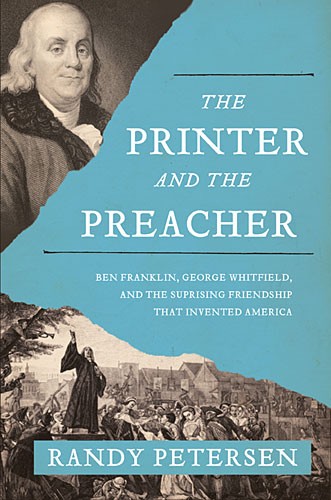
The Printer and the Preacher - A Review

The recently released book, The Printer and the Preacher, promises to explain how the friendship between Benjamin Franklin and George Whitefield helped to “invent America.” The author, Randy Petersen, has an extensive list of publications including a number of co-authored volumes. He has written on sports, psychology, history, various Christian topics, and more. Petersen appears to have an eclectic appetite for writing projects and the ability to finish them.

The book is readable and there are some interesting anecdotes, but I found it to be a disappointment overall. There are pointers along the way that indicate that both Franklin and Whitefield influenced the founding of the United States, but Petersen never really explains why their friendship was pivotal. I walked away with a better understanding of the long-term correspondence that existed between these two men, but without seeing how it really matters in the grand scope of history.

Analysis and Critique

Petersen’s writing style is light. The book uses endnotes, so it is not encumbered by the distractions (welcomed by many) that footnotes often provide. He tells the story well. There are points, however, where Petersen is excessively informal, in ways that may be deemed disrespectful by those who engage in academic pursuits. He consistently refers to people by their first names (George and Ben), which is atypical for serious historical work.

There is a connection between the two men. Franklin and Whitefield corresponded for decades and met several times, particularly while Whitefield was preaching through America. Franklin printed news about Whitefield and many of his sermons. Whitefield attempted to convert Franklin from his self-created Deism to a Calvinistic Christianity. He was unsuccessful. There is a story worth hearing here.

However, after reading The Printer and the Preacher, it isn’t clear that there is enough of a story to make a book length treatment. At times Petersen lapses into conjecture, trying to describe conversations they were likely to have or occasions they might have met while both were in London. This has the dangerous potential to present as surmise as fact, if the reader is not careful. The concept of a surprising friendship that is essential to the formation of America is intriguing, but in my mind at least, there needs to be a better case made.

This is a popular level historical book, but at times the history gets jumbled because Petersen tries to organize the parallels by topic instead of by chronology. He also jumps back and forth between accounts of the lives of two men born eight years apart on different continents. There are certainly some parallels between the two, but at times the presentation seems strained.

 The greatest benefit of the book is Petersen’s demonstration that two men with vastly different foundational beliefs could get along, work together, and have meaningful dialog for a number of years. Whatever other weaknesses the book may present, this is a good thing to understand and I appreciate Petersen’s efforts to tell the story well.

Conclusion

The Printer and the Preacher is a quick read. It would be worth taking to the beach or on an airplane. It is has weaknesses, but it is an entertaining book that some history buffs may enjoy.

Note: A gratis copy of this book was provided by the publisher with no expectation of a positive review.

The Oxford Handbook of Value Theory - A Review

Oxford University Press recently released another entry into their series of Oxford Handbooks, this time the topic is value theory. Like most of their handbooks, The Oxford Handbook of Value Theory is designed to be a mid- to upper-level reference volume and not an introduction, at least not an introduction to someone without some background in philosophy.

Value theory is a key concept for ethics. How do we determine what is of value, especially what is of ultimate value? How do we evaluate between two things that are each good? Where does value come from?

The twenty-two new essays in this volume are a worthy attempt at bringing some clarity to an otherwise exceedingly complex portion of philosophy. Indeed, I found that though some of the essays challenged me with symbolic logic and dense philosophical prose, my understanding of contemporary value discussions was improved significantly.

After a brief introductory chapter by the editors, Iwao Hirose and Jonas Olson, the book is divided into three sections. The first is on foundations. In ten chapters, authors provide overviews of the differences between evaluative and deontic value (quality versus morality), intrinsic and extrinsic value, value and emotion, and more. These first tend essays tend to be simpler and clearer for the relatively uniformed. The second section deals with the structure of value theory. There are important definitions of incomparability and incommensurability, a discussion of ranking different value structures, and an evaluation of theories of value aggregation. The six essays in this section are more focused and philosophically dense, but they inform the reader of important arguments in the field of value theory. The final section includes six chapters that apply the earlier concepts. How will health be valued? What is freedom worth? Can we assign value to nature? The practical orientation of these chapters relies on the framework provided in the earlier discussions, but rounds out the volume to show why the whole discussion matters.

The essays tend to be expository, which is to say they are not strongly polemical. The authors are trying to explain the field more than sway the reader toward one system or another. This is an essential characteristic of a handbook like this.

This is a not a book for the faint of heart. Indeed, it is a reference book that will best serve individuals with some background in philosophy to improve their grasp of the field. In reality, the world would be better served if more people understood value theory more thoroughly and were able to differentiate between aesthetic goodness and moral duties, or, in some cases, see value in aesthetics at all.

Ethicists and moral philosophers should begin petitioning their librarians to get a copy of this book in their collections. It is the best entry into the depths of value theory that I have found, and I have looked before. Reading this volume has been enormously helpful in my understanding of discussions in environmental ethics, which I hope will pay dividends in the future.

Note: A gratis copy of this volume was provided by the publisher with no expectation of a positive review.

Wildlife in the Kingdom Come

If there is one thing most theologians are in need of it is a good laugh. After hours of poring over the sometimes terrible writing and convoluted thoughts of people we are generally in disagreement with, a little levity would seem to be a welcome thing.

I was pleased to be introduced to an old, humorous book a few months ago by Bruce Ashford. He credits Paige Patterson with bringing him to the font of amusement. Personally, I don’t care how it got to me. I just think it’s funny.

The book is Wildlife in the Kingdom Come: An Explorer Looks at the Critters and Creatures of the Theological Kingdom. It was written (and illustrated) by Ken C. Johnson and John H. Coe. Cast your memory back to the 1980’s and you may remember seeing Ken Johnson’s name as the creator and writer of McGee and Me! Or, more recently, from his work with Adventures in Odyssey. John H. Coe is actually a trained theologian who is at Biola and, amazingly, actually lists this book on his faculty page.

Wildlife in the Kingdom Come contains several dozen brief discussions of theological movements or elements of theology and a representative drawing. It is very tongue in cheek. It also leaves no theological movement protected, making fun of theologians of every stripe. The footnotes are humorous, too, citing authors such as Clark P. Nock and R. C. Sprawl.

Most of the humor is not highbrow. It relies on puns, caricatures and stereotypes. Of course, if the punchlines were too sophisticated it wouldn’t be nearly as fun to read. Who wants to work to get a chortle, anyway?

Some Quotes

I’ll give five quotes to provide a taste of the book:

“Long ago in an age when the primitive shores of the Textual Critic Coastlands were forming, a fierce and tyrannical giant roamed the earth, the terrible Textus Receptus (TR). Rising from the Erasmus Manuscript Marshes, the TR ruled these lands particularly during the Jurassic Era of King James.”

“Anyone wishing to explore the theological kingdom will inevitably encounter the Problem Passage. This terrifying creature roams the Theological Hillsides and creates extremely difficult going for the would-be traveler. By positioning himself stubbornly on the explorer’s path, the Problem Passage impeded any attempt to forge a trail toward a complete theological system.”

“In the heartland of the Teaching Timberlands that border the Pulpit Prairies thrives the ever-stoic and staunch Expository Sermon. Though less daunting and spirited than his cousin, the Topical Sermon, this meticulous creature is an instinctive digger and a study in discipline.”

“Many centuries ago zealous (and at times, unbalanced) expeditions sought to rid the Great Primitivchuch Plains of a dreaded and poisonous parasite, the Heretic. Found throughout the theological lands, the Heretic is most fond of feeding off helpless hers of Unorthodox and Neoorthodox whose diet lacks any substantial dosages of doctrine of theological presuppositions. Although small and difficult to detect at first, the bite of this malicious little pest can have devastating results. As infection forms around the bite, schism and dissension spread throughout the body of the helpless victims. This condition ultimately gives way to such fatal diseases as Arianism, Modalism, Universalism, and the Ten-Percent Tithe.”

“By far the most beautiful and colorful of all the birds in the Moral Highgrounds is the proud Pelagian. This reigning king of pomp and splendor typically spreads his impeccably plumage for all to see. His feathered feat is usually an unabashed attempt to attract as many admirers as his flock can carry. So impressive is the sight that some have suggested that his brilliant display has a blinding affect [sic]  on the admirers of this unfallen fowl.”

Conclusion

The list goes on. There are pages of these punny quips and sidelong theological references throughout. As a student of theology, I have guffawed, wheezed, snorted, and cackled at some of the jokes. My family things I’m crazy anyway, so that makes no difference.

The biggest downside of this book is that it is out of print. However, I still commend it because there are relatively inexpensive copies available used through Amazon. Trust me, theological friends, this is worth your money. It’s a skinny book, too, so it won’t be that much more weight the next time you move.

Lewis, Tolkien and the Shadow of Evil - A Review

If you’re like me, finding a grocery list written by J.R.R. Tolkien or C.S. Lewis would be a treat and make for enthralling reading. Therefore, I suppose it comes as little surprise that I enjoyed the recent book by Colin Duriez, Bedeviled: Lewis, Tolkien and the Shadow of Evil.

This book is a literary analysis that traces the theme of evil through the major works of both men, weaving through Middle Earth, Narnia and more. As an expert in the study of the Inklings, the informal club of scholars Tolkien and Lewis belonged to, Duriez demonstrates mastery of both the literature and the history of the two men.

Summary

The book is divided evenly into two parts. Part 1 focuses on the influence of the wars on the perception of evil. Although Tolkien resisted reading his works allegorically, there can be little down that his experience in World War I was influential in his work. The same is true for Lewis. The horrors of World War I, which both men experienced firsthand, including life in the trenches and being wounded, could not help but increase their understanding of suffering. This particularly since the so-called War to End All Wars was senseless in its cause and its manner.

Part Two deals with the intersection between good and evil. In particular, Duriez maps out ways that goodness overcomes sin and temptation, leads to change, and shines through with joy despite the pain of the present world. These themes are apparent in Tolkien’s Leaf by Niggle and literature of Middle Earth. They are also constantly brought to mind in most of Lewis’ works.

Analysis

Considering just the two most famous fictional works of both men, The Lord of the Rings and the seven part Chronicles of Narnia, there is a progression from a fallen state toward heavenly redemption in both works. In fact, by including all of Tolkien’s Middle Earth works and taking the Narnia sequence in chronological order with The Magician’s Nephew at the beginning, the movement through the pattern of creation, fall, and redemption is quite obvious.

What Duriez makes clear in his analysis is that there is a true, biblical notion of good and evil behind the fictional webs created by two Oxford dons. In fact, both the Roman Catholic, Tolkien, and his Anglo-Catholic friend, Lewis, were rather Augustinian in their approach to evil. That is, evil was not a thing in and of itself, it was the deprivation of goodness. This is most clearly seen in Tolkien’s descriptions of orc as twisted elves, and not a new creation. Evil is inherently non-creative, it mocks by copying but it does not make.

This perception of evil, then, shapes the way the two men view the proper response to evil. Both men questioned the widespread bombing of civilians during World War II because the optimal response to evil is not to destroy it, but to reform it. And, as they both show in their literature, there is hope for redemption. Evil will one day be beaten back and the good will win.

One of the more helpful aspects of Duriez’s book is his work on The Great Divorce. Lewis’ account of the journey of some people from Hell to Heaven often leads to questions about Lewis’ view of the eternal state and the possibility for redemption after death. Duriez helps to resist that criticism as he points out that it was not Lewis’ intention to create a work of theology that represents the way things will be after death. Rather in The Great Divorce Lewis is delving into the human psyche to show how strong the tentacles of sin are wrapped around the self, keeping people from accepting redemption even when it can be seen in its fullness.

Duriez shows how both authors presented an accurate image of the world and pointed people toward faith and hope instead of despair. The work of Lewis and Tolkien continues to be popular largely because of the realism behind the fantasy, which culminates in the eschatological victory of good over evil. Their stories, and Lewis’ apologetic work, point toward something that is great, gracious and desirable.

Conclusion

This is an enjoyable piece of scholarship. Duriez’ love for the subject comes through in every page and his vibrant prose make reading this a real joy for those that are fans of the Inklings. For those that are literary minded, this would be a good way to be introduced to or deepen appreciation for two of the greatest English authors of the Twentieth Century. For those less interested in literary analysis, this is still an enjoyable read because so much of what Tolkien and Lewis wrote about still helps to explain the human condition in our contemporary times.

Note: A gratis copy of this volume was provided by the publisher with no expectation of a positive review.

Editor's Note: This post has been modified to note the concerns of Aaron Earls (@wardrobedoor) about whether the chronological reading of the Chronicles of Narnia is, in fact, in accordance with Lewis' preference. His discussion of the concept can be found here: http://ow.ly/NSPh7 

Trevin Wax (@TrevinWax) has previously addressed the order of reading as well: http://ow.ly/NSPh7 

A Catalog of My Recent Book Reviews

I read a lot of books. I review a lot of books. This post is simply a collection of recently published book reviews that have come from my keyboard.

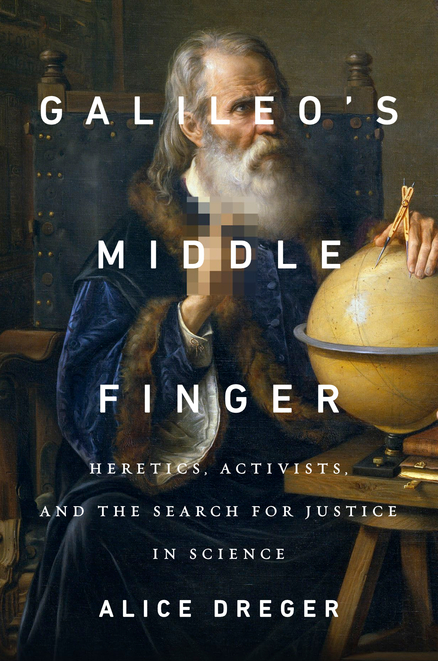
1. Alice Dreger - Galileo's Middle Finger: Heretics, Activists, and the Search for Justice in Science

Dreger’s thesis:
’Science and social justice require each other to be healthy, and both are critically important to human freedom. Without a just system, you cannot be free to do science, including science designed to better understand human identity; without science, and especially scientific understandings of human behaviors, you cannot know how to create a sustainably just system.’

2. Paul Heintzman - Leisure and Spirituality: Biblical, Historical and Contemporary Perspectives

This is the most thorough book on the concept of leisure available. Heintzman’s historical summaries bring together a number of streams of discussions in a comprehensive fashion. His biblical outline of leisure and rest covers the relevant passages in a manner that is fair to the text. This is a book that is both critical and constructive. In short, this is a reference volume that anyone interested in doing scholarship on work and leisure should own.

3. John Warwick Montgomery - History, Law and Christianity

History, Law and Christianity, by John Warwick Montgomery has recently been republished by the 1517 Legacy project, which aims at presenting a Christian apologetic to the world. Montgomery’s book was originally published in 1964, having begun its existence as a series of lectures in response to attacks on the Christian faith. The first five chapters discuss the plausibility of historical evidences of the truthfulness of Christianity. The final chapter provides a “legal defense” of Christianity, as it might occur in a court of law. This edition also includes the original lecture to which Montgomery was responding, as well as an affirmation of the quality of the argument by a non-Christian historian.

4. Paul L. Allen - Theological Method: A Guide for the Perplexed

Allen’s goal is “to survey and analyse the history of Christian reflection regarding how we speak of God and the life of the world in relation to God” (viii). He does this using a “wide-angle lens on the horizon of Christian theology, with peaks and valleys of theological method revealed in cursory snapshots over the bulk of its 2000-year history” (ix). Indeed, these two sentences sum up Allen’s accomplishment in this volume well.

5. Alistair Young - Environment, Economy, and Christian Ethics: Alternative Views on Christians and Markets

This recent volume by Alistair Young is an attempt to tie together the issues of environment, economics, and Christian ethics. Young is a retired economist, with experience teaching economics in several countries. His extensive experience in economics is evident throughout the text, as there is a decided emphasis on economics over the other two title subjects. Young has three purposes for writing this volume. First, he makes the case that environmental conditions require a response. Second, he examines theological perspectives on the environment. Third, he describes and evaluates policy decisions on the environment.

6. William Boekestein - Ulrich Zwingli (A Bitesize Biography):

Ulrich Zwingli follows the basic formula of the series, which includes a timeline, a brief introduction, and a walk through progression to importance, major conflicts, and reason of significance. The volumes all end with a summary of the legacy of the individual. This means that these books, including Boekestein’s recent edition, have all the pieces necessary to a good biography.
Both editions of this text have been, as the title claims, A Theology for the Church. The preposition in the title is hugely important, as it is not a theology of the church or to the church, but one designed to be accessible for the church. In other words, unlike many Systematics, which are written by theologians for other theologians, Akin’s text was written with the intelligent but theologically untrained in mind. Thus it does not get caught in jargon and leave insider references unexplained. It is crafted so a person in the pew can pick it up and benefit from it. Because of that, it makes an outstanding introductory Systematics for a Bible college or seminary.
Scott Sauls’ recent book, Jesus Outside the Lines: A Way Forward for Those Who are Tired of Taking Sides, is intended to mitigate the trend in polarization and move toward gospel reconciliation. As such, this book represents the beginning of a deep conversation that needs to happen in the gospel community whose ideas are increasingly demonized.
Rediscovering an Evangelical Heritage has been republished at a time when another major effort is being made to redefine Evangelicalism as merely a social movement with negotiable understandings of significant, historical doctrines. The essays were written at a popular level, with no interaction with contrary positions, which gives a false impression that this notion is and has been uncontested. The volume is worth reading, but it is one-sided.

10. Bill Watterson - Exploring Calvin and Hobbes:

This new book from Andrews McMeel Publishing is a breakthrough for the hungry Calvin and Hobbes fan. Exploring Calvin and Hobbes: An Exhibition Catalogue begins with an extended interview with the man who curated a recent exhibit of Calvin and Hobbes strips at the Billy Ireland Cartoon Library & Museum. In this interview, Watterson discusses his childhood, how he became interested in cartooning, his various attempts to break into the industry, and how the production of Calvin and Hobbes took place for its decade-long run.
This is basically a popular level book with some sociological research to support it. The conclusion outpaces the argumentation at several points, but this is still a thought provoking text. It has some significant weaknesses, but the strengths are sufficient to make it worth reading. Nonviolent Action is unlikely to become a classic text on the subject, but it makes a contribution to an important conversation in turbulent times.
Overall, though, this volume is well written and may replace Avery Dulles’ book, Models of Revelation. Having done a fair amount of reading on this topic, it is the best explanation of a Roman Catholic understanding of the doctrine of Revelation I have encountered. I would recommend it to those seeking to meaningfully engage in inter-denominational dialogue on this topic. Levering is an excellent scholar, whose work on Augustine I have benefited from in the past. This book is a helpful addition to the discussion, but it is far from the final word.
In about 130 pages of content, Ashford manages to provide a solid overview of a broad sweep of Christian thought. Besides the question of the relationship between the Law and the Gospel, there are few questions more significant to Christian theology than how Christians should relate to cultures which are, most often throughout history, not distinctly Christian. Ashford’s book is a beginner’s field guide on the topic.
The sub-discipline of environmental ethics has seen a torrent of publications in the past few years, with volumes that claim to present an authentically Christian version of environmentalism. Most of the books have juxtaposed a basic theological foundation for environmental stewardship with accepted scientific data to make ethical pronouncements consistent with those of explicitly non-Christian sources. The ethical methodology used by many of these authors tends to be utilitarian, rather than theological. This means that the majority of the books on Christian environmentalism tend to backfit theological concepts to previously accepted conclusions.
Pinker makes significant contributions to the style discussion. First, he presents some of the cognitive linguistics data that help make sense of prose structure. This is done in a clear manner that communicates well and is helpful for contemporary writers. Second, he affirms beginning with basic style manuals, but shows how good writing may and should move beyond. This is helpful as an academic and popular writer. Third, Pinker demonstrates good writing throughout. The prose is punchy and alive. It is interesting, even when the content is heady and a bit dry. This is a demonstration of how to make bland content flavorful without being gimmicky.
If you have questions about nuclear power, buy this book and read it. If you are a proponent of nuclear power, buy this book and cite it in your arguments. This is, hands down, the best one stop reference on the subject I have encountered.
If you love Puritan theology, you will thoroughly enjoy this volume, which is well stocked with Puritan quotes. If you want to deepen your walk with Christ, you will find this book very beneficial, because it points readers toward practices which are important for becoming more Christlike. If you need encouragement in your walk with Christ, this short text will provide ample exhortation. It is worth your time to read it.
I commend this to readers who are looking for answers to some very important ethical questions. I plan on recommending it as a resource to people in my church who have questions about this topic. It is up to date and informative. It is written with a pastoral heart and academic acumen. It should be a trusted resource for the church for the near future.
The question Baron picks up in the volume is whether “digital reading is reshaping our understanding of what it means to read.” (xii) She goes on to argue “that digital reading is fine for many short pieces or light content we don’t intend to analyze or reread.” (xii) Her conclusion is that digital reading is here to stay, but so is reading in print. Each has a niche in the publishing world and the academic world. Thus the future is a complementary coexistence rather than extinction of one or the other.
Neil Wilson and Nancy Ryken Taylor have put together a handsomely illustrated and solidly evangelical help for Christians seeking to enrich their ability to interpret some of the images of Scripture. They point to ways that significant symbols are used and make connections between them. They provide several Scripture references for each and show how the terms are applied.

21. Michael A. G. Haykin - George Whitefield (Bitesize Biographies):

Whitefield is a worthy subject of such a biography. This format of very brief, but well-researched biographies is a helpful tool for Christian discipleship. Reading a popular-level account of the life of a significant believer reminds the reader that great things are possible for those who are faithful to use their talents according to their calling. It is also a testimony of God’s faithfulness, as he raised up someone to preach and through him revived true religious fervor despite the moral decay in Britain and America in the 18th century.

22. Elizabeth Hinson-Hasty - Dorothy Day for Armchair Theologians:

At just about 200 pages, Hinson-Hasty provides an overview of Day’s life and work that covers the major epochs in her life, the main thrust of her work, and helps to place Day in her cultural context. Additionally, the author shows how Day’s ideas have been appropriated and applied to contemporary social justice movements. This makes the book a useful introduction into the topic.

The Importance of the Pursuit of Truth in Science - A Book Review

Alice Dreger’s recent book, Galileo’s Middle Finger, is about several things. It discusses her work in advocating for rights for intersex and transgender people. Though she spends over a hundred pages on that topic, that biographical data is largely an entry point into her broader discussion of problems within the academic community of ideologues undermining scholarly work and attempting to control the content and outcome of academic discussions.

Although I don’t agree with Dreger’s ethics in many areas, her main point is important. Her contribution to an understanding of the unwholesomeness of the relationship between science and social justice movements is vital as we pursue open conversation about a just social order.

Dreger’s thesis:

Science and social justice require each other to be healthy, and both are critically important to human freedom. Without a just system, you cannot be free to do science, including science designed to better understand human identity; without science, and especially scientific understandings of human behaviors, you cannot know how to create a sustainably just system.

In light of this, Dreger notes,

Yet it seems that, especially where questions of human identity are concerned, we’ve built up a system in which scientists and social justice advocates are fighting in ways that poison the soil on which both depend.

In other words, there is a problem right now where ideological advocates for social justice are undermining legitimate attempts to understand the human condition unless the scientific evidence agrees with the advocacy group's accepted narrative. Particularly in the area of identity advocacy, legitimate scientific study is thwarted through an openly hostile atmosphere to explanations that run counter to the desired storyline.

Dreger provides several examples of this. First, in her own account, although she is an avid advocate for intersex rights and openly supportive of transgender identity groups, she was viciously attacked for her work in defense of a scientist who dared to explain the transgender psyche differently.  Mike Bailey of Northwestern University is openly an advocate for transgender rights, but since his peer reviewed research undermined the accepted narrative, and because he made his case in an insensitive manner at times, he was deemed a danger to the transgender identity movement. Thus, he was mercilessly and falsely attacked by strong advocates within the transgender advocacy movement. When Dreger, a trained historian, investigated the accusations, she found them to be either gross misrepresentations of truth or entirely false. This led to a central advocate for transgender rights seeking to destroy Dreger’s career and being publically hostile.

There are several steps to this method of advocacy, which Dreger admits to using in a less nefarious way. She outlines four steps, 

blanketing the Web to make sure they set the terms of debate, reaching out to politically sympathetic reporters to get the story into the press, doling out fresh information and new characters at a steady pace to keep the story in the media and to keep the pressure on, and rhetorically tapping into parallel left-leaning stories to make the casual bystander “get it” and care.

These methods were used against Bailey, Dreger herself, as well as other cases Dreger outlines in the book. Her objection to these is not to the methodology used, but to the truthfulness of the accusations. In the cases she highlights, there were clear factual errors that were being intentionally promoted through this form of social advocacy. Dreger also highlights several other cases in less detail where individuals have been warned off of pursuing further research and publication on significant topics because of similar scare tactics by belligerent advocates.

Tying the title back in, Dreger notes that Galileo himself faced resistance in his life to his empirical conclusions. It was only because of his perseverance in the face of persecution that he was able to disrupt the scientific status quo. While Dreger oversimplifies that debate, making it largely a conflict between religion and science, her point is well made that the geo-centric model may have persisted for longer without Galileo’s persistence. Going where the evidence leads is vitally important for the pursuit of Truth.

In closing her book, Dreger writes, 

Here’s the one thing I now know for sure after this very long trip: Evidence really is an ethical issue, the most important ethical issue in a modern democracy. If you want justice, you must work for truth. And if you want to work for truth, you must do a little more than wish for justice.

In this, I am profoundly in agreement with Dreger. She comes at this from the perspective of atheistic empiricism, convinced there is an objective order in the universe. I come at this as a theistic Christian, certain there is objective order in the universe because there is a Creator who ordains and sustains that order. We agree on the desire to pursue truth and justice, but our concepts of justice are shaped by our beginning points. This is the point of disagreement, but one that we should be able to discuss respectfully.

This is a good book. It is well written and engaging. Her prose is lively and draws the reader in. This is a book that is worth the time and effort to read.

For my predominately Christian audience, I will note that Dreger uses language and discusses some topics in a way we would not consider appropriate for dinner conversations. There are points early on where her advocacy for liberalized sexual ethics is a bit tedious for those not so inclined, but the main point of the book is sound and well-made.

Note: A gratis copy of this book was provided by the publisher with no expectation of a positive review.

Leisure and Spirituality

There have been dozens of books published on the doctrine of work in the past few years. These books are part of a larger resurgence in interest in engaging the culture in all of life, particularly through vocation as Christians seek to break down the sacred/secular divide in their lives.

 On the other hand, there have been few books published on rest, leisure, and recreation from Christian thinkers. Some of those that have picked up the topic of rest, like Walter Brueggemann’s Sabbath as Resistance, tend emphasize opposition to economic systems rather than presenting a comprehensive biblical perspective on the subject. This has given rise to an imbalance which has left some Christians wondering what they should do with their free time, and perhaps whether they should have any.

 As such, Paul Heintzman’s recent book from Baker Academic, Leisure and Spirituality: Biblical, Historical, and Contemporary Perspectives, is a welcome addition to the topic. This is the most ample, comprehensive presentation of a Christian perspective on leisure I have encountered. I do not expect it to be surpassed in the near future.

 Summary

 In Part One, Heintzman surveys current concepts of leisure as well as the actual state of leisure time in the West. Part Two is an overview of historical understandings of leisure. The reality, Heintzman points out, is many myths about the amount of leisure time people have now compared to other times in history are unfounded or rely on mistaken terms. In fact, the concept that we have more leisure time than previous civilizations is founded largely in reaction to the Industrial Revolution, during which time lower classes spent nearly all their time in work. According to Heintzman’s history, many earlier civilizations had more frequent opportunities for leisure.

 The third part provides a biblical background to leisure. Here Heintzman has carefully outlined the texts in Scripture that relate to leisure, including discussions of the Sabbath, the concept of rest, and touching on other work/recreation topics. It is in this section Heintzman connects the whole Christian life, including leisure, to spirituality. His development of the Sabbath shows that in part, the day of rest was designed to be spiritually refreshing, not just a legalistic observance. Part Four then summarizes scholarship on the doctrine of work, laying out a biblical vision for work in a single chapter.

 Part Five critically explores Christian perspectives on leisure, arguing the concept has often been misunderstood. At times, errors relating to the concept of leisure have led to guilt over any sort of rest and recreation. Heintzman carefully and concisely critiques these errors throughout history. He then seeks to positively articulate a positive ethics of leisure, which he builds off of the Golden Rule. The final section, Part Six, Heintzman unites the concepts of leisure and spirituality. He provides examples of ways that leisure is significant for spiritual growth and points the reader to growth in Christ through those things. Heintzman closes the volume with a summary chapter that illustrates his ideal work-leisure balance through the life of one of his mentors whose life holistically blended a sense of vocation and faithfulness, which allowed smooth transitions between leisure and work.

Analysis

 This is the most thorough book on the concept of leisure available. Heintzman’s historical summaries bring together a number of streams of discussions in a comprehensive fashion. His biblical outline of leisure and rest covers the relevant passages in a manner that is fair to the text. This is a book that is both critical and constructive. In short, this is a reference volume that anyone interested in doing scholarship on work and leisure should own.

 Leisure and Spirituality is an adaptation of Heintzman’s master’s thesis. This explains the thorough scholarship, but it also gives the prose a sometimes ponderous feel to it. I would not provide this volume to the average church member as an introduction to the topic. While never laborious, the book is geared toward an academic audience that is familiar with the concepts. This does not diminish the value of the volume, though it does shape the audience.

 In sum, I recommend this book to those engaged in research on faith and work. Heintzman’s book is a key piece of scholarship that will be significant in the field for the foreseeable future. We should be thankful to Heintzman for his thorough and comprehensive portrait of the connection between leisure and spirituality.

Note: A gratis copy of this volume was provided by the publisher with no expectation of a positive review.