Guy on a Buffalo

Sometimes the internet is the bane of human existence, demonstrating how low we as a race have stooped. Meme's relating to the defense of Brittany Spears' public breakdowns, grumpy cat pictures, and defiant babies keep our social media news-feeds full. The occasional misquote of Abraham Lincoln gets thrown in just to keep us on our toes.

Still, there have been few items of high culture shared with the internet population. Of those few items of high brow culture, there are none to rival the "Guy on a Buffalo" videos that came out a few years ago.

I've embedded each of the five videos below for your viewing pleasure. Also, this makes for a quick way to find them again in the future. They are really worth watching repeatedly, much like fine movies such as "The Princess Bride" and "The Three Amigos." I might throw "Goonies" into that mix, too, though something really was lost when the octopus scene didn't make it through the final cut.

In any case, if you missed Guy on a Buffalo years ago I will explain the basic premise to you. First, there is a guy who rides a buffalo. Then a folksy singer provides a musical narration of the events in the short videos. Guy on a Buffalo gets chased by a bear, chases a bear, finds a baby, wrestles a cougar and such like.

I've heard these are authentic videos from early nineteenth century American frontier life, which truly represent how things were. They are, according to some, authentic representations of historical realities known only to some that are experiencing lasting effects of 1970's drug usage. (cough, cough)

Whatever your understanding of their historicity, I hope you find these videos entertaining and will share them with your friends. As a caution, don't consume any beverages while watching these videos, unless you are prepared to have it come out your nose.

The gripping first episode of "Guy on A Buffalo." The "guy" battles a bear and a mean-spirited Indian (Native American). Original music and narration by Jomo. http://www.thepossumposse.com EPISODE 2: http://www.youtube.com/watch?v=v5Lmkm5EF5E Get the NEW game for iPhone! https://itunes.apple.com/us/app/guy-on-a-magic-buffalo/id872395169?mt=8 Get the Soundboard App for iPhone! http://itunes.apple.com/us/app/buffalo-sounds-guy-on-buffalo/id471049475?mt=8 Video and story adapted from the now-residing-in-the-public-domain film from 1978 - Buffalo Rider.

The highly anticipated second episode of "Guy on A Buffalo." The "guy" discovers a human and tag-teams some predators with the buffalo. Original music and narration by Jomo. http://www.thepossumposse.com EPISODE 3: http://www.youtube.com/watch?v=L55dKrjxcCY Get the NEW game for iPhone! https://itunes.apple.com/us/app/guy-on-a-magic-buffalo/id872395169?mt=8 Get the Soundboard App for iPhone!

The moving and slightly aggressively-anticipated 3rd episode of "Guy On A Buffalo." The "guy" discovers and trains the buffalo and encounters some buffalo hunters. Original music and narration by Jomo of The Possum Posse. http://www.thepossumposse.com EPISODE 4:http://www.youtube.com/watch?v=WXtpNm_a4Us Get the NEW game for iPhone! https://itunes.apple.com/us/app/guy-on-a-magic-buffalo/id872395169?mt=8 Get the Soundboard App for iPhone!

The moving, extended final episode of "Guy on A Buffalo." The "guy" battles a mean case of gunshot wound, and exacts revenge on various people who have tried to kill him. Original music and narration by Jomo. http://www.thepossumposse.com Get the NEW game for iPhone! https://itunes.apple.com/us/app/guy-on-a-magic-buffalo/id872395169?mt=8 Get the Soundboard App for iPhone!

Contrary to my tongue in cheek comments above, these edited videos with the humorous songs over the top are made from a 1978 movie called "Buffalo Rider." The premise that a man rescues a buffalo that was going to be eaten by coyotes, raises it and tames it. The movie has, apparently, passed into the public domain. It has made its way to the Internet Archive, a repository for much of our cultural sludge.

The movie itself is poorly made, relies on a narrator, and appears to have actually harmed animals in the making. (This last is really not a good thing.) That being said, the movie is made and I post it here more so you can see where the humorous videos above came from than with hope that anyone will celebrate anything about the original film (which is awful based on the 15 minutes that I was able to watch). 

Here is a link to the original movie at the Internet Archive.

Memorial Day

According to many, today is the beginning of the summer season. It marks the time when many people break out white shoes, begin grilling in earnest, and generally celebrate the changing seasons. For many people, the most significant thing about this weekend is that they get an extra day off.

For Memorial Day, by Storm Crypt. Used by CC license: http://ow.ly/NmW3Y

For Memorial Day, by Storm Crypt. Used by CC license: http://ow.ly/NmW3Y

That isn’t the point of Memorial Day. The holiday was originally invented as Decoration Day, a day to honor the many dead of the American Civil War by decorating their graves. After the devastation of Work War I, it was renamed Memorial Day and was shifted to honoring all American dead from all wars.

 This is the point in Memorial Day. The point is honoring the sacrifice of those who died in the service of the country. Thus, “happy Memorial Day” is something that should not be said.

 In many churches, the Sunday before Memorial Day is a time where churches publicly honor those who have served. Often they restructure their services toward patriotic themes and some sort of recognition of the holiday. In general, I am not a fan of this approach because I think it lends itself to blending Christianity with our political loyalties and risks forming, or giving the impression of, a sort of civil religion. While I am not opposed to using a portion of the service in a prayer of gratitude, it would be hard to preach an expositional sermon that is truly patriotic in theme. Additionally, singing traditionally patriotic-themed songs in church tends to point people’s minds outward instead of upward. I think there are better ways we can be faithful citizens than incorporating such elements into our services.

 However, it is another thing for Christians to participate in Memorial Day services. In reality, we have much to be thankful for. Especially as we remember the men and women who have served our country and died in that service. Although our nation is far from perfect, we do still have freedom to gather for worship together and, for the most part, to live out the convictions of our religious beliefs. Additionally, we have a degree of physical safety even today because men and women have been willing to die in service of their country.

 In short, while some people go to Memorial Day services to honor the dead through a form of civil religion, it is entirely appropriate, in my mind, to go to a community gathering to express thanksgiving to the One True God for his faithfulness and provision through those who died in our nation’s service. This isn’t syncretism; it’s community. There will be parts of the ceremony that will be more or less consistent with my worldview, but that’s okay. This is not an expression of my faith in particular, but of community remembrance.

 Additionally, this is an opportunity to illustrate to our children the cost of war. Armed conflict isn’t just a game or an adventure. When there is discussion of sending troops in to stabilize a region or as retribution, we should recognize the hellish cost of war and think many times over, counting the cost. War is hell. War is always the result of someone’s sin. War costs many people everything they have in this life and even those that return home safely often pay a steep price.

Solemnizing this day publicly teaches children something important, and can instill a sense of the deep tragedy of human sin.

My disappointment this year is that there isn't a ceremony at the local veteran's memorial, but we'll probably pass that way anyway to pay our respects.

 I hope you have an enjoyable Memorial Day. May you be productive, get a nap, and take pleasure in having time with your family. However, I hope you also take some time to contemplate what exactly is being memorialized on this day. I also hope you will pray for the coming time when such days of memorial will be no more, when suffering is at an end.

Comprehensive Exams

Used by Creative Commons license from Alberto G. http://ow.ly/MZjw6 

Used by Creative Commons license from Alberto G. http://ow.ly/MZjw6 

Today I am taking my written comprehensive exams for the PhD at Southeastern Baptist Theological Seminary. For this program it consists of six hours at a computer typing four essays on different topics.

However, this experience and the preparation for it (the most intense parts of which always get pushed later than they should) remind me of my comprehensive for Nuclear Power School.

 The experience of taking an exam that covered Chemistry, Material Science, Systems, Reactor Theory, and several other topics was nerve wracking for all of us at 21 or 22 years of age. It seemed to us, much like Harold Abrahams in Chariots of Fire, we had a short time to justify our existences.

 The pressures of comprehensive exams were apparent to many, which resulted in one of the few officially sanctioned jokes in Naval Nuclear Power. In one of the official publications of Naval Reactors, someone inserted a sample “final exam” from Nuclear Power School.

 This has bounced around the web, so I can’t promise this is word for word what is in the NRTB, but this is certainly representative.

 If you have four hours, go ahead and give the exam a try. Or, at least think of me today trying to summarize my knowledge of Christian Ethics in 6 short hours.

Final Exam - Naval Nuclear Power School

INSTRUCTIONS: Read each question carefully. Answer all questions. Time limit: 4 hours. Begin immediately.

HISTORY: Describe the history of the papacy from its origins to the present day, concentrating especially, but not exclusively, on its social, political, economic, religious, and philosophical impact on Europe, Asia, America, and Africa. Be brief, concise, and specific.

MEDICINE: You have been provided with a razor blade, a piece of gauze and a bottle of scotch. Remove your appendix. Do not suture until your work has been inspected. You have fifteen minutes.

PUBLIC SPEAKING: 2500 riot-crazed aborigines are storming the classroom. Calm them. You may use any ancient language except Latin or Greek.

BIOLOGY: Create life. Estimate the differences in subsequent human culture if this form of life had developed 500 million years earlier, with special attention to it probable effect on the English parliamentary system. Prove your thesis.

MUSIC: Write a piano concerto. Orchestrate and perform it with a flute and drum. You will find a piano under your seat.

PSYCHOLOGY: Based on your knowledge of their works, evaluate the emotional stability, degree of adjustment, and repressed frustrations of each of the following: Alexander of Aphrodisias, Rameses II, Gregory of Nicaea, and Hammurabi. Support your evaluation with quotations from each man's work, making appropriate references. It is not necessary to translate.

SOCIOLOGY: Estimate the sociological problems which might accompany the end of the world. Construct an experiment to test your theory.

ENGINEERING: The disassembled parts of a high- powered rifle have been placed on your desk. You will also find an instruction manual, printed in Swahili. In 10 minutes a hungry Bengal tiger will be admitted to the room. Take whatever action you feel appropriate. Be prepared to justify your decision.

ECONOMICS: Develop a realistic plan for refinancing the national debt. Trace the possible effects of your plan in the following areas: Cubism, the Donatist controversy, the wave theory of light. Outline a method from all possible points of view, as demonstrated in your answer to the last question.

POLITICAL SCIENCE: There is a red telephone on the desk beside you. Start World War III. Report at length on its socio- political effects, if any.

EPISTEMOLOGY: Take a position for or against truth. Prove the validity of your stand.

PHYSICS: Explain the nature of matter. Include in your answer an evaluation of the impact of the development of mathematics on science.

PHILOSOPHY: Sketch the development of human thought, estimate its significance. Compare with the development of any other kind of thought.

GENERAL KNOWLEDGE: Describe in detail. Be objective and specific.

If you finish early turn your paper in at the table at the front of the room.

The Importance of the Pursuit of Truth in Science - A Book Review

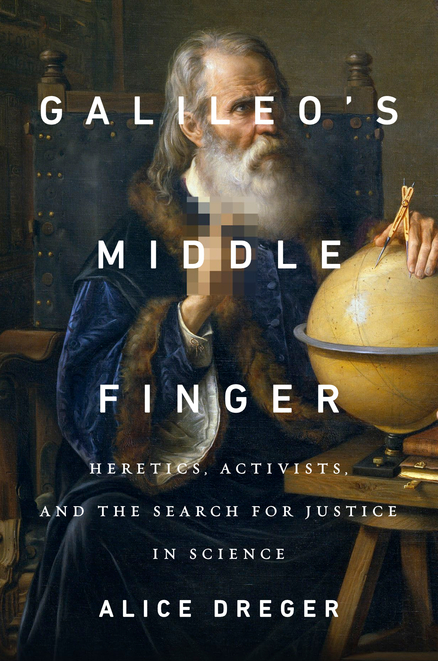
Alice Dreger’s recent book, Galileo’s Middle Finger, is about several things. It discusses her work in advocating for rights for intersex and transgender people. Though she spends over a hundred pages on that topic, that biographical data is largely an entry point into her broader discussion of problems within the academic community of ideologues undermining scholarly work and attempting to control the content and outcome of academic discussions.

Although I don’t agree with Dreger’s ethics in many areas, her main point is important. Her contribution to an understanding of the unwholesomeness of the relationship between science and social justice movements is vital as we pursue open conversation about a just social order.

Dreger’s thesis:

Science and social justice require each other to be healthy, and both are critically important to human freedom. Without a just system, you cannot be free to do science, including science designed to better understand human identity; without science, and especially scientific understandings of human behaviors, you cannot know how to create a sustainably just system.

In light of this, Dreger notes,

Yet it seems that, especially where questions of human identity are concerned, we’ve built up a system in which scientists and social justice advocates are fighting in ways that poison the soil on which both depend.

In other words, there is a problem right now where ideological advocates for social justice are undermining legitimate attempts to understand the human condition unless the scientific evidence agrees with the advocacy group's accepted narrative. Particularly in the area of identity advocacy, legitimate scientific study is thwarted through an openly hostile atmosphere to explanations that run counter to the desired storyline.

Dreger provides several examples of this. First, in her own account, although she is an avid advocate for intersex rights and openly supportive of transgender identity groups, she was viciously attacked for her work in defense of a scientist who dared to explain the transgender psyche differently.  Mike Bailey of Northwestern University is openly an advocate for transgender rights, but since his peer reviewed research undermined the accepted narrative, and because he made his case in an insensitive manner at times, he was deemed a danger to the transgender identity movement. Thus, he was mercilessly and falsely attacked by strong advocates within the transgender advocacy movement. When Dreger, a trained historian, investigated the accusations, she found them to be either gross misrepresentations of truth or entirely false. This led to a central advocate for transgender rights seeking to destroy Dreger’s career and being publically hostile.

There are several steps to this method of advocacy, which Dreger admits to using in a less nefarious way. She outlines four steps, 

blanketing the Web to make sure they set the terms of debate, reaching out to politically sympathetic reporters to get the story into the press, doling out fresh information and new characters at a steady pace to keep the story in the media and to keep the pressure on, and rhetorically tapping into parallel left-leaning stories to make the casual bystander “get it” and care.

These methods were used against Bailey, Dreger herself, as well as other cases Dreger outlines in the book. Her objection to these is not to the methodology used, but to the truthfulness of the accusations. In the cases she highlights, there were clear factual errors that were being intentionally promoted through this form of social advocacy. Dreger also highlights several other cases in less detail where individuals have been warned off of pursuing further research and publication on significant topics because of similar scare tactics by belligerent advocates.

Tying the title back in, Dreger notes that Galileo himself faced resistance in his life to his empirical conclusions. It was only because of his perseverance in the face of persecution that he was able to disrupt the scientific status quo. While Dreger oversimplifies that debate, making it largely a conflict between religion and science, her point is well made that the geo-centric model may have persisted for longer without Galileo’s persistence. Going where the evidence leads is vitally important for the pursuit of Truth.

In closing her book, Dreger writes, 

Here’s the one thing I now know for sure after this very long trip: Evidence really is an ethical issue, the most important ethical issue in a modern democracy. If you want justice, you must work for truth. And if you want to work for truth, you must do a little more than wish for justice.

In this, I am profoundly in agreement with Dreger. She comes at this from the perspective of atheistic empiricism, convinced there is an objective order in the universe. I come at this as a theistic Christian, certain there is objective order in the universe because there is a Creator who ordains and sustains that order. We agree on the desire to pursue truth and justice, but our concepts of justice are shaped by our beginning points. This is the point of disagreement, but one that we should be able to discuss respectfully.

This is a good book. It is well written and engaging. Her prose is lively and draws the reader in. This is a book that is worth the time and effort to read.

For my predominately Christian audience, I will note that Dreger uses language and discusses some topics in a way we would not consider appropriate for dinner conversations. There are points early on where her advocacy for liberalized sexual ethics is a bit tedious for those not so inclined, but the main point of the book is sound and well-made.

Note: A gratis copy of this book was provided by the publisher with no expectation of a positive review.

Leisure and Spirituality

There have been dozens of books published on the doctrine of work in the past few years. These books are part of a larger resurgence in interest in engaging the culture in all of life, particularly through vocation as Christians seek to break down the sacred/secular divide in their lives.

 On the other hand, there have been few books published on rest, leisure, and recreation from Christian thinkers. Some of those that have picked up the topic of rest, like Walter Brueggemann’s Sabbath as Resistance, tend emphasize opposition to economic systems rather than presenting a comprehensive biblical perspective on the subject. This has given rise to an imbalance which has left some Christians wondering what they should do with their free time, and perhaps whether they should have any.

 As such, Paul Heintzman’s recent book from Baker Academic, Leisure and Spirituality: Biblical, Historical, and Contemporary Perspectives, is a welcome addition to the topic. This is the most ample, comprehensive presentation of a Christian perspective on leisure I have encountered. I do not expect it to be surpassed in the near future.

 Summary

 In Part One, Heintzman surveys current concepts of leisure as well as the actual state of leisure time in the West. Part Two is an overview of historical understandings of leisure. The reality, Heintzman points out, is many myths about the amount of leisure time people have now compared to other times in history are unfounded or rely on mistaken terms. In fact, the concept that we have more leisure time than previous civilizations is founded largely in reaction to the Industrial Revolution, during which time lower classes spent nearly all their time in work. According to Heintzman’s history, many earlier civilizations had more frequent opportunities for leisure.

 The third part provides a biblical background to leisure. Here Heintzman has carefully outlined the texts in Scripture that relate to leisure, including discussions of the Sabbath, the concept of rest, and touching on other work/recreation topics. It is in this section Heintzman connects the whole Christian life, including leisure, to spirituality. His development of the Sabbath shows that in part, the day of rest was designed to be spiritually refreshing, not just a legalistic observance. Part Four then summarizes scholarship on the doctrine of work, laying out a biblical vision for work in a single chapter.

 Part Five critically explores Christian perspectives on leisure, arguing the concept has often been misunderstood. At times, errors relating to the concept of leisure have led to guilt over any sort of rest and recreation. Heintzman carefully and concisely critiques these errors throughout history. He then seeks to positively articulate a positive ethics of leisure, which he builds off of the Golden Rule. The final section, Part Six, Heintzman unites the concepts of leisure and spirituality. He provides examples of ways that leisure is significant for spiritual growth and points the reader to growth in Christ through those things. Heintzman closes the volume with a summary chapter that illustrates his ideal work-leisure balance through the life of one of his mentors whose life holistically blended a sense of vocation and faithfulness, which allowed smooth transitions between leisure and work.

Analysis

 This is the most thorough book on the concept of leisure available. Heintzman’s historical summaries bring together a number of streams of discussions in a comprehensive fashion. His biblical outline of leisure and rest covers the relevant passages in a manner that is fair to the text. This is a book that is both critical and constructive. In short, this is a reference volume that anyone interested in doing scholarship on work and leisure should own.

 Leisure and Spirituality is an adaptation of Heintzman’s master’s thesis. This explains the thorough scholarship, but it also gives the prose a sometimes ponderous feel to it. I would not provide this volume to the average church member as an introduction to the topic. While never laborious, the book is geared toward an academic audience that is familiar with the concepts. This does not diminish the value of the volume, though it does shape the audience.

 In sum, I recommend this book to those engaged in research on faith and work. Heintzman’s book is a key piece of scholarship that will be significant in the field for the foreseeable future. We should be thankful to Heintzman for his thorough and comprehensive portrait of the connection between leisure and spirituality.

Note: A gratis copy of this volume was provided by the publisher with no expectation of a positive review.

History, Law and Christianity - A Review

One of the several ways to engage people with the good news of Jesus Christ is through evidential apologetics. In many cases now, the morality of the Bible is so offensive to people they have little initial concern over the historicity of Scripture. However, both within and without the church there are cases where cogent, rational demonstrations of the credibility of Christianity are necessary.

History, Law and Christianity, by John Warwick Montgomery has recently been republished by the 1517 Legacy project, which aims at presenting a Christian apologetic to the world. Montgomery’s book was originally published in 1964, having begun its existence as a series of lectures in response to attacks on the Christian faith. The first five chapters discuss the plausibility of historical evidences of the truthfulness of Christianity. The final chapter provides a “legal defense” of Christianity, as it might occur in a court of law. This edition also includes the original lecture to which Montgomery was responding, as well as an affirmation of the quality of the argument by a non-Christian historian.

Much like Lee Strobel’s book, The Case for Christ, and Josh McDowell’s classic, Evidence that Demands a Verdict, Montgomery’s volume points out some of the common challenges to the truthfulness of the biblical accounts regarding Christ. Montgomery shows that, while we cannot have Cartesian certainty of Christ’s resurrection and his deity based on evidence alone, there is such a strong logical coherence to the accounts of Christ’s life that opponents of biblical Christianity are wrong to dismiss the accounts in Scripture as readily as they often do.

Apologetic volumes like these are helpful within the church, because they can shore up existing faith. With a constant barrage of accusations and denials thrown at Christianity from the world, reading a careful, logical defense of the reliability of Scripture can be nourishing to the soul.

In some cases, a book like this can be helpful for people who have not yet come to faith but are asking realistic, honest questions about the integrity of Christianity. Montgomery’s careful argumentation may be the help someone needs to come to grips with the transformative power of the gospel.

One of the benefits of this book is its size. The actual argumentation of the volume is a mere 76 pages. It took me a couple of hours to read it fairly carefully. Many apologetics books, in attempting to be perfectly thorough, become weighty tomes which are unlikely to be picked up by the casual inquirer.

Another strength of History, Law and Christianity is the precision with which Montgomery argues. His carefully argued points are shaped as only the lawyer can do (one of Montgomery’s earned degrees is a J.D.). The book, then, is up to the logical  scrutiny of a rational skeptic.

The weakness of the book is that it may be answering questions that most people aren’t asking in our day and age. This book will be a solid entry into a debate with someone with a modern epistemology, which is rigorously rational (often excessively so). It may not be as effective in convincing the post-modern skeptic, who is willing to accept truths but not Truth. As such, this is a tool that will be most effective when provided to the proper audience.

All in all, this is a well written book. It has withstood the last half-century well. It is a book I am glad to have on my shelf and will gladly recommend to others.

The Choir Member's Lexicon

As you probably know already there is nothing that a church choir is typically more in need of than tenors.  Second only to that is some knowledge of music.  We see the little booklet of black dots and lines in front of us every Sunday morning and Sunday afternoon, but all those symbols do is make neat boundaries around where the words are; that’s all we really use it for.

The previous paragraph isn't entirely true: some of the choir doesn't make it to both morning and afternoon sessions on Sunday.  For those that do, and those that are reading this who have some knowledge of music theory, you will forgive any typographical errors which may cause definitions of certain words to be expressed in ways that you are not familiar with, or cause definitions to appear to be factually incorrect.  Also, for the more rigid lexicographical purists, you will note that I have disposed with the usual alphabetical organization of things because I felt like it.  

As to my choice of words, I have chosen only the words most important for a Biblical understanding of church music: I have trimmed out all the fluff and developed what is a basic guide to choir membership.  Anyway, let’s begin...

A Flat n. The reason that half the choir was late to the Easter cantata.

Crescendov. To increase the volume of one’s voice, e.g. What happens in the Soprano section when the choir director is working with the Baritones.

Bassn. One of the group of men who couldn't be a Tenor. Synonym: general population. 

Soprano – 1.  n. Women who sing the top set of notes in choir music.  2. n. Choir members who can comfortably sing the Tenor line in a David Clydesdale piece.

“Okay, let’s try it again” – 1. Uh, Oh. 2. We’re singing this Sunday? 3. What else do we know that we could sing Sunday?

“This may not be your best gift” -  1. What the choir director tells you at auditions to encourage you in your children’s ministries. 2. A sign that a recording contract isn't in your future. 3. Even Carol Cymbala might not want you.

Alton. A popular brand of mints.

Fermatta n. A soft Greek cheese usually associated with pitas.

A Naturaln. The note that is a step above the range of some Sopranos.

B Flat -   Colloquialism referring to the nature of the Tenors, i.e. “You B Flat.”

Solon. A section of music in which only one person miscounts the number of measures rest.

Decrescendov. What happens abruptly after a solo.

Duetn. A solo for two people. See also: Solo.

Ad Lib v. What the praise team does when the words get messed up on the projection screen.

Mass Confusionn. Congregational Ad Lib.

Forte – 1. Adj. The median age of the altos. 2. Adj. Ten greater than the admitted median age of the altos.

Tenors – 1. n. The blessed ones. The elect. 2. Adj. The first half of the phrase indicating a value slightly greater than nine, i.e. What time did you go to bed?  I don’t know, tenor ‘leven.

Pianissimo -  n. The Italian word for Big Piano.

Mezzo ForteAdj. The admitted age of the gray haired altos.  See Also: Forte.

Quarter Noten. One of those little black dots we don’t look at anyway.

Baritonesn. Fence sitters. 

Ulrich Zwingli - A Bitesize Biography

William Boekestein’s contribution to the Bitesize Biography series, Ulrich Zwingli, is the latest of these little books to make it to press. I’ve previously reviewed the volumes on John Chrysostom and George Whitefield. All have been enjoyable and engaging.

Ulrich Zwingli follows the basic formula of the series, which includes a timeline, a brief introduction, and a walk through progression to importance, major conflicts, and reason of significance. The volumes all end with a summary of the legacy of the individual. This means that these books, including Boekestein’s recent edition, have all the pieces necessary to a good biography.

Summary

Zwingli is an interesting character within Church History and often less covered than other reformers, like Luther and Calvin. This is, as Boekestein notes, in part due to Zwingli’s untimely death, which prevented him from publishing revisions (as Calvin) or as much (as Calvin and Luther).

Zwingli was a first generation Reformer. His shift from the Catholic Church occurred roughly simultaneously with Luther and in parallel. While there was undoubtedly some interaction between the two early on, the theological movement away from the Roman church had a basically independent genesis for each of the men.

Unlike Luther, however, who had a political power to support his religious efforts at Reform, Zwingli became much more involved in the daily political squabbles of his Swiss canton. This also contributed to the diminished literary production of Zwingli, as well as some of the attitudes toward reform, which for Zwingli required convincing many more people along the way. Switzerland was also in a more precarious political situation because of the small size of the Cantons and their proximity to Italy.

Boekestein highlights these differences and brings out some of the unique contributions that Zwingli, often considered the father of the Reformed faith, makes to church history. This story is told in a winsome manner, in general. The writing is alive and engaging. This volume, like the previous in the series, is an enjoyable evening read for someone interested in history and theology.

Analysis

My greatest point of contention with this volume is the Boekestein diverges from the pattern, which is generally descriptive theologically and historically, to insert a paedobaptist polemic into the volume. Certainly the issue of the proper subject of baptism is bound to come up in a volume on Zwingli, since it was Zwingli’s teaching in Zurich that lead Conrad Grabel and others to follow the text of Scripture to the doctrine of believer’s baptism.

Dealing with the controversy was inevitable, but this doctrine is handled differently than other controversies. Unlike the concern over iconogrophy, marriage of clergy, and the controversy of the Lord’s Supper, all of which Zwingli engaged in and which Boekestein covers descriptively, this volume presents a defense of Zwingli’s position and describes the Anabaptists as “rebaptizing” repeatedly, instead of presenting their belief that they were merely baptizing for the first time.

I appreciate Boekestein’s desire to demonstrate the importance of the doctrine, due to his commitments to a covenantal understanding of salvation, which leads to the idea that baptism replaces circumcision as the sign of the covenant. However, this digression into polemicism is a blemish in an otherwise excellent volume, and completely unnecessary for the project under consideration. As a Baptist, I obviously reject the notion that infant baptism is preferable to believer’s baptism, and would have preferred if this controversy had been handled in the same manner as the others.

One danger of descriptive biographies like this is the potential to devolve into hagiography. Thankfully, Boekestein does not do this. He relates in general terms the sexual sin Zwingli participated in before finally getting married. The volume also relates some of Zwingli’s failures in judgment, including his support of the persecution of the Anabaptists. These are points that much be discussed, but which do not diminish the overall contribution Zwingli made to the history of the church.

I am pleased to see that this latest volume includes a brief list of recommended reading, which was a lacuna I first noted in my review of the volume on John Chrysostom. Boekestein provides a single paragraph summary of where the interested reader should go for more on Zwingli, which makes the helpful approach of the Bitesize Biography series even better.

Conclusion

Laying aside the small digression discussed above, this is an excellent volume. This was an enjoyable little book to dive into, sitting in my overstuffed chair on an evening near the end of the semester. There is healthy balance between history, theology, and good story telling that make this entire series a treasure for the contemporary church.

I recommend this series, and this book, heartily. These books make good pleasure reading for adults, and would be useful volumes for studying church history in the upper grades of a homeschool curriculum. I look forward to many more volumes to come in the series.

Ulrich Zwingli
$11.99
By William Boekestein
Buy on Amazon

Note: A gratis copy of this volume was provided by the publisher with no expectation of a positive review.

Mock Draft 1.0 for the Upcoming Pastor's Draft

The coverage of the 2015 NFL draft has taken over sports media. Who is the best player? Who will be drafted first? Which team will blow their future for a marginally better player in this year's draft? These are the pressing questions of the day.

However, a more significant question is out there. That is, who are the top prospects available for the 2015 Pastor's draft? In this post I'll take a modified "Big Board" approach to list my top prospects for this year, with commentary. I'll also stop at five, because that's about how long anyone might care.

1.    David Blakely is the top prospect on my Big Board this year. He’s an all-star student that can really bring the house down when he preaches. The best things about him are that he plays the guitar AND the organ, and he’s got experience as a church janitor because that's how he paid his way through seminary. He comes as a twofer, because his wife will get her MA in Biblical Counselling this Spring, and has spent the last six years working in early child education. She can bring home the bacon and run VBS, which makes this couple the top pick in this year’s pastoral draft. Blakely has no leadership experience, but that makes him ready to be controlled by a solid deacon board. He’s likely to go to Crick River Baptist, who finished at the bottom of their association last year after the volunteer Youth Leader and Pastor ran off together.

2. I think the next prospect off the board will be Eli Felluten, though it's not because of quality. Eli declared for the pastoral draft early by taking an MA instead of the MDiv. He says it’s so he can “get on mission” sooner, but sources say that it was the D- in Hebrew that scared him off biblical languages. At any rate, he’s likely to be off the board early because his name is Felluten and Felluten Baptist Church of Felluten, Alabama, which is in Felluten County, wants an Associate Pastor to serve under Reverend Elvis Felluten, who happens to be Eli’s Grand-daddy.

3. Philbert Dolittle is the near the top of the talent pool in this year's draft. He was a top student in each one of seminary classes and always produced when it came to paper time. Everyone remembers the Hermeneutics paper where he delivered the blow-out 35 page paper on the 15 page assignment. This guy has staying power. The downside is that he comes from a Calvinist system, so there are questions about what kind of scheme he will fit into and whether he can adjust to associational politics in Georgia or Louisiana. I think he's a solid first round pick, but his stock is likely to dip a little come draft day because of the "TULIP" tattoo on his right forearm and his mismatched socks. Though he's got the chops to be an every Sunday starter from day one, his stock may fall until he gets selected as a Youth Pastor at a large church, where his X-Box skills will serve him well, even if his overall talent is underutilized.

4. The next guy on my Big Board is Thaddeus Pig. Pig brings in the bacon at a meaty 302 pounds, 5 feet 7 inches. He has the physical characteristics of the average mid-career pastor, so he's way ahead of the game. Pig is also known to be a top performer at church potlucks. In fact, his numbers were off the charts in calorie consumption at the Combine.  This guy excels at the apt art of alliteration and avoids conflict like a treadmill, so he's a good fit for a number of small churches. His lack of theological awareness was a liability in seminary, but it will stand him in good stead when he gets into their pulpits. Look for this guy to go early and then disappear into the rural church system.

5. Julian Barnsworth is really the best prospect in this year's draft, but I've got him pegged at number five on my Big Board just because he's not likely to get much attention. When you watch the tape on Julian, he's got good delivery. This guy stands in the pulpit and reads the congregation well. He needs a little polish on his sermons, but the intangibles are there and I think he's the most pastor-ready of all the candidates. His theological accuracy is way beyond the rest of the field. However, since all the tape on this guy is in the practice setting and scrimmages--you know, class assignments--it's unlikely he gets picked in the first three rounds. You just can't get a job without experience, which makes it tough for guys like Julian who have families and can't take youth pastor positions. Julian is a second career pastoral candidate who spent ten years as an Electrical Engineer and Supervisor for a major corporation, which should be credited to him as experience, but it's likely churches will be concerned with how well his people skills will translate to the local church. This guy is a late round gem if he doesn't decide to pull out of the draft and get a PhD.

Editor's Note: For those that aren't aware, this is satire. Which, of course, means that it is probably more true to life than I choose to admit. Any likeness of names, descriptions, and personalities in this to anyone you know or have heard of is incidental, because when I wrote it I was going off of stereotypes and not individuals. Really.

A Theology for the Church - A Review

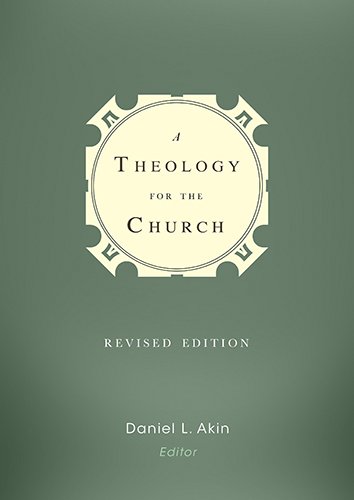
Only seven years after the first edition of Danny Akin’s A Theology for the Church, B & H Academic has issued a revised edition. I read the first edition when it came out  and have been interested to see what changed. 

One of the best changes about the book is the formatting. The revised edition is a larger format with more information on each page. Personally, I find this change beneficial and the newer edition feels like it has more room to breathe. For the seminarian reading thousands of pages, typeface and formatting really do make a difference.

Updates and Revisions

Four chapters saw significant changes in this revised edition. The theological method chapter was replaced by a newly written chapter by Bruce Ashford and Keith Whitfield. They commend a missional approach to theology, which tries to root the study of theology in the greater picture of God’s redemptive work through the whole of Scripture. In my opinion, this is a helpful approach, as it avoids some systemic pitfalls that come from an overly emphatic interest in some particulars of Scripture over others. It also tends to avoid the abstraction that is native to some philosophical approaches to theology.

Chad Brand’s chapter on the work of God is a helpful new chapter. Additionally, David Dockery revised his chapter on Special Revelation and John Hammett updated his chapter on the Doctrine of Humanity. These new chapters include more recent scholarship and some improvements over the previous offerings. In particular, Hammett’s chapter shows the fruit of his ongoing work toward a monograph on the Doctrine of Humanity.

Approach and Content

The chapters are staged to ask for main questions, in this order: “(1) What does the Bible say? (2) What has the church believed? (3) How does it all fit together? and (4) How does this doctrine impact the church today?” Scripture is given preeminence in the discussion, but not to the exclusion of history, system, and application. This is a healthy thing and helps make the volume a valuable introductory resource.

Each chapter has a separate author, so this is a Systematic Theology text by committee. Beginning with four constant questions helps prevent this from becoming a structural Frankenstein. Akin and the other editors did well to ensure the chapters stay true to the formula, which provides cohesion in the chapters. One real advantage of this approach is that the authors often specialized in the topics on which they wrote. It also means they were able to drill down into one doctrine and do more thorough research (or as thorough research in a shorter time) than one theologian could do in a comparable volume. Each of the chapters, then, is lively and well researched.

Analysis

There are two weaknesses of this approach. First, the theological diversity of the authors prevents it from being a truly systematic theology. In other words, each author has his own theological system that he brings to the table. While there is unity in this diversity, it is a somewhat less cohesive unity than would be possible with a single authored Systematics. The second weakness is that the writing style of each chapter is different, which it makes it harder to get into a reading groove. This can make sustained reading somewhat more laborious.

Despite these weaknesses, which are native to the approach and not problems unique to this volume, the diversity adds value. Not only, as discussed above, does it allow for more thorough and timely research, but it ensures that one individual’s system does not overrun the text. While there are distinct advantages to single authored Systematics, in the sometimes divisive world of Baptist thought, it is good to see men with different perspectives on a host of issues working together to do theology for the church.

Conclusion

Both editions of this text have been, as the title claims, A Theology for the Church. The preposition in the title is hugely important, as it is not a theology of the church or to the church, but one designed to be accessible for the church. In other words, unlike many Systematics, which are written by theologians for other theologians, Akin’s text was written with the intelligent but theologically untrained in mind. Thus it does not get caught in jargon and leave insider references unexplained. It is crafted so a person in the pew can pick it up and benefit from it. Because of that, it makes an outstanding introductory Systematics for a Bible college or seminary.

The one improvement that could be made, if there is another edition released, is to add a glossary to the back. While the indices are helpful and the chapters are written well, that would make this an even more beneficial reference volume.

If you are theologically inclined, or thinking about seminary in the future, this is a theology text I would recommend as a place to start. It is accessible, orthodox, and sufficient to make a sound beginning in the study of theology for the benefit of the church and the glory of God.

Note: A gratis copy of this book was provided by the publisher with no expectation of a positive review.