Alive in Him - A Review

Ephesians is, perhaps, my favorite book of the New Testament. I’ve probably read it more often than any of Paul’s letters and I’ve tried to memorize it more than once. Ephesians is something like a brief summary of Christianity. It’s got the gospel, it’s got the central doctrines of Christianity, it has a lot of ethics spilled out in application of the theology it proclaims.

Alive in Him is a companion volume to Paul’s letter to the Ephesians. It is a tool that can enhance someone’s personal study of the important epistle. It functions well as an individual study, but would serve as a good guide to an individual study to the book of Ephesians.

This is not a verse by verse commentary, but Gloria Furman walks through the text in discernible chunks and in order. After her introduction, where she deals with some of the basic questions of provenance and relation to other books of the Bible, the book is divided into eight chapters.

Chapter One focuses on Ephesians 1:1-14. Here Furman digs into the gospel, which is the powerful theme of Paul’s entire letter. The second chapter outlines Paul’s prayer and God’s power evidenced through Christ. Chapter Three covers all of Ephesians 2, exploring our status as redeemed people, called to life and unity in Christ Jesus. Furman’s fourth chapter surveys Ephesians 3, where Paul lays out the difficult truth that the gospel is for all people regardless of nationality or background.

In Chapter Five, Furman follows Paul’s turn from doctrine to its application in ethics. She dives into Paul’s call for his readers to live in unity as one body of Christ. The sixth chapter closes out Ephesians 4 and hits the first half of Ephesians 5 with an inspiring call to be the new creation God made Christians to be. Furman deals with the so-called household codes in Chapter Seven. In the eighth chapter the reader is treated to Furman’s lively discussion of the armor of God.

This book is a prize for the church. Furman combines biblical consistency with fervent faith and engaging prose to draw the readers along and through a key text in the church. If you read this book without being interested, then the problem is not with the book.

Perhaps the chief strength of Alive in Him is that it points the reader beyond itself and to Scripture. In her introduction, Furman specifically calls her readers not to replace God’s word with her book. This is a volume that is designed to enhance a Christian’s study of Scripture, not distract from it.

Furman does an outstanding job at finding textual relationships between Ephesians and the rest of the canon. Her study of Ephesians is a small part of a larger biblical theology. This book points to the metanarrative of Scripture through Paul’s brief epistle.

The most enjoyable aspect of this book is that Furman so clearly delights in the text of Scripture and the God who is revealed by it. The secret to some of the most powerful teaching and writing is not someone’s grasp of original languages or their mastery of minutia, but the degree of interest of the teacher. Furman’s joy lights up this volume. It is refreshing and exciting for the reader.

Perhaps the greatest tragedy that could befall this book is that it be consigned to a ladies’ Bible study. If I ever preach through Ephesians I will reference this book. This deserves to be read and widely. It deserves to be on the shelves of pastors, deacons, and professors. This is an example of how to do Bible study well and how to love Christ more through doing rigorous study. May the church be blessed by this volume for years to come.

NOTE: I received a gratis copy of this volume with no expectation of a positive review.

Expect Great Things - A Review

Expect Great Things is a spiritual biography of Henry David Thoreau. It provides an in-depth exploration of the nuances of this celebrated individualistic naturalist. Kevin Dann does the dirty work of digging through Thoreau’s various writings, including his copious personal diaries and correspondence, and correlating those informal writings with his published works.

If Dann’s biography of Thoreau is taken seriously, the work that some have done to include Thoreau on the list of vaguely Christian environmentalists should be viewed skeptically. The image Dann presents is of a man who held both strong skepticism of Christian truth with credulous belief in some of the spiritualistic superstitions common in early America. Thoreau certain used language that resonated with Christianity in some of his writings, but his own beliefs were far afield from orthodoxy by any reasonable reading. Dann argues that Thoreau was fascinated with Christ but rejected Christianity. However, to love the man and hate his bride does not show much affection for the loved object.

In addition to presenting the meandering spirituality of Thoreau over the course of his life, Expect Great Things provides a window into the complex and often bizarre spiritual beliefs that were common in ante-bellum America. Dann surveys the rise in popularity of the Freemasons, with their uniquely American adaptations. He spends several pages covering the evolution of the Mormon cult, the various prophetic cults that arose in the early 19th century, and the perversions of Christianity that arose from the Millerites and other pseudo-Christian digressions.

Some of this supernaturalism apparently came from incomplete understanding of natural science. Just as pseudo-Christianity was common, so was pseudo-science. Meteor showers were described in periodicals as divine signs. Accounts of sea serpents were accepted as factual and often embellished. Final conclusions were published about natural phenomena based on partial observations. This led to supernatural explanations for natural events and misinformation about much that would be later clarified. According to Dann, Thoreau’s practice of careful observation was an improvement over many other naturalists of the day.

The structure of this book is weak. The story of Thoreau’s life meanders through chronologically. There are chapter breaks, but there is often little clear reason for the distinction in chapters. The volume has no introduction and thus the reader is left to try to figure out what Dann’s purpose is in writing the book; there is no clear thesis. The aimless wandering of the book may provide a suitable simile for the life of Henry David Thoreau, but that sort of literary experiment is more effective in essays than in book length biographies.

The concluding paragraphs transition with little warning from anecdotes of Thoreau to the moral that Dann appears to want to draw. Based on those few paragraphs, it appears that Thoreau’s life is supposed to reflect the good of radical individualism codified into law based on universally accepted facts that are epistemologically impossible. In short, this account (and perhaps the actual life of Thoreau) represents the impossible tension between the desire to express and the prohibition of contrary expression that we see in modern culture. As such, Dann may have uncovered the patron saint for some in our confused time, but what he highlights in the life of Thoreau provides little worth emulating for those committed to the possibility and importance of pursuing truth.

Despite its weaknesses in form, Expect Great Things has a place within contemporary discourse on Thoreau. Dann sets Thoreau in historical context quite well. He pushes against the idea of a Christian Thoreau and presents more thoroughly the Thoreau that many have seen in the pages of the man's work. Dann adds to the field of study by presenting a nuanced, robust, and realistic portrait of Thoreau's spiritualism. This is also an interesting look into the spiritual climate of the early nineteenth century. For individuals interested in a casual, entertaining read about Henry David Thoreau, this book may be a real treat. 

NOTE: I received a gratis copy of this volume with no expectation of a positive review.

J. C. Ryle as Model Churchman

I first encountered J. C. Ryle in a seminary course. It was David Jones’ basic ethics course. That class changed my trajectory for seminary and also introduced me to an outstanding author.

Ryle’s Holiness is one of the most overlooked Christian classics. It deserves to be continually in print, widely read, and often referenced. The book is a means of grace; the biography of the man who wrote it helps explain why.

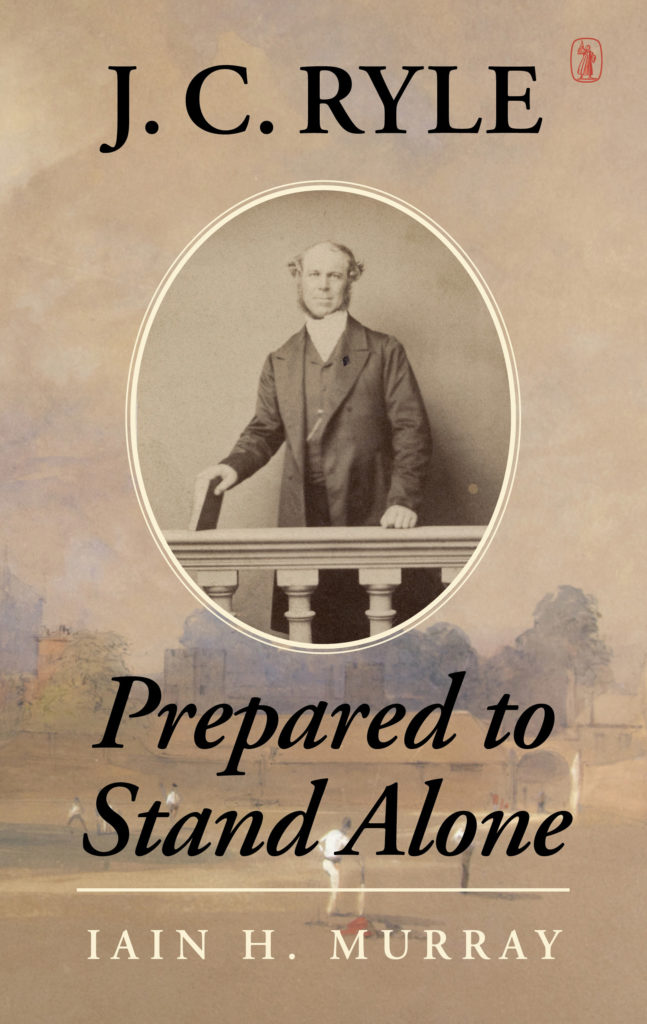
Iaian Murray, co-founder of Banner of Truth Trust, has published a number of volumes on church history including several biographies. Every book of his that I’ve read has been well done. J. C. Ryle: Prepared to Stand Alone is no exception.

The volume contains thirteen chapters, which progress through Ryle’s life from childhood to the influence of his work after his death. Throughout his life, Ryle’s character is revealed in a way that helps explain the power behind his plainspoken writing.

Ryle was the son of a wealthy man and member of parliament who went bankrupt do to some bad decisions. The blessing of the bankruptcy was that it pushed J. C. Ryle into ministry to support himself. However, according to Murray, the elder Ryle’s debts were source of moral burden to the son, who tried to repay his father’s creditors, even on a meager salary.

The portrait of J. C. Ryle that emerges from these pages is one of a churchman. He was ordained into the Church of England and eventually rose through the ranks to become the first bishop of Liverpool.

However, Ryle’s rise was not due to politicking and compromise. In a time when liberalism was rampant within the Church of England and factions within the state church were attempting to reunite with Rome, Ryle vocally opposed both liberalism and ritualism.

In fact, Ryle was a conservative combatant in an era that, according to comments by Ryle, sounds much like our own day. In a collection of sermons, Home Truths, Ryle wrote:

“It is not Atheism I fear so much in the present times as Pantheism. It is not the system which says nothing is true, so much as the system which says everything is true. It is the system which is so liberal, that it dares not say anything is false. It is the system which is so charitable, that it will not allow everything to be true. It is the system which is so scrupulous about the feeling of others that we are never to say they are wrong … What is it but a bowing down before a great idol speciously called liberality? What is it all but a sacrificing of truth upon the altar of a caricature of charity? Beware of it if you believe the Bible.”

Ryle was a churchman in the best sense of the word. He took his pastoral responsibilities seriously, visiting many of the homes in his sprawling parish regularly. He preached to the people, not over their heads. He saw writing as an important part of his ministry, but not one that would allow him to forgo his local responsibilities.

As Ryle wrote in Charges and Addresses, he was leery of “a growing disposition throughout the land, among the clergy, to devote an exaggerated amount of attention to what I must call the public work of the ministry, and to give comparatively too little attention to pastoral visitation and personal dealing with individual souls.”

This meant that preaching was important and public polemics were important, but pastoral ministry was paramount to Ryle. There was no room for the celebrity pastor in Ryle’s worldview.

Part of Ryle’s story must include the death of those close to him. Ryle was single when he began his ministry, which, of course, makes getting married that much more difficult. He lost his first wife after a few years to a lingering illness and had to board his child elsewhere. He would remarry two more times, each time outliving his wives due to illness. Ryle’s life was one that witnessed to suffering and yet found the joy of the Lord within that experience. The power of his sermons and books was shaped by the pain in his life and the goodness of God through that pain.

Murray’s biography of Ryle is a worthwhile read. It synthesizes the bits of biography we have about Ryle and brings them to light for our contemporary era. Murray shows what made Ryle useful to God. While our calling may not be identical, and the circumstances may have changed, there is much in Murray’s portrait of Ryle that deserves attention and mirroring by current or future pastors.

Read Murray’s book. After you do that, read Ryle. It will be worth your time, without a doubt.

Note: I received a gratis copy of this volume from the publisher with no expectation of a positive review.

The Radical Book For Kids - A Review

The Radical Book for Kids is one of those books that makes you exclaim, “I wish I’d had this when I was a kid.” In fact, I said this so many times while reading this book, I risked annoying my wife. Turns out, one of the endorsers had the same thought I did, but I didn’t notice that until I was half way through the book.

The simplest way to explain this volume is to compare it to a basic overview of Christianity presented in the format of the Dangerous Book for Boys (or girls). The closest equivalent to this book that was around when I was a kid would have been a Boy Scout Handbook.

This description, however, risks making this sound like a Christian knock off. That wouldn’t be fair to the author, Champ Thornton. He may have been inspired by the format, but this is a book that deserves to be considered on its own merits.

The Radical Book for Kids: Exploring the Roots and Shoots of Faith is filled with brilliant colors, attractive graphic design, and oodles of information. This is the sort of book that draws you into reading it, if just to admire the pictures.

There are no chapters or clear segments in the book, though there is an order and progression to it when reading it from cover to cover. It’s the sort of book meant for opening randomly on a Sunday afternoon.

When you open the book, you might find yourself reading a summary of the biblical story line, learning how to make a sling, or reading a biography of a great Christian. At another reading, you could discover the different systems of money used in the Bible, learn why manners matter, or getting introduced to the structure of a New Testament Epistle. At a different time, you might find yourself learning the Greek alphabet, exploring images of Christ in literature, or reading tips on how to memorize something.

Thornton combines biblical survey, typological teaching, hermeneutics, systematic theology, and church history into a coherent jumble of discipleship. He’s included a few jokes, some trivia, and occasional games with eternal truths that will really help kids understand more about the Christian faith.

The whole book pitches important topics at the right level for kids to understand. If I had to give an age range, I’d say 7-140 is about right. I am confident my first graders will enjoy this as much as my preteen.

This lively book will be a great gift for the kid who has been sitting through church, Sunday school, and AWANA for years, but still hasn’t gotten the big picture. That’s the greatest strength of this volume, it continually shows how the gospel holds everything together. Even though it is filled with a variety of information, it has one consistent theme.

Once you give this to your kids, expect to be peppered with random facts about Christianity. You may also be roped into playing “Dogs and Jackals” or making a ‘clay’ pot with them. You’ll probably have to make sure all the kids get a turn with it, too, though that will likely settle down in a few weeks.

If there is one critique of the book, it is that there are some pop culture references that may seem dated in 20 years. However, none of them are critical to the book, and at that point you’re considering the value for your grandkids.

So, buy the book, give it to a kid you know, and watch them enjoy exploring the depths of it. This really is an excellent volume that deserves a place in your home.

Note: I received a gratis copy of this volume from the publisher with no expectation of a positive review.

A New Biography of Eric Liddell - For the Glory

I read biographies because it puts me in contact with better men and women, most of whom have died and whose lives can be measured with more accuracy and finality than the living. This is a sanctifying process, since it humbles me to recognize my own weakness in comparison to the greatness of others.

When it comes to the recent biography of Eric Liddell, For the Glory, I have found a man whose sandals I am unworthy to untie.

Liddell has been immortalized in contemporary culture with the Oscar winning movie Chariots of Fire. That film tells the tale to Liddell’s relatively short running career which cultivated in his surprising world record and gold medal finish in the 1924 Olympic Games in Paris. Previously, when I thought of Liddell, I always heard the synthesizer playing the familiar theme and thought of giving up a chance at more gold medals to honor sabbatarian traditions. The movie ends with a brief, abrupt epilogue that indicates that the hero died in an internment camp in China during WWII.

Another picture emerges in other biographies I’ve encountered. The YWAM biography and other simplified biographies written by Christians paint a portrait of a saint, telling a powerful story for an audience looking for a Christian hero. Danny Akin has preached a sermon using the life of Eric Liddell as an extended illustration.

I expected these sorts of biographies to paint Liddell in a positive light as the protagonist in a compelling sports movie and as a great missionary who died for the cause.

When I picked up Duncan Hamilton’s recent biography, I was expecting a much less flattering picture. A missionary biography written by an apparent non-believer with no clear Christian sympathies printed by a secular publisher is bound to find all the dirt and put it out so everyone can see it. I expected to find private details with hints of suspicious activities at every turn. That, however, is not the case.

The portrait of Liddell that emerges from this volume is of a man whose serious, meticulous devotion to God was rewarded by such a degree of sanctification that he was able to risk his life for Christ without thinking twice. In fact, the man once pushed two wounded men in a wheelbarrow through the countryside filled with Japanese aggressors because they would have otherwise died. He faced harassment, theft, confiscation of his property, and separation from his wife with a good attitude for the sake of the cross. The picture Hamilton paints is one of a saint who did great things for the Lord with a gracious attitude and without neglecting the other good things in his life as a consequence.

The book is divided into three parts. Part One focuses on Liddell’s childhood through his Olympic victories. These chapters line up well with other biographies I’ve read and generally support the well-known story that has been seen on screen as Chariots of Fire. Part Two explores Liddell’s work as a missionary in China, including his courtship of his wife, his continued athletic efforts, and his focus on doing the work God called him to. An interesting wrinkle to the legend of Liddell is that he didn’t absolutely reject the possibility of running in another Olympics. His faith was not a call to asceticism. Rather, it was the British Olympic Committee that failed to engage a man who might have won the U.K. another gold. This section was largely new ground for me and very engaging. Part Three expands on Liddell’s life in the Japanese internment camp, about which much less has been known than about other parts of Liddell’s story. Hamilton conducted a host of interviews of other internees to expand the available information about a great hero of the faith.

What Hamilton has done here deserves notice. He took a Christian hero whose story has been told before and he made it better. Hamilton added to the field of missiology by writing a careful history of someone who has been celebrated widely. He did this without slipping into dismissiveness of Liddell’s convictions or snarky digressions about the foolishness of his faith. Hamilton should be praised for adding a critical work on Liddell that doesn’t fall into the too common trap of attacking the biography’s subject in order to add interest. There are no “daddy complex” narratives or secret abuse allegations. What the reader gets is honest history told exceptionally well.

Even if missionary biographies don’t keenly interest you, this book is worth your time. Hamilton writes so very well. His retelling of Liddell’s life story is detailed but lively, carefully crafted but not pedantic, honest but complimentary. In short, this is a great book that deserves to be read and widely.

Note: I received a gratis copy of this volume with no expectation of a positive review.

Enjoy - A Review

Those pursuing to grow in Christ and redeem every moment often fail to properly delight in the goodness that God provides to us. Voices on the left, like Lee Hull Moses in More than Enough, feel guilty for the abundance of life in the United States. For both groups, guilt can become a trap that steals joy from the Christian life, which is a tragedy of significant proportions.

In contrast, Trillia Newbell’s recent volume, Enjoy: Finding the Freedom to Delight Daily in God’s Good Gifts, provides an antidote to guilt over the good gifts God provides. Instead, Newbell encourages her readers to delight in the good gifts that God provides.

The volume is targeted toward women, though I found the content instructive and helpful. This is a text that is self-consciously structured for book studies, with roughly even chapter sizes, discussion questions and prayer prompts.

Enjoy has eleven chapters, each with a different topic. In Chapter One, Newbell begins with an invitation to enjoy, where she counters the tendency toward guilt among Christians. The second chapter deals with friendship as a gift from God. Newbell moves on in Chapter Three to discuss the joy of sexual intimacy, while also emphasizing the goodness of singleness. The fourth and fifth chapter emphasize the goodness of work and rest, respectively. Chapter Six deals with the blessing of money and possessions, noting that they can also become a trap that robs joy and blessing. The seventh chapter outlines enjoyment in food. Chapter Eight highlights a theology of creation and the appropriateness of responding joyfully with that. The ninth chapter speaks to enjoying art, which is a needed corrective for evangelicals. In Chapter Ten, Newbell points her readers back to the main focus of the volume, which is delight in the God who gives us everything. Chapter Eleven focuses on our future, greater enjoyment of God’s goodness in heaven.

Newbell’s latest volume is an example of the well-written, engaging, theological informed resources the church needs. With Christian bookstore shelves often dominated by bad theology or poorly written books, Enjoy improves the available options. This is a resource that is useful, necessary, and sound.

Importantly, this volume strikes the right balance for us in this life of American prosperity. There is great suffering in the world, but we do not need to feel guilty for God’s good gifts for us. At the same time, we must be careful to properly enjoy those good things God has given us. So much of our culture seems to fall into the trap of discontentedly longing for more and guiltily partaking of the good around us. Newbell offers a middle option that delights in God’s grace.

All is grace. Newbell reminds us of that in this volume. For that she deserves to be congratulated.

God deserves to be enjoyed. We find this explained with numerous examples in Enjoy. For this, the book warrants being read.

Note: I received a gratis copy of this volume from the publisher with no expectation of a positive review.

Basic Economics - A Review

Thomas Sowell recently announced his retirement from writing regular columns. As an advocate of realistic economics with a free market emphasis who dealt with facts rather than political talking points, his common sense approach that relies on economic realities rather than wishful thinking made him a helpful voice in contemporary economic discussions.

Having just finished reading the fifth edition of Sowell’s Basic Economics: A Common Sense Guide to the Economy, I would advocate that this book be read widely. For those unschooled in economics (or who haven’t read anything about it since High School), I would recommend beginning with Henry Hazlitt’s Economics in One Lesson, followed closely by Gwartney and Stroup’s Common Sense Economics. Those books are helpful because they are much shorter and even more basic than Basic Economics, but Sowell’s volume belongs on the reading list because it more closely follows the syllabus of a basic economics course and is thus more comprehensive.

As an economics textbook, Basic Economics does not differentiate itself by having a unique table of contents. Sowell covers prices and markets, industry and commerce, work and pay, time and risk, national economics, international economics, and some select special economic issues. This is little different than any other college level text.

Sowell distinguishes his volume in three ways:

(1)      There are no equations in this volume. Even my high school economics course (which was a while ago) included graphs and equations that were supposed to demonstrate the validity of what the author(s) were writing. However, Sowell is not equipping his readers to become economists, but to become economically literate. For some who learn better through visual representation, the absence of graphs may make this book a bit less helpful.

(2)      To compensate for the absence of graphs, Sowell includes a multitude of plain language, everyday examples to illustrate the principles he is describing. Given the number of examples and the basic connections he makes with every day concepts, the absence of graphs and equations is well compensated for. Rather than leaving the concept in the abstract, Sowell makes the effort to give concrete examples, which helps convey the message more clearly than other texts I have read.

(3)      Sowell’s Basic Economics is written largely in plain language. Certainly there are terms that have particular meanings that Sowell takes pains to define. However, the number of those terms is small. This is a book that, despite its impressive length, is intended to communicate economic reality to an audience that is not familiar with the terms. Sowell does quite well in writing so that even a theologian or an ethicist with little training in economics can understand the concepts.

These distinctions make Sowell’s book a great way for non-economists to learn about the principles that undergird financial systems, markets, and political decisions related to the economy.

As the number of advocates for socialism rise, having people that understand economics and why socialist systems inevitably collapse will be increasingly necessary. Sowell provides the tools that help the reader understand why rent control creates housing shortages, minimum wage hikes keep low skilled workers unemployed and impoverished, and general attempts to establish government control of markets tend to have deleterious effects in the long term on everyone. These aren’t political statements as much as evidential arguments from historical data. Sowell’s book helps to provide a framework and language so that everyday people can understand why government interference in markets tend to make things worse.

Basic Economics is a book for our times. It is somewhat imposing with over 600 pages of content, but there’s a lot to talk about. The chapters are fairly evenly divided with enough headings and subheadings that the book is readable in short sittings. And this is a book that deserves to be read.

Basic Economics
$27.19
By Thomas Sowell
Buy on Amazon

Enduring Truth - A Review

Aaron Lavender of Carver Baptist Bible College, Institute, and Theological Seminary has recently released a book with B&H Academic that, I believe, provides a much needed word for all Christians of all times. His book is directed toward the particular context of improving the theological quality of African American preaching, but most of the examples and lessons are applicable to any ethnic context.

Summary and Analysis

Enduring Truth: Restoring Sound Theology and Relevance to African American Preaching contains four content chapters bookended by an introduction and conclusion. Lavender begins by addressing the problems he sees with biblical preaching in African American pulpits. He notes that many African American churches have suffered due to the segregation of theological training and social segregation over the previous generations. As a result of many theologically conservative colleges and seminaries excluding or restricting access by African Americans, Lavender argues some bad theological tendencies have developed. He describes a significant mishandling of the Word of God that is widespread and has lead to the propagation of Black Liberation theology and the Prosperity Gospel instead of sound, biblical teaching. In other cases, showmanship and style have replaced substance in African American pulpits. This amounts to a crisis in African American churches.

In Chapter Two, Lavender moves to discuss the goal. Having stated the crisis, he unveils a vision for exegetical preaching, including its importance and its methodology. This chapter is concise and worthy of reading by prospective preachers of any ethnicity. In particular, Lavender tackles the issue of single versus multiple meanings as it pertains to exegesis of Scripture. Progressive evangelicals regularly assault conservatives for believing there is one primary meaning intended by the God-inspired authors of Scripture. Lavender defends the singular intended meaning, but also clearly notes that a given text may have diverse implications and applications in varying context. Lavender handles this issue and other similarly complex issues clearly, carefully, and concisely, which help to make this a good introductory volume.

Lavender builds a brief theology of preaching in the third chapter. Here he moves the reader to understand that preaching is more than simply regurgitating the results of Bible study, but it is a performative act in which the clear content of Scripture is presented clearly as a message of good news to a particular audience. However, Lavender cautions against preaching turning into a performance: “[The preacher] has not been called to entertain or mesmerize his listeners.” Instead, he should seek to reprove, rebuke and exhort. Scripture is to be the center of the preaching, because it is the message of Scripture not the charisma of the messenger that is intended to reshape the lives of the listening congregation. In this chapter, Lavender also considers some elements of preaching that are unique to an African American context. He evaluates both the strengths and pitfalls of “whooping” (“when the preacher’s words begin taking on a musical quality”) and “participatory proclamation” where the congregation is vocal in response to the preacher’s message. The purpose of this chapter is to frame a vision for expository preaching within the particular contours of the African American context.

Chapter Four closes the body of this brief volume by discussing the ever important search for relevance in preaching. In this chapter the author skims the surface of postmodernism, providing a critique that should keep the biblically informed from delving into the allure of epistemology murkiness. Lavender also discusses the importance and dangers of contextualization, which functions as further buttressing against a full-throated Black Liberation theology. Lavender urges his readers to contextual well, but cautiously. Seeking to apply the Scriptures to the lives of the hearers without diminishing the central message and authority of the Word itself is a challenge that every faithful preacher must navigate carefully. Lavender provides sound advice for his audience. This chapter concludes with a question an answer section, with a variety of seasoned African American preachers explaining their approach to the craft of preaching.

Conclusion

At under 100 pages of text, this is the sort of resource that could be useful in mentoring prospective young preachers in any context, but particularly within an African American context.

One of the clear messages that I received from this volume as a white evangelical Christian is that within the African American context, Aaron Lavender has the same concerns about biblical fidelity and faithfulness to the message of Scripture that I have had in a predominately white context. As we continue to work toward racial reconciliation, this makes it clear that conservative Christians of various ethnicities should be able to work together in the common cause of redemption of biblical preaching, even when styles and techniques differ.

Finally, this is an important book that should be read across ethnic lines. Within the African American context, it will provide a focused critique and corrective to possible errors. Within the majority evangelical context, it has the potential to provide an introductory understanding to some of the distinctive aspects of African American preaching (like “whooping” and congregational response), which can seem distracting initially, but which have a historical and theological foundation within that tradition. If you are a white evangelical seeking to be a bridge builder to theologically aligned African Americans in your community, this book will help you understand their context better.

Note: I received a gratis copy of this volume from the publisher with no expectation of a positive review.

An Account of Meeting C. S. Lewis

Early on in my time at Southeastern Baptist Theological Seminary, I had the opportunity to attend one of the best academic conferences I've ever been to. It was a conference on the life and work of C. S. Lewis.

The breakout sessions were ok, but this hour-long lecture by Walter Hooper, Lewis' editor and curator of his literary remains, was worth the trip. Hooper is known for carefully guarding Lewis' image (which one might expect, given his job), so there might be a bit of hagiography here. However, I still find the lecture very enjoyable.

I pass this resource on to you, for your enjoyment.