Earth Day Reading - 4/22
1. The Gospel Coalition ran a post I wrote about engaging culture through Earth Day as Christians:
“Our churches spend vast amounts of time and money on outreach programs to engage our communities outside the church. We have a strong interest in engaging our neighbors with the gospel. Participating in Earth Day activities is one way we can meet with fellow citizens—many of whom need to hear the gospel—by engaging in activities for the common good and building meaningful relationships.
As people of the cross living in a world that needs to hear and see the message of the gospel, becoming cobelligerents for the common good through certain forms of environmentalism may provide opportunity to connect to our communities by being good neighbors.
When we use resources wisely, pick up trash, and maintain the landscaping in our parks, we demonstrate thankfulness for God’s work in creating the world around us. We also point forward to a future state of flourishing when a frustrated creation will be set free from “its bondage to corruption and obtain the freedom of the glory of the children of God” (Rom 8:21). Caring for creation can powerfully demonstrate God’s love. ”
2. On the same topic, here is the interview I did with Steve Noble a couple of weeks ago on his radio show, Called2Action:
3. My posts on environmental ethics here at Ethics and Culture:



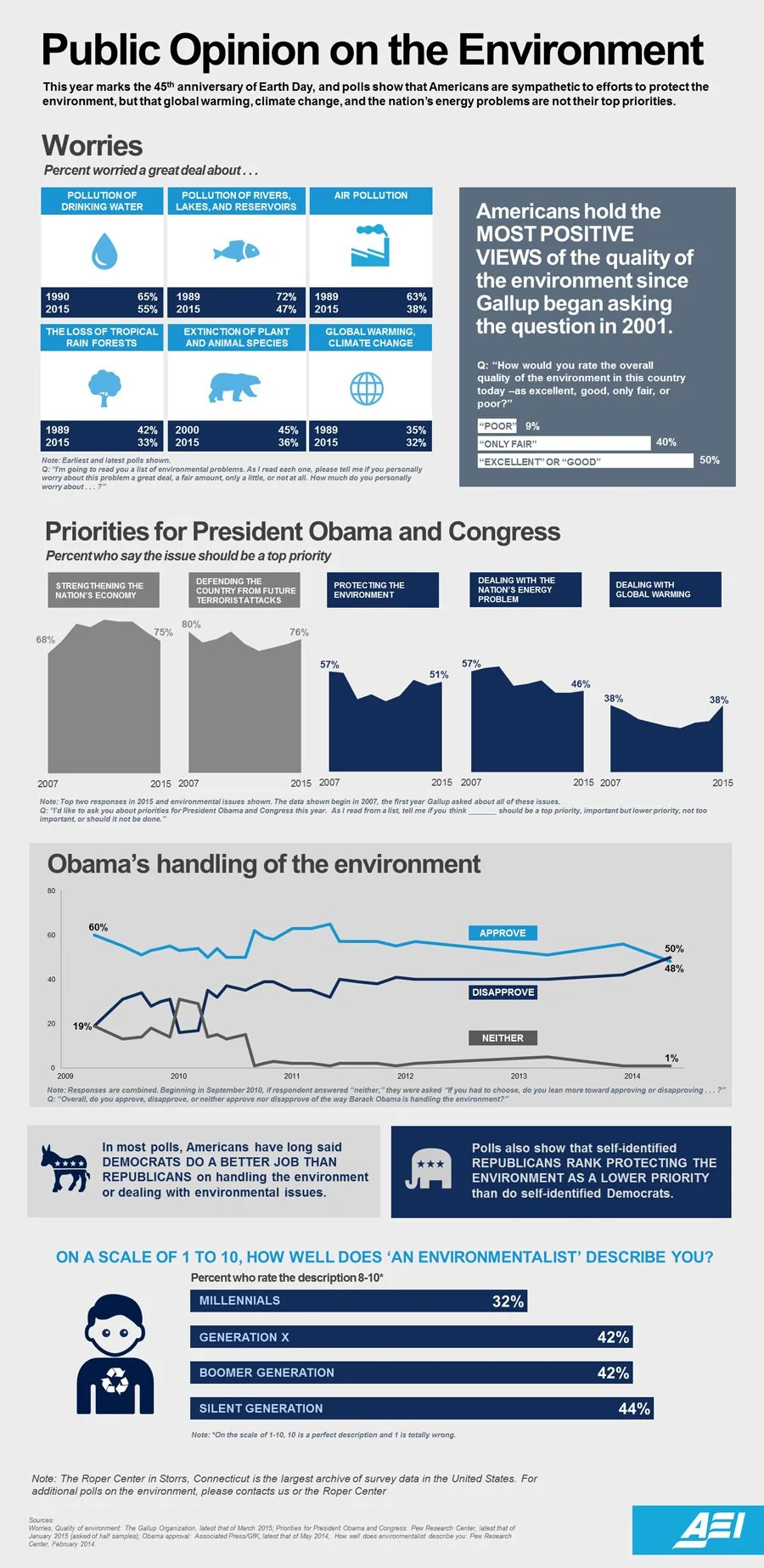
4. The American Enterprise Institute shared an infographic representing public opinions on the environment.

There’s no reason to doubt that Jesus was nailed to the cross. Ultimately, I trust what Scripture says about Jesus’s crucifixion because I also trust what it says about his resurrection. And that’s what we should be celebrating this week.

Reading your Bible is a battle. There’s a reason why Paul lists Scripture as the sword of the Spirit in his discussion of the armor of God (Eph. 6:17). More even than that, Scripture reveals God’s character and is, thus, central to worshiping well (Psalm 119). That’s why reading the Bible is a battle.

God of All Things thus deepens our experience of the world as we study and live. Its short chapters and engaging prose are suitable for a wide audience. The many connections with real, physical object lessons have deepened my appreciation of God’s efforts to ensure that the message of his greatness is available for all.

As stories go, it’s reasonably entertaining. It’s no wonder this book is popular—it hits all the key notes of our zeitgeist. Climate anxiety, empowerment of children, wealthy people are evil, and wonder at the world.

Some links worth reading this week: 1. Philip Jenkins claims that empires influence religions; 2. Why we probably need less news; 3. Many elite college students have never read a book; 4. The value of the five-paragraph essay in an world with generative AI; 5. A podcast about youth sports, the family, and the future of the earth.

Full Circle reminds us of the continuity of human culture and that there is nothing new under the sun. As a result, it’s a helpful source for understanding the times so we can make the best use of our time in these evil days.

Some links worth reading this week: 1. The need for Protestant ethicists; 2. Is it ok to lie to "own the libs?"; 3. We need more historical nuance; 4. An account of rejecting personal autonomy; 5. An interview about metamodernism.

“Online church” is a temporary patch on a leaky roof. It can get someone through a rainy season, but it was never meant to last for decades. We should never try to argue that watching a livestream is a worthy substitute for church attendance. To do so is to reduce the church to something we subscribe to rather than a community we belong to.

Some links worth following this week: 1. Patrick Miller argues against school-provided screens; 2. Alan Jacobs thinks about the pursuit of the enchantment in the world; 3. Matthew Arbo makes a case for more Protestant theological ethicists; 4. An engaging discussion of Robert Caro's biography of Robert Moses; 5. Brett McCracken reviews a forthcoming documentary that riffs on Bowling Alone; 6. An interview with James Davison Hunter.

As we navigate thousands of decisions about consumer goods, entertainment, and even volunteer opportunities, we would all benefit from spending a bit more time to ask whether what we are considering fulfills the main purpose of life: to glorify God and enjoy him forever.
The hope of Christians for creation is not that we will be able to make things entirely correct through our efforts. Rather, we work with the knowledge that we have been given a ministry of reconciliation, which includes all of creation (cf., Col 1:20; 2 Cor 5:16–18). We work toward reconciliation in hope, but recognize that hope will not be fulfilled until Christ comes again. Creation exists in futility in the present age because of God’s curse on creation. (Gen 3:17–19) Our task is to till the ground in hope, making our living, (Gen 3:20) looking forward to the moment when God supernaturally sets everything right.