Attacking Justice in the Name of Justice

I was listening to one of John Piper’s biographical talks from the pastors’ conference that his ministry has put on for years and was struck by the way Piper described one of the most harmful means of attacking someone who is pursuing a cause that another dislikes. He describes it more fully in an aside in the actual audio [around the 44 minute point in the audio], but you can get the gist of it from the published text of the lecture.

Piper writes:

Probably the severest criticism he ever received was from a slavery-defending adversary named William Cobett, in August of 1823, who turned Wilberforce's commitment to abolition into a moral liability by claiming that Wilberforce pretended to care for slaves from Africa but cared nothing about the "wage slaves" – the wretched poor of England.

He then goes on to quote at length from the speech of William Cobett:

You seem to have a great affection for the fat and lazy and laughing and singing and dancing Negroes. . . . [But] Never have you done one single act in favor of the laborers of this country [a statement Cobett knew to be false]. . . . You make your appeal in Picadilly, London, amongst those who are wallowing in luxuries, proceeding from the labor of the people. You should have gone to the gravel-pits, and made your appeal to the wretched creatures with bits of sacks around their shoulders, and with hay-bands round their legs; you should have gone to the roadside, and made your appeal to the emaciated, half-dead things who are there cracking stones to make the roads as level as a die for the tax eaters to ride on. What an insult it is, and what an unfeeling, what a cold-blooded hypocrite must he be that can send it forth; what an insult to call upon people under the name of free British laborers; to appeal to them in behalf of Black slaves, when these free British laborers; these poor, mocked, degraded wretches, would be happy to lick the dishes and bowls, out of which the Black slaves have breakfasted, dined, or supped.

Of course, anyone who knows anything about Wilberforce knows that Cobett’s accusations are false. Wilberforce was a member of the Clapham Saints, who were known for their pro-social efforts throughout Britain. They supported protections for laborers, animal welfare, literacy programs for the poor, and many other forms of justice. Their most contentious work, however, was for the abolition of slavery and the slave trade, so it is this against which much of the criticism was leveraged.

 There is no question that Wilberforce was more invested in the abolition of the slave trade than in other causes. One person absolutely cannot be equally concerned with all forms of injustice. Those that try to be equally vocal about all injustice end up doing little to actually improve conditions. However, to be focused primarily on correcting one form of injustice leaves one open to all sorts of attacks, like the one that Cobett wages.

Do you care about the environment? Why do you not care equally for those dying without the gospel?

Do you care about racial reconciliation? Why have you not ended poverty in your own town?

Do you care about unjust economic systems? Why do you not care about those caught in unjust criminal justice system?

These are all a form of the tu quoque fallacy. When we read these sorts of pairings in typed letters, they look ridiculous. Where does the presumption come from that simply because good environmental stewardship is a concern that there is not also a deep love for the lost a desire to see people saved? It is possible that there is a lack on the one hand because of an overwhelming concern on the other. However, it is just as possible that someone sees certain ways in which they can uniquely contribute to the good of the world, while still supporting, caring about, and engaging in other goods.

 If you focus on everything, you can accomplish very little in this life. But if you focus on any sort of contentious action, then you will be open to being maligned in this way.

 Sometimes these criticisms land very strongly in the public mind, because it is readily apparent that the victim has not done everything he could have done for the cause in question. Therefore, the accusation is partially true—true in the sense that another concern may have been chief in the benefactor’s mind and efforts.

 These sorts of criticisms can also devastate those on the receiving end, because it undermines all of the good they intend to do. The reason why this sort of criticism is used is that it can dishearten those engaged in an effort for justice in a contentious sphere. If we are willing to listen, it can be devastating to see our hard work undermined by such half-truths. We ought not to let it be so.

 This talk was presented in February of 2002. It was a conference that had for a good portion of its meat a focus on racial reconciliation. Part of Piper’s emphasis was for pastors to continue in that work despite attacks of this sort.

 Several decades later, I can see this form of criticism being levied against men like Piper, Keller, and others. They have worked to create a sense of desire for justice in the world. And yet, they are often criticized for not caring enough about some other concern. The “Just Preach the Gospel” crowd does this an awful lot to men who have invested their lives into preaching the gospel and helping to show the gospel’s implications to the Christian life.

 The secular “Social Justice” crowd does this when we favor some causes—often those that align with a Christian view of the social order—but ignore or work contrary to them in others. It is impossible to post a pro-life argument in favor of ending elective abortion without hearing someone argue that real pro-life energy should include greater government control of the economy, the end of capital punishment, or whatever the other cause is. Most of the time it isn’t really that the person cares so much about the other thing, they just want to silence arguments against killing children in the womb.

 The secret to resisting the power of this form of criticism is to recognize that it is often levied as a means to guard some form of deep, self-interested sin. Cobett owned something like 1,300 slaves, so he was deeply interested in ending Wilberforce’s efficacy. When we hear criticisms like this levied against people, we should ask ourselves what self-interested sins are the critics seeking cover for as they publicly attack those pursuing justice in the world.

Some Recommended Introductions to Christian Ethics

Sometimes the variety and range of options of books makes it difficult to know where to begin in the study of any given topic. Whereas a few years ago we would have had to rely on the personal recommendations of a friend or acquaintance, and what was available in our local library or bookstore, now the entire catalog of human knowledge is, seemingly, open to us at all points. This is really great, if you have a starting place in mind or an existing framework from which to begin. For those simply trying to get a toehold in a new topic, the options can be paralyzing.

This post was written because I have had several people ask me what books I would recommend to begin the study of Christian ethics. The list is based on my own preferences and those that I would recommend to people who are reasonably well-read and who share at least some of my presuppositions about the nature of Scripture and the truthfulness of orthodox Christianity. In other words, I am going to make recommendations that are consistent with an orthodox, evangelical Christianity. There may be significant books on philosophical ethics, Roman Catholic ethics, or some sort of modernistic Christianity that others might see as invaluable. However, my point is to lead people deeper into the mystery of faith in Christ Jesus, not toward the apparent brilliance of writers in another faith. There are many books about particular topics within ethics that are useful, too. I have selected these as introductions, not endpoints.

Mere Christianity, by C. S. Lewis

This in not a textbook on Christian Ethics, per se. However, in his defense of a basic, orthodox Christianity, Lewis writes about ninety pages of his apologetic work—about a quarter of it—on what amounts to Christian Ethics. This is helpful, because it demonstrates the integration of Christian Ethics into the broader theological ideas of Christianity. The way we live is an apologetic and it is a demonstration of what we truly believe. For those new in the faith, Mere Christianity is an excellent place to start when trying to figure out how to live morally.

An Introduction to Biblical Ethics, by David W. Jones

Biblical Ethics is a subset of Christian Ethics, but this is the place that many evangelical Christians would do well to begin. Absent from the book are discussions of the categories of philosophical ethics, because the assumption behind this volume is that the reader believes Scripture to be trustworthy as a source of moral authority. This is a volume that teaches readers to reason well from Scripture to moral application. Jones writes with clarity and grace, with a fine balance between demonstrated research and transparency to make this useful for beginners who are primarily interested in how to read Scripture better. This is lean on particular application to current events, but long on methodology.

Invitation to Christian Ethics, by Ken Magnuson

This 2020 volume is a good, current survey of the field of Christian Ethics from an evangelical perspective. Magnuson introduces various philosophical and theological frameworks for moral reasoning, but the focus is on reasoning well from Scripture. This is a book that is helpful if a reader is trying to figure out why different systems of moral reasoning end up with different ideas. After laying out his basic framework, Magnuson then moves on to discuss various contemporary ethical issues, working through them from a scriptural foundation.

The Doctrine of the Christian Life, by John Frame

Frame’s book is a hefty volume, but it is a solid way to begin an ethical journey. I love John Frame’s approach and have been deeply influenced by it. However, his triperspectivalism is distinct from many other approaches and likely to be less common in future years. I have a deep attachment to DCL and all of Frame’s work, but his approach will retain popularity primarily among conservative Presbyterians in the years to come. At the same time, if a reader is looking for a different approach to complement their understanding of Christian Ethics, Frame provides a deeply theological, Scripture-saturated book written from a Reformed perspective.

Ethics as Worship, by Mark Liederbach and Evan Lenow

This book is a 2021 volume that combines some features that I really like. It is a full introduction to Christian Ethics textbook, with a survey of various philosophical approaches. It is primarily driven by Scripture as the source of morally authoritative guidance for our age. Ethics as Worship includes application to many of the major, contemporary moral issues. All of this puts it in the solidly introductory camp and makes it quite useful. In addition, Liederbach and Lenow also have an explicit focus of living the moral life as an act of worship. This is a subtext in most evangelical ethics texts, but this book makes it overt. I’ve read it once and enjoyed it. I need to read it and use it more to fully evaluate it, but it is a good, useful book that I commend for its faithfulness, readability, and doxological emphasis.

Reformed Ethics, by Herman Bavinck

Volume 2 just released a few months ago. I haven’t finished it. However, volume 1 is clearly a treasure and I anticipate that the final two volume will continue the legacy. Bavinck is one of my favorite theologians. He does ethics from a theological framework in the Reformed tradition. His approach will connect well to Jones, Frame, and, to a reasonable degree, with Liederbach and Lenow. Bavinck is not going to cover contemporary issues, since he wrote a century ago. However, what you see is non-performative reasoning from someone who was grappling with modernity, outside our specific culture, and dealing with the same source text—Scripture—that we are using. His application requires a little translation, but this is helpful. Bavinck’s Reformed Ethics are a good historical approach that can be used to encourage thoughtful application of orthodox theology and scriptural reasoning in our day.

Resurrection and Moral Order: An Outline for Evangelical Ethics, by Oliver O’Donovan

This is the last book on this list for a reason. It is a very difficult book to read, but it is also very important. O’Donovan’s work is essential for a full understanding of what it means to think morally as a gospel-focused, theologically orthodox believer. This is a book that demands slow reading and often repeated reading. It was not until the third time through the book that it made sense to me, but once it ‘clicked’ everything fell into place and it helped unlock a more complete process of moral reasoning through Scripture. This is the Brothers Karamazov of Christian ethics; it is very hard work, but it is very much worth the effort.

This is not an evaluation of all the ethics books on the market. There are certainly others that are good and helpful. This is where I think someone should start as they seek to understand Christian ethics better.

Doors in the Walls of the World - A Review

At some stage in their career, if they are any good, an author gets to the point where their work will be enough of a commercial success that they gain freedom from publishers to write books that a less well-known author would not be able to get in print. Peter Kreeft hit that status quite a while ago and the freedom he has found to experiment and explore is a wonderful thing. Whenever Kreeft publishes a book, buy it and read it.

Doors in the Walls of the World: Signs of Transcendence in the Human Story is the sort of volume that probably wouldn’t have gotten off the ground if Kreeft were less well-known, but it is just the sort of book that many people need at just this moment. This is a book that is much needed in this age of scientism and materialism. It is, fundamentally, an apologetic for a supernatural understanding of this world.

The introduction begins by considering several kinds of wonder. Wonder may be found in surprise. It may be found in intellectual exploration and curiosity. Wonder also results in awe. It is this third form of wonder that is the main grist of this book. This is a book about finding something beyond the world as we see it. It is about finding a door in the wall of the world, as the title indicates. This world is the material reality that we sense—the cave in Plato’s myth—and the doors in the cave wall are gateways to the supernatural reality that lies beyond.

Kreeft proceeds to show that life, in many ways, is a story. There is a Storyteller beyond the story. There is plot, setting, characters, theme, and style. These are, in plain English, history, physical science, psychology, religion and philosophy, and art. All of these are doors in the walls of the world, through which we can pass to wonder at the supernatural. They are clues to help us understand the transcendent.

Each of the chapters is a brief discussion on one of the five elements of story. Kreeft uses fictionalized illustrations, literary examples, and plain prose writing to make his case. His case is that there is something beyond the world that we can see and we would be foolish to think that the shadows on the cave walls are all there is.

Doors in the Walls of the World is the sort of book that does not dazzle with its purple prose or overwhelm with a logical argument. It is like a short film that carries a powerful message that is vitally important and, perhaps, couldn’t be told in another way. This is the sort of volume that should be read quickly, and maybe repeatedly, to be digested in wonder of the goodness of the hope it points toward. It’s a rest stop that refreshes with a surprising garden in the middle of a journey. This book is a testament to wonder and deserves to be read for those of us in a dry and weary cave who could use a little magic, mystery, and joy.

Knowledge and Christian Belief - A Review

Is being a Christian at all intellectually defensible?

To many Christians, this seems like an obvious answer. Especially those who have been taught to begin debates with an assertion, “The fool says in his heart, ‘There is no God.’”

That quote, which opens Psalm 14, is no doubt true. However, it is not helpful and often falls short of the mark. First, fool is a moral category in Scripture, not “doofus” or “idiot” as we might think in our own culture. Second, the logic doesn’t flow the way the Christian would like. A fool may say there is no God, but it does not follow that someone who says there is no God is a fool. At least, it does not follow by that statement alone.

Setting that digression aside, it is more apt to this discussion to note that there are many atheists and agnostics that would argue that it is foolish to believe in God, or at least to have any confidence that there is a God. Some have gone as far as to say that it is morally repugnant to believe in God. The arguments along those lines generally flow from the problem of evil, which was really aptly stated by Epicurus and oft repeated since then: If there is a God in the world and there is evil in the world, then that God must be evil, since an omniscient, omnipotent God (the sort of God that matters) would stop evil. It’s been a knotty problem for generations of Christian philosophers.

Unfortunately, some Christians do a pretty poor job of dealing with the problem of evil, especially those Christians equipped with a semester of philosophy.

Alvin Plantinga remains one of the foremost Christian philosophers. He was a winsome and potent advocate for orthodox Christianity and his arguments take on all challengers. His book, Knowledge and Christian Belief is an example of the quality of work he does and he makes his arguments accessible to well read individuals, who may not have extensive backgrounds in philosophy.

Plantinga’s style of argument is to take the strongest objections to his position, state them as strongly as possible, and then topple them like a house of cards.

This may sound like an exaggeration, but his succinct volume takes on some of the most significant defeaters to the Christian faith and demonstrates pretty clearly that not only is faith in Christ possible, it’s a good explanation for the world as it is.

One of the surprising ways that Plantinga makes this argument is to take on the challenge that Christians cannot have warranted belief for God. He states the objection about as well as it can be and then shows why the strength of those objections depends on the assumption the Christianity is false. In fact, if one does not make that assumption, then the better conclusion (especially given the sense of transcendence) is that Christianity is, more probably than not, true. (Absolute certainty in this logical sense is not the primary goal or a likely outcome of this sort of argument.)

At the end of the volume, Plantinga takes on the major challenges of historical biblical criticism, pluralism, and evil. The chapter on historical biblical criticism is worth the cost of the book, as Plantinga shows that neither of the two main approaches to historical biblical criticism offer much of a challenge to traditional Christianity, because the assumptions that underly the methodology are fundamentally foreign to the system it is challenging, and thus incapable of actually undermining the faith it intends to undermine. Plantinga concludes, “The traditional Christian can rest easy with the claims of HBC [Historical Biblical Criticism]; she need feel no obligation, intellectual or otherwise, to modify her belief in the light of its claims and alleged results.” (106)

The argumentation leading to that conclusion is tight. It is not the sort of gun-slinging, sloppy  argumentation that sometimes occurs on YouTube. Despite the fact that Knowledge and Christian Belief is a somewhat simplified version of a more academic work, the argument still requires great care in reading to follow it accurately. But the end result is an encouragement to believe Christianity as it has been passed on, without modification, and without a sense of intellectual inferiority.

There is no compromise intellectually in being a Christian, as Plantinga shows.

If there was a way to dial this down just a little more, this would be an amazing book to put into the hands of a high school senior, ready to head out in the world. As it is, a careful parent or friend with a little rereading could work through this slowly and patiently with a teen and give them a gift of confidence. Even if one cannot articulate everything that Plantinga argues, it is reassuring to know that the argument can be made.

Knowledge and Christian Belief is a short book, but it is a good one, especially for those seeking greater confidence in the basic truthfulness of Christianity. Alvin Plantinga makes a convincing case that one stands on solid ground when one holds to the faith once for all delivered to the saints.

The God of the Garden - A Review

Although I lived in the same house for my entire childhood, I have since moved many times. First, off to college. Then to different duty stations up and down the East Coast while I was in the United States Navy. When I got out, I went to seminary, stayed for a while, then bounced to a couple of other jobs. There has been a lot of moving in that time, as my patient wife reminds me.

There were good reasons for every move, but the constant bouncing from place to place leaves a mark on the psyche, especially for the kids who have lived in either three or four states. Some of the places we have lived we knew were temporary. When we were newly married, living in an apartment on the Thames River in Connecticut, we knew that that was not a final destination because my boat was going to move to the West Coast in a couple of years. Besides, neither of us had any roots in Connecticut.

It is that rootlessness that characterizes much of modern society. Ben Sasse’s book, Them, addresses that concept, especially as it impacts the way we think about economics and politics. It’s a feature of much of our culture. Most of us do not expect to live in one place for very long––people move about 11 times in their lifetime on average. Many of those moves are in town––from one apartment to another. However, many of those involve significant disruptions of life.

Andrew Peterson’s recent book, The God of the Garden, is about moving. Or, more accurately, it’s about a sense of place and investment in permanence despite moving. It’s also about trees, because they are the sort of permaculture that remains long after moving trucks have come and gone. It’s also about beauty, hope, and a desire to see creation flourish.

For those unfamiliar, Andrew Peterson is best known as a singer/song writer who lives in Nashville, TN. He’s well beyond the stage of waiting tables at Olive Garden to afford rent between gigs, and has become a favorite among a subset of Christians who are generally reformed and committedly orthodox. His Behold the Lamb of God album is also a recurring tour that celebrates the incarnation of Christ every year around advent, and which captures the essence of biblical theology well. It’s a CD that my family listens to frequently from November through January. He’s also recorded various other albums, which all carry a sense of longing for the resurrection and a hope in the present situation, with Peterson pouring out his heart through his fingers and with his somewhat reedy voice. While recording those albums, Peterson also managed to write and publish a quatrain of children’s fantasy novels that point readers (kids and adults) to some big ideas while telling a good story and celebrating the wonder and beauty of the world. His first non-fiction book, Adorning the Dark, is a somewhat autobiographical book, which talks about seeking to create a God-honoring beauty in the midst of a dark and crooked world.

The God of the Garden shares some similarities with his previous book, Adorning the Dark. There is a heavy autobiographical feel to the volume, with Peterson relating in more detail some of the stories that inspired some of his songs. So, for those of us who have sung along with Peterson about being buried beneath the rows of corn in the land of Lincoln where he was born, we now get some more information about what was happening during that time.

In this book, Peterson focuses on trees as the semi-permanent form of agriculture that indicates a sense of personal rootedness. So, we hear a story about a couple of maples in Illinois. The story is kind of about Maples, but it’s really about family routines and a way of living that lasted for a little while. To some degree that way of life continues to exist because the celebrated maples are still there as markers of the past. He talks about the various trees he has planted on his own homeplace—combination forest and English garden—that includes markers for his children. This is a book about place, people, and putting down roots. There is also a chapter reflecting on the likely changes in his neighborhood. Changes that are more likely to commercialize than harmonize with the beauty and wonder. It is with longing for a retention of beauty that Peterson lays out a vision of flourishing and hope for the future.

Those that are fans of Peterson will be delighted by this book. There are many phrases and ideas in his other work that come to life through this volume. But it isn’t necessary to already like Peterson’s work to appreciate the volume. Folks who understand what Sensucht is, who are votaries of the blue flower, or who understand what it means to be a bearer of the sacred flame will find much that resonates in The God of the Garden. For folks that are looking for a reason why a call to better environmental stewardship and putting down roots resonates, this book helps tie a lot of those things together, too.

This is a good read. The prose is clear and simple. The stories are engaging. One need not have a deep and abiding interest in any of the things I’ve listed above to enjoy the book. This book is a quick read that would be enjoyable for someone simply looking for a little patch of beauty on a plane flight or at the end of a long day.

Jesus, the Firstborn of All Creation

Colossians 1:15 tells us that Christ is “the firstborn of all creation.” This is a challenging phrase for some and there continues to be a great deal of confusion over it, even among self-described Bible-believing evangelicals. The problem is more pronounced in a couple of American-made religions, which often rely on excessive literalism in their interpretation. One of the dangers of not understanding Colossians 1:15 rightly is that it allows Christians to be picked off by cults.

Manning the Watchtower for Jehovah’s Witnesses

The Jehovah’s Witnesses, for example, in an official publication argue:

“From [several] Biblical statements [including Col 1:15] it is reasonable to conclude that the Son of God is the firstborn of all creation in the sense of being the first of God’s creatures. . . . There are many who object to the idea of Jesus as being a created person.  They argue that since “in him all things were created” (CB)—during his prehuman existence in heaven—Jesus himself could not be a creature. Such individuals believe that Jesus is himself Almighty God, the second person of a “trinity” of three coequal, coeternal persons in one “godhead. . . . . Since Jesus as the firstborn of all creation is a created person, he cannot be Almighty God.”

Houston, we have a problem.

The argument they posit, based on their commentary on this passage, is that Jesus is “the first creation by Jehovah God. Seven of the eight occurrences of the Greek term for “firstborn” (pro·toʹto·kos) in the Christian Greek Scriptures refer to Jesus. The usual Scriptural meaning of the term “firstborn” is the one born first in order of time, such as a firstborn child.”

But contrary to this assertion, there are a number of times in Scripture that firstborn is not meant literally, but used to refer to the heir who was chosen in place of the chronologically first son.

In Exodus 4:22, God says to Moses:

“Then you shall say to Pharaoh, ‘Thus says the Lord, Israel is my firstborn son”

Israel was once called Jacob. And Jacob was second son who gained the birthright––the status of firstborn. Thus, the firstborn was not literally the first to be born, but the one who was prominent in the family and through whom the line would extend.

Isaac was not Abraham’s firstborn, Ishmael was. But it was Isaac who was the one God chose to be the heir.

In a Messianic prediction in Psalm 89:27, the psalmist writes,

“And I will make him the firstborn, the highest of the kings of the earth.”

That was not about David, who was also not the literal firstborn who became the prominent son by divine action, but about Jesus himself who was the long-expected Messiah.

Mormon Misunderstanding

But the Jehovah’s Witnesses are not alone in their misunderstanding of this passage. The Mormons also believe that Jesus Christ is a created being.

In Joseph Smith’s Bible Dictionary, he notes that,  “Jesus is the firstborn of the Spirit Children of our Heavenly Father.”

Bruce McConkie, who was a theological authority within the LDS religion makes clear that “firstborn” in this sense means chronologically first: “Christ is the Firstborn, meaning that he was the first Spirit Child born to God the Father in pre-existence.”

But lest we let that error pass, let us flip over to the entry in Smith’s Dictionary for “Spirit,” where we read, “Every person is literally a son or a daughter of God, having been born as a spirit to Heavenly Parents previous to being born to mortal parents on the earth.”

There are a number of errors all wrapped up in Mormon theology. They believe that God the father has a physical body and that we have potential of becoming like gods—one might say gods ourself—if we do enough good works. Jesus is not the product of a truly virgin birth, but of a literal union between God the father and Mary who would later become the wife of Joseph. All of that is problematic in addition to their belief that Jesus was a created being.

Beware the leaven of the Mormons. When I was a kid they emphasized their distinction from Christianity because they were the “Church of Jesus Christ of Latter Day Saints.” But recently they have asked everyone to refer to them as “The Church of Jesus Christ,” and are thus claiming the mantle of true Christianity when they have replaced the true Christ with a semi-divine being of their own choosing.

Theology matters. Biblical interpretation matters. It’s a dangerous world out there and you can ill afford to be ill–informed.

Seeking Clarity

Because biblical interpretation takes work, Colossians 1:15–20 is a passage that has led people on a dark pathway away from truth and an unwillingness to hold two truths at the same time:

(1)          Jesus Christ was fully human.

(2)          Jesus Christ was fully divine.

We need to interpret Scripture with Scripture and hold all the truths of the Bible together at the same time.

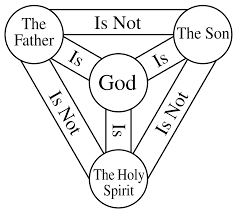
That’s why we understand that Jesus is co-equal with the other two persons of the Holy Trinity and there was never a time when he was not. As question 3 of the New City Catechism tells us: “There are three persons in the one true and living God: the Father, the Son, and the Holy Spirit. They are the same in substance, equal in power and glory.”

The second person of the trinity “became flesh and dwelt among us” (John 1:14), but he has always been God without dilution of his divinity.

Don’t be fooled when the Jehovah Witnesses or Mormon missionaries come knocking at your door. They are not carrying salvation, but deception. There is no question and no negotiation on that fact. There is no common faith between a Christian and either of those groups.

And yet, there are troubled signs within self-described “born again believers” who actually affirm important “Evangelical Beliefs.” A 2018 study by LifeWay Research in partnership with Ligonier Ministries showed that 78% percent of those with “Evangelical Beliefs” Agreed or Strongly Agreed with the statement: “Jesus is the first and greatest being created by God.”

That is a significant theological error, which is not consistent with Scripture.

As the Chalcedonian Definition tells us:

….Our Lord Jesus Christ, the same perfect in Godhead and also perfect in manhood; truly God and truly man, of a reasonable soul and body; consubstantial with us according to the manhood; in all things like unto us, without sin; begotten before all ages of the Father according to the Godhead, and in these latter days, for us and for our salvation, born of the virgin Mary, the mother of God, according to the manhood; one and the same Christ, Son, Lord, Only-begotten, to be acknowledged in two natures, inconfusedly, unchangeably, indivisibly, inseparably; the distinction of natures being by no means taken away by the union, but rather the property of each nature being preserved, and concurring in one Person and one Subsistence, not parted or divided into two persons, but one and the same Son, and only begotten, God the Word, the Lord Jesus Christ, as the prophets from the beginning have declared concerning him, and the Lord Jesus Christ himself taught us, and the Creed of the holy Fathers has handed down to us.

The Chalcedonian Definition is a faithful summary of the teaching of Scripture, handed down for generations, which should serve as a summary of biblical doctrine, as we seek “to contend for the faith that was once for all delivered to the saints.” (Jude 3b) As we read Scripture and interpret it, we should look at how the body of Christ has interpreted it in the past.

While that interpretation does not override the actual content of Scripture, it should help form our reading as we communicate with those Spirit-filled believers who have sought to faithfully exegete God’s Word in the past. That will help us avoid being picked off by errant teaching, like that offered by the Jehovah’s Witnesses and the Latter Day Saints.

A Company of Heroes - A Review

In the week to week grind, it’s easy to lose sight of the big picture and to forget that there are bigger things than the overdue report, looming deadline, or potential future promotion. There is a kingdom being illuminated by salt of the earth servants of the one true God who will return someday to restore the whole creation and shine his glory through the whole world. It’s easy to forget that grand reality because the inane, normal, and immanent demands blot out the grandeur of God’s ineffable splendor through the tyranny of the urgent.

Tim Keesee’s book, A Company of Heroes is a reminder that that the kingdom is coming, that the daily grind can have great meaning, and that God is on the move throughout the world. Keesee’s 2014 book, Dispatches from the Front emphasized the work being done in frontline locations throughout the world. It contains snippets that will encourage and it is worth picking up for its own goodness. When I picked up the 2019 book, A Company of Heroes, I expected more of the same. This book, however, is different. And because it is different it is in a way much more powerful and encouraging. While Dispatches from the Front focused on what God is doing in hard places, A Company of Heroes emphasizes what God is doing through ordinary people in both exceptionally difficult circumstances and simply through persistent faithfulness by his people in “ordinary” places.

The book covers the ministries of twenty people. It’s a mix of the living and the dead, the great and the small, those serving in critical ministries and those faithful in banal ones. For example, there is a chapter on Samuel Zwemer who gave his life on mission in the Middle East around a century ago. There is another chapter on Danny Brooks, whose name you likely have never heard, but who heeded the call of God, moved his family, and planted a church in Salt Lake City Utah. The end of his story is unknown, but his family is part of a pattern of sacrificial living that demonstrates the overwhelming value of the glory of God.

There are other stories that encourage deep obedience to the call of Christ. There are reminders throughout, as John Piper is quoted in the book saying, “America isn’t a safe place for children, if going to hell is your biggest concern.” Physical safety may not be the key criteria by which we should evaluate our opportunities in life. As we take up our cross and follow Christ, we may literally die and that may be exactly the right thing for us. This book does not offer a secret recipe for being more on fire for Christ, but it does provide repeated examples of living all out for the kingdom of God.

We need more books like this. Books that show simple faithfulness of the common person. We need books that tell stories in snippets that can be digested that take missions, service, and living in hard places from extraordinary tales to ordinary realities.

A Company of Heroes is the sort of volume that should be in many Christian homes, read aloud by families, included in homeschool curricula, on the shelves at church, and wherever people that need to learn to live faithfully can get access to it. May Tim Keesee’s tribe increase, as well the tribe of people like those whose stories he captures.

10 Significant Books from 2021

It was a good, if different reading year. I read and reviewed many fewer books this year than in any past year. In large part this due to reading for a book that I am writing and trying to write said book, which is not going as fast as I would like. Also, the pace at work seems to get increasingly faster and consume more and more of my free mental space, which makes it much easier to pick up something light and fluffy or find a movie to watch than to work through some excellent, but challenging Christian non-fiction.

In any case, my apologies for flagging aside, my deeper apologies go to a number of books that my friends have obviously appreciated, but which I am unable to commend simply because I didn’t have time or energy to read them.

However, here is my imperfect list of good books I encountered in 2021 that I would commend to you for future reading. They are in no particular order.

You Are Not Your Own: Belonging to God in an Inhuman World by Alan Noble

“This is a book I would recommend for people of every age, but especially for those about to be sent out into the world. Noble teaches undergraduates, so it has the marks of many conversations had behind an office door, with students who came for help with an essay, but needed assistance in putting life together. Would that many more young Christians would discover the central message of this volume before heading out into the world, making shipwreck of their health, their life, and perhaps their faith in attempt to become someone, do something, and belong to themselves in an inhuman world.”

The Glory Now Revealed: What We’ll Discover About God in Heaven by Andrew M. Davis

“If asked where to learn about heaven, this is the resource I will point people toward. It is clear, simple, and Christ-honoring. More importantly, the book minimizes speculation by focusing on what can be understood from Scripture plainly read. This is the sort of book that draws the reader’s mind beyond the pages themselves to the hope that the author is pointing toward. It is a hopeful book, which offers a healthy dose of encouragement in a world that seems to be bent on wearing us down and keeping our minds of the life to come. The Glory Now Revealed is the sort of book that helps us become more like Christ by imagining more vividly what our future life in the presence of the visible Christ will be like in heaven.”

Ethics as Worship: The Pursuit of Moral Discipleship by Mark Leiderbach and Evan Lenow

“Ethics as worship means that the Christian worldview is the beginning of the moral quest. The foundation of the Christian worldview is properly Scripture, which anchors the method and content in the reveal Word of God. But a purely “scriptural” ethic can lead to casuistry. After all, Scripture does not say that we cannot use cocaine or tell us precisely what to do about global warming. An alternative, which includes various forms of philosophical ethics attempts to get at truth apart from Scripture and then looks for passages that can illustrate. Still other forms of so-called Christian ethics are more like weather gauges that check the cultural climate and decide write and wrong to try to maintain respectability. Viewing ethics as worship puts God at the center, with Scripture as the foundation, and delight in God and holiness as primary signs of success.”

Enjoying the Bible: Literary Approaches to Loving the Scriptures by Matthew Mullins

‘This book is an academic text. The best audience will be those familiar with the basics of literary theory or hermeneutics. Enjoying the Bible would make an excellent text for a “Bible as literature” course at the undergraduate level or as a source of encouragement for English majors in universities trying to reconcile the value of a literary approach to the Bible with its spiritual authority. This is a volume that can serve to encourage the weary seminary student or studious pastor whose need to produce a paper or sermon sometimes stifles a thoroughgoing delight in Scripture. This is a good book that will help many faithful, orthodox believers grow in their love of God and his Word.’

The End of Our Exploring: A book about Questioning and the Confidence of Faith by Matthew Lee Anderson

“As a parent of children who “know all the answers” because we have spent a lot of time on discipleship, I find Anderson’s faithful but open approach to questioning helpful. This is a book that I will have my children read toward the end of high school. Sometimes it is frightening that my kids have the ready answers to theological questions. I worry that they have borrowed my authority, as it were, because they have seen me teach through an abbreviated systematic theology, several books of the Bible, and other topical lessons. They know that I have read the books and explored the questions, but it is important that they do some of their own exploring, too.”

Recovering the Lost Art of Reading: A Quest for the True, the Good, and the Beautiful by Leland Ryken and Glenda Mathes

“The self-description of the book is apt. The authors write, “[This is] a guidebook by two season and enthusiastic reading travelers, who show all readers . . . how to discover more delight in the reading journey.” This is not an academic volume, though it has academic value. It is not a prescriptive “how to” like Adler’s book. It is filled with instruction, but it is not purely didactic. It’s the sort of book that can be read piecemeal as someone tries to grow in the art of reading. It’s also the sort of book that can be used as a textbook in a high school or introductory college literature class. It would also be useful as a companion to a reading group. Most significantly, it’s a book that will help its reader grow in their love of the better things in life.”


Another Gospel?: A Lifelong Christian Seeks Truth in Response to Progressive Christianity by Alisa Childers

“In response to the redefinitions and abandonment of the ancient Christian faith by progressive Christians, Childers points people toward “historic Christianity.” She doesn’t perfectly define this term either, but she describes it as a faith “deeply rooted in history. In fact, it is the only religious system I can think of that depends on a historical event (the resurrection of Jesus) being real—not fake—news.” She goes on to summarize her faith as understanding that, “The Bible is [God’s] Word, or it’s not. Jesus was raised from the dead, or he wasn’t. Christianity is true, or it isn’t. There is no ‘my truth’ when it comes to God.” What she defends through the book is the faith “once and for all delivered to the saints,” with the truthfulness of Scripture at the core and the necessary conclusions drawn from that about the nature of God, the importance of the cross, and the goodness of pursuing holiness as it is described in Scripture.”


Reading the Times: A Literary and Theological Inquiry into Reading the News by Jeffrey Bilbro

The core of the problem, as Bilbro presents it, is not necessarily the technology or the content of the news, but rather that too much of what we get that passes as news has very little to do with our lives, even though it is designed to rattle our cage. What we get angry or excited about often has little to do with what God is concerned about: “Perhaps we need to conduct an emotional audit and consider which issues or news items cause us to become angry, outraged, or excited: Are we grieving over what grieves God and rejoicing over what brings him joy? Or have we become emotionally invested in trivia while growing apathetic about matters of real import?”

Bilbro recognizes that a big part of the problem is the way we read the news. As a result, the fix is to change ourselves and what we value. This is a book that is timely and well suited for those looking for an off-ramp from the highway of partisan politics, misanthropy, and emotional turmoil that often goes with the news.

The Rise and Triumph of the Modern Self: Cultural Amnesia, Expressive Individualism, and the Road to Sexual Revolution by Carl Trueman

This is the only one of the books which I have not reviewed this year. Actually, I did review it, but due to a tragic failure of autosave, my lovely review was lost and I have not recreated it yet. I will provide a mini-review here.

Trueman’s book is one of the most important books of the year and likely will remain significant for years to come. Rise and Triumph digs into the reality-denying world of identity confusion that surrounds us. How have we come to a place where a statement like, “I am a man trapped in a woman’s body,” is considered meaningful? “Gender Identity” wasn’t really a recognized term when the infamous Obergefell case redefined so much of reality. Trueman walks through the stages of modern philosophy and culture that have allowed that sweeping change to be made so quickly and so readily absorbed. The books moves from Rousseau, through the Romantic Poets, Nietzche, Marx, and Darwin, the into Freud, with Marcuse and some other contemporaries thrown in. It’s obvious Trueman has done his homework, though his reading may not agree with the most generous interpreters of those works. Rise and Triumph has explanatory power. The really good news is that a more accessible version is being published by Crossway in 2022.


Dispatches from the Front: Soties of Gospel Advance in the World’s Difficult Places by Tim Keesee

Each of these dispatches—quick vignettes of the gospel bearing fruit and increasing—reminds readers that we have a supernatural God who works in mighty ways to accomplish his vital work in the world. For the pastor weighed down by the constant bickering about pandemic protocols, selfishness of congregations, and mundane arrangements of life in the US, this book offers a vitamin shot of encouragement about the way God can work in hard places. For the average Christian whose vision of the faith is limited to a service that can be squeezed in between travel league games and vacations, this will reveal Christian faith that energizes all of life.
 

10 Questions Every Teen Should Ask (and Answer) about Christianity by Rebecca McLaughlin

The usefulness of this book is that McLaughlin has transposed important apologetic arguments from the halls of the atheist/Christian debates and put it in language and terms that are absorbable for the average teen. McLaughlin uses illustrations from Harry Potter, Lord of the Rings, and a variety of Disney animated movies. She does this as someone who has obviously watched and enjoyed them, so they don’t come across as misplaced tinsel, but actually support the content of the book. This is a book that reads well without sacrificing the quality of the arguments.

How to Think Like Shakespeare - A Review

The list of books I have purchased because of Ken Myers and his Mars Hill Audio Journal continues to grow. Though subscriptions to the journal run about $30, regular listeners are likely to find the actual cost of the journal and the free, weekly Friday Features much greater because Myers has the gift of bibliography. He also brings such interesting people in for interviews or reads such enthralling essays that curious minds will find it difficult not to want to follow where he leads. For those without robust university libraries nearby, the cost of following those intellectual breadcrumbs can rise as online orders and regular deliveries from the postman serve to dish up fuel for the mind.

One recent book that I purchased because of Ken Myers is How to Think Like Shakespeare: Lessons from a Renaissance Education. The author, Scott Newstok is a professor of English at Rhodes College. He has previously published on both Shakespeare and renaissance education. In this volume, published with Princeton University Press, Newstok brings those ideas together.

How to Think Like Shakespeare sounds like a “how to” manual. Thankfully, it is not, though that might annoy some who pick up the volume thinking it will provide “10 easy steps to better writing” or whatever.

In an interview with Myers, Newstok related that one of the driving forces behind his writing the book was a rejection of the education-industrial complex. His daughter, enrolled in a public school, came home muttering about “assessment,” which is code for “high stakes testing to justify money spent on novel methods with unproven results which may not have a valid goal in mind.” The problem with assessment is that it pushes toward educating in measurable information without necessarily considering whether the end goal is right and proper. What could have turned into a manifesto is framed much more positively, though, as Newstok provides a framework for considerations for the Renaissance Mind.

The purpose of this book is to help reframe the goal of education around more human considerations. Newstok writes:

My conviction is that education must be about thinking––not training a set of specific skills. . . . Education isn’t merely accumulating data; machines can memorize far more, and far less fallibly, than humans.

The best way to learn about thinking is not to hire a neuroscientist to measure the electrical activity in the brain, but to watch how others have thought before. Since we do not have a time machine to travel back to meet Shakespeare or other thinkers who lived before our technology-saturated age, we must consider what they have written and follow the trails they have followed.

How to Think About Shakespeare takes an intriguing approach. In a world that prizes originality, the book is comprised largely of quotes and tight allusions. Newstok is fastidious in his annotation, so this is no plagiarist’s volume. However, what is illustrated is the great degree that we are dependent upon those that have come before us. In many cases, they have already thought better with clearer language about the things that we consider imponderable.

The book has fourteen chapters, which all deal with particular issues relevant to human thinking and our contemporary culture. For example, Newstok begins with “Of Thinking,” which is appropriate considering the title of the volume. The upshot being that the lament “why can’t people think” is not a new problem driven by smart phones (though perhaps accelerated), but one that spans the intellectual history of the world. The conclusion we might draw from that is that it may be better to see how the problem has been overcome in the past and model our solutions off of that, rather than trying to reinvent the wheel. Newstok then moves on to discuss ends, craft, fit, place, attention, and more. All the topics serve to outline aspects of human thought in a humane world. Each of the chapters is brief—usually about a dozen pages, which keeps the pace quick while providing some material for future consideration.

How to Think Like Shakespeare is not so much earthshattering as paradigm disrupting. It’s hard to define, really, but this is book that caused me to think and is still nagging at me to continue thinking. Mostly, it’s driving me to continue to explore what it means to be human and to think as a human in a computerized world. Newstok’s brief chapters highlight the ways that we have been habituated to a technological society. He doesn’t provide a lot of clear answers, but he raises some of the more significant questions that we should be asking and which humanity has previously asked. This is the sort of book that I read and have dipped into several times as I’ve mulled its contents since then. The book is one that that will stick with you at the edge of your mind and encourage dabbling.

From Plato to Christ - A Review

In the final pages of The Chronicles of Narnia in the grand eschatological conclusion to The Last Battle we find Professor Digory Kirke explaining the wonder that is before the faithful Narnians, muttering to himself impatiently as he tries to explain what is happening to the English children: “It’s all in Plato, all in Plato: bless me, what do they teach them at these schools!”

That is a comment that went largely over my head when first I read of Narnia. All I knew of ancient Greek philosophy in my school days came from the brief summaries of their lives in history textbooks, which might tell me something like, “Plato was the student of Socrates. He wrote much of the canon of Western philosophy.” Additional contributions came from sources like Bill and Ted’s Excellent Adventure, which made a joke of pronouncing the names and generally reinforced the plausibility of ignorance. What did they teach in these schools, indeed!

Entirely missing from the accounts of any of the classical philosophers was the content of their teaching. That level of ignorance was only reinforced in college, where I earned a degree and became a Really Smart Person without ever encountering more than a passing familiarity with some of the philosopher that have largely shaped the contours of Western thought and civilization.

Then the classical education revival became more prominent, I had kids, we decided to homeschool, and I started to read C. S. Lewis more broadly. I came to understand that in order to understand where we are culturally and where we might want to go, it is necessary to understand how we got here. That includes both through the influence of Christianity and other sources. Moreover, how can I provide the sort of education to my children I wish I had had when I’m too busy to master all the information myself? I need an entry point to help bring things together.

From Plato to Christ: How Platonic Thought Shaped the Christian Faith is a resource that can stand in the gap for many parents who, like me, did not receive a classical education and lack time to cram it all in to teach our children. In this volume Louis Markos highlights significant points of contact between Christianity and Plato’s philosophy. He shows why some Christians theologians have been enamored of Plato and will describe themselves as platonic. He also shows some ways that some theologians may have less helpfully appropriated portions of Plato’s philosophy.

Markos is a classicist who teaches at Houston Baptist University. He has written extensively on the truthfulness of Christianity, ancient Greek and Roman cultures, various works of the Inklings, and certainly more. In other words, he’s just the sort of individual to teach contemporary Christians without a background in ancient philosophy about the relationship between philosophy and Christianity.

The first half of From Plato to Christ is a summary of the teaching of Plato’s philosophy. The work Markos does in the first six chapters is not exhaustive, but it lays the groundwork for the points of contact he will highlight with Christian theologians later in the work. This section of the book is enough to inspire greater interest for those unfamiliar with Plato and help draw some themes together for those, like me, who are somewhere at a midpoint on our journey to understanding philosophy.

The second half of the volume looks back through the Christian tradition at ways Plato and the platonic tradition have influenced Christian thinking. This is the section that will serve as a litmus test for how one perceives the relationship between Christ and culture and the way that a reader views common grace. For some, the influence of Plato on Christian thinking is a pollution of the pure source. For others, the influence of Plato on Christian thinking is a powerful aid to Scripture. The portrait Markos provides is something of both, which makes this volume balanced and helpful.

On the one hand, it is sometimes astonishing how much of what Plato and other ancient philosophers accomplished apart from direct special revelation. There are points at which they reasoned out the right ordering of the universe without a word from God. On the other hand, Markos makes it clear where Plato and his intellectual descendants clearly missed the mark. For example, Plato is one of the ancient philosophers who viewed women as deformed men—lesser creatures—which did negatively influence the Christian tradition. These pagan philosophers must not be taken without parsing their words carefully, as Markos regularly reminds readers.

To my mind, Markos ends up too positive toward Plato. At several points he describes him as inspired—not in the same sense as Scripture, but more than simply artistically. I’m not sure that is necessary. However, Markos is fair in pointing out the failings of the Platonic tradition where it has corrupted Christian theology. If nothing else, this book has the potential to help contemporary readers sift through the Western Christian theological tradition more carefully, becoming aware of the sources and ideas that were influencing them. Markos provides a helpful tool that can be used with Scripture to parse through the Christian tradition and ask whether a particular conclusion is indeed biblical or if it relies on conceptions from another source.

Most significantly, Markos can help the contemporary reader make sense of the platonic tradition and be better equipped to appreciate the goodness of it. This is a book that is engaging to read, but also useful. While it does not replace the reading of the original sources, Markos provides a commentary that can help readers understand the original sources better. This is the sort of instruction that a parent seeking to guide their children in a classical education—which they likely lacked themselves—will find invaluable.

NOTE: I received a gratis copy of this volume from the publisher with no expectation of a positive review.