A Mind for Numbers - A Review

I have heard many people argue they can never succeed in a certain field of study because, they say, “I’m just not a math person.” The idea is that there are fields of knowledge that it requires some innate set of skills to gain any sort of foothold.

For the sake of debate, we might set aside those who are obviously especially gifted at some academic skill. One may, indeed, need to be specially gifted and then extensively trained to discover new proofs of mathematical ideas or originate create solutions to scientific problems. However, not having the capacity to be at the top of a field should not be confused with being unable to grasp the rudimentary aspects of it.

One of the central theses of Barbara Oakley’s book, A Mind for Numbers: How to Excel at Math and Science Even if You Flunked Algebra is that with due diligence, anyone can do well at Math and Science.

The examples tend to be oriented toward technical disciplines, but the reality is that this book is simply trying to teach habits that lead to academic success in any field. In fact, to someone who has done any significant research in metalearning or study habits, there is very little that is not known. Most of the information Oakley outlines is fairly intuitive for the experienced student.

That qualification is the key, though. Experienced students may have struggled through difficulties on their own, had a mentor who provided them guidance (like a parent, sibling, or neighbor), or simply have naturally fallen into a helpful set of habits related to study because of their environment.

Not everyone has the advantage of being homeschooled, having parents who teach and emphasize learning, or that have excelled in school and are able to help break down mental barriers when they arise. A Mind for Numbers is a treasure for those who are trying to figure out studying on their own, attempting to help a student grow when they aren’t really good students themselves, or looking for ways to restructure curriculum to set students up for success. The target audience of the book is high schoolers, but this is the sort of volume that is useful for college students or adult learners trying to retool for a better career, get a new certificate, or conquer a challenge that previously defeated them.

Oakley’s story is intriguing. Though she is now and engineering professor, she once believed she was incapable of doing math. At some point along the way, a family crisis led to an untimely move with an unhelpful teacher in a new school, all of which resulted in Oakley missing some key links in her mathematical understanding that made it hard for her to follow along in later efforts in the subject. Her natural reaction was the “sour grapes” approach, where she decided that math just wasn’t her thing and that was ok because it was a dumb subject anyway. She later enlisted in the Army, became a language specialist, earned a degree in Slavic languages, but came to realize that the career opportunities in that narrow field were quite limited. So, she decided to see if she could retrain herself to love math, and she pursued a degree in engineering. The end result being a lot of work to learn how to learn, a PhD in engineering, and a deep interested in the learning process.

Much of A Mind for Numbers is really just a plan to become a better student through better time management and prioritization techniques. There are no gimmicks about doing special online puzzles to improve spatial reasoning or whatever. Oakley offers explanations on why starting with easy problems, working examples in the textbook, and doing least-liked jobs first are part of getting through new or difficult subjects. There is a mix of practical wisdom and scientific data, along with the fact that the advice does not come from a parent or teacher who is already in an adversarial role. As a result, this might be a book that a struggling student may find helpful. Oakley digs into the brain science of procrastination, of test stress, and overconfidence. She offers some real, proven processes that will benefit most students in most subjects, even if it does not open up doors to a PhD for everyone.

The trick with any methodology is that the individual who needs the new technique has to want to apply it. There is no magic wand to shake over a student who is entirely uninterested in learning or overtly hostile to it. However, in many cases, those who are obstinate about studies often got that way because they weren’t particularly good at it, so Oakley’s book may offer a way to break a stalemate. Or, for the marginal student in a difficult situation, finding A Mind for Numbers in the library (or having it presented by a well-meaning mentor) may provide the beginning of a framework that can change their life.

One of the things I most appreciate about this book is that it does not make excessive promises. Oakley doesn’t promise that everyone can be a quantum physicist. She does, however, offer real hope that everyone can master even difficult scientific and mathematical concepts if they are willing to exert due diligence, apply themselves systematically, and given some of the basic resources necessary to be successful. That’s an honest claim that the book is entirely capable of delivering on.

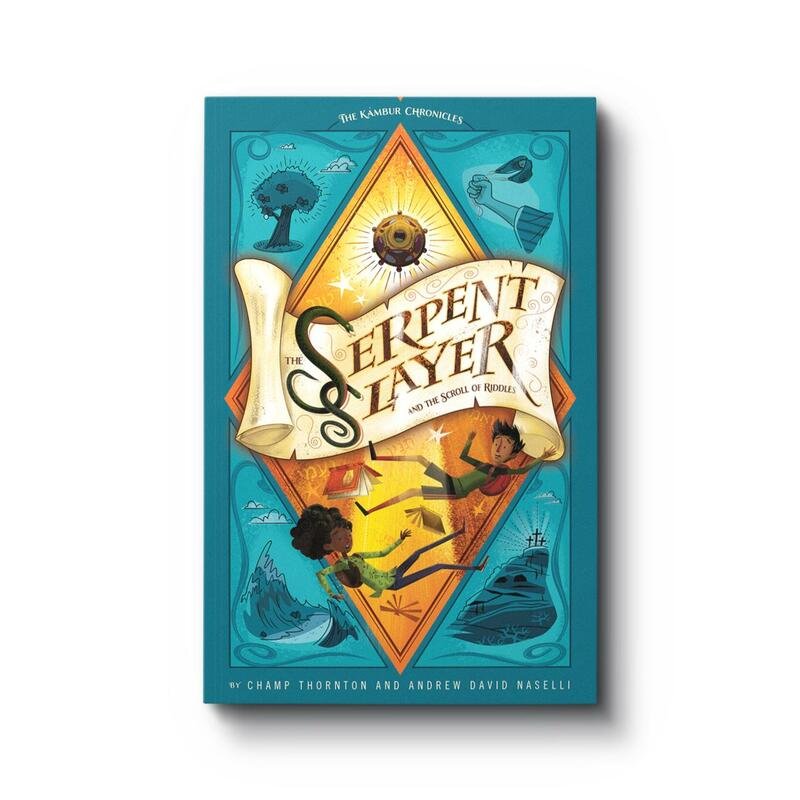
The Serpent Slayer - A Review

How do you get biblical theology to your children?

For those of us committed to discipling our children by helping them understand the big picture of Scripture as one narrative of God’s providence from creation to the fall, then through his redemption and final consummation, this can be a daunting task.

Sunday school is a powerful tool, with excellent curricula like LifeWay’s The Gospel Project pounding away at the big picture, reminding youngsters (and the adults that use the curriculum) that every story in the Bible whispers Jesus’ name. It’s good that curricula that teach biblical theology exists and are readily accessible to churches.

But what about the spaces between Sundays and Wednesdays when the Boxcar Kids, Harry Potter, Encyclopedia Brown, and the Animorphs capture our children’s attention? Should we try to backfit some Jesus ideas into those narratives and try to make connections?

There are cases where it can be helpful. Harry Potter is, of course, a type of Christ. J. K. Rowling has admitted as much. But teaching kids about “the Gospel in the Marvel Comic Universe” is a stretch and even the least discerning kids typically recognize it as such.

In a recent book Champ Thornton and Andy Naselli attempt a different approach to providing an imaginative pathway to teaching these basic biblical truths. New Growth Press released The Serpent Slayer early in 2022.

The book is a middle grade level chapter book that follows twins, Nomi and Emmet, as they have a wild adventure where they get sucked into stories that turn out to be part of the biblical story line. There’s a little bit of mystery, a little bit of Never Ending Story, some repentance and moral truth telling, along with unmistakable elements of biblical theology.

The story is carried along with riddles that will likely seem transparent to an educated reader, but which will be engaging for the 9-13 year-old target audience. There are twenty-five concise chapters that keep the plot moving along in the 135 page volume. Readers that have cut their teeth on The Mysterious Benedict Society and similar tomes will find this book a light snack in comparison. But there is some meat in the content, so the authors included a Reader’s Guide at the end that helps make clear the symbolism for kids that need a little help putting the pieces together.

There are elements of magic within the book, which may make some parents skittish. But when this is put in context of the theological grounding that Naselli and Thornton have demonstrated in their other works, there is good reason to expect that the mysterious events remain a devise to move the plot rather than a subject to be explored. In order to be interesting, there needs to be something out of the ordinary as a hook.

The book is intended to be the beginning of a series. There is a fair amount of space invested in introducing the characters. Later books may have opportunity for more thorough character development because the foundation is already laid. As far as tone and quality, this has more of the feel of The Hardy Boys than The Chronicles of Prydain, but at the rate many kids devour literature this is a welcome addition to a church book shelf, a home library, or even as something to request for your local library.

NOTE: I received a gratis copy of this volume from the publisher with no expectation of a positive review.

The Medieval Mind of C. S. Lewis - A Review

For some people, another book about C. S. Lewis leaves them scratching their head wondering what else there is to say. For other people, new analysis of Lewis’ grocery shopping habits would be a must read.

I can say that I am much closer to being in the second camp than the first, though I have reached the point in my studies that the mere presence of Lewis’ portrait on the cover or his name in the title of a book are no longer enough to get me excited.

I am, however, excited to have read the recent book on Lewis by Jason Baxter, The Medieval Mind of C. S. Lewis: How Great Books Shaped a Great Mind. It is a relatively brief volume and it takes up questions that have been explored in other volumes, but it also explores them in ways that I have not encountered in my research in the secondary literature on C. S. Lewis.

Allow me to begin by explaining a few reasons why this book is worth your time and money.

First, it is a concise volume at just over 160 pages. Too many books are about twenty-five percent too long these days. They make their case and then they continue to do so well after their point has been well expressed. Baxter avoids that, leaving the reader interested by the end, which is a gift to the serial reader.

Second, Baxter makes Lewis the main subject of the book not his own research. When writing on a subject has reached a certain critical mass it becomes possible to read a book that claims to be about a topic, but it is really about the author’s interactions with books and articles about the topic instead of the topic itself. The Medieval Mind of C. S. Lewis interacts with significant segments of the secondary literature, but the majority of the sources are Lewis’ works and the main thrust of the book’s arguments is an interaction with and exposition of C. S. Lewis. This is a volume that leads the reader to Lewis and beyond the author’s own mind.

Third, The Medieval Mind of C. S. Lewis explores a major aspect of Lewis’ work that is well-deserving of attention. Lewis described himself as a dinosaur, by which he meant that he was really a man of an earlier age, specifically the medieval age. This has been explored to some degree in several biographies of Lewis. It was also the thrust of Chris Armstrong’s book, Medieval Wisdom for Modern Christians. Baxter’s book is distinct from these earlier volumes because it explores some of Lewis’ lesser known works, like Allegory of Love and Discarded Image, while tying those resources to the books that Lewis read, interacted with, and in some cases helped maintain some interest in among contemporary scholars.

The end result is a volume that is a pleasure to read, deepens the readers understanding of Lewis and medieval thought, and connects to some lesser explored aspects of Lewis scholarship.

This is the sort of volume that has significant explanatory power. It helps to explain why Narnia feels different and that when reading Lewis one encounters something deeper than the offerings of much of modernity. Baxter begins by describing the medieval cosmos, then explores Lewis’ deep roots in the scholarship of the era. He then introduces some of the counterpoints between antiquity and modernity, the shifts in the understanding of the human mind and person. Baxter goes on to explore the ways Lewis went beyond the presuppositions of his day to see the wonder of humanity, and the mystery of God. These all contribute to a worldview that tends to tear down barriers build by modern constructs.

The Medieval Mind of C. S. Lewis is an instructive book that may serve for some readers as an introduction to sources often unknown to contemporary readers. For those coming to Lewis anew, being pointed to Boethius and Dante, for example, may open up new worlds for explorations and broader reading lists for continued digging.

Baxter’s book is a good one. It is thoroughly readable and can be consumed by someone without an advanced degree in literature, philosophy, or theology. It is engaging and carefully constructed. For those that love C. S. Lewis, it is a welcome exploration in a cherished topic. This is a book that belongs on the shelf of the Lewis scholar, the teacher hoping to get a student engaged in some deeper thinking. More significantly, it belongs in the hands of a reader hoping to be delighted and broadened through the reading experience.

NOTE: I was provided a gratis copy of this volume with no expectation of a positive review.

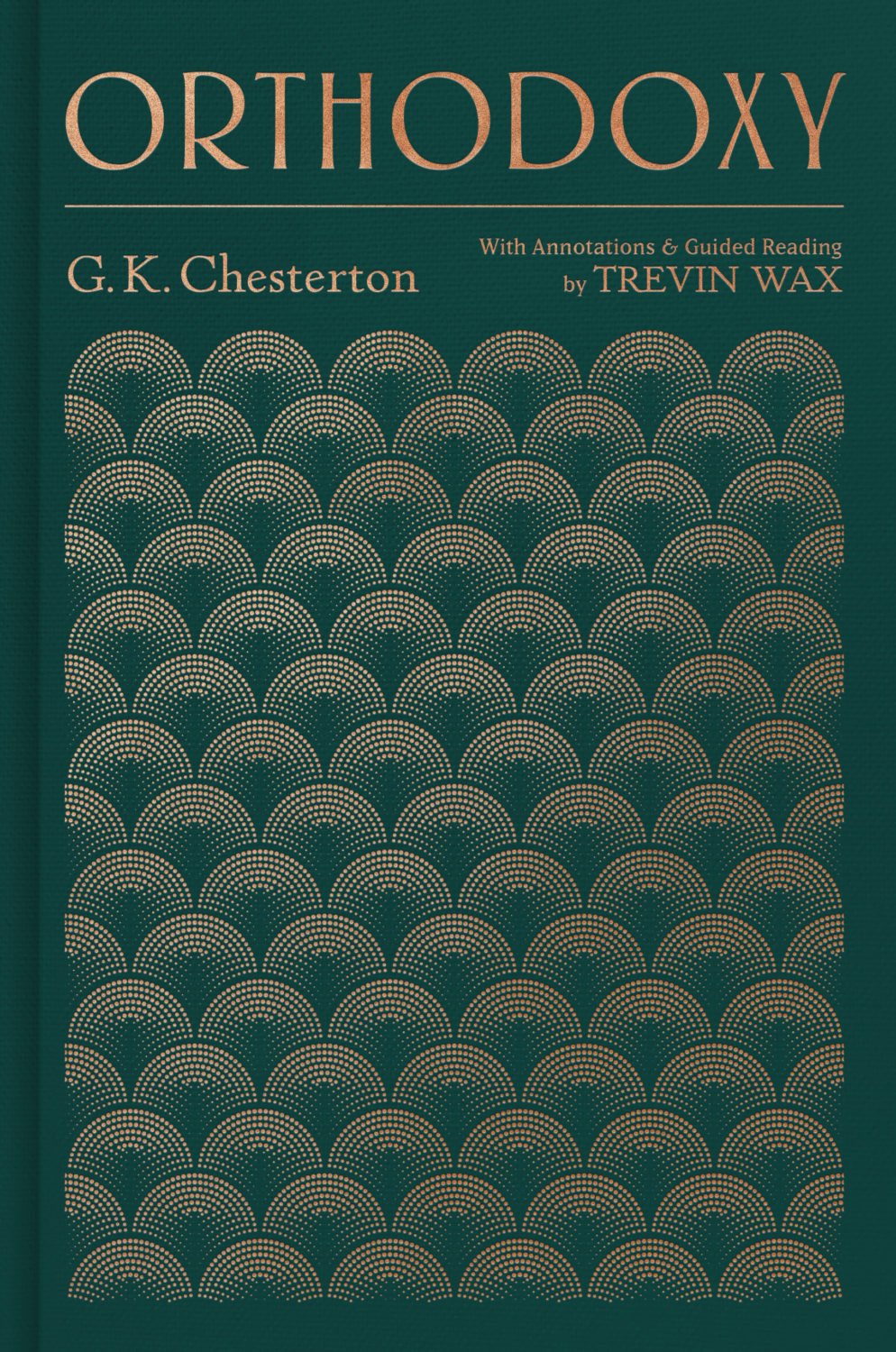
A New Edition of Chesterton's Orthodoxy

If you haven’t read G. K. Chesterton, you should take the opportunity to do so.

He’s humorous, incisive, perceptive, witty, and a fierce defender of the Christian faith. Chesterton’s Everlasting Man is one of the volumes that contributed to the conversion of C. S. Lewis. Some find his contrariness and paradoxical thinking grating, but most sense the twinkle in the eye of a brilliant thinker who has been captured by a love of the truth.

Chesterton’s work is out of copyright, so I anticipate (if it hasn’t happened already) many cheap and barely readable versions of the text to pop up in online marketplaces. One of the challenges of reading old books in our age is finding a well-produced edition for a reasonable price.

B&H has produced a gorgeous printing of Orthodoxy, with an introduction, annotations, and guided reading from Trevin Wax. The annotations alone are worth the price of the book, because Chesterton drops many names of popular politicians, thinkers, and cultural fixtures without any context. It’s possible to get the general idea of the text without knowing who he is referring to, but the notes that Wax provides at the bottom of the page are very helpful. The guided reading is also useful for those who haven’t encountered Chesterton before, or who are unfamiliar with the conflict of Christianity and modernity. Chesterton is a very deep thinker, so the first trip through Orthodoxy can be tough slogging for the uninitiated. Wax scaffolds the content with a brief introduction to each chapter telling the reader what the gist is and what to look for; at the end of chapter there is a brief summary and some discussion questions. These are all helpful for engaging the book on its own terms.

Orthodoxy itself, of course, is a classic volume. There is a reason it has been in print for an extended period of time. This volume is a follow up to Chesterton’s book, Heretics, where he takes on Christianity’s modern critics directly, and often by name. However, some of those critics did not engage with Chesterton because, they said, he had not outlined his own position in the positive. They recognized that it is much easier to tear down opinions than it is to build them anew. Chesterton agreed and took them up on the challenge. The result was Orthodoxy.

Chesterton was, of course, a Roman Catholic, which shapes his approach to defending the faith. He also grossly misunderstood Calvinism—or at least, he has misrepresented every real version I have ever encountered in life or in print. And yet, Chesterton’s defense of Christianity from modernity is a defense that is appealing even for a low-church Baptist with Calvinistic tendencies. He makes the locus of his understanding of Christianity the Apostle’s Creed, which is a good place to start, if you ask me.

It’s challenging to sum up the contents simply, but it might be fair to say that, having looked at modernity’s answers to life’s most pressing questions, Chesterton is explaining why Christianity provides the best description for the world as it exists. He begins by showing the circularity of materialistic arguments for the world and the better answer he found in Christianity. The argument moves on from there. This isn’t a typical apologetics book, but trust me, it’s worth your while.

The latest edition of Orthodoxy from B&H is worth the money. It is a handsome edition and the notes add value rather than distracting from the quality of the text. If you haven’t read it at all, get some version of the book and pick it up. You’ll thank me later.

NOTE: I received a gratis copy of this volume from the publisher with no expectation of a positive review.

Another Sort of Learning - A Review

The Preacher who gave us Ecclesiastes famously wrote, “What has been is what will be, and what has been done is what will be done, and there is nothing new under the sun.” (Ecc 1:9)

This is true in many arenas, but those who read old books will find it true of controversies, antagonisms, and the general feel of cultural unrest. C. S. Lewis recommends reading old books “to keep the clean sea breeze of the centuries blowing through our minds.” (Lewis, “On Reading Old Books”) It is by reading old books that we gain a corrective to the characteristic blind spots of our own culture.

I’m not sure if James Schall’s book, Another Sort of Learning, counts as an old book, since it was published in 1988, but it had a revealing effect for me. Schall’s book is worth considering on its own, but it also provides evidence that today’s cultural battles are not really that new. More than thirty years ago, Schall was calling out the same problems that might be the source of concern in The American Conservative, First Things, or National Review today. That doesn’t mean that the concern is not warranted, but rather that we might be better served by recognizing that this election or this court case or this movie may not actually be the straw that broke the camels back. It may be, but that seems less and less likely the older I get. There is nothing new under the sun.

In Another Sort of Learning, Schall writes “about being a student, about reading, about the fact that each of us is called to understand. . . ‘the truth about our lives.’” This is a book that discusses other books that can help shape the mind. It is a book about thinking well, appreciation of the transcendentals, and recommendations of others who are thinking along the same vein.

Contents

The book is divided into three parts. The first is addressed to college students, pointing them toward what their goal as students ought to be. Schall expresses concern that students seek to answers to the big questions of life, rather than simply learning a trade. The whole of this section is framed around that. In his first essay, “Another Sort of Learning,” Schall commends used book stores for being able to find the right sorts of books that are often not in as regular circulation. A lovely way to begin an engaging book.

The second part of the volume recommends “Books You Will Never Be Assigned.” Here offers to “provide reviews of certain books that I think help us gain some insight into the heart of reality.” These are mainly modern books with an ancient soul. They are the sorts of secondary literature that take the Great Conversation seriously and try to engage it meaningfully rather than demonstrate why it is a foolish attempt. For those with a hefty book budget, these are chapters ripe with suggestion.

Part Three seeks to provide an alternative viewpoint to the most common modern perspective. Schall states, “I want to discuss rather substantive things, both intellectual and spiritual. Here I want to say something about the humanities, about devotion, prayer, something more, again, about permanent things.” Here he again is recommending volumes that pull readers deeper into the idea of reality about the universe, rather than directing them to their own reality.

Conclusion

Another Sort of Learning is a deeply conservative book. Not the sort of conservatism that produces strong tweets or rages against the right enemies, but the sort of conservatism that digs deep into the intellectual realities of the world and seeks to find truth, goodness, and beauty. It is a sort of reactionary perspective that is revulsed by the evils of modernity, looking to the solidity of the past for a conversation of substance.

One of the interesting benefits of reading a book like this over thirty years old is that it skips a generation. The authors that I recognize are mainly the ones still being discussed today, so Schall’s reading lists can point us back to older books of substances that may further help clear away the cobwebs of the contemporary cacophony. There is nothing new under the sun, but Schall provides access to the ongoing debates that doesn’t include the gaps and blind spots of the latest cycle of blogs.

Another benefit of Another Sort of Learning is that Schall describes the same sorts of problems being lamented by thoughtful people today. There is, indeed, nothing new under the sun. On one hand, the continuance of this concern about the loss of the transcendentals is discouraging because we have not made much progress. On the other hand, the continuance of concern on this issue shows that we have not altogether lost the fight. This is an encouraging volume that is worth the time to read. The essays are no worse for being more than thirty years old. Maybe they are even better for it.  Overall, the collection is well-written and engaging, perfect for taking a chapter at a time after a long day at work.

Homeschooling - Our Freshman Curriculum

Homeschool continues to grow in popularity. Some of this is due to curriculum concerns. Some due to COVID protocols and the unpredictability of schools that continue to alternate between in person and remote learning. Others, I think, have leaned toward homeschooling because the homebound instruction during the earliest stages of the pandemic showed them that parent-led learning was possible.

There are many reasons to homeschool, but I think the best reasons include it being a form of learning that fits the needs of the student. So, for example, it may be better for a student with special needs to get the attention available from a local public school. Or, for a parent and child whose personalities clash, it may be better to commit to a private religious school. For those of us that have options, it is good to consider which one serves the student the best.

My family committed to homeschooling early on and it is has worked well for us. One of the enjoyable parts of the high school experience has been shaping a curriculum that fits the personality of our eldest and will push her to grow as a person as a student.

Since she is very verbal student, there is a lot of reading in her curriculum. We value the Great Conversation, so I have made an effort to begin her high school with ancient cultures and texts, with the intention of getting her into the modern era when she is a senior.

In case some might find it helpful, I am going to describe her freshman curriculum here.

Math and Science

We purchased Math and Science curricula off the shelf. Math has been a source of parent-child stress over the years with our oldest student, so we used Thinkwell’s homeschool honors Algebra I material for the freshman year. It has tended to make the learning process much less stressful and it is a solid, interactive mathematics course. For science, our homeschool co-op was doing the Marine Biology labs from Apologia’s catalog. The community support for that worked well for us.

Critical Thinking

The learning outcomes for this course are:

  1. Learn to think well, fairly, honestly, and clearly about big ideas.

  2. Consider how thinking well supports living a moral life.

These outcomes will follow through all four years of this approach. In support of this, our student had to read volumes that were selected to get her thinking about the world, about ideas, and about how thinking takes place. I had her read:

C. S. Lewis, “On Reading Old Books”

Lloyd Alexander, The Gawgon and the Boy

Epstein and Kerberger, Critical Thinking

Bluedorn and Bluedorn, The Thinking Toolbox

Bluedorn and Bluedorn, The Fallacy Detective

Richard Weaver, Ideas Have Consequences

Dorothy L. Sayers, “The Dogma is the Drama”

C. S. Lewis, “Religion and Rocketry”

Lesslie Newbigin, Foolishness to the Greeks

Dorothy L. Sayers, “The Creative Mind”

Most of these resources are either directed thinking and logic explicitly or are from a friendly perspective. As she matures, the intention is to put more challenging perspectives into this mix.

English Literature

Freshman English was intended to hit some of the high point English literature. This was intended to complement another course in the homeschool co-op that ended up cancelled. I will probably revise this for the next two, but this is how the year went. I had her read six novels over the course of the year. Given the extent of the reading for the Great Conversations portion of the curriculum, the brevity of this list did not seem problematic.

The learning outcomes for this course were:

  1. Read significant works of English literature for familiarity and to engage with our shared culture.

  2. Improve writing reading, thinking, and writing skills by summarizing books as they are read.

  3. Appreciate the beauty of the written word in the English language.

  4. Critically engage with literary themes in major works of fiction by writing essays that draw together themes and ideas.

The books selected were:

William Golding, Lord of the Flies

John Steinbeck, Of Mice and Men

Mark Twain, Tom Sawyer

Ernest Hemingway, The Old Man and the Sea

Willa Cather, My Antonia

Oscar Wilde, The Importance of Being Ernest

I had her do a little research on the historical context of each novel, a biographical summary of the author, and a brief summary of the work. Additionally, I assigned a 500-1,000 word essay on each novel.

The writing was supposed to be covered by the co-op class. So I hadn’t thought the essays through. This was a bit frustrating because of the quality of the work was not very good. Over the course of the year, I figured out this was because the student did not understand how to arrive at a thesis, and instead continually defaulted to attempting to compare and contrast works. I think my vision for these assignments was ahead of where she was developmentally. If I had this to do again, I would assign a thesis, which is what I did for Sophomore literature. For the Sophomore curriculum, I also made “literature” a parallel track to Great Conversations, to get more of the volumes from the same time period but read them from a more literary angle.

Spiritual Disciplines

One of the major reasons we homeschool is so that we can make spiritual disciplines a part of the curriculum. The learning outcomes for this course are:

  1. Grow toward Christlikeness by reading and meditating on important books, both contemporary and historical.

  2. Develop the practice of journaling as a discipleship tool.

As a result, the assignments were to do the reading and write a journal each week. The texts for the course were intended to reinforce Christian doctrine and faithful practice of spiritual disciplines. They included:

J. C. Ryle, Holiness.

Augustine, On Christian Teaching (or On Christian Doctrine).

Brother Lawrence, Practicing the Presence of God.

C. S. Lewis, Mere Christianity.

Dorothy L. Sayers, “Strong Meat” in The Whimsical Christian, 17-23.

Gloria Furman, Alive in Him.

Athanasius, On the Incarnation.

History

We have followed a basic 4-year cycle for much of our time homeschooling, though one year we substituted in a year-long study of the Eastern Hemisphere. The plan is to do another 4-year cycle through high school, this time including reading that accompanies the time period.

I chose Susan Wise Bauer’s The History of the World series to use as a backbone. We had already purchased all four of her The Story of the World books and encouraged the kids to read them as supplements, so taking the step to the next level seemed appropriate. Additionally, Bauer seems to deal more fairly with Christianity than some approaches without slipping into pandering as do some of the overtly Christian approaches.

Bauer’s History of the World books have accompanying curriculum, which we purchased. In addition, I created a Google Classroom for this course with a topic per week. In the classroom, I linked a lot of the CrashCourse YouTube videos and other videos that help provide visual stimulation and additional support for the ideas in the curriculum. Each chapter also had an objective quiz in the classroom, so that we could monitor whether the reading was being done well enough without having to hover.

I scheduled about eight exams for the course of the year. Each of the exams was an essay question, with essays selected from a pre-published list of the long form questions in the History of the World student curriculum. It was an introduction to the Blue Book exams that were the torment of many college students.

The learning outcomes for Ancient History were:

  1. Gain a sense of the trajectory of history, the development of human culture, and how motivations and ideas shape human responses to events.

  2. Meditate on why studying history is a vital discipline for a virtuous life.

  3. Think critically about politics, society, science, and culture to better engage a diverse world.

These learning outcomes will be common for the four years and are the target of the high school history program, not the focus of this year, only.

Old Testament

Again, one of the reasons we homeschool is to include religious instruction in our curriculum. Therefore, one of the subjects this year was a survey of the Old Testament. Once I figured out how the Google Classroom thing worked, I decided to give homemade Old Testament instruction a try.

In the past, I haven’t been as engaged in the teaching aspect of homeschool because I’ve been at work. However, by created a weekly video of me lecturing on a given topic or book of the Old Testament, I could be directly involved in instruction without being present during normal school hours or having to have energy on a given night.

And so, I put together a robust reading list, a set of standard objectives for each book of the Old Testament, a weekly quiz, and a video of me, filmed in my basement office. Additionally, I included one of the Bible Project videos for each book, and sometimes lectures or sermons on a specific verse or book that were helpful and instructive. To kick off the year, I had the student watch David Platt’s Secret Church videos where he goes through all of the Old Testament in about 4 hrs.

There were weekly quizzes, chapter exams, and self-reported Bible reading reports this year.

The Old Testament Learning Outcomes were:

  1. Explain the overarching themes and message of every book in the Old Testament.

  2. Gain a deeper appreciation for the gift of special revelation, particularly the Old Testament.

  3. Defend Christianity against basic cultural criticism based on the nature and content of the Old Testament.

  4. Explain the historical contours of the Old Testament History.

The reading list was extensive. There were selections from several other volumes, but the following books were assigned in their entirety (except for only reading the OT portions of Schreiner):

Mark Dever. The Message of the Old Testament. Wheaton: Crossway, 2006.

Andrew E. Hill and John H. Walton. A Survey of the Old Testament. 2nd Edition. Grand Rapids: Zondervan, 2000.

Thomas Schreiner. The King in His Beauty. Grand Rapids: Baker, 2013.

Michael Cosper. Faith Among the Faithless: Learning from Esther How to Live in a World Gone Mad. Nashville: Thomas Nelson, 2018.

C. S. Lewis. Reflections on the Psalms. New York: HarperCollins, 1958.

Francis Schaeffer. Genesis in Time and Space. In The Collected Works, vol 2. Downers Grove: Crossway, 1983.

_____. No Final Conflict. In The Collected Works, vol 2. Downers Grove: Crossway, 1983.

_____. Joshua and the Flow of Biblical History. In The Collected Works, vol 2. Downers Grove: Crossway, 1983.

This amount of reading only works because the student is a high-level reader and because the reading makes up the bulk of the course content.

Great Conversations

The summer before starting high school, I assigned Sophie’s World to provide an introduction to the intellectual history of the West. Along with that, I assigned a list of names for the student to research and write a paragraph about, so the list of new characters would be diminished over the course of this first year.

Inspired by C. S. Lewis’s essay “On Reading Old Books” this curriculum represents an attempt to go back to original sources. I decided it was better to try to hit some of the major works in full rather than trying to do selections of a wider range of sources. The readings were generally sorted in chronological order. I ordered standard English translations, usually from a recent source to try to get the best reading experience possible.

The course learning outcomes were:

  1. Engage in the “Great Conversation” by reading books written by men of women of diverse backgrounds and eras to better understand the human condition.

  2. Enrich the understanding of the history of ideas by reading primary sources to support the readings in history.

  3. Meditate on why studying history is a vital discipline for a virtuous life.

  4. Improve writing reading, thinking, and writing skills by summarizing books as they are read.

The assigned readings included:

Myths from Mesopotamia (Gilgamesh and Epic of Creation)

Homer’s Iliad

Homer’s Odyssey

OUP Presocratics volume, intro only

Finn, History: A Student’s Guide

Plato’s Republic

Plato, Defense of Socrates and Other Essays

Aristotle, The Art of Rhetoric

Aristotle, Politics

Virgil, Aenid

Sima Qian, The First Emperor

Aristotle, Nichomachean Ethics

Confucius, The Analects

The Bhagavad Gita

Plato, Gorgias

Cicero, The Republic

Cicero, The Laws

Lucretius, On the Nature of the Universe

Cicero, On Life and Death

Ovid, Metamorphoses

Aeschylus, Agamemnon

Aeschylus, Libation Bearers

Aeschylus, The Eumenides

Euripides, Medea

Sun Tzu, The Art of War

1-2 Maccabees

Josephus, War of the Jews (Selections)

Early Christian Writings

Many of these were referenced in Bauer’s book in History, especially the non-Western texts. It wasn’t possible to line this reading up exactly with History, but there was enough overlap so there was plenty of interplay.

In addition to the reading, the only other assignment was to keep a notebook with a summary of the historical context, a biographical sketch of the author, and a summary of the work. I would check in with the student periodically to see how the reading was going. The written work was not always exemplary, but was good evidence through discussions that the reading was happening and things were beginning to come together. Many of these volumes could be the study of a lifetime, so the goal for this course is exposure and increasing appetite rather than getting everything from them on the first pass.

There is no question that this is a Western-heavy reading list. Since we live in the US and since many of these books have been so influential through history, this seems natural. I did, however, make an effort to include some significant texts from other ancient cultures. Ancient cultures of every sort are so foreign to ours that even the Western canon is a form of multi-culturalism, but these is something to be said for having read The Bhagavad Gita and Confucius’ Analects in addition to a fair amount of Plato and Aristotle.

Some experts in education will probably tell me that this volume of reading is excessive. Looking back, I would have cut a couple of volumes from this list. However, when you recall that this is both homework and class, the volume makes more sense.

Concluding Thoughts

This post is already too long, so I will save discussion about my philosophy of curriculum development for another post. This approach was possible largely because my student is a very motivated reader.

Raising kids and homeschooling is a decades long experiment with no control group. We will see how it goes, but this is part of the approach I’ve been using and I offer it for your information.
The Lynn White Thesis and American Christianity

Lynn Townsend White, Jr’s essay, “The Historical Roots of Our Ecological Crisis” is the essay that launched a thousand ships in the study of religious environmentalism. That essay, originally delivered as a conference talk and popularized because of its publication in Science magazine, has been a touchstone of discussions of the connection between Christianity and environmentalism in in the more than fifty years since it has been published.

The problem with the essay is that it is largely wrong.

White’s basic argument is that Western Christianity devalues creation, promoting a dualistic framework that treats the physical world as merely existing for human benefit. White puts the blame on Christianity for de-paganizing the world because, he argues, Christian missionaries chopped down the sacred groves, taught the barbarians that there was one true God in spirit form, and that the Nyads and Dryads of their mythologies were false gods. The solution, according to White, is to adapt a more pagan conception of reality, viewing the world as sacred and adapting Christianity to a more nature-centric worship.

This thesis should have been debunked simply because it relies on a basic misunderstanding of Christianity. While theologians like Augustine do argue that there are differences between spiritual things and physical things, they do not indicate that on that basis physical things may be abused. There are certainly dualistic Christians who devalue creation and view it as solely existing for humanity’s benefit, however, their perspective in not consistent with Scripture. The solution is not to modify Christianity, but to present a robust theological orthodoxy that points dualistic Christians back to Scripture, back to the creeds, and back to the proper worship of the creator.

In the same year that White’s infamous essay was published, there was another volume that also should have undermined his thesis. Clarence Glacken published his seminal work, Traces on the Rhodian Shore, in 1967. In roughly 700 pages, he shows from ancient literature through roughly the present that the common human condition has been an anthropocentric view of nature. That is, the view that White ascribes to Christianity is prevalent throughout Western culture from the ancient philosophers through the current ones. While Glacken does not absolve Christianity from all guilt related to environmental abuse, he does demonstrate the White’s simply cause and solution are off base. Glacken’s main failure was publishing the anecdote to an essay in a tome. White’s thesis has more power because it is concise and blames the right out-group. Glacken’s work is devastating to that thesis, but is dense, carefully researched, and lengthy. Thus it is often footnoted, but much less likely to have been read and digested.

More recently, a more direct rebuttal of White’s thesis has been published. In 2016, historian Evan Berry’s book, Devoted to Nature, was released into the wild. He argues that, “American environmentalism is related to religion, not out of serendipitous resemblance but by way of historically demonstrable genealogical affinity with Christian theological tradition.” (2) Moreover, “Theologically rooted notions of salvation, redemption, and spiritual progress provided a context for Americans enthusiastic about the outdoors and established the horizons of possibility for the national environmental imagination.” (5)

This, of course, does not take us directly to “orthodox Christianity is great for the environment” because a large piece of Berry’s account is how the bones of American environmentalism align to progressive ideas with a significantly middle-class flavor. Therefore, there is a Christian tinge to much of American environmentalism that is, to paraphrase Rauschenbusch, about as orthodox as the interests of the environmental movement will allow.

Still, Berry’s book is helpful in that it exposes the reality that Christian per se is not the problem with the environmental movement. While the versions of Christianity that have been most active in preserving the environment are not always particularly Christian, there is hope that with some focused attention and proper hermeneutics, we can see a robust pro-environment theology that is consistently orthodox. At least, as an orthodox Christian who believes caring for the environment is important, I hope that is true.

For those struggling with the Lynn White thesis, Evan Berry’s book, Devoted to Nature provides a strong anecdote. It is a helpful entry into the history of environmentalism in the US. It carefully debunks some of the strongest anti-Christian tropes of the environmental movement. It also points readers toward a hopeful engagement with Christianity that may lead to them finding the gospel. This isn’t a book for everyone, but it is a particularly important book for those doing scholarship on religion and the environmental.

Learning How to Learn - A Review

Learning how to learn has always been a struggle, I think. Ancient philosophers invested significant time and energy into thinking about pedagogy. Though we have advanced in many ways, our struggle to learn has not changed that much, since we are still humans with the same basic traits as the ancients.

The difference in our age is that everyone promises easy ways to learn with half the effort. Usually, those new ways to learn are ineffective in the long run. Meanwhile, the sheer number of distractions and their addictiveness have increased. While there is nothing new under the sun, I think that Nicholas Carr is on to something with his book, The Shallows.

As an instructor, I am seeing a generation rise that tends to struggle with focus and learning in ways that are changing. This is not as much as “kids these days” comment as it is an awareness that the ubiquity of digital entertainment and information overload has made it more difficult for people to make connections between concepts, retain that information, and see the value in knowing anything that can be looked up. Since by federal law the end of the training course I supervise is a closed book exam, there is no escape from the informational demands, just a greater struggle to get to the finish line.

My wife found and enjoyed Barbara Oakley’s 2014 book, A Mind for Numbers, in which she talks about how she went from being a very verbal person to an engineering professor over a number of years. In 2018, along with Terrence Sejnowski and Alistair McConville, she published a volume for kids, Learning How to Learn: How to Succeed in School without Spending All Your Time Studying.

As the subtitle hints, the selling point on this is instrumental. Read this book and you’ll get smarter faster. However, given that a book advertising the benefits of learning for its own sake is less likely to sell, I can’t really fault the publisher for their choice in titles. In the end, the book is helpful whether you are learning how to learn to get ahead or simply for the value of learning on its own.

Summary

The book opens with an introduction to the main authors. More significantly, the book tells students that “follow your passion” is bad advice. It’s a good way to start. Their point is that just because something is hard or unpleasant does not mean that it is not a good thing that you come to enjoy. In Chapter Two, the authors shift to describing types of thinking, noting that we need to practice both focused thinking when we are zeroed in on solving a problem or getting information, but we also need to use diffuse thinking, where we allow ideas to bounce around in the back of our head. A lot of creative thought and connection of ideas comes during diffuse thinking. The issue is that its not enough to try to blast through studying in one chunk, there has to be time for multiple focused hits and diffuse mulling to get things embedded. So this is not a book that simply tells you to work harder, it is intended to help teach how to study smarter for better results.

The third chapter wrestles with focus and procrastination. The authors provide some hints to help overcome the hard start as well as to increase focus. One big tip they recommend is the Pomodoro method. Chapter Four drills into some neuroscience, describing how many scientists believe information is stored and provided some tips on how to strengthen neural pathways. The visual aids in this chapter help with understanding, and the understanding can be useful in providing motivation for study. The fifth chapter offers an exhortation to take up subjects that are new, even at the risk of being bad at it. Chapter Six emphasizes the need for proper sleep so that the brain can be restored. It also introduces the concept of “spaced retrieval” where a learner looks at material multiple times, preferably with sleep in between. This is the anti-cramming chapter.

Chapter Seven deals with the way our memories work and describes the processes for getting things from short term (working) memory to long-term memory. This is an encouraging chapter for those that struggle with focus, as the authors highlight the potential for people with weaker working memories often have higher capabilities in creativity. The eighth chapter provides to tips and tricks for improving one’s memory. There is nothing earth shattering, but the techniques have been validated, which is encouraging. Chapter Nine talks about building brain links, which elsewhere is called chunking. This is the process of connecting ideas together to strengthen their hold in our minds. The authors recommend focus, repetition, and understanding as key means of retaining knowledge and skills.

The tenth chapter recommends learning in groups, especially exploring more in-depth topics beyond the typical curriculum. Chapter Eleven commends the benefits of both exercise and good nutrition as part of improved learning. The twelfth chapter returns to the construction of brain links and encourages practice over an extended period. The authors commend both deliberate practice (focused study) and interleaving (doing something different between practice or study sessions). Both can be helpful means of solidifying knowledge in the brain.  Chapter Thirteen recommends being truthful about how distractions affect a student and then eliminating them. The fourteenth chapter notes that tests are actually some of the best ways to learn and thus commends quizzing and self-testing as a means to ingrain knowledge.  Chapter Fifteen provides some helpful tips on being better prepared for tests. And the book concludes in the sixteenth chapter tying many of the concepts together.

Analysis and Conclusion

Learning has not changed drastically over the course of documented human history. There are no real shortcuts to learning, but Learning How to Learn helps to identify roadblocks so they can be removed. In other words, there is not a lot of original content in this volume, but it has been structured and presented in a way that it is accessible to kids.

The target audience of this volume is tweens and teens. There are cartoons and diagrams throughout. The language is simple and plain. On of my children didn’t appreciate the zombie cartoons or analogies, but others might find this makes the book more interesting.

This is the sort of book that will help a motivated student get better. For the kid that is convinced that everything is going to pan out and that video games are enough of a career goal that real learning can be foregone, this book will probably not cross the threshold of engagement. Learning How to Learn isn’t a promise of an easy path to success. For students that want to learn more effectively, this can be an excellent resource. For parents of kids who have some desire to improve, but whose kids are resistant to their input, this book offers a sly way to get good advice into the hands that need it.

I commend this book as a helpful resource. As we try to prepare out children to learn on their own, this sort of book has the potential to assist them in the quest to be successful in their studies and become lifelong learners. It may also begin to form habits of persistence and perseverance that transcend academic success, often bleeding over into so many other venues.


 As a bonus, here is Barbara Oakley speaking at Google. This is based on her Mind for Numbers book, but it has basically the same content as the book translated for teens.

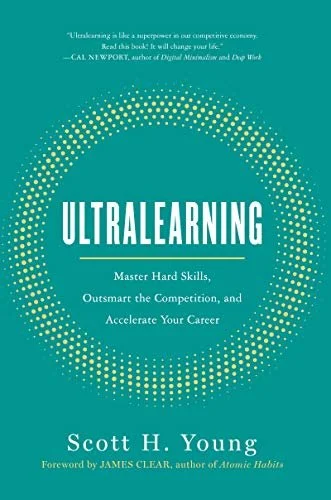
Ultralearning - A Review

There is a temptation in our world to try to find a quicker, easier, and better way to do everything. How can I lose 20 pounds without actually dieting? How can I earn a huge income without working? How can I make everyone think I am more intelligent without actually studying? We are a culture of convenience that hasn’t eliminated our preference for appearance—we want microwave dinners that don’t really taste like it. It’s a form of dishonesty.

When I first picked up Scott Young’s book, Ultralearning, I expected to find a microwave dinner that advertised itself as fine cuisine. But what I actually found was a microwave dinner than that advertised accurately and notes the benefits and the drawbacks of what it is. The potatoes may be a little soggy and the meat a little tough, but it takes ok and is reasonably nutritious. A little candor is a good thing, because sometimes a microwave dinner is good enough.

Young’s book falls into the airport book genre, which I commented on in my review of Rolf Dobelli’s, The Art of Thinking Clearly. It is reasonably short, lucidly written, relies on the research of others, provides clear steps to success, and is the sort of self-improvement volume that can provide light conversation and make the reader sound intelligent.

That Young’s book is designed to sell well should not be considered a severe criticism, however, because he has put together some helpful advice in an easily absorbed presentation.

Young has done the round of podcasts and presented at a TEDx event and some other self-help, inspirational, big-idea sort of stages. His writing style, ideas, and approach fit well within that genre of thought.

The majority of what he advertises, though, is simply a way to become a better learner. The lack of originality is no sign of a lack of value. Every generation needs champions of ideas and contextualizers that can help translate older ideas for newer audiences. The weakness in Young’s approach is that he does not really recognize that what he is doing is translating older ideas, but presents much of what he offers as being derived from contemporary science, rather than simply repackaging older methologies.

Ultralearning is “a strategy for acquiring skills and knowledge that is both self-directed and intense.” It is, in essence, the process of becoming an efficient autodidact. It is an approach that Young has put to the test by working his way through MIT’s computer programming curriculum on his own and by learning four languages in a year. Ultralearning is about becoming competent quickly at a particular skill.

There are nine principles that Young recognizes for ultralearners:

  • Principle #1 – Metalaerning – Figuring out the way that the subject or skill should be learned.

  • Principle #2 – Focus – Zooming in on the subject to the neglect of many other things. Making a job of getting good at whatever the goal is.

  • Principle #3 – Directness – Seeking to gain the information or skill in as close to the setting as it can be applied.

  • Principle #4 – Drill – Figuring out where the choke points are in learning or proficiency, breaking those down, and practicing them until proficiency is achieved.

  • Principle #5 – Retrieval – Using testing (of various sorts) to embed information well so that skills and knowledge are retained and progress can be made.

  • Principle #6 – Feedback – Going through the discomfort of feedback so that problems can be corrected as quickly as possible.

  • Principle #7 – Retention – Creating a plan to maintain important proficiencies, depending on the nature of the skill.

  • Principle #8 – Intuition – Making the “why” connections on the topic to help make further learning on the subject easier.

  • Principle #9 – Experimentation – Changing methods when something isn’t working, even if it worked earlier on.

As I noted, there is nothing that is truly remarkable about any of these steps for those that been engaged in the study of pedagogy. But Young packages them in a way that prevents having to dig through the literature of the field. He also shows some ways that some of the “quick fix” learning methods that are advertised are doomed to failure.

Ultralearning is not a “quick and easy” approach to becoming an expert in something. Rather, it is “hard and fast” approach to becoming reasonably proficient at something. It does not advertise cheap, fast, gourmet food. It advertises reasonably healthy, reasonably tasty, microwave food. On that front it delivers.

I think there is value in the Ultralearning approach for those that are trying to gain knowledge in a new field. For the pastor seeking to learn New Testament Greek without going to seminary, something like an ultralearning approach would probably work well. If someone could carve out three hours a day for a few months to jam through a common Koine textbook, memorize the most common vocabulary, and develop a plan to use it daily, they will be more likely to be successful than by trying to do Greek drills 20 minutes a day for years. There is a realism to Young’s approach that I find attractive.

This, of course, does not mean that someone can become an expert in something nearly instantly. While the internet tends to make people feel they can be experts on constitutional law one day, international politics another, and health sciences on the next, the reality is that most of us have a limited bandwidth to develop competencies. The ultralearning approach intentionally neglects a lot of the background work that is typical of more conventional learning approaches.

If you want to be able to paint something you find attractive and don’t expect to become a stellar artist, then it can be helpful to learn to paint from Bob Ross. If you want to become more proficient at a skill or in a limited area of knowledge that can develop you personally or improve your career options, then Scott Young’s approach is beneficial. In neither case will you be the best at something or the expert in a field, but it can certainly add tools to a toolbox that can make a huge difference.

The Art of Thinking Clearly - A Review

If there is one skill I would like to improve in time on this earth, it is thinking well. Our affections and our actions follow what we think. Additionally, in the information-saturated world in which we live, individuals and companies are spending billions of dollars every year to keep us from thinking well.

In this quest to think better, I picked up Rolf Dobelli’s 2013 book, The Art of Thinking Clearly. The title makes it sound like it has some methods to clearer cognition, but as Dobelli announces in the introduction, “This is not a how-to book.” Instead, it is an illuminated list of biases and fallacies that people commonly buy into.

This book falls into the category that I like to categorize as “airport books.” These are the trade books that you will see if you browse one of the bookstores or newsstands in any American airport. The writing is clear, with simple language and frequent illustrations, but usually very skimmable. The chapters tend to be short and well titled so that one can pop in and out easily or simply skip some chapters and still understand the main flow. The books are designed to be read in about the time it takes to wait for and endure a domestic flight. The content is usually something in the self-improvement vein (usually with a business bias), alternative view of history, or interesting but lesser-known aspect of humanity.

Authors of this genre of book include Malcolm Gladwell, James Clear, Bill Bryson, Nassim Taleb and others. They are usually popularizers whose gift is in researching a topic, synthesizing some of the ideas, and writing about in a captivating way. Some of the books are quite good, and some even include very helpful ideas, but they are always derivative, typically non-controversial, and intended to make the reader look and sound more well-informed than he or she really is.

As I’ve fallen into a well of these books while reading on various topics, I’ve also come to discover that there is a lot of self-reference within the genre. For example, Dobelli probably should have listed Taleb as a contributor to his volume, given how frequently he cites him. There are many instances of each of them citing each other—whether in print or a Ted Talk someone else gives. This isn’t the worst thing in the world, it’s simply something that is evident when you read a clump of the books published around the same time.

Dobelli’s book is helpful in many ways. Each of the ninety-nine chapters covers a distinct error in thinking or method of misrepresentation we ought to watch out for. He tells us to watch out for mistakes in true remembrances, the paralysis of excessive options, attempts to attribute attitudes to an author based on characters in their novel, the psychological effect of scarcity, and more. There really area lot of different ways that we can think incorrectly and there is value in understanding how we might get tricked, so we can watch out for it.

The book seems to take a humanitarian approach by offering for the cost of a restaurant meal tips that could change your life and improve society. But the nature of social improvement is not entirely altruistic. As Dobelli notes, “If we could learn to recognize and evade the biggest errors in thinking––in our private lives, at work, or in government––we might experience a leap in prosperity. We need no extra cunning, no new ideas, no unnecessary gadgets, no frantic hyperactivity––all we need is less irrationality.”

Of course, what exactly constitutes irrationality in Dobelli’s mind? He does not state it, but it is clear from the text that he writes that irrationality is assumed to be any belief or idea that does not reduce all value to instrumentality and all reality to the material.

When considering causality, he dismisses the possibility of the supernatural. Those who believe in God’s intervention have simply been fooled by the randomness of the world and pieced together a fairy tale based on ignoring the details. At another point he dismisses as foolish someone holding onto a car he had refurbished when selling off possessions to pay a debt. There can be no value other than the dollar value in his mind.

None of these views are surprising. They are not atypical. However, they reflect the biases of his own thinking, which oddly enough he does not highlight as one of the fallacies. They are reflective of how people need to continually interrogate the baseline assumptions of authors as they read a book. Having assumptions does not invalidate the contents of a volume or its arguments, but it can inform us and help readers sift through the wheat and the chaff.

Overall, this was a useful book. It can serve as a reference when trying to label errors in thinking that we witness. It may also provide fodder for discussions of clear and critical thinking. Whether it will result in a jump in prosperity, as Dobelli hopes, is less clear. However, it will certainly provide an amusing way to spend a few hours, if one has the time.