The Gospel - A Review

The central concern of Christianity is the gospel. The good news that is at the core of the Christian faith is the beginning and ending of everything that the local church and the life of every believer should be about.

How many of us can give a good, succinct explanation of the gospel?

I don’t mean how many of us can explain how we are different since we have been born again. That is an important story, but that is a story about the effects of the gospel, not the gospel itself. In my experience, I have found that too few Christians understand the gospel at a basic level, which makes evangelism very difficult.

In Ray Ortlund’s book, The Gospel, he offers a careful, but brief summary of the gospel:
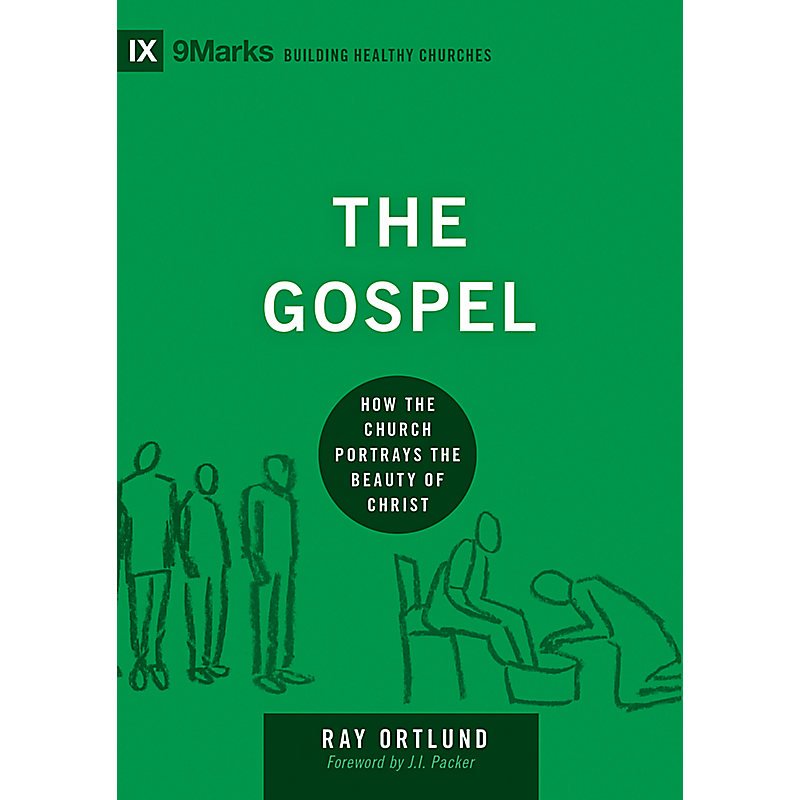
“God, through the perfect life, atoning death, and bodily resurrection of Jesus Christ, rescues all his people from the wrath of God into peace with God, with a promise of the full restoration of his created order forever––all to the praise of the glory of his grace.” (16)

There is more that could be said about the gospel. Orlund’s summary leaves room for expansion, for explanation, and for greater detail. However, the core truth is there.

This year my local church walked through Ortlund’s book as we sought to build community within the congregation. Our desire is to frame our community around the gospel and establish a baseline understanding about the content and implications of the gospel.

The Gospel is one of a series of helpful resources produces by IX Marks, many of which have been published by Crossway. This “gift sized” books are all brief, written at an accessible level for all church members, and brief. It was helpful for a large-group study and would be a useful volume to put into the hands a new believer.

One of the interesting aspects of this book is how reliant upon Francis Schaeffer Ortlund is for this book. For those who have read much of Francis Schaeffer, this is not at all surprising. Though some have attempted to classify Schaeffer primarily as a culture warrior, particularly because of his opposition to abortion, but the main thrust of his work was consistently about the gospel and how that should shape the life of the community of faith.

Ortlund’s book is not a simplistic account of the good news. He describes a thick gospel, which require living in a community that takes the renewal of both the individual and the community seriously. This is a short book, a serious book, an encouraging book, and a useful book that I would commend for broad reading and application.
Against Liberal Theology - A Review

The more I study modern theology, particularly modernist theologies, the more I am convinced that J. Gresham Machen was right. He wasn’t right about the letter he wrote during seminary to his mother protesting the integration of Princeton Seminary’s dorms. However, he was correct about his theological analysis of modern liberalism that it is a distinct religion from Christianity.

Machen’s point has often been disputed. The main objections are that he was a racist (especially currently) and that he was mean (because he was critical of bad theology). I have not yet encountered anyone saying that Machen’s conclusion was incorrect based on the merits of his argument. (This may exist, it’s not my wheelhouse and it may be that I just haven’t found it.)

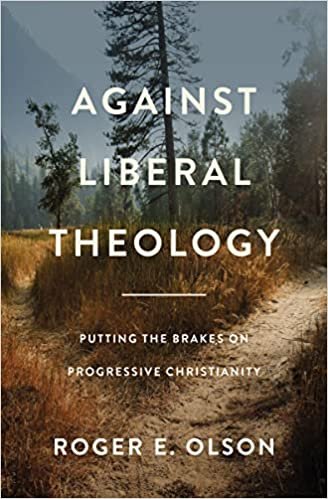
However, Roger Olson of Baylor’s Truett Theological Seminary has recently penned a book that argues that Machen is right. In Against Liberal Theology: Putting the Brakes on Progressive Christianity, Olson makes the argument that based on its own descriptions, modernist theological liberalism is something different from Christianity.

Olson is a theologian that specializes in the historical evolution of Christian though. Two of his books, The Story of Christian Theology and The Journey of Modern Theology are very helpful surveys. Olson is a self-described “moderate.” He believes Scripture is mostly true and authoritative, and that it infallibly points toward true things. He generally judges theologians and their theology on their merits in comparison to orthodoxy, as it has been historically understood. Olson is exactly the sort of person to write a book like Against Liberal Theology because he holds mediating positions on the questions in play—everyone already knew that Machen thought liberal theology was bad; Olson was previously critical of full theological liberalism, but he draws some lines in this book that surprised me.

Olson’s main beef with liberal theology is, “It allows modern knowledge, whatever that is at the moment, to stand in authority over the Bible in the most important matters.” This methodological flaw leads to either overt rejection of or redefinition of basic doctrines that are essential to Christianity. Therefore, some modern liberals reject the deity of Christ or the truthfulness of the resurrection. Some of them redefine the terms to explain it away. Others will repeat the orthodox confessions without actually believing it because their Christianity is not a quest for truth, but participation in an experience that conforms to historical patterns of action. Olson rightly identifies that by rejecting or redefining the central doctrines of Christianity, modern liberal theologians have created another religion. It sounds like Christianity sometimes, but it is really something different.

After a brief introduction where he begins defining his terms and outlining his thesis, Olson begins with a chapter on the sources of authority for theological liberalism. Tellingly, the next chapter is on the relationship between liberal theology and the Bible. Then Olson moves through specific theological topics like theology proper, Christology, soteriology, and eschatology. He then closes the book addressing the reality that, even as the number of faithful Christians dwindles, participation in modernistic liberal faith practices is plummeting. He closes by encouraging those Christians who find socially progressive causes attractive to no lose the animating force of real Christianity as they pursue their vision of justice.

This is a helpful book in many respects. Olson is particularly careful as a scholar when dealing with those to the left of him. Thus, this is not a polemic against theological liberalism. He affirms much of what Machen identified much earlier on, but because he’s “not one of those dirty fundamentalists” his critique is much stronger. Olson relies on original sources and secondary sources that are sympathetic to theological liberalism. This adds strength to his argument. Although most liberal Christians would not identify their religious beliefs as anything but authentic Christianity, Olson shows how theologians at the heart of liberalism agree with the substance of the critique. It’s just that they think their departures from historic Christian doctrine are warranted.

On the edges of this book are Olson’s side quests. He tries to rehabilitate Clark Pinnock, who rejected orthodox theology in favor of open theism, as conservative. He also seems to be open to severing Christian ethics from Christian theology, particularly in his definition of “progressive Christianity.” These, however, are minor distractions from what is otherwise a very helpful book, especially for those among theologically conservative evangelicals who recognition of liberal Christianity (as it were) as a distinct religion are ignored because of supposed bias.

The Snakebite Letters - A Review

If there is anyone who I think might possibly pull off a version of C. S. Lewis’s Screwtape Letters, it would have to be Peter Kreeft.

Kreeft is deeply steeped in Lewis and in the same source material that Lewis was infatuated by. Kreeft writes well, is witty, has similarly strong opinions, and generally expresses them clearly.

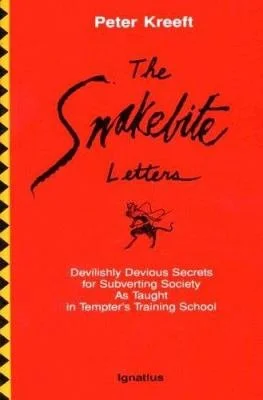
In The Snakebite Letters: Devilishly Devious Secrets for Subverting Society as Taught at the Tempter’s Training School, Kreeft takes a swing and misses the mark.

The book is entertaining and at points helpful. Kreeft is at his best when he is engaging modernity with a pre-modern, Christian vision. That is exactly what he does through much of the book.

Kreeft identifies the real, spiritual nature of the ongoing strife in the lives of Christians. He notes how the media helps saturate every minute with unhelpful thoughts, especially about sex. This leads to undermining any helpful conception of chastity and advocacy for abortion, often as a matter of convenience, even by those who recognize that it is reprehensible and evil.

Somewhere Kreeft here slips away from talking about Christianity to talking about a defense of Tridentine Roman Catholicism, which is the particular sect of Christianity that he converted to as an adult. Much of the rest of the book shifts away from spiritually helpful resistance to modernity to his particular concerns about the internecine struggles within his own tribe. More than many of his other books where he dabbles in pro-Roman apologetics and swipes against the Reformed faith, this book majors in those topics.

Kreeft, of course, has every right to defend his particular version of Christianity. This is likely a very helpful book for those seeking to evade the weird balkanizations within the membrane of Catholicism, with Trads that hate the pope but are stuck with him and Liberals that often dislike the historic teachings of Roman Catholicism that serve as the supreme authority but like the pomp and circumstance. As odd as so much of Protestantism is (and it is odd!) the tensions within Roman Catholicism are sometimes baffling.

Lewis’s appeal in Screwtape is that he is arguing for mere Christianity. That is, his book is generally applicable to a wide range of Christians. Kreeft leaves most Protestants behind for much of this book.

More significantly, however, Kreeft is simply not as capable as carrying out the schtick as Lewis. I’m a fan of both Lewis and Kreeft and have found Kreeft to be one of the most enjoyable contemporary writers of apologetics and wit. His inability to consistently carry the motif is more a testament to Lewis’s brilliance than any detriment to Kreeft. There are times where Kreeft’s own didactic voice comes through and it is clear that it is him talking to the reader, not the demon Snakebite writing to his apprentice, Braintwister. There are holes in the plot, the wall isn’t quite sound, and it becomes possible to catch a glimpse of the man behind the curtain.

The fact that Kreeft can’t pull off a copycat of Screwtape is probably a sign that so many others that try it shouldn’t. As Kreeft notes in his introduction, Lewis would likely have “wanted such ‘plagiarisms’”. It’s not the copycatting that is the problem, it is that the bar is so high that everything else seems like weak sauce—even what Kreeft provides here.

My appreciation for Kreeft remain undaunted. I was left a little unimpressed by The Snakebite Letters, but not really disappointed. It’s a credit that Kreeft came as close as he did. Who knows, the next person to try may actually pull it off. I doubt it, though.

A Compass for Deep Heaven - A Review

There is version of academic work that focuses mainly on how the author handles secondary works. This leads to the sort of reviews that argue that, though the focus of a book or essay was a particular author, if someone didn’t specifically reference another author’s book or essay that they have somehow failed as a scholar. Worse would be if someone did read the approved sources and still managed to come to a different reading of the original source.

Such petty narrowmindedness exists within many different guilds of scholarship. It is a reflection of scholarship for the sake of prestige rather than for its own sake.

There are, of course, important essays and books that should be dealt with as appropriate. It would be tiresome to begin always in the same place, so that every new work had to pretend like nothing had every previously been written or said. Good scholarship often builds on previous work. But if an essay deals meaningfully with the text or topic in question, counting footnotes and checking the bibliography to measure quality is tacky.

A recent volume by a group of undergraduates was a refreshing glimpse into what thoughtful scholarship can look like, when one does not get lost in the weeds of secondary literature. In A Compass for Deep Heaven, a collection of honors students from Azusa Pacific University demonstrates thoughtful exploration of a topic without cluttering the notes with excessive commentary about the commentary.

The volume offers an accessible introduction to C. S. Lewis’ Ransom Trilogy, which is often referred to as the Space Trilogy. For many, Out of the Silent Planet, Perelandra, and That Hideous Strength, remain unexplored territory in the literature of Lewis. They get neglected in favor of Narnia, Mere Christianity, and some of his more popular collections of essays. These three volumes, however, offer impressive illustrations of Lewis’ ideas and are an imaginative rebuttal to the illnesses of modernity. Due to the number of cultural allusions, the references to other works of science fiction, and the strangeness of the third volume, the Space Trilogy is often only slightly less neglected than Lewis’ scholarly work.

Part of the pleasure of reading A Compass for Deep Heaven is that the authors keep their focus on the work under consideration. They use sources to amplify their arguments and bring readers deeper into Lewis’ work. Really, the only signs that they authors are undergraduates is the lack of terminal degrees in their biographies, a note about the volume being published by their university initially, and the fact that the authors were less concerned with padding the notes than making their point.

This is a good book. May more books with this tone increase. And, more significantly, may books like this draw more people into the work of C. S. Lewis.

NOTE: I received a gratis copy of this volume with no expectation of a positive review.

How Dante Can Save Your Life - A Review

I have subjected my daughter to a “Great Conversations” curriculum for her high school homeschool. She is of the bookish sort, so the large volume of reading is really up her alley.

This year, at the beginning of the year, she is staring down Spenser’s Faerie Queene and Dante’s Divine Comedy at roughly the same time. Spenser is in her English literature curriculum, with Dante occupying a prime place (about 1/6th of the year) in her Great Conversations course. There is overlap between the courses, though Great Conversations tends to be as much about history and philosophy as literary value.

In any case with my dear daughter bowed under the weight of two classic, but challenging, texts, I felt compelled to find her some resources (besides my fervent assurance) that they volumes are very much worth the labor to read and understand them.

I have heard Rod Dreher’s 2015 book, How Dante Can Save Your Life recommended by some that know Dante well. Even some that find Dreher’s more recent work in The Benedict Option and Live Not by Lies a bit too political and panicked have recommended the volume.

There is good reason for the recommendation. This is a good book. It’s not quite the commentary on Dante that I was looking for, but it tells a good story, it uses Dante’s Divine Comedy as a framework, and engages the mind and heart in the pursuit of truth.

Like most converts to anything, Dreher has strong opinions. The story he tells in How Dante Can Save Your Life has strong ties to Dreher’s opinions about the value of Roman Catholicism he left from his earlier Methodism, and the Orthodoxy that Dreher adopted after he became disgusted with the Catholic hierarchy after sitting under a liberal priest and reporting on the Roman Catholic sex scandals in the late ‘90s and early 2000s. There is a lot of veneration of icons, exorcisms, and ritualistic prayers in the book that will make those familiar with Scripture, especially the second commandment (or the 2nd half of the first commandment in the Catholic and Orthodox tradition) very uncomfortable. At the same time, there is a real discovery of grace and the ability to forgive that provides the climax of the book.

This is a story of homegoing. After the death of his sister––whose legacy Dreher memorialized in The Little Way of Ruthie Leming––Dreher and his family moved back to rural Louisiana. Dreher expected to be welcomed back, but found himself alienated from his family and depressed. The stress of his anger at his perceived mistreatment left him with a significant bout of chronic fatigue.

How Dante Can Save Your Life is a story of Dreher finding his way out of a pit of depression and learning to forgive his family. It involves regular counselling, ascetic spiritual practices, and a deep dive into Dante’s epic journey through Hell, Purgatory, and finally on to Paradise.

As I have said, this is not primarily a commentary on Dante. However, as Dreher follows Dante on his journey, we see how a great work of literature can have a significant impact on the mind, body, and soul. Dreher’s telling of his own story maps well onto Dante’s journey of self-discovery. Although the story is more about Dreher than Dante, it is well-told and it does illuminate the power of the Divine Comedy many centuries after it was first penned.

This book is impressive because it was written to a broad audience. Dreher invites secular readers into a moral vision that points toward Christianity. It isn’t clearly stated, but the Dreher offers and invitation to the reader to be conformed to the moral order of the universe. Through his own story of discovering joy in chastity, even the atheist can see the value in the discipline of sexual restraint and seeking persistent love before conjugal relations.

Dreher provides some resolution to the tension of the story, but it is a powerful twist on the ending one might expect. If this were a sitcom, then Dreher would have been received with open arms by his family, everyone would apologize and the wrongs of previous years forgotten. As it stands, Dreher recounts his coming the point of being able to forgive despite not receiving many concessions from the family who held him at a distance. In this Dreher provides a picture of the most likely reality. We do not always get to live happily ever after, but we get many opportunities to choose to be as happy as we can be in a given circumstance.

This is Dreher’s book telling Dreher’s story. There are points at which one wonders if the narrator can be fully trusted. Although Dreher admits to some of his own failings, it is clear that he believes the fault is mainly on the other side. The reader is left wondering whether Dreher is entirely fair to the rest of his family. The downside of the book is that the reading of it feels a little voyeuristic. One wonders how the rest of the family feels about his publication of this volume.

If you can get over the feeling that there might be too much dirty laundry exposed in this volume, the book is well worth reading. I’m offering it as an auxiliary volume for the Great Conversations curriculum as a way to see the value of Dante. It also offers a thoughtful portrait of redemption and forgiveness. These are all things that deserved to be explored in greater detail by all of us, especially by those trying to figure out why the books consistently chosen for a Great Conversations curriculum belong there.

Good Prose - A Review

There is a certain amount of learning how to write that comes through osmosis, first by reading widely and second by simply writing. At some point, however, the amount that one can discover by blundering about copying better writing and dissecting one’s resulting prose is exhausted. Professional help is needed.

For those in academic settings, getting help with writing is much easier than for those outside the ivory tower. There is a writing center, a critical mass of people all trying to write better, and even classes that one can audit if time allows. For others, especially those who practice their writing largely in isolation, external helps are needed, often in the form of books about writing.

Good Prose is such a book. It is co-written by Tracy Kidder, a Pulitzer Prize winning author, and his long-time editor, Richard Todd. The relationship they share is an unlikely situation in our contemporary setting. Most authors flit around between publications trying to scrape out a meager existence between online and print articles. Editors seem to change allegiances nearly as quickly, especially as the ability to edit seems to be much less significant to many people than the willingness to acquiesce to whatever the trendy political flavor of the day is. Kidder and Todd worked at The Atlantic together for decades. They collaborated on stories, articles, and even books. Some of those books took years to write.

The result of the partnership between Kidder and Todd was more than a large literary output and a Pulitzer Prize. A friendship is evident that helped shape the way each other thought and the way the words were formed on the page. The actual writing advice in Good Prose at some points is less visible than the story of the relationship between an editor and a writer. That is to say, this is the sort of book that someone who had very little interest in writing or editing well could be enthralled by.

The chapters flow as one might expect from a less narratival approach to teaching writing: discussions of narratives, memoirs, essays, the importance of facts (and the ability to negotiate them), issues of style and commercial viability, and the balance between conformity to standard usage and bending the rules. This isn’t Strunk and White’s twenty-five rules, though. One gets a strict list of applications and speed limits from that slim volume. Good Prose offers guidance, but more importantly, it offers a vision of what the writing life can be in the best of circumstances.

On my first pass through the volume, I barely noticed the technical advice that authors provided in their collaboration. As I was reviewing the book to write this review the actual writing instruction became more apparent. What stuck out during my careful reading of the volume is the encouragement of a friendship around communicating to the world through the written word.

If you are struggling with grammar, this may not be the book for you. (In fact, they point you toward a book they recommend on the topic.) However, if you are looking for encouragement in your own quest to continue writing, in your willingness to be edited, and in the hope that you can improve over time, then this is a book that delivers.

Good Prose: The Art of Nonfiction
By Kidder, Tracy, Todd, Richard
Buy on Amazon

Lost in Thought - A Review

For all the criticism that academic pursuits get for putting someone in “an ivory tower” there is an awful lot of rat race that goes on.

When I would comment on the chaos in our department or a major corporation, mostly due to the ineptitude of a former boss, I would frequently be told “that’s the nature of the business, this isn’t like a university.”

The thing is, if it ever was such a thing, universities are no longer places of quiet rest and contemplation. The pressure to publish and present or miss promotions and tenure is real for many young faculty. More experienced faculty often are still trying to find elbow room for their ideas, publishing opportunities, and respect. To read the stories of the life of C. S. Lewis and his own accounts in That Hideous Strength, I think the halcyon days of a peaceful, irenic university faculty life are more urban legend than real history.

What, then, is the value of the intellectual life? Is it really just another hyper-competitive sphere of life, without any different potential than the rest of the corporate grind?

In Lost in Thought, Zena Hitz explores the possibility that the intellectual life has potential for enjoyment on its own.

This is the sort of book that is good for young academics wondering if the mountain is worth climbing or for older faculty wondering what joy there can be in a community that is often polite in the midst of savagery.

What Hitz finds is that, while academia is not for everyone, there is a joy in the process of learning for its own sake. She argues that learning has inherent value. It is worth pursuing even if it does not result in greater riches and measurable wealth. It does, however, require the space of time and energy that come from leisure—exactly the reason why it is so hard to justify learning for its own sake in our harried and exhausted culture.

Even for those outside of the ivy shrouded walls of academia there is value in intellectual pursuits. They provide a refuge in a hostile world as we touch the minds of many who have gone before and lived fuller lives. Hitz explores ways that being a bookish sort of person can lead to relief and blessing in the midst of struggle and difficulty.

Learning, however, must be pursued for its own sake to have the full effect. If the point of learning becomes to climb a social ladder, to be cutting edge, or to win approval, then it is perverted and many of its benefits are reduced. She writes, “Intellectual life is artisanal toast for the mind.” The idea being that it must be enjoyed to be worth the cost.

More significantly, learning must not be pursued for the sake of politics. In that case, learning becomes about indoctrination. This is true whether the guiding lights of the institution lean right or left. Real learning is meaningful when it wrestles with the thorny thoughts of different perspectives to come out the other side with transformative power.

This is a book that is inspiring for those outside of academia who are inclined to continue learning and growing but struggle with the value of those efforts—heaven knows that has been my fate for several years. Lost in Thought provides reassurance that reading, writing, and seeking to grow intellectually have a purpose even if those efforts are not rewarded with academic titles, publishing contracts, sabbaticals, and the other trappings of the university.

The Courage to Be Happy

Not too long ago, in a quest to answer a question about lyrics in a Ben Rector song or find the end of the internet—whichever came first—I stumbled across a review of Rector’s latest album. The gist of the review was, His music seems pretty happy, which is surprising given the state of the world.

That sentiment is pretty common in popular culture. The review is in a relatively minor website, by no means a strong editorial force or significant cultural shaper. However, I think that is what a lot of people are thinking.

“How can I be happy when there is so much wrong with the world?”

There is war in Ukraine, abject poverty is horrible, it feels like the culture has gone crazy, my email inbox fills up faster than I can deal with it. The deficit is huge, there are issues with the environment, inflation is insane, the stock market it down.

Seriously, why can anyone be happy?

The Erasure of Distance

This sentiment of warranted unhappiness because of distant problems is a peculiarly modern issue.

One of the blessings of modern telecommunication is that it erases distance.

I can call someone on the other side of the world in a second and have a clear communication with them. I can also talk to the person sitting in the cube next to me using the same tool. In fact, I can hold a teleconference and have a discussion with half a dozen people that are thousands of miles away. Grandparents can speak to their grandchildren live, with video, and even watch in real time distant family events like baptisms, plays, birthdays, etc. This would seem miraculous just a few decades ago.

But the erasure of distance is also one of the curses of modernity.

Every problem in the world is now an immediate concern. I can get live pictures of people bleeding out in the street in Ukraine. I can see children starving to death on another continent. Flooding a world away pops up in my news feed with a higher frequency and realism than the family next door who just got a cancer diagnosis.

There is no separation. There is no local community. Every global problem is blasted into my pocket begging me to do something about it.

I don’t believe there is any more evil in the world than there was a hundred years ago. However, we can be much more aware of all sorts of evil, with vivid depictions, and demands for immediate action.

The Feeling of Futility

The demand for action is what makes the experience the most miserable.

When there is a car crash and we are the first on the scene we can provide first aid, call the ambulance, and hold someone’s hand as they weep over their lost child.

When there is a flood in the next county over, we can go and muck out someone’s living room, provide a bed for a neighbor, or get meals ready for disaster relief workers.

Truly local problems provide real ways that we can do something. We can take a casserole to the family who just lost a loved one or whose matriarch had surgery. There is something meaningful.

All we can do when we see the horrors of the world while scrolling through our phones is send a small donation, repost something to “raise awareness,” and feel a little bad by proxy.

The inability to really fix the big problems of the world leads to a feeling of futility.

The feeling of futility can lead to a sense of despair, which causes people to wonder why anyone can be happy when there is so much misery in the world.

The Courage to Be Happy

It takes courage to be happy in the face of the constant deluge of negative information we receive. “If it bleeds, it leads,” is the motto of all forms of news media. We have to find ways of coping with the overwhelming flood of information.

One way of responding to persistent negativity is what comedian Bill Bailey humorously demonstrates through the “Not Too Bad” approach, with the additional caveat, “All Things Considered.” As he describes it, this is the process of dialing down expectations to a reasonable level so that things are really not as bad as they could be.

Frankly, that’s the way I generally approach the issue. First, I try to limit my consumption of bad news. Second, I dial down expectations and try to remember that things aren’t really as bad as they could be. Living in the Midwest, I am frequently reminded that I am not alone in my approach.

But that’s not a particularly good way to live life. This sort of pessimism leaves one consistently expecting the other shoe to drop. It’s like the sword of Damocles hanging over your head. Things will probably be worse in a few weeks, so enjoy the moderate misery of the day.

It takes courage to be happy. It takes internal strength to shut off the flood of sadness from the world and say “Thank you” to the God of the universe who created everything from nothing, instilled the created order with wonder, and gives us breath every single moment. It takes stubborn, persistent, relentless effort to remember that things are not only “not too bad,” but that they are, really, pretty darn good most of the time.

Sometimes its good to take a moment to count your blessings, push off the negativity, and take a moment just to be grateful for the inherent goodness of the world. Given my own sin and depravity, things are much better than they ought to be. Most of the time, if I’m really honest, things are pretty darn good.

The Satisfaction of Good Stories

I recently took an entire week off work. It was mainly to finish my book for B&H Academic, tentatively called From Futility to Hope: A Theology for Creation Care. I also tried to unravel the knots of stress and encroaching burnout I was feeling from months of busy work, teaching Sunday School, trying to finish the book, with the only break since the New Year having been invested in the not-so-restful travel to the annual meeting of the Southern Baptist Convention.

To set the mood for what I hoped would be a creative and productive week of editing, I kicked the week off by reading a completely fluffy book: Lee Child’s first novel, Reacher: Killing Floor. It was a recommendation from a friend. It sounded interesting because I was looking for some relatively mindless reading that I could consume without too much effort.

Reacher met the mark. It was largely predictable and cliché. It was filled with the nearly-super hero who went to “the Point,” which is what Naval Academy graduates call their second choice. There were cultural inconsistencies, a really odd career timeline for Reacher (which Child acknowledges), and attractive women who were suddenly attracted to the rugged protagonist. Aside from the lack of sharks, the book is prime beach reading.

The story had few redeeming qualities, other than being quite engaging and thoroughly entertaining.

Sneaky Serious Content

The introduction, however, was a sneak attack on the person looking for brain candy. There are some nuggets worth considering that Childs tossed into his introduction, added fifteen years after the book was first published.

When mulling the genre of this novel, Childs assesses why his books were widely popular. It was because he was writing for the audience, but he wasn’t writing down to the audience, which results in cheesy, overdone fiction. Instead, he notes, “Along the way, I discovered I was the audience.” He quotes Chesterton on Dickens, “Dickens didn’t write what people wanted. Dickens wanted what people wanted.” Thus, he’s writing lowbrow fiction in exactly the fashion he would like to receive it.

There’s a secret there, I think. C. S. Lewis, in his essay, On Three Ways of Writing for Children, describes (1) writing down to children, (2) writing for particular children, and (3) “writing a children’s story because a children’s story is the best art-form for something you have to say.” Lewis affirms the second and participates in the third way of writing to children. The first he describes as being “generally a bad way,” which is pretty severe criticism in the vernacular of the British Isles.

Childs’ assessment is fair. It is obvious in Reacher that the writer is enjoying the little plot twists too coincidental to be believable, the overdone perfection of the main character’s ability and perceptions, and inevitability that the hero will ride off into the sunset to his next adventure.

The book—and I presume the series––rely on Reacher as the prime mover and only focus for the story. There isn’t so much a plot as performance art by the ex-Army MP. Childs admits that storyline and plot are secondary elements for his writing: “Character is king. . . . So, my lead character to carry the whole weight.” And he does.

A Western Connection

The result is a fairy story for adult males. Childs claims to have modeled it after stories of knights errant. I tend to agree with other readers who, as Childs notes, “classify the series as a set of modern-day Westerns.” Though he does not fully agree, he notes this Western-Reacher connection “is convincing in terms of feel and structure.” Childs claims not to be a fan of Westerns, but he has noted that “Westerns too have strong roots in the medieval knight-errant sagas.”

I read the introduction after I read the rest of the book—remember, I was trying to veg out. But I had already pegged this is a Louis L’Amour (Childs references Zane Grey) with more sex and more graphic descriptions of violence. Childs is on the right track here.

This is a knight-errant story. It is a modern Western. It is exactly what many readers want to read.

The Reacher Series has been successful because it provides a good guy––without doubt about his moral compass––who is trying to unself-consciously punch the big guy in the face and set wrongs to right. This is a book about a character who knows which way he is headed and won’t bend to polls or shifts in public opinion.

The Power of Stories

So many contemporary stories–-movies and books––fall short because, to quote Harry Flugelman from The Three Amigos, they “strayed from the formula, and [they] paid the price.”

This is why the recent sequel to Top Gun has had ridiculous box office success and staying power. Maverick is predictable, it is cliché, and it is thoroughly enjoyable. The same is true of Louis L’Amour and the Lee Childs novels.

What do the people want? They want someone to look up to who isn’t really just a villain in disguise. They want to be treated as if goodness, honesty, and self-confidence are admirable traits. They want the hero to win and the bad guy to lose, but not just on a technicality.

The fact that people want that—even people who think the metanarrative of Scripture is a new Facebook feature––is an indication of the eternity that is written on the hearts of all humans. (cf. Eccl 3:11) It can be a foothold for the gospel, if we are willing to tell the old, old story well.

That desire for wrong to be set right and for a hero who is a good guy can point straight to the greatest story ever told. I think that is what makes Reacher: Killing Floor such an engaging story. And that makes me question how we Christians are telling stories and telling the story.

Maybe telling the great story of Scripture is more powerful than reasoning people to Christ. And we may find it helps that our great hero story also happens to be true.